


This is not drug or arms trafficking, but the seizure, at the end of September, of a tonne of subsidized fertilizer at the Guinean border illustrates an often overlooked reality: Senegalese agricultural subsidies are fueling a cross-border black market with damaging effects on the farmers they are meant to serve.
The Kalifourou interception
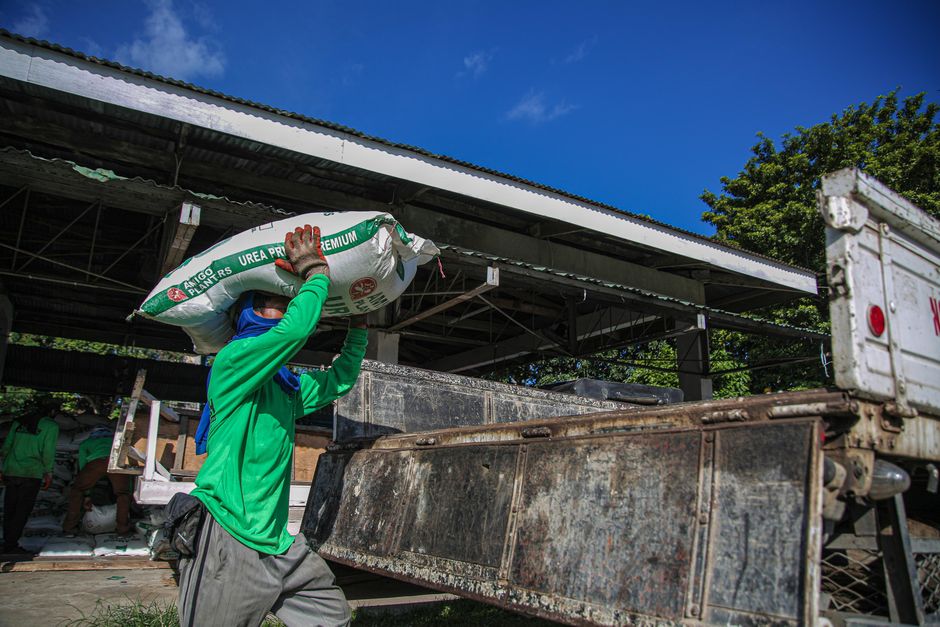
On September 28, officers from the Special Commissariat of Kounkané deployed at the Kalifourou advanced post — a border crossing with the Republic of Guinea — seized 20 bags of 50 kg of Urea 46% N Perlée, being transported by tricycle toward Wassi, a Guinean locality. Two individuals were detained. According to the national Police, which released a statement on Monday evening, the goods originated from the Senegalese village of Wadiyatoulaye.
When questioned, the suspects stated they had acquired this fertilizer at 13 000 francs CFA per unit on the black market in Linkéring, from resellers whose identities they claim not to know. A statement that shifts the problem upstream: who are the intermediaries reselling, at a marked-up price, an input that is supposed to be distributed at a subsidized price to farmers?
SODEFITEX at the heart of the diverted supply chain
This type of fertilizer is, according to the police source, “often granted to farmers in the department of Vélingara by SODEFITEX” — the Société de développement et des fibres textiles, the body overseeing the cotton sector in southern Senegal. Urea fertilizer is a key input for cotton and cereal farming; its subsidized supply aims to reduce production costs for small-scale farmers.
The fact that this product ends up being resold on an informal market before even reaching the fields raises questions about the integrity of the distribution chain. Diversion can occur at several levels: among direct beneficiaries who sell off their allocations due to lack of cash, or, in the most serious cases, upstream, before the input even reaches them.
A price differential driving the trade
The economic logic of the trade is straightforward. If fertilizer is distributed at a subsidized rate in Senegal and sold at a higher price in Guinea — or simply on the Senegalese black market — the profit margin justifies the risk taken. At 13 000 FCFA per unit resold in Linkéring, compared to a potentially much lower subsidized price, the gap is enough to sustain an informal supply chain.
This phenomenon is not unique to Senegal. In several Sahelian and West African countries, subsidies on agricultural inputs or fuel structurally generate smuggling flows toward neighboring countries where the same products are more expensive. The porousness of rural borders — such as that of Kounkané, deep in the forested zone of Casamance — facilitates these movements.
Legal follow-up and outstanding questions
The seized goods and the tricycle used for transport were handed over to the Departmental Commerce Service of Vélingara. The legal fate of the two detainees is not specified in the statement.
Several angles remain in the dark: have the Linkéring resellers cited by the suspects been identified? Is an investigation tracing the chain back to the initial holders of the bags — SODEFITEX beneficiaries or distribution agents? And more fundamentally, what is the true scale of the phenomenon in the Kolda region, where the border with Guinea stretches over several dozen kilometers that are difficult to monitor?
The Kalifourou interception is a one-off warning signal. Its real impact on the trade will depend on the authorities’ ability to trace the supply chain rather than limiting themselves to the low-level couriers at the end of it.
Source: APS (Agence de presse sénégalaise), September 28