


Between Bamenda and Maiduguri, an invisible market worth billions
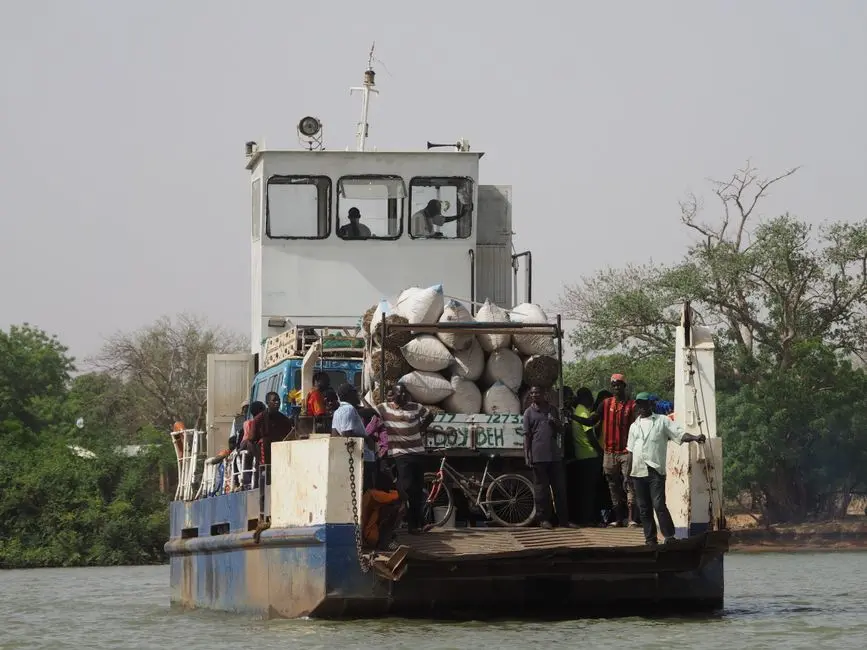
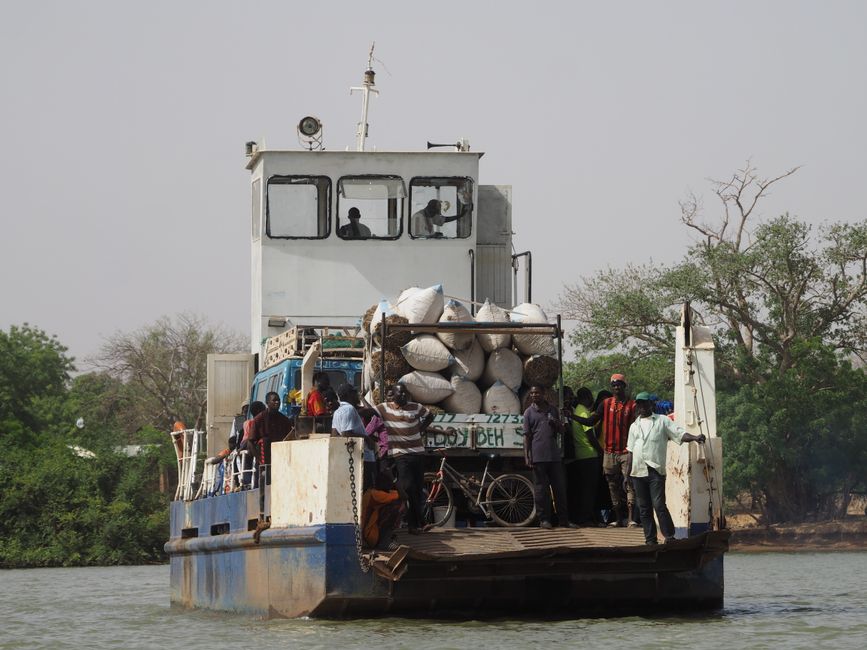
At Ekok, a small border post nestled in the rainforests of Cameroon’s South-West region, pirogues loaded with Nigerian fuel glide along the Cross River before the roosters even crow. At Amchidé, in the Far North, convoys of rice sacks cross laterite tracks well below the radar of customs officials. These scenes, commonplace for decades, actually structure a cross-border economy of a scale that official statistics struggle to capture. In 2026, according to converging estimates from the African Development Bank and the Observatory of Informal Economys of Central Africa (OEIAC), informal trade between Cameroon and Nigeria represents between 1.8 and 2.4 billion dollars in undeclared annual exchanges. An economic reality that far exceeds security rhetoric and calls into question the very foundations of taxation in both states.
Anatomy of the corridors: perfectly organized parallel routes
Reducing informal trade to the sole image of a small trafficker carrying shoddy goods would be a major analytical error. The undeclared trade corridors of West Africa and Central Africa — and particularly those linking Cameroon to Nigeria — operate according to sophisticated logistics, with specialized actors, negotiated rates, and their own regulatory mechanisms.
The three main cross-border traffic routes
- The Northern route (Maroua – Maiduguri): Predominance of livestock, Nigerian cereals, and subsidized fuel from the Lagos side. This corridor is historically the most active and involves Kanuri, Fulani, and Shuwa Arab communities on both sides of the border.
- The Centre-West route (Bamenda – Enugu): Dominated by textiles, Chinese manufactured goods transiting through Lagos, and Cameroonian agricultural products (coffee, smuggled cocoa, palm oil). The Anglophone crisis has paradoxically strengthened some of these flows by displacing the usual circuits.
- The Southern route (Ekok – Ikom): Fuel, precious timber, unregistered pharmaceutical products, and, increasingly, refurbished electronic equipment. This corridor concentrates the largest number of actors from the Igbo diaspora settled in Cameroon.
What distinguishes these corridors from simple smuggling operations is their degree of internal regulation. Cross-border trader associations, often unregistered, set informal “transit fees,” arbitrate disputes, and guarantee transaction security. A form of customary commercial law that, in many cases, predates the states themselves.
Parallel taxation: when the state delegates without saying so
The expression parallel economy taxation CMR real fiscal burden encapsulates a fundamental contradiction: the Cameroonian state collects revenue through agents formally outside the official tax system. This paradox is not an anomaly — it is a tacit equilibrium.
The “barriers”: informal tolls acknowledged by all
Along the roads leading to border posts, law enforcement agencies — gendarmerie, customs, police — collect “facilitation payments” that, at the national level, represent a considerable source of parallel income. A study by the International Development Research Centre (IDRC) published in early 2026 estimated that a truck travelling from Ngaoundéré to the Nigerian border paid an average of 47 000 FCFA in informal taxes at 9 different barriers, compared to 12 000 FCFA in official duties theoretically owed. On the Nigerian side, the mirror phenomenon involves Nigerian Customs Service agents in similar arrangements.
Traditional chiefs as regulators of last resort
In the border areas of Adamaoua and the North-West, lamibé and fons exercise a decisive regulatory function. They collect “market fees” on informal transactions, ensure the resolution of commercial disputes, and in return guarantee a form of public order that the central state is often unable to provide on its own. This system of parallel economic governance is not marginal: it is constitutive of the cross-border social fabric.
Nigerian fuel and Asian rice: the two pillars of the imbalance
Two products more than any other symbolize the complexity of the issues at stake: subsidized Nigerian fuel and Asian rice entering Cameroon via Nigeria.
Nigeria, despite the partial fuel subsidy reform initiated by the Tinubu administration in 2023, maintains pump prices 30 to 45% lower than those in Cameroon. This price difference creates a structural premium for smuggling that cannot be eliminated by customs enforcement alone. In 2026, unofficial estimates from the National Hydrocarbons Corporation (SNH) acknowledge that up to 15% of fuel consumption in Cameroon’s northern regions is of undeclared Nigerian origin.
Rice, for its part, enters massively through undeclared West African corridors to circumvent Cameroonian customs duties on imported agricultural products. This rice — often originating from Thailand or Vietnam, reshipped from the ports of Lagos and Apapa — is sold for up to 20% less than rice imported through official channels. The consequences for local rice farming (Yagoua, Ndop) are direct and documented.
Towards formalization? The limits of current policies
The Lake Chad Basin Commission (LCBC) and CEMAC have, on several occasions, attempted to put in place customs simplification mechanisms at the Cameroon-Nigeria borders. The Central Africa Trade Facilitation Corridor initiative, launched in 2023, planned the creation of one-stop shops at the main border posts by 2025. In 2026, only the Kousséri post has a partially operational system.
The obstacles to formalization are systemic:
- The loss of informal income for state agents constitutes a de facto institutional resistance to any effective reform.
- The unsuitability of official procedures for the realities of small-scale cross-border trade (volumes, frequency, trader profiles) discourages the use of legal channels.
- Security instability — the persistence of Boko Haram in the Lake Chad basin, the Anglophone crisis in the North-West — reinforces reliance on informal circuits as the only viable alternative for many communities.
- The absence of monetary harmonization between Nigeria (naira) and Cameroon (franc CFA), exacerbated by the recurring volatility of the naira since 2023, considerably complicates any attempt to trace financial flows.
An informal economy that sustains livelihoods, whether we like it or not
It would be intellectually dishonest to reduce these corridors to their illegal dimension alone. In Cameroon’s border areas — among the poorest in the country — informal cross-border trade is often the primary local employer. In Mora, Banyo, or Mamfe, thousands of families depend directly or indirectly on these flows: transporters, money changers, porters, market vendors, and craftsmen repairing equipment in transit.
In 2026, a brutal formalization without a social safety net would be a localized humanitarian disaster. Development economists are increasingly advocating for a progressive formalization approach: not banning what works, but creating real incentives for declaration, adapting taxation thresholds, and integrating informal actors into social protection systems.
FAQ — Frequently asked questions about informal trade corridors between Cameroon and Nigeria
What is an informal trade corridor between Cameroon and Nigeria?
An informal trade corridor refers to a regular axis of cross-border exchanges that takes place outside official customs and tax channels. Between Cameroon and Nigeria, these corridors have existed for decades and involve thousands of traders, with products ranging from fuel to foodstuffs and manufactured goods. They are not synonymous with disorganization: they follow their own rules, actors, and regulatory mechanisms.
Why are these informal flows so difficult to curb?
Because they respond to genuine economic needs and structural price differentials that customs policies alone cannot correct. The fuel price difference between the two countries, the unsuitability of official procedures for small-scale trade, and the interests of institutional actors (state agents benefiting from informal taxes) create a self-sustaining system that is difficult to reform without strong political will and significant resources.
How does “parallel taxation” work in these border areas?
Parallel taxation takes several forms: “facilitation payments” made to law enforcement agents at road barriers, market fees collected by traditional chiefs, and commissions levied by informal trader associations. These levies are not remitted to the public treasury but nonetheless constitute a real form of taxation that operators factor into their costs.
What is the impact of the Anglophone crisis on the North-West corridors?
The crisis in Cameroon’s Anglophone regions has profoundly reconfigured the corridors of the Centre-West route (Bamenda – Enugu). Some flows have decreased due to insecurity, but others have been strengthened or redirected to alternative, less monitored tracks. The crisis has also led to the emergence of new intermediaries and greater opacity in transactions in this area.
Are there regional initiatives to formalize this trade?
Yes, several initiatives exist — CEMAC border one-stop shops, LCBC trade facilitation programs, the African Continental Free Trade Area (AfCFTA) framework. However, their implementation remains very partial in 2026. The most concrete progress concerns the Kousséri post and, to a lesser extent, Ekok. The political will of both states and the resistance of those who benefit from the informal system remain the main obstacles to overcome.
Read also
The Les Afriques newsletter
L’essentiel de l’économie africaine — guides, comparatifs et analyses — dans votre boîte mail chaque semaine.