


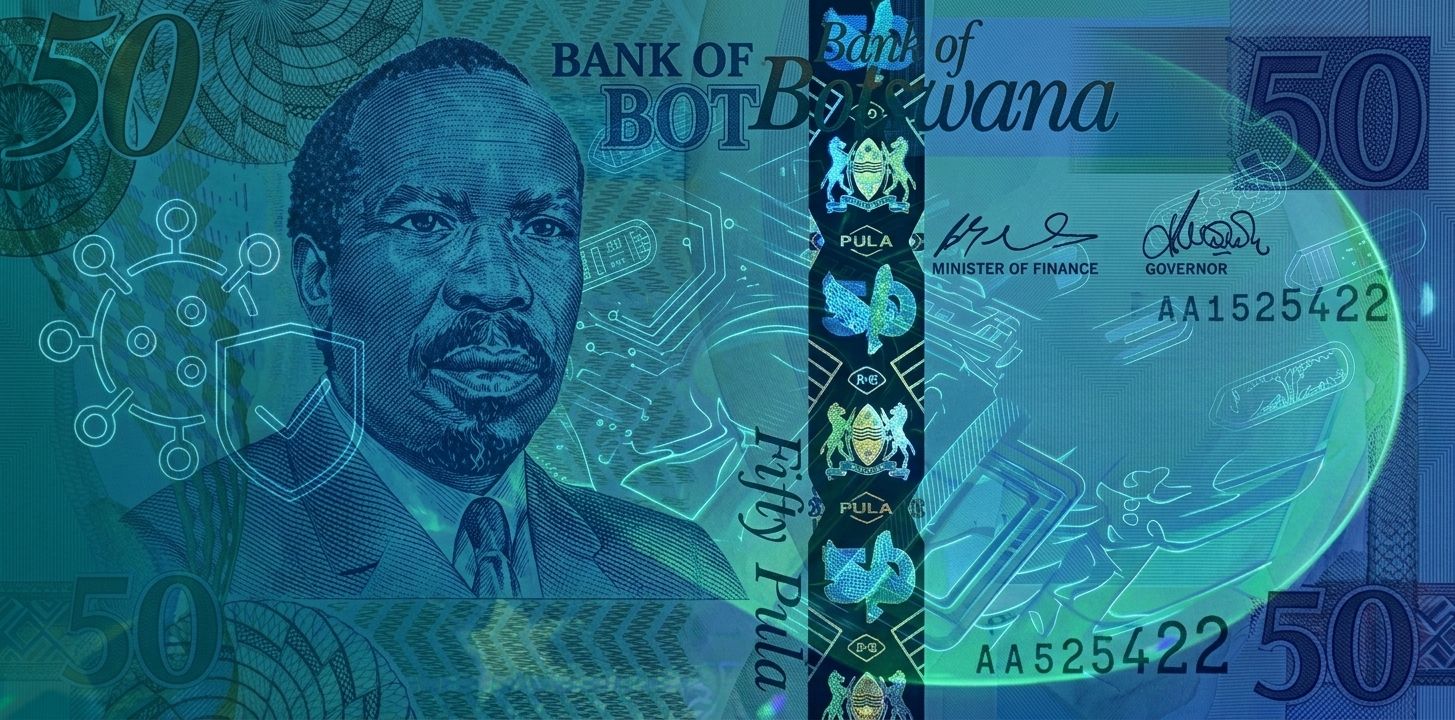
Used on billions of banknotes around the world, the Bioguard system could establish itself with African central banks by leveraging its antiviral and antibacterial properties. This banknote treatment system aims to limit the survival of micro-organisms on circulating currency.
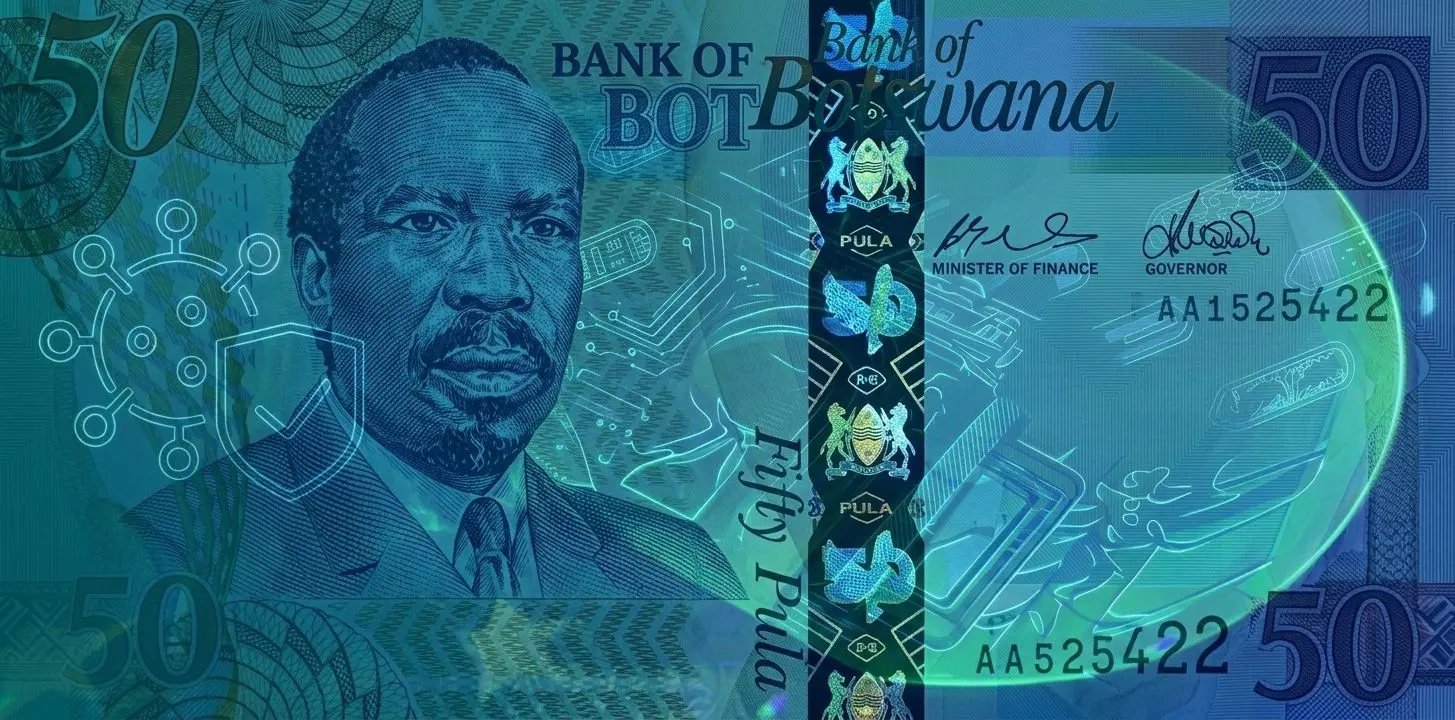
A few have claimed to use the Bioguard system to protect their banknotes from viruses, fungi and other bacteria: the Central Bank of Botswana, that of Lesotho and that of the Democratic Republic of Congo have publicly announced that they have asked currency manufacturer Oberthur Fiduciaire – the parent company of Bioguard – to integrate this system into the banknotes put into circulation on their respective territories. Their number still appears limited on the continent, but in a sector where professional confidentiality is significant, obtaining confirmation from central banks remains difficult.
Communicable diseases, a public health issue
This banknote and surface treatment process was developed to meet current international regulatory standards. It was following the global H1N1 influenza pandemic in 2009, which originated in Mexico, that the research and development teams at Oberthur Fiduciaire developed Bioguard to combat the transmission of diseases via banknotes. A few years later, this technology – antiviral, antibacterial and antifungal – was once again brought to the fore to reduce transmission risks for banknote users, during the Covid-19 pandemic of 2020-2021. “With Bioguard’s self-disinfecting function, we accelerate the death of the virus and reduce the risk of contamination, assures Henri Rosset, inventor of the technology and director of the Bioguard research centre. And after five years, the process is still active on banknotes put into circulation under tropical conditions.” A solution addressing the health challenges of several African states.
On the African continent, the question arose more acutely at the time of the coronavirus crisis 6 years ago. From March 2020 onwards, numerous health authorities sounded the alarm, stating that African countries were less well prepared than others to deal with contamination vectors. Thus Dr Michel Yao, head of emergency operations at the World Health Organization (WHO) in Africa – himself of Ivorian origin – expressed concern about the role of banknotes in circulation: according to him, in most cases in Africa, the risk of contamination was real. At the time, this idea spread rapidly, fuelled by numerous scientific studies conducted by African universities – such as the University of Ghana (Ghana) and Makerere University (Uganda) – which identified several bacteria and viruses on banknotes: Escherichia coli (E. coli) bacteria, Staphylococcus aureus, bacillus, microscopic fungi… A situation that heightened the attention of African health authorities to this risk, given that – according to the WHO – communicable diseases still account for “59% of the health burden of African populations“.
Protected banknotes, but not only
While it has been demonstrated that the use of paper currency is not a particularly significant vector of contamination, the adoption of the Bioguard system makes it possible to drastically reduce risks. “The COVID-19 crisis demonstrated the importance of allocating resources to innovations whose realisation can take years, states Étienne Couëlle, Chief Executive Officer of Oberthur Fiduciaire. The Bioguard solution is one example. This health safety guarantee has been applied to billions of banknotes around the world and has proven highly effective against the Covid-19 virus, as confirmed by independent laboratories.” The technology exists and has proven itself in several countries, and could be adopted by other African central banks.
This protective system also has a significant advantage: while it can be integrated into banknotes, it is also used to coat all surfaces that users may touch in public spaces: touchscreens, door handles, vertical handrails in public transport, and many others. “The viral concentration is reduced by at least 100 times compared to untreated surfaces, assures Nicolas Koutros, Chief Executive Officer of Bioguard & Co. In practical terms, this means that contamination through contact with any surface protected by Bioguard, such as a banknote, but also a screen, a table or packaging, is virtually impossible.” The company has, for example, adapted its process to industrial packaging – featuring a clearly visible Bioguard label – in order to reassure handling employees, for instance.
And handling has become a major concern in certain countries at present, particularly those where monkeypox (mpox) continues to spread or in the Great Lakes region where the Ebola virus has been surging since the beginning of the year. While the WHO seeks to reassure the public about its knowledge of the various routes of contamination, it continues to warn populations. “If you talk to someone closely, if you breathe on them, if you are physically close to them, it is possible that mpox droplets, if you have lesions, can spread to someone else“, states Margaret Harris, the UN organisation’s spokesperson, who also emphasises the risk of infection through contact with contaminated objects or surfaces. Reiterating essential gestures – disinfecting surfaces and washing hands – is a minimum. But turning to innovative technologies integrated directly into such objects and surfaces appears to be a very useful complementary solution.
The Les Afriques newsletter
L’essentiel de l’économie africaine — guides, comparatifs et analyses — dans votre boîte mail chaque semaine.