



Average Salary in Africa 2026: A Complete Country-by-Country Comparison
Understanding the average salary in Africa in 2026 means confronting a continent of striking contrasts. Between a tech engineer in Lagos earning more than 2 000 USD per month and an agricultural worker in Mali receiving less than 100 USD, the income spectrum reflects deeply different economic, geographic, and sectoral realities. With 54 countries, dozens of currencies, varying levels of development, and rapid urbanization, Africa cannot be reduced to a single figure. This hub page offers a structured overview of salaries across the continent’s major economies — both French-speaking and English-speaking — in 2026. You will find comparative data, an analysis of urban-rural gaps, a focus on the best-paying sectors, and concrete benchmarks for negotiating your salary or evaluating a professional opportunity. Explore our country guides for precise, actionable figures.
Overview: Salaries in Africa in 2026
If you send money to an African country, Wise applies the real mid-market exchange rate and displays its fees upfront — without the hidden margin charged by traditional banks.
In 2026, the average monthly salary in Africa varies considerably from one country to another, ranging between 80 USD in the most fragile economies and more than 1 500 USD in middle-income or resource-rich countries. The most dynamic economies — Maroc, Southern Africa, Kenya, Nigeria — pull averages upward, while nations such as RDC or Mali remain held back by instability and weak infrastructure. Purchasing power, adjusted for local cost of living, significantly nuances these comparisons: a salary of 400 USD in Abidjan does not provide the same standard of living as in Nairobi or Casablanca. For a complete, figures-based and methodological analysis, see our complete comparison of average salaries in Africa in 2026, which details sources, methodologies, and major continental trends.
Nigeria: Africa’s Largest Economy and Its Salary Disparities
With a population of more than 220 million and the continent’s highest GDP, Nigeria presents a two-speed labor market. In Lagos, a financial and commercial hub, professionals in banking, tech, and telecoms can earn monthly salaries exceeding 1 500 USD. In Abuja, the federal capital, positions in the civil service and international organizations also offer attractive compensation. But in the rural states of the north, average incomes fall below 150 USD per month. The national minimum wage remains low and is unevenly enforced. The depreciation of the naira since 2023 has also eroded the purchasing power of many workers. For sectoral details and the salary grid from Lagos to Kano, read our guide average salary in Nigeria in 2026.
Kenya: Silicon Savannah and Salary Dynamism in Nairobi
Kenya has established itself as East Africa’s technology hub, with Nairobi nicknamed “Silicon Savannah.” In 2026, developers, data scientists, and fintech professionals there earn salaries close to international standards, often between 800 and 2 500 USD per month. The agricultural sector, which still employs a large share of the rural population, offers significantly lower incomes, around 100 to 200 USD per month. The strong presence of NGOs and international organizations in Nairobi also creates a premium segment of the job market. Kenya has one of the highest literacy rates in sub-Saharan Africa, which supports the upskilling of workers. For a complete salary grid by sector and by city, see our guide average salary in Kenya in 2026.
Maroc: A Structured Labor Market Between Casablanca and the Hinterland
Maroc is among Africa’s most diversified economies, with sectors such as tourism, the automotive industry, offshoring, and financial services driving salaries upward. In 2026, the average salary in Casablanca in the formal private sector is around 700 to 900 EUR per month for managers, while the SMIG (salaire minimum interprofessionnel garanti) serves as the legal floor. Inequalities between Casablanca, Rabat, and rural regions remain significant, with agricultural incomes often two to three times lower than urban salaries. The development of industrial zones and call centers has created an expanding salaried middle class. For all figures by city and sector, read our analysis average salary in Maroc in 2026.
Algérie: The Weight of the Public Sector and the SNMG
In Algérie, the state remains the country’s largest employer, and the Salaire National Minimum Garanti (SNMG) serves as the reference benchmark for millions of workers. In 2026, the SNMG was revised upward to mitigate the effects of inflation, but real wages in the private sector vary significantly by industry. Hydrocarbons, the historically dominant sector, offer the highest compensation, often supplemented by bonuses and benefits in kind. The construction and civil engineering sector, stimulated by major infrastructure projects, also offers competitive salaries. By contrast, the informal trade sector, which employs a significant portion of the active population, falls outside official pay scales. Find complete data on salary brackets in our guide average salary in Algérie in 2026.
Côte d’Ivoire: Abidjan, the UEMOA’s Salary Engine
As the leading economy of the Union Économique et Monétaire Ouest-Africaine (UEMOA), Côte d’Ivoire displays in 2026 some of the strongest salary indicators in the sub-region. Abidjan concentrates the bulk of well-paying formal jobs: banking, telecoms, agri-food, construction, and business services. The Ivorian SMIG (salaire minimum interprofessionnel garanti) serves as the legal floor, but large multinational companies and pan-African groups offer packages well above this level. The rise of digital technology and fintech in Abidjan is creating new opportunities with attractive compensation for young graduates. Gaps with the interior of the country remain significant, however. For the detailed sectoral grid, read our guide average salary in Côte d’Ivoire in 2026.
Sénégal: Between a Dynamic Dakar and Lagging Rural Areas
Sénégal is experiencing in 2026 a renewed economic attractiveness driven notably by the start of offshore oil and gas production. Dakar, which concentrates more than 60 % of national GDP, offers professional opportunities in services, telecoms, construction, and now the energy sector. Expatriates and local managers at multinationals benefit from competitive salaries, while jobs in the public administration remain governed by the civil service pay scale. Outside Dakar, in Saint-Louis, Ziguinchor, or Thiès, average salaries are noticeably lower. Agriculture, the main activity in rural areas, generates highly variable income depending on the season. For city-by-city and sector-by-sector comparisons, see our guide average salary in Sénégal in 2026.
Cameroun: Douala and Yaoundé, Two Distinct Salary Logics
In Cameroun, the duality between Douala — the economic capital — and Yaoundé — the administrative capital — profoundly shapes the labor market. Douala concentrates industrial, port, banking, and commercial jobs, with higher average salaries in the formal private sector. Yaoundé, a city of civil servants and institutions, offers salary stability through public employment, but with compensation levels that are often less competitive than the Douala private sector. In 2026, the extractive sector (oil, timber, mining) remains among the best-paying, followed by telecoms and banking. Cameroun’s SMIG, revised upward in recent years, remains a key indicator for the informal sector. Our guide average salary in Cameroun in 2026 details all these figures by sector and by city.
Mali: A Labor Market Under Cyclical Constraints
Mali is going through a difficult economic period in 2026, marked by the effects of past security crises and regional sanctions. Bamako remains the main pool of formal employment, with opportunities in the mining (gold), banking, and telecoms sectors. Salaries in the gold sector, dominated by international groups, are among the highest in the country. By contrast, the vast majority of Mali’s active population works in subsistence agriculture or informal trade, with very modest incomes, often below 100 USD per month. Humanitarian organizations and NGOs present in Bamako offer attractive packages to qualified profiles. For a complete overview of salary levels and practical advice, see our guide average salary in Mali in 2026.
Ghana: Accra, a Liberal Economy and Salaries Under Reconstruction
Ghana, long cited as a model of democratic stability and growth in West Africa, is facing in 2026 the consequences of the 2022-2023 debt crisis. The ongoing economic restructuring is weighing on real wages, particularly in the public sector. Despite this, Accra remains an attractive city for professionals, with a developed financial sector, an emerging tech scene, and a strong presence of multinationals. Salaries in the offshore oil industry near Takoradi are among the highest in the country. The cedi, after a marked depreciation, is gradually stabilizing, which directly affects comparisons in USD. For figures and the sectoral grid, read our guide average salary in Ghana in 2026.
RDC: Mines, Kinshasa, and the Extreme Duality of Incomes
The République Démocratique du Congo presents in 2026 one of the most extreme salary dualities on the continent. On one side, the large industrial mines of Katanga and Lualaba — cobalt, copper, coltan — employ thousands of workers with salaries well above the national average, within a framework regulated by mining conventions. On the other, the vast majority of the Congolese population survives on less than 2 USD per day, in an omnipresent informal economy. Kinshasa, a megacity of more than 17 million inhabitants, offers opportunities in telecoms, banking, and NGOs, but salaries there are often eroded by a high cost of living and persistent inflation. Find all the details in our guide average salary in RDC in 2026.
The Best-Paying Sectors in Africa in 2026
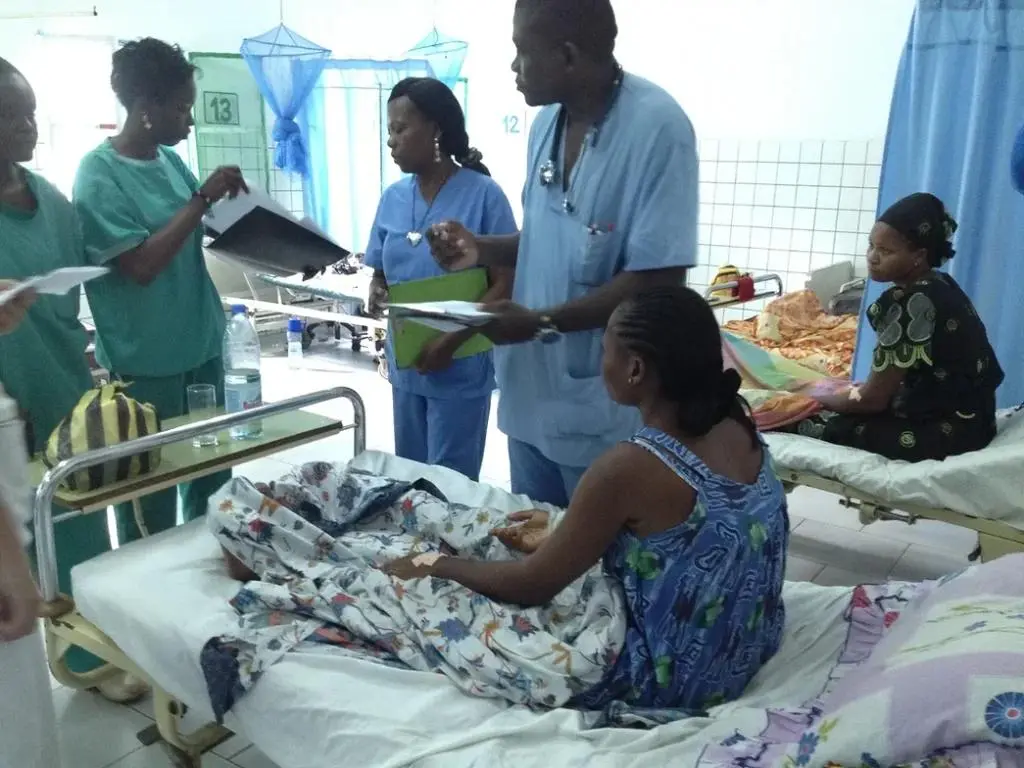
Regardless of the country considered, certain sectors consistently stand out for their high compensation levels in 2026. Hydrocarbons and extractive industries (oil, gas, mining) come first in producing countries such as Nigeria, Algérie, Angola, or RDC. The financial and banking sector offers competitive packages in major cities (Lagos, Nairobi, Casablanca, Johannesburg). Telecoms and tech, driven by the explosion of mobile money and startups, are hiring heavily with attractive salaries. Qualified healthcare and international organizations round out this picture. By contrast, subsistence agriculture, artisanal trades, and informal commerce generate the most modest incomes. To identify high-growth occupations and the most sought-after skills on the continent, see our article jobs hiring in Africa.
Urban-Rural Gaps: A Persistent Divide
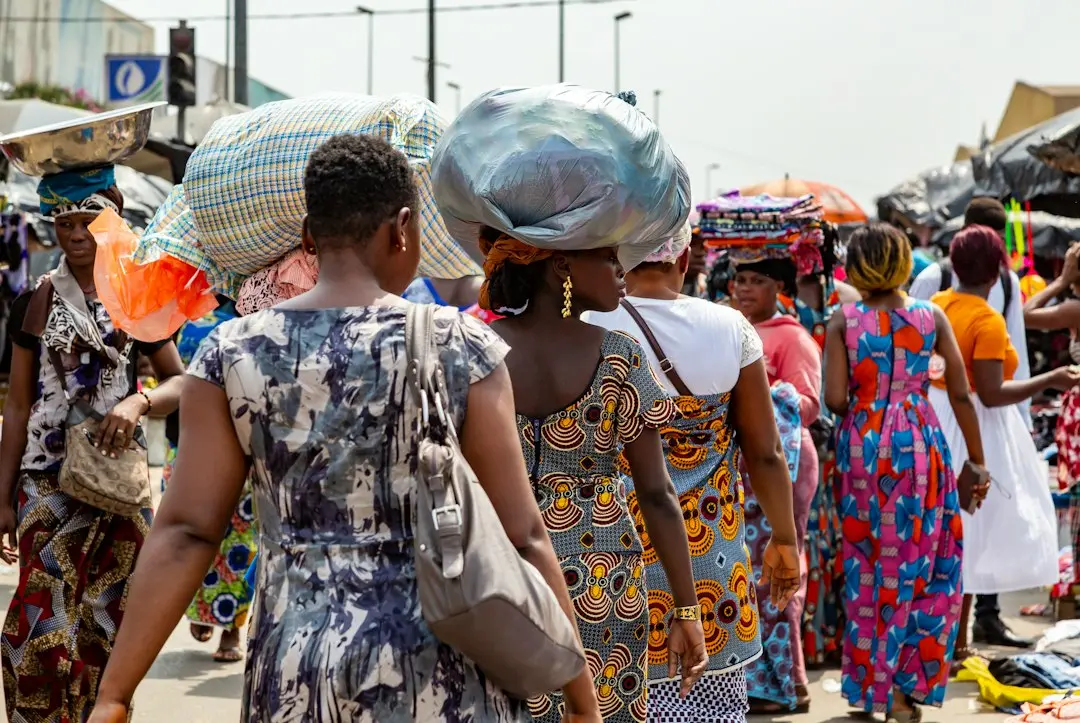
One of the most consistent features of the African labor market in 2026 remains the deep salary divide between major cities and rural areas. In Nairobi, Lagos, Casablanca, or Abidjan, average salaries in the formal sector can be three to five times higher than those in the surrounding countryside. This concentration of wealth in urban centers fuels massive internal migration, with young workers converging on major cities in search of better-paid jobs. The development of special economic zones, agropoles, and regional industrial hubs seeks to rebalance this distribution, but the effects remain limited so far. Remote work, although growing, concerns only a minority fraction of African workers. This reality must be factored into any serious salary comparison between countries or between regions within the same country.
How to Negotiate Your Salary in Africa: Practical Benchmarks
Negotiating your salary effectively in Africa requires mastering a few fundamental benchmarks. First, always refer to market salaries in your specific sector and city, rather than overly aggregated national averages. Second, distinguish between gross and net salary, social charges, and benefits in kind (housing, vehicle, health insurance) which can represent 20 to 40 % of the total package. Third, take the monetary context into account: in countries with high inflation or an unstable currency (naira, cedi, franc congolais), negotiating an indexation or partial payment in a hard currency can be a strategic move. Fourth, position yourself by highlighting rare skills — bilingualism, tech expertise, international certifications — which allow you to aim for the upper end of salary ranges. Our country guides detail ranges by position and by experience level.
Conclusion: Africa’s Salaries, a Multi-Speed Continent
The average salary in Africa in 2026 cannot be reduced to a single figure. It is a mosaic of economic realities, where ultra-competitive labor markets in major cities coexist with rural economies still far removed from international standards. Underlying trends — urbanization, digitization, the rise of natural resources and financial services — nonetheless point to encouraging trajectories for skilled workers. Understanding these dynamics means giving yourself the means to negotiate better, position yourself better, and better anticipate opportunities. Explore our country guides to access the most precise and up-to-date data available on the African labor market in 2026.
Frequently Asked Questions
What is the average salary in Africa in 2026?
Which African countries have the highest salaries in 2026?
In 2026, the African countries offering the highest average salaries are Southern Africa, Maroc, Kenya, Algérie, and Nigeria in its formal sectors. These economies combine a structured private sector, developed extractive or technology industries, and a base of skilled workers that supports compensation levels. Real purchasing power must nonetheless be nuanced according to the local cost of living.
Which sectors have the highest salaries in Africa?
What is the salary difference between a major African city and a rural area?
The salary gap between major African cities and rural areas is considerable: it generally varies by a factor of 3 to 5 depending on the country. A formal-sector employee in Lagos, Nairobi, or Casablanca can earn three to five times the income of an agricultural worker in a rural area of the same country. This divide fuels strong internal migration to cities and constitutes one of the major challenges of African economic development.
How can I compare my salary in Africa with international standards?
To effectively compare an African salary with international standards, you must first convert your compensation to USD or EUR at the current exchange rate, then adjust it according to the purchasing power parity (PPP) of the country concerned. A salary of 500 USD in Dakar or Douala often provides greater local purchasing power than the same amount in Paris or London. Our country guides incorporate these comparative elements to help you position yourself precisely within your local labor market.
See also: our guide to investing in Africa (high-growth sectors, risks, and access conditions).
See also our guide to money transfers to the continent.
Affiliate link.
Also read: Index Les Afriques 2026: the 15 most dynamic African countries.
The Les Afriques newsletter
L’essentiel de l’économie africaine — guides, comparatifs et analyses — dans votre boîte mail chaque semaine.