

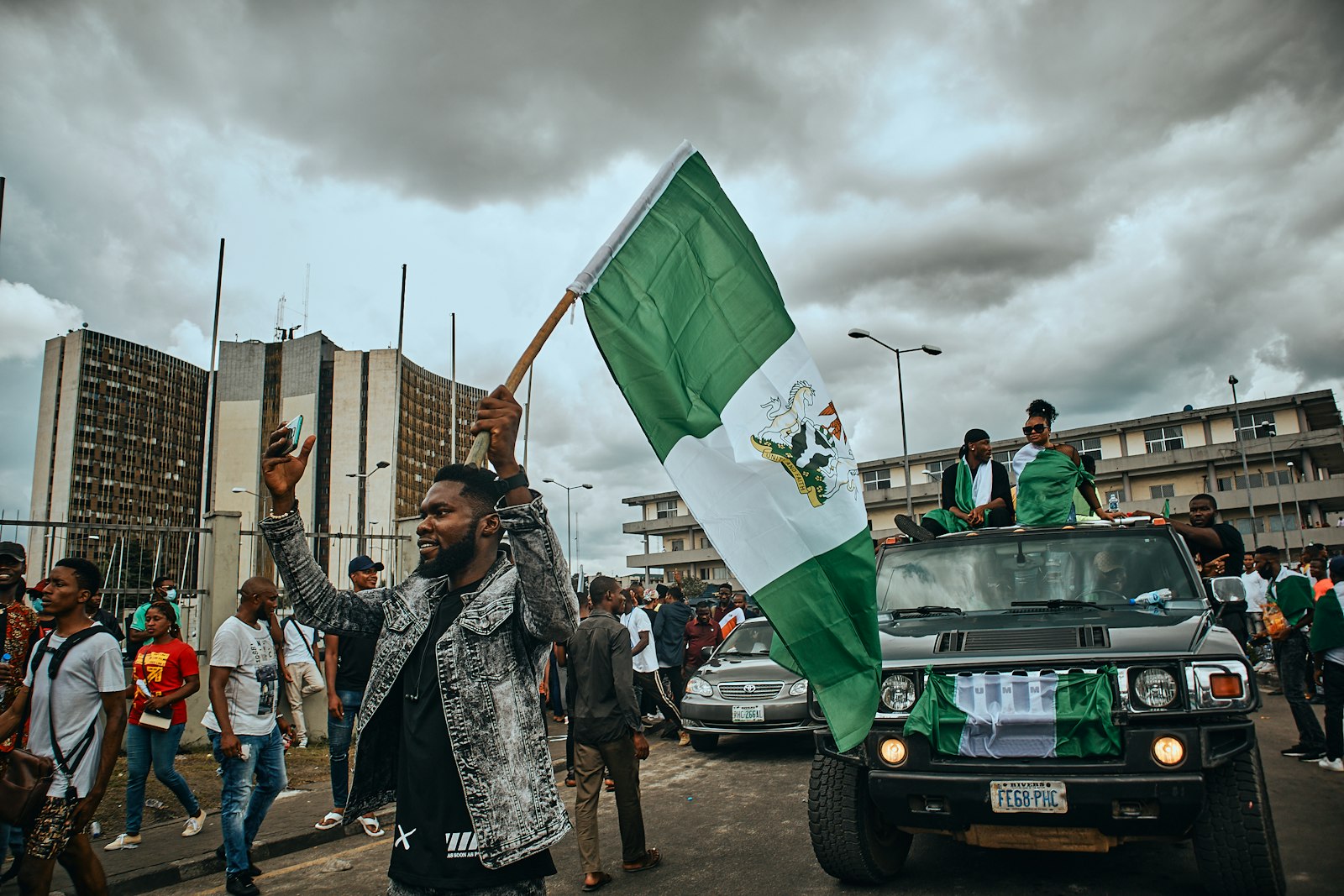
From Europe to Africa, from Asia to Latin America, a generation is refusing to let its future be decided without it. Young people are taking to the streets, challenging their leaders, and using social media to make their voices heard. But one question remains: how do you turn online outrage and street protests into real, lasting change?
Sometimes all it takes is a few seconds of footage to ignite a firestorm. A crumbling classroom, a student calling out an injustice, a police intervention captured on a phone — within hours, the images spread, reactions multiply, and what was once scattered anger becomes a collective force.
This is one of the defining realities of this generation. They get their news online, exchange ideas, compare experiences across borders, and no longer wait for political parties or unions to speak on their behalf. From Brussels to Belgrade, from Nairobi to Kathmandu, young people are flooding the streets to demand justice, jobs, affordable housing, quality education, and accountable leadership.
The Afriques newsletter
- Free & no spam
- 1 email per day
- Unsubscribe in 1 click
The circumstances differ, of course. But one feeling keeps surfacing: a sense that this is a generation being asked to work hard with no guarantee that it will ever be able to build the future it was promised.
Across Europe, demands that cross borders
In France, the fall 2026 protests shone a spotlight on the struggles facing the public education system. Students called for more resources, smaller class sizes, better-maintained schools, and enough teachers to go around. Behind those demands lies a deeper anxiety: does equal opportunity still mean anything when the conditions for learning keep getting worse?
In Italy, students have been pushing back against chronic underfunding of education and challenging the government’s budget priorities. Their slogans call for investment in schools and universities rather than military spending. In Spain, it’s housing that has become the lightning rod for frustration: rents are climbing, wages aren’t keeping pace, and financial independence feels increasingly out of reach.
In Albania, the grievances extend to politics itself. Corruption, bleak job prospects, and a failing education system have bred deep distrust. Many young Albanians feel that connections matter more than competence — and that their future lies somewhere else entirely.
In Belgium, too, students are worried about education reforms, the cost of studying, and financial precarity. For some, being a student already means holding down a job — sometimes even helping to cover the family’s bills. Access to university shouldn’t depend on how much money your family happens to have.
These grievances aren’t identical. But they share the same underlying exhaustion: why keep demanding more from young people without giving them the conditions they need to actually succeed?
Serbia: when students shift from protest to political power
The Serbian example deserves particular attention. The movement was born out of tragedy: on November 1, 2024, the collapse of a canopy at the Novi Sad train station killed 16 people. Students began demanding transparency about the construction work, the release of official documents, and accountability from those responsible.
The mobilization gradually grew beyond the rail disaster. It became a broader challenge to corruption, impunity, and the dysfunction of public institutions. Student assemblies, blockades, and rallies gave the movement staying power and drew in a significant portion of the wider population.
The political outcome was striking: on October 25, 2026, the slate backed by the student movement won 140 out of 250 seats in parliamentary elections, surpassing the ruling party. But winning an election is only the beginning. The newly elected representatives must now prove they can turn that victory into genuine reforms and more transparent institutions.
The electoral win opens a new chapter for Serbia’s student movement. But winning an election doesn’t automatically transform a country. That victory will now have to prove itself through concrete decisions, real reforms, and tangible results.
Serbia offers a lesson to young people across Europe: a movement can shift the balance of power when it is built on clear demands, collective organization, and the determination to last. The point isn’t to copy this model, but to understand that organized anger can become a genuine political force.
Madagascar and Serbia: two victories, one shared question about what comes next
Serbia isn’t the only example worth examining. Looking at Madagascar and Serbia side by side helps illuminate both the possibilities and the limits of youth movements.
In Madagascar, in September 2025, the unrest began around very concrete grievances: water and electricity outages, the hardships of daily life, and widespread corruption. Driven by Generation Z, the mobilization quickly took on a national scale. Social media played a key role in coordinating the movement and amplifying its demands. President Andry Rajoelina ultimately left power in October, following the defection of a military unit to the protesters’ side.
But the president’s fall did not mean that young people had gained the power they were calling for. A military transition was put in place, and representatives of the movement decried their exclusion from political decision-making. Those who helped force the change were not necessarily the ones who got to shape what came next.
In Serbia, the trajectory was different. The student movement, sparked by the Novi Sad tragedy in November 2024, gradually expanded from a demand for justice into a nationwide political challenge. After two years of sustained mobilization, the students took a decisive step forward by securing an electoral victory in October 2026.
Both experiences show that youth mobilization can fundamentally alter the balance of power. But they also reveal a reality that is too often overlooked: ousting a leader or winning an election does not, by itself, guarantee democratic transformation.
Madagascar illustrates the risk of a popular uprising giving way to a transition in which the people who started it have no seat at the table. Serbia points to a different possibility: a movement that seeks to convert its civic energy into political power — along with all the responsibilities that entails.
Ultimately, the question isn’t just how to bring down a contested system. It’s how to build fairer institutions once the protests are over. That is where the true reach of any youth movement is tested.
Social media speeds up mobilization — but it doesn’t deliver change on its own
This may be one of the most distinctive features of today’s movements. Social media has fundamentally changed the way people protest. Information no longer depends on a newsroom, a union, or a politician to get out into the world. A student can film a situation, post it, and reach thousands of people. A call to march can be shared within minutes. A local grievance can resonate far beyond its borders.
That speed has changed the game. It makes injustices visible, helps circumvent certain media silences, and puts officials face-to-face with images they can no longer easily ignore.
But we shouldn’t confuse visibility with victory. A movement can rack up thousands of followers, produce a steady stream of videos, and push a hashtag to the top of the trending list without securing a single reform. A widely shared post doesn’t guarantee an independent investigation, the release of someone who’s been arrested, or better conditions in a school. And a protest announced on social media doesn’t automatically become a movement with the staying power to see things through.
That’s the real danger: mistaking digital mobilization for change itself.
Social media is good at amplifying anger. On its own, it cannot build an organization, negotiate an agreement, or hold anyone accountable for implementing a reform. It can bring together people who have never met — but it’s no substitute for the conversations, assemblies, associations, and collective work that make real decisions possible.
It also comes with its own pitfalls. Misinformation can spread just as fast as verified firsthand accounts. Images stripped of context can inflame tensions. Algorithms tend to favor the most spectacular, provocative, or inflammatory content. A movement can end up chasing attention rather than pursuing its actual goals.
A study published in 2026 in Humanities and Social Sciences Communications highlights precisely this ambivalence: digital tools make it easier to participate and spread information, but can also undermine the organization and long-term impact of movements.
The Serbian experience is a reminder of how much happens away from the screen. Students didn’t just post messages — they met in person, held assemblies, defined their demands, and kept the movement going over time.
The real question, then, isn’t how many people watched a video. It’s how many are willing to stay engaged, get organized, and follow up on whatever commitments are won.
Social media can bring people into the streets. It cannot, by itself, turn their demands into laws, budgets, and institutional change.
From Nairobi to Brussels, the same demand for accountability
Across Africa, youth mobilizations have revealed this same determination to hold those in power to account. In Kenya, the 2024 protests against a proposed tax hike quickly expanded well beyond the fiscal question. Corruption, the management of public funds, and police violence moved to the center of the conversation.
In Nepal, the September 2025 protests gave voice to a deep frustration with corruption, nepotism, and a lack of opportunity. In Madagascar, water shortages and electricity blackouts helped trigger a mobilization that gradually grew into a broader political challenge.
In these countries, the demands aren’t only about promises for the future. They’re about immediate needs: being able to study, find work, access water and electricity, live safely, and trust that institutions will actually function.
From Brussels, home to the European institutions, these developments should prompt some serious reflection from political leaders. Europe champions democracy, the rule of law, and civic participation. It also needs to ask itself what place it truly makes for its own young people — and how it supports the ambitions of young people in its partner countries.
Relations between Europe and Africa cannot be reduced to trade agreements, security arrangements, and migration policy. They must also reckon with the aspirations of a generation that wants to study, build something, and live with dignity in their own countries.
After the clicks and the marches, results
Young people have no shortage of ideas or tools to make their voices heard. What still needs to be built is the bridge between protest and outcomes.
Political parties, unions, civil society organizations, and institutions need to be willing to engage with these new actors — without trying to co-opt their energy or redirect their anger for their own purposes. For their part, youth movements need to be able to translate their demands into concrete proposals, sustain their organization over time, and hold decision-makers to the commitments they’ve made.
Serbia shows that a mobilization can go so far as to reshape the political landscape. Other movements are a reminder that success isn’t measured by turnout or video views, but by the real changes that actually improve people’s daily lives.
At the end of the day, a generation isn’t looking to be applauded for its online activism or praised for its courage in the streets. It wants schools that work, housing it can afford, decent jobs, reliable public services, and leaders who answer for their decisions.
Social media has given young people an amplifier. Now they want their voice to produce actual decisions. Because going viral means getting attention. Changing things means getting results. And that is exactly what they’re asking for.
Young people can spark change. But for that change to truly belong to them, they also need a seat at the table where it’s built.
Yahya YAHYAOUI
L’œil de Bruxelles sur le grand jeu géopolitique
[email protected]
References
- Reuters — Youth mobilizations across Europe, October 28, 2026.
- El País — Young Europeans in the streets, October 19, 2026.
- European Students’ Union — Student Protests Monitoring, November 2026.
- Associated Press — Serbian election results, November 6, 2026.
- Study on social media and social movements, April 28, 2026.

Yahya Yahyaoui
A lawyer, analyst and journalist based in Brussels, he deciphers the economic, legal and regulatory stakes of Europe-Africa relations for Les Afriques: European funding, trade rules and the negotiating capacity of African economies.
View all articles → · LinkedIn ↗