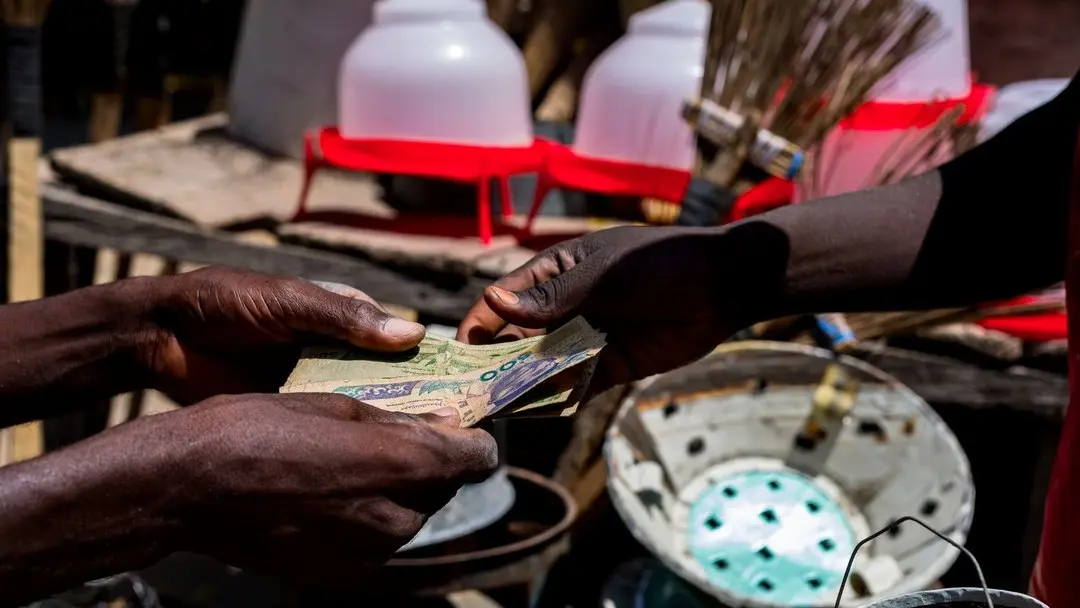


Since 2 November 2026, every interoperable e-money transfer in the Union has had to go through the BCEAO’s platform. Small transfers remain free, but the free service, until now general for domestic transfers between individuals, is now capped. Who will collect the margin above the cap?
What changes
On 2 October 2026, the BCEAO announced new rules for its Interoperable Instant Payment System Platform (PI-SPI), launched on 30 September 2025. Until then, according to its 2025 annual report, its pricing policy meant “free transfers between individuals at national level”. Since 2 November, interoperable e-money transactions, from one institution to another, must go through the platform, and free sending is capped: domestic transfers between individuals remain free as long as their daily total does not exceed CFAF 8,000, per user and per participant, with no limit on the number of operations. Transfers of a larger amount may be subject to fees, at a rate of between 0% and 0.8%, applied to the transfer amount excluding tax. Receiving money remains free, with no cap. These conditions will extend to transfers between Union countries on 1 June 2027.
For users, sending CFAF 5,000 to a wallet held with another operator remains free, as long as the day’s transfers from that account do not exceed CFAF 8,000. For a transfer of CFAF 50,000, the rate cannot exceed 0.8%, or CFAF 400. According to the BCEAO, the free tier covers 75% of e-money transactions in the Union.

The Afriques newsletter
- Free & no spam
- 1 email per day
- Unsubscribe in 1 click
Why now?
The BCEAO explains it itself: after a first year of operation, it assessed interoperability and revised its pricing for “better targeting” of those who benefit from free transfers. The figures tell the rest: while connection was voluntary, the platform remained marginal, with one million operations and CFAF 110 billion in cumulative value by July 2026, according to the press, even though 175 institutions were authorised by end-September. The obligation comes once the network is ready, and the cap gives institutions back the possibility of charging, and so probably a reason to commit.
For banks
As recently as 2024, according to the BCEAO, transfers between bank accounts and e-wallets were growing through bilateral partnerships. The platform, which interconnects all participants, replaces that patchwork with a common access point. It gives banks a chance to regain ground in small payments: in 2024 they handled only 18% of e-money transactions, compared with about 82% for e-money institutions.
The numbers so far
On 2 October 2026, according to the BCEAO, the platform had 175 participants and gave more than 38 million people access to instant payments. The official list of institutions authorised to open the service to the public rose from 104 on 31 July to 175 on 30 September. At that date, Senegal (43) and Côte d’Ivoire (38) accounted for nearly half; Guinea-Bissau had only 7. Among states, Côte d’Ivoire’s treasury already makes regular bulk payments through the platform.

In 2024, e-money in the Union handled nearly 12 billion transactions worth CFAF 160,415 billion, or 118.94% of the Union’s GDP. Transfers between Union countries reached CFAF 5,661 billion, more than three times the 2020 level.

Where the rent lies
First, amounts above the threshold. The free tier covers most operations, but probably not most of the value: in 2024, a person-to-person transfer averaged CFAF 18,220, more than twice the threshold. The communiqué does not say who will set the rate, whether it will be published, or how a second small transfer on the same day will be treated.

Second, cash withdrawals. The communiqué deals with transfers; it says nothing about withdrawals. Yet, according to the BCEAO, about 88% of the deposits made into e-money accounts in 2024 were withdrawn. Withdrawal fees remain outside the scope of the new rule.
Third, concentration. According to BCEAO data, three networks handled more than 80% of e-money transactions by number in 2024, and more than 90% by value. The platform is public and regional; the customer relationship, however, remains in the hands of a few networks.
Fourth, and least visible: information. Interoperable flows now pass through a central bank infrastructure, which is therefore in a position to see these payments as a whole. Who will be able to use that knowledge, and what will be published?
What the platform does not change
PI-SPI is a public rail, set up and operated by the Union’s central bank. That is a gain in control over how the currency circulates. But a rail is not a currency. The decisions of 21 December 2019 ended the centralisation of foreign-exchange reserves at the French Treasury; according to the BCEAO, they kept two pillars: the fixed exchange rate with the euro and France’s unlimited convertibility guarantee. This reading is subject to actual findings on the political and geopolitical ground. The platform decides the path money takes; it decides neither its value nor its exchange rate. A slice of sovereignty is not sovereignty.
Four indicators to watch
- Volume and value processed by PI-SPI, month by month and country by country: the only known figure is a cumulative total announced in July 2026.
- The rates charged above CFAF 8,000, institution by institution: how many stay at 0%, how many reach 0.8%?
- The share of deposits withdrawn as cash (about 88% in 2024): if instant payments take hold, it should fall.
- Banks’ share of transactions (18% in 2024) and the number of public treasuries connected.
The BCEAO has built the road and left the first kilometre free. On the kilometres that follow, three tolls are taking shape: amounts above the threshold, the counter where money leaves as cash, and the customer relationship. Who will collect them?
Omolola Yakubu, Founder of Sankofa Finance (sankofafinance.com).
Sources: BCEAO communiqué of 2 October 2026; lists of participants authorised to open PI-SPI services to the public (31 July and 30 September 2026); communiqué of 8 October 2026 on public treasuries; 2025 annual report; Annual report on digital financial services in WAEMU, 2024; press release on the CFA franc reform (December 2019). July 2026 figures: Financial Afrik and Togo First.

Omolola Yakubu
Founder of Sankofa Finance, independent economic intelligence and financial rating. A certified financial analyst and former accountant turned management controller, he deciphers capital markets, public debt and monetary policy across the continent with a constant commitment to rigorous, verifiable sourcing.
View all articles →