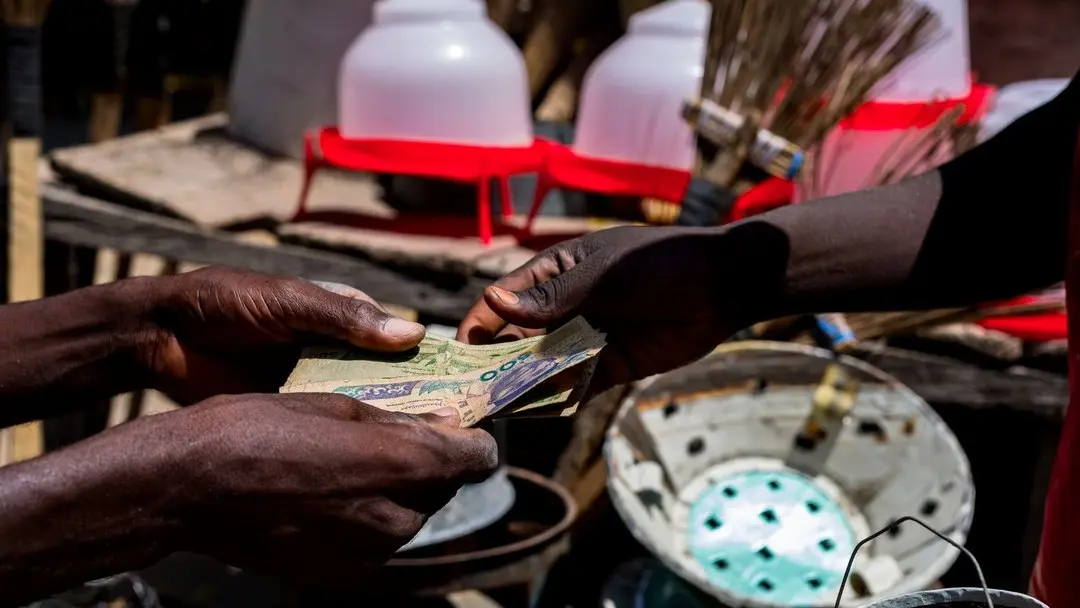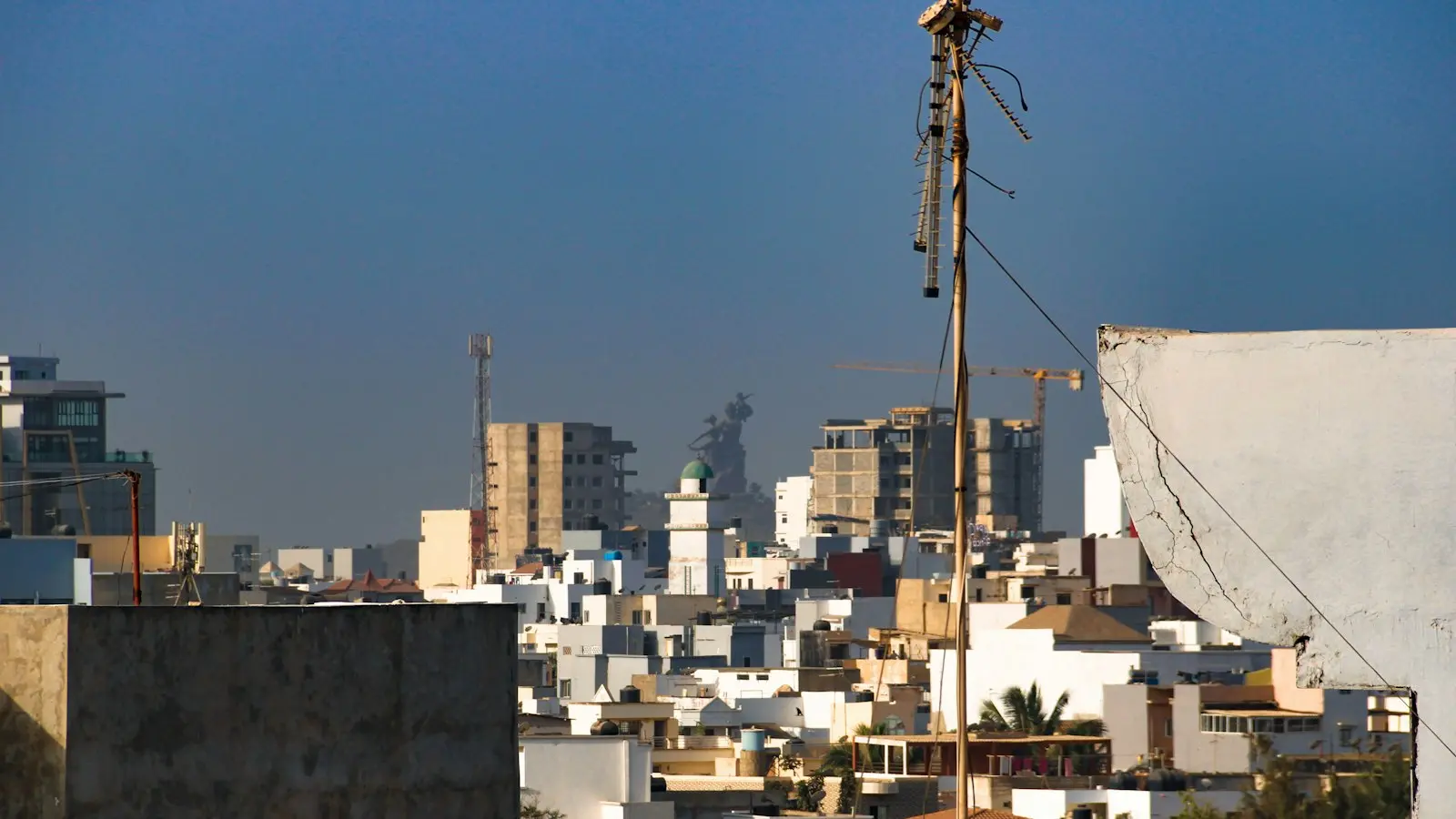


Africa can export its training courses, digital books and creations. But how much of this wealth remains in the hands of those who produce it? The partnership with Europe must also be measured by the income retained, the rights held and the businesses that last.
Africa–Europe: behind the success of digital creators, the battle for revenue, rights and power.
A video can cross borders in a few seconds. Its author, however, may wait for payment, incur conversion fees or discover that part of their income depends on rules they do not control. This is the paradox of the creator economy: a worldwide circulation of works, but a distribution of value decided at several counters.
The Afriques newsletter
- Free & no spam
- 1 email per day
- Unsubscribe in 1 click
The African challenge is therefore no longer about producing more music, videos, training courses or educational content. It is about determining who owns the rights, controls the distribution, knows the customers and keeps the margin. Visibility opens a door; it guarantees neither income nor negotiating power.
From Brussels, this question forces us to move beyond the talk of a “connected” African youth. The real test of the partnership between the two continents is economic: does it help creators become owners of their activity?
While Europe and Africa discuss transport corridors, ports and energy, a more discreet economy deserves their attention: that of people who turn their knowledge into digital products.
Take a few illustrative situations: a student in Dakar offering an exam-preparation guide; an accountant in Abidjan selling an Excel training course; a graphic designer in Douala selling customisable templates. A mobile payment and a messaging app can facilitate these exchanges without an international bank card. But using WhatsApp or Canva still means depending on foreign services. Starting with few resources does not mean producing without costs.

The talent is African. Who gets the profits?
In a study published on 1 September 2025, Selar credits consultant Felix Ohaeri with close to 10 million naira (Nigeria’s currency) in sales in a single month for an artificial intelligence training course. He says he reinvests about a third of his revenue in advertising. The exact month of this performance is not specified. [1]
This commercial testimonial does not constitute an independent audit. It nevertheless shows why turnover and profit must not be confused: attracting buyers can absorb a significant share of sales, before other expenses and taxes.
This economy extends beyond music. Selar stated it had paid out 9.88 billion naira to creators in 2024, in its report of 16 January 2025. For 2025, TechCabal reported on 14 February 2026 that payouts exceeded 18 billion naira to the platform’s African users. These figures come from the company; they do not represent the sellers’ audited net profits. [2]
In recorded music, IFPI estimates sub-Saharan Africa’s revenue at 120 million dollars in 2025, up 15.2%, in its report published on 18 March 2026. [3]
These indicators cover different scopes and do not add up. They do not make it possible to calculate what proportion of the value ultimately stays in Africa.
Whoever holds the till holds the power
Who captures what? Streaming and sales platforms collect commissions, subscriptions or a share of revenue. Payment providers charge for collection and sometimes conversion. Advertising players are paid to attract customers. Publishers, distributors and other rights holders receive their contractually agreed shares.
The creator keeps what is due to them, then funds their activity and meets their tax obligations. These functions may be grouped: their fees do not automatically add up. The creator can also keep their rights and collect the corresponding income directly.
YouTube provides a concrete benchmark. Its documentation, consulted on 24 October 2026, provides for paying out 55% of net advertising revenue to the partners concerned for ads on the watch page of public videos. This rate does not apply to every placement. [4]
The commission pays for a real service. The imbalance appears when the creator has few alternatives, misunderstands their commitments or depends on a single intermediary to reach their audience.
Tax, for its part, falls under public funding. Confusing it with a commercial commission prevents responsibilities from being correctly identified.
Selling to the world, paying the toll
In Nigeria, the Paystack pricing consulted on 24 October 2026 shows 1.5% plus 100 naira for local transactions, versus 3.9% plus 100 naira for the international transactions concerned in naira. [5]

On a hypothetical sale of 10,000 naira, this represents 250 or 490 naira in fees. The seller receives 9,750 or 9,510 naira, before their other costs. This calculation illustrates only payment processing, not the full cost of a digital export.
To reach a European diaspora, displaying a price is therefore not enough. You must accept their payment method, understand possible conversions and receive funds under predictable conditions.
African infrastructure is progressing. The BCEAO launched PI-SPI on 30 September 2025 to facilitate interoperable payments in the WAEMU, notably with a standardised QR code for merchants. This regional advance does not, however, solve collection from Europe on its own. [6]
Cooperation should guarantee transparent fees, reliable timelines and accessible recourse.
Becoming an entrepreneur without getting lost in the rules
There is no single tax regime for the African creator. Obligations depend on the country, the status and the activity.
In Kenya, the Kenya Revenue Authority indicates a 5% withholding on payments related to the monetisation of digital content to residents, applicable since 1 July 2023. This withholding is generally not the resident’s final tax: it must be taken into account in their annual return. [7]
Europe also intervenes as a tax market. The electronic services concerned sold directly to its consumers are in principle subject to the VAT of the customer’s country. The non-Union OSS scheme allows eligible businesses established outside the EU to centralise their filings. The classification of the service and the role of a platform remain decisive. [8]
Recognising creators economically means making these obligations practicable: proportionate formalities, accessible information and accounting support. An activity does not become solid simply because it becomes taxable.
Africa produces the ideas. Who owns the business?
Digital sovereignty must take on a concrete meaning: retaining one’s rights, controlling one’s commercial data in respect of individuals, choosing one’s providers and negotiating one’s terms of sale.
This means being able to recover one’s catalogue, export the information needed for one’s activity and change services without losing all one’s work. It implies understanding an exclusivity clause, a reuse authorisation or a termination clause.
An African platform can better respond to local needs and contribute to the continent’s economy. Its origin does not, however, guarantee fair prices or the seller’s autonomy. Sovereignty also requires competition, readable contracts and effective recourse.
Brussels, African talent deserves more than applause
Europe already has instruments. In its communiqué of 24 November 2025, updated on 2 December, the European Commission announced 120 billion euros mobilised for Africa under Global Gateway. “Mobilised” does not mean fully disbursed.
The document also announced 32 million euros, under Finnfund Global Connect, for African infrastructure including cables, fibre, data centres and mobile payments. Digital is therefore indeed part of the commitments. [9]
From Brussels, a question deserves to be put to the European institutions: when they finance Africa’s digital transformation, what place do they reserve for African ownership of businesses, content and rights? An additional connection opens a market. It does not determine who will keep its profits.
Europe occupies several positions at once: financial partner, consumer market, place where businesses set up, and regulatory power. Its interests do not automatically coincide with those of a creator in Dakar or Abidjan. A credible partnership must make these interests explicit and organise their convergence around concrete commitments: balanced contracts, accessible payments, protection of rights and commercial outlets.
This is where the European discourse of an equal partnership must be put to the test. Funding should also be assessed according to the share of intellectual property retained locally, the orders won by African businesses and their ability to negotiate without depending on a single intermediary. The real outcome would not only be an Africa better connected to Europe, but an Africa better paid for what it brings to it.
Sharing markets, sharing profits too
The success of the partnership should be measured by the margins retained, the rights held and the businesses that last. Audiences and funding announcements are not enough.
Africa creates value. It must be able to keep a share commensurate with its contribution. Its ambition cannot be limited to enriching the catalogues of others: it must also own the businesses and the rights that build its prosperity.
References and sources — consulted on 24 October 2026
- Selar, How Felix Ohaeri Used Selar to Make ₦10 Million in a Month Selling Courses, 1 September 2025. Read the source.
- Selar, 2024 review, published on 16 January 2025; TechCabal, “I had no assumptions. I was just building:” Day 1–1000 of Selar, 14 February 2026, for 2025 payouts. Selar review · TechCabal article.
- IFPI, Global Music Report 2026, communiqué of 18 March 2026, data for 2025. Read the source.
- YouTube Help, YouTube partner earnings overview. Read the terms.
- Paystack, Pricing — Nigeria. See the pricing.
- BCEAO, official launch of the Interoperable Instant Payment System Platform — PI-SPI, 30 September 2025. Read the communiqué.
- Kenya Revenue Authority, Withholding Tax, “Digital content monetization” section and details on the credit of withholdings. Read the documentation.
- European Commission, VAT territoriality rules and the OSS scheme. VAT territoriality · OSS one-stop shop.
- European Commission, From Cairo to Luanda: Europe and Africa celebrate 25 years of strategic partnership, communiqué IP/25/2795, 24 November 2025, updated on 2 December 2025. Read the communiqué.

Yahya Yahyaoui
A lawyer, analyst and journalist based in Brussels, he deciphers the economic, legal and regulatory stakes of Europe-Africa relations for Les Afriques: European funding, trade rules and the negotiating capacity of African economies.
View all articles →