

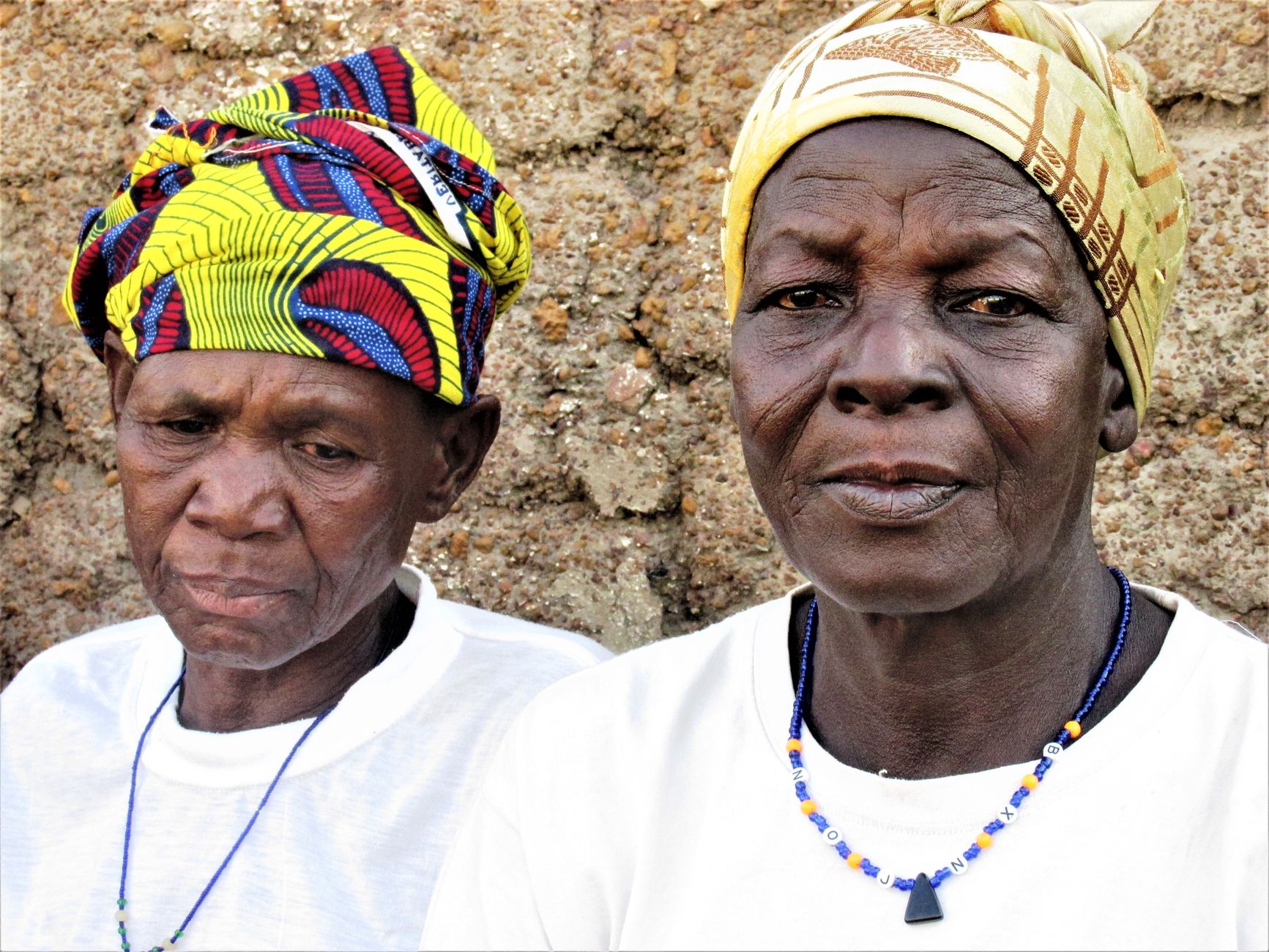
A monthly contribution of 5,000 F CFA. That is what Moussa Ilboudo, a healthcare worker in the private sector in Ouagadougou, was paying, without informing his wife. After his death at the end of 2025, Fatima Nanéma received a capital of nearly two million F CFA — an amount sufficient to launch a fruit and condiment business, pay rent, and fund the schooling of her three children. Her case illustrates both the promise of life insurance in Burkina Faso and its paradox: a product that works, but that few families know about or take out.
The void left by the death of the breadwinner
The reality on the other side — that of unprotected families — is striking. Adja Compaoré, 28 years old, lost her husband in January 2024, a taxi driver in Ouagadougou who died at 41 in an accident. The sole provider for a household with four children, he left no coverage. Two years later, in February 2026, the precariousness persists: the eldest child had to drop out of school to work in a restaurant in the Nioko1 neighborhood. A similar trajectory for Nadège Sanou, 23 years old, widowed since the end of 2025 with two young children — 4 years and 17 months old — who survives by doing laundry in homes in the Rayongo neighborhood, with no clear prospects for schooling her children.
These situations are not exceptions. In Burkina Faso, the disappearance of the head of the household frequently triggers a cascade: school dropouts, debt, sale of assets, resort to begging. The structure of households — often dependent on a single male income — amplifies vulnerability. The near-total absence of a public social safety net makes the question of private provident coverage all the more urgent.
The Afriques newsletter
- Free & no spam
- 1 email per day
- Unsubscribe in 1 click
An accessible product, two mechanisms
Life insurance is a contract by which a company undertakes to pay a defined capital to the beneficiaries designated by the policyholder, in the event of the latter’s death during the coverage period. According to Evariste Sauret, Deputy General Manager of Sanlam Allianz Burkina Faso, the beneficiary can be a named natural person or a legal entity.
Two formulas coexist on the Burkinabe market. In the defined benefit contract, the insured sets the capital they wish to pass on; the premium follows from this. In the defined contribution contract, the reverse applies: the insured indicates what they can pay, and the company calculates the corresponding coverage. Philippe Zombré, Technical Director of SUNU Assurances Vie Burkina Faso, specifies that some offers start from 5,000 F CFA in annual contributions — a deliberately low threshold to reach lower-income households.
Once a death has occurred, benefits are paid within a period of between 24 hours and 15 days, depending on the guarantees and the completeness of the file. This file includes the death certificate, a compensation certificate, and the beneficiaries’ identification documents. A certificate of heirship may be required, and additional documents are needed when beneficiaries are minors.
The capital paid out can be used to cover funeral expenses, ensure children’s return to school, repay a bank or microfinance loan, or simply keep the household afloat. Mariam Sawadogo, from the Tampouy neighborhood in Ouagadougou, benefited from this after her husband’s death in August 2023: the company paid her more than 3.5 million F CFA, making it possible to organize the funeral and fund the children’s schooling.
The company as a channel for distribution
The private sector is beginning to integrate life insurance into its social policies. In security companies, where occupational risk is high, collective subscription is seen as a strong signal. Issa Traoré, an employee of a private security company in Ouagadougou, testifies that the announcement of collective coverage was “very well received” by all workers, and that it strengthened their commitment to the employer. For companies, the tool serves both staff retention and social image.
This collective approach could constitute a lever for scaling up the product, by bypassing the barriers to individual subscription — perceived cost, lack of awareness, cultural resistance.
The barriers: between lack of awareness and cultural constraints
Despite accessible pricing and documented success stories, life insurance remains marginal in Burkina Faso. The Sidwaya press release notes “socio-cultural constraints” that make the product poorly received in certain circles. Anticipating one’s own death — or that of a loved one — in order to make it the subject of a commercial contract clashes with deeply rooted social and religious representations.
The press release does not quantify the penetration rate of life or death insurance in the country, nor the number of contracts in force. These missing data are nonetheless central to assessing the true scale of the problem and the sector’s capacity to address it. It is also unknown whether public mechanisms — subsidized micro-insurance, partnerships with community health mutuals — are being considered to support the spread of the product beyond the formal salaried population, which remains a minority in a country where the informal economy dominates.
The question of trust in insurers also remains open: payment timelines vary according to “the nature of the file,” a formulation vague enough to raise questions about the conditions for refusal or delay. No disputes, no cases of non-payment are mentioned — which does not mean they do not exist.
Source: Sidwaya (Burkina Faso), March 2026.
To go further
Read also
- Jet Energy, solar subsidiary of Jet Contractors, lists on the Casablanca Stock Exchange
- Cameroon currency in euros: FCFA → EUR converter 2026
- Morocco currency in euros: dirham → EUR converter 2026