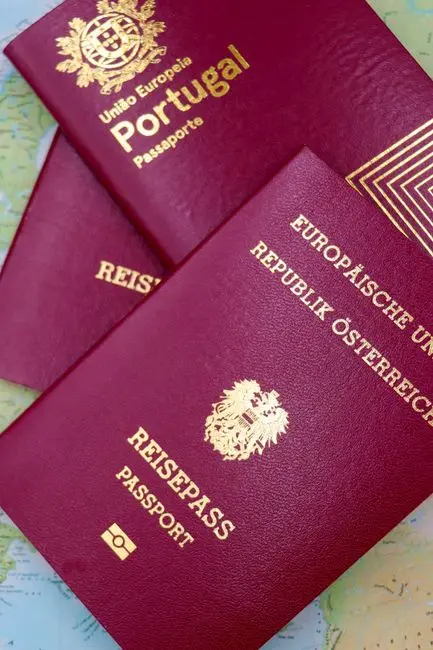


The figures are considerable. Between 2020 and 2024, 508,000 Moroccan nationals acquired citizenship in an OECD member country — an increase of 18.7% compared to the 428,000 naturalizations recorded over the 2015-2019 period. At the same time, 217,000 Moroccans emigrated to those same countries in 2024, up 7% year-on-year. These figures, drawn from the OECD’s “International Migration Outlook 2026” report, reveal less a phenomenon of flows than one of lasting settlement: the Moroccan diaspora is no longer merely relocating — it is naturalizing at an increasing rate.
A sixth-place global ranking reflecting structural pressure
With 217,000 new migrants to OECD countries in 2024, Morocco ranks sixth in the world among origin countries, ahead of Cuba, Romania, Pakistan and Venezuela. Only India, China, Colombia, Brazil and Mexico rank ahead of the kingdom. This ranking serves as a reminder that Moroccan migration is not the product of a one-off crisis, but of a deeply rooted demographic, economic and social dynamic.
The question raised by this ranking remains open: to what extent does this flow reflect a lack of opportunities in Morocco, or simply the accelerating effect of a diaspora that, through networks and family reunification, facilitates the settlement of those who follow? The OECD report does not take a position, nor does the source communiqué address the matter.
The Afriques newsletter
- Free & no spam
- 1 email per day
- Unsubscribe in 1 click
Spain, the primary destination — and naturalization hub
Spain alone accounts for the bulk of the flow: 133,100 new Moroccan migrants were recorded there in 2024, compared to 123,500 the previous year. The country now has 1.166 million residents born in Morocco, compared to around 700,000 in 2015. Morocco has become the top country of origin among foreign-born residents living in Spain, with a share of 12% out of a total of approximately 9.5 million people.
Spain also leads in Moroccan naturalizations: 42,910 in 2024, although this figure is down from 54,027 in 2023 and 55,463 in 2022. This slight decline warrants attention: it could signal an administrative tightening, a slowdown in pending applications, or simply a base effect following a peak in regularizations.
France, Italy, Belgium: three well-established Moroccan communities
| Country | Residents born in Morocco (2025) | Naturalizations 2024 | New migrants 2024 |
|---|---|---|---|
| Spain | 1 166 000 | 42 910 | 133 100 |
| France | 1 136 000 | 14 454 | 17 200 |
| Italy | 508 000 | 27 638 | 24 500 |
| Belgium | 249 000 | 5 647 | nd |
| Netherlands | 177 300 | 2 677 | nd |
In France, the flow of new arrivals remains stable — 17,200 in 2024 compared to 17,700 in 2023 — but the established community continues to grow: 1.136 million residents born in Morocco in 2025, compared to 955,000 in 2014, an increase of more than 180,000 over a decade. In Belgium, Morocco remains the top country of origin among foreign-born residents, accounting for 10% of the immigrant population. These growing stocks reflect less an acceleration of arrivals than a long-term cumulative effect that is unlikely to be reversed.
The drop in asylum applications: an ambiguous signal
The report records a marked contraction in asylum applications filed by Moroccans in several countries. In Spain, they fell from 6,440 in 2021 to 2,910 in 2025. In Austria, the drop is dramatic: from 6,800 applications in 2023 to 145 in 2025. In Slovenia, from 5,745 to 2,415 between 2022 and 2024.
This trend can be interpreted in several ways: a tightening of asylum policies across Europe, better guidance of Moroccan migrants toward legal channels, or stricter procedures that discourage applications deemed inadmissible from the outset. The Bulgarian exception — where Moroccans represented the top nationality of asylum seekers in 2025, ahead of Afghans and Syrians — suggests that migration routes are shifting without necessarily disappearing.
What the figures do not tell us
The accumulation of statistical data in the OECD report provides a precise picture of flows, but leaves several questions unanswered. The socio-professional profiles of Moroccan migrants to OECD countries are not detailed in this communiqué: are they predominantly low-skilled workers in seasonal agriculture, or is there a growing share of highly educated profiles attracted by the skilled migration programs that Europe is increasingly developing? The answer matters for assessing the scale of what some economists describe as “brain drain.”
Furthermore, while rising naturalization rates can be read as a sign of successful integration, they also raise the question of whether economic ties with Morocco will be maintained — in particular remittances, which constitute a significant macroeconomic resource for the country. Will Moroccans who have become Spanish, French or Italian continue to send as much foreign currency back to their country of origin? The report does not answer this.
Finally, the dual movement identified by the OECD — a tightening of entry and asylum conditions on one hand, and a proliferation of programs to attract skilled workers on the other — places Morocco in a delicate position: its most mobile and best-trained nationals are precisely those that Europe is actively seeking to recruit, at a time when Morocco itself aims to make its human capital a driver of development.
Source: OECD, “International Migration Outlook 2026” report, via Hespress FR, 2025.
Further reading
See also
- France visa from Africa 2026: price, fees and processing times (from 90 €)
- France visa from Côte d’Ivoire: steps, processing times and costs 2026
- France visa from Cameroon: steps, processing times and costs 2026