


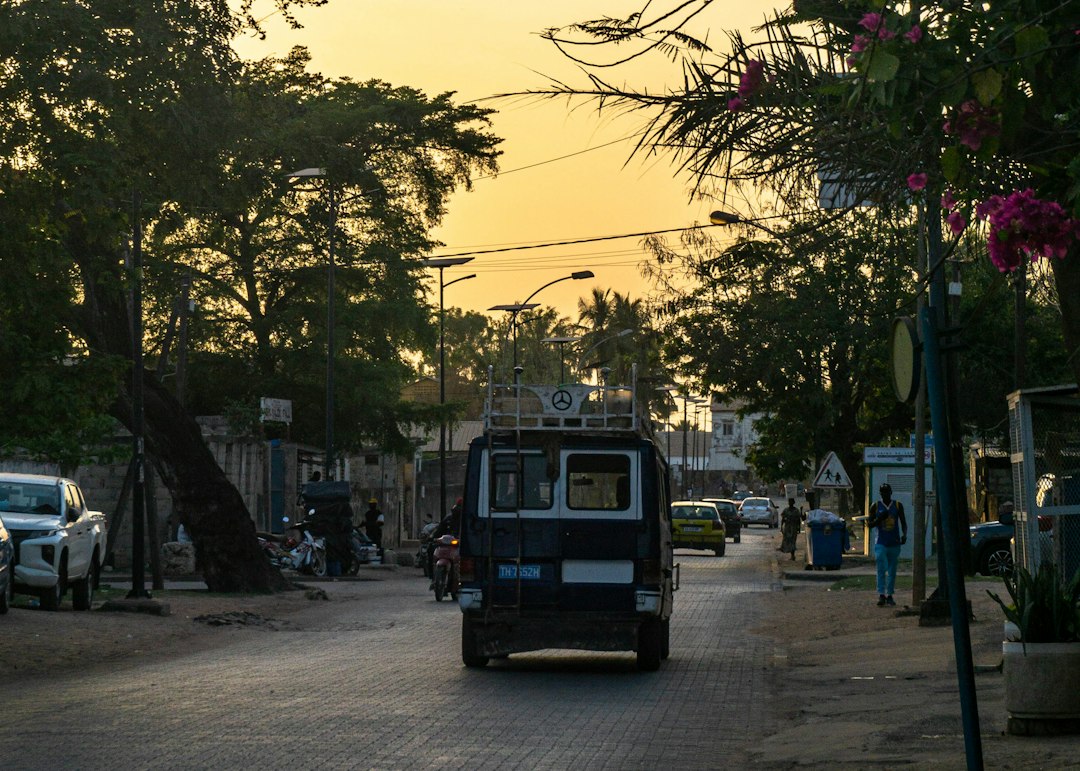
An accident every few hours, and one death every four days. The figures published by the National Road Safety Agency (ANASER) for the Louga region illustrate the scale of a structural problem that goes far beyond the scope of a simple half-yearly statistic.
An alarming half-year toll
Between January and June 2026, the Louga region, in northern Senegal, recorded 1 068 road accidents, according to Latyr Mané, director of development and cooperation at ANASER. The human toll stands at 41 deaths over this six-month period alone. The geographical distribution of incidents is telling: 687 accidents were recorded in areas under Gendarmerie jurisdiction — mainly interurban and rural routes — compared to 381 in areas under Police jurisdiction, corresponding more to urban settings. This predominance of accidents outside built-up areas points to high-speed behaviour on open roads as an aggravating factor.
Four out of ten vehicles in violation
To support its assessment, ANASER conducted, in partnership with the Gendarmerie, a joint inspection operation on several strategic routes: Louga-Kébémer, Louga-Sakal and Louga-Dahra. Of the 275 vehicles inspected, 115 violations were recorded — a non-compliance rate of over 41 %. Speeding and dangerous overtaking were among the most frequently identified offences.
This violation rate, recorded during a targeted operation and therefore possibly not representative of daily traffic flow, nonetheless illustrates the scale of the behavioural challenge. ANASER itself acknowledges that “human responsibility” is one of the main factors in the occurrence of accidents. Latyr Mané recalls the classic triptych: infrastructure, vehicle, behaviour — while noting that improvements have already been made on the RN2, with the reinforcement of vertical and horizontal signage.
“Jakarta” motorcycles in the crosshairs
The operation was not limited to road routes. ANASER also visited the Louga bus station to engage with transport operators and, notably, with motorcycle riders commonly known as “Jakarta”. This motorised two-wheeler, ubiquitous in secondary Senegalese cities, is often associated with a high accident rate due to the non-wearing of helmets and intensive use in dense urban environments. Awareness efforts focused on compliance with the Highway Code and the wearing of mandatory equipment: helmets, seatbelts, and visibility vests.
The educational approach is commendable, but several questions remain open. The press release does not specify whether judicial or administrative follow-up was given to the 115 recorded violations, nor what the reoffending rate is on these routes. One-off awareness campaigns, without regular checks and effective sanctions, generally struggle to durably change behaviour — a well-documented limitation in road safety policies in sub-Saharan Africa.
What the figures don’t say
Beyond the raw toll, the breakdown of victims — seriously injured, slightly injured, categories of road users involved — is not detailed in the published data. Yet this level of granularity determines the effectiveness of targeted measures. Likewise, a comparison with the first half of previous years would make it possible to determine whether the trend is rising, stable or declining — information absent from ANASER’s press release.
The agency announces its intention to “change the behaviour of road users”, but the tools being used — targeted inspections, awareness-raising at bus stations — remain conventional. The question of the mechanical condition of vehicles currently in circulation, the second factor of the triptych cited by ANASER itself, is not addressed in this operation.
Source: APS (Agence de Presse Sénégalaise), 29 September 2026.
Further reading
See also
- Women’s philanthropy in Côte d’Ivoire: three decades, three organisations, one shared priority for the vulnerable
- Senegal: one tonne of subsidised fertiliser seized at the Guinean border, the black market in question
- Breast cancer in Senegal: 2 220 new cases per year, LISCA mobilises for Octobre Rose
The Les Afriques newsletter
L’essentiel de l’économie africaine — guides, comparatifs et analyses — dans votre boîte mail chaque semaine.