



In 2026, Africa asserts itself more than ever as an indispensable player in the global economy. With 54 countries on contrasting trajectories, one and a half billion inhabitants and natural, human and technological resources of planetary scope, the continent is redefining global economic balances. This hub offers you the complete ranking of African GDPs, regional analyses, per capita comparisons and detailed country profiles to fully understand African economic power in 2026.
Africa GDP 2026: complete ranking and country-by-country analysis
The African continent represents today one of the most dynamic growth zones on the planet. With 54 sovereign states, colossal natural resources, a rapidly expanding population and emerging innovation hubs, Africa is gradually redrawing the global economic map. Understanding Africa GDP 2026 means grasping both the present realities and the future trajectories of a continent undergoing deep structural transformation.
This hub page is designed to be your single entry point into the wealth of African countries. Whether you are an investor, researcher, journalist, student or simply curious, you will find here a rigorous synthesis of the African GDP ranking, regional and global comparisons, per capita analyses, and detailed profiles of the continent’s most significant economies. Each section links to in-depth guides for a deeper understanding of African economic power in 2026.
The overall ranking of African GDPs in 2026
Who are the most powerful economies in Africa in 2026? Nigeria, Egypt and South Africa continue to dominate the podium in terms of nominal GDP, but the overall ranking holds surprises. Countries like Ethiopia, Tanzania and Morocco are advancing at a sustained pace, disrupting hierarchies that have long been fixed. The continent displays a striking heterogeneity: between regional heavyweights and small island economies, GDP gaps reach hundreds of billions of dollars. Understanding this ranking also means understanding the development models underpinning each trajectory — oil extractivism, extensive agriculture, digital services or tourism.
For an exhaustive view of the ranking, updated figures and an in-depth economic analysis, consult our dedicated article: Africa GDP 2026 ranking by country: figures and analysis.
Top 30 richest countries in Africa
Beyond the strict podium, the top 30 African economies offer a finer reading of continental balances. It reveals nations with very different profiles: oil economies such as Angola or Algeria, financial hubs like Mauritius or Kenya, agricultural powers like Ethiopia, and diversified economies like Morocco. This expanded ranking also highlights often underestimated emerging economies, such as Côte d’Ivoire, Tanzania or Ghana, which are asserting themselves as new regional engines. Analysing these top 30 positions makes it possible to identify the major geographical and sectoral logics that structure the continent’s wealth.
Find the complete, annotated and illustrated ranking in our guide: Top 30 richest countries in Africa 2026: GDP ranking.
GDP per capita in Africa: wealth as it is actually distributed
A country’s nominal GDP does not tell the whole story of its inhabitants’ prosperity. A state can display a high overall GDP while keeping a large share of its population in poverty, if wealth is concentrated or poorly redistributed. GDP per capita is therefore an indispensable complementary indicator for assessing the real standard of living. In Africa, this lens reveals a profoundly dual continent: the Seychelles, Mauritius or Libya outrank demographic giants such as Nigeria or the DRC. Population growth plays a central role — a GDP that grows more slowly than the population mechanically generates a decline in GDP per capita, a trap in which several African countries continue to be caught.
For a complete analysis of GDP per capita across the continent, consult: Richest African countries per capita 2026.
Nigeria, South Africa, Egypt: the leading trio decoded
Three countries have dominated African GDP for several decades, but their supremacy is far from homogeneous. Nigeria, the continent’s largest economy, relies on its hydrocarbons and a population of 220 million inhabitants, but suffers from chronic volatility linked to oil prices and still insufficient infrastructure. South Africa, the continent’s most industrialised economy, is going through a period of painful transitions — power cuts, structural unemployment — that are holding back its competitiveness. Egypt, for its part, is counting on the Suez Canal, tourism and an ambitious infrastructure programme to consolidate its position. These three heavyweights alone account for more than half of continental GDP.
Discover the summit duel in our analysis: Nigeria, South Africa, Egypt: who dominates African GDP?.
Africa’s GDP compared to France: an illuminating comparison
Comparing Africa’s cumulative GDP to that of France may seem iconoclastic, but the exercise is rich in lessons. France, the world’s sixth-largest economic power, generates on its own a GDP comparable — or even superior depending on the year — to that of all 54 African nations combined. This observation, often cited to illustrate global development inequalities, deserves to be nuanced: it also reflects decades of constraining monetary policies, imposed deindustrialisation and unfavourable terms of trade. The current trajectory nevertheless hints at a gradual rebalancing, as African economies gain in sophistication and added value.
For precise figures and a complete perspective: Africa GDP vs France: simple comparison and key figures.
Country profile: Morocco’s GDP in 2026
Morocco has established itself as one of the most stable and diversified economies on the African continent. With a GDP crossing significant thresholds in 2026, the Cherifian Kingdom benefits from a coherent long-term development strategy: industrial upgrading in automotive and aeronautics, continental leadership in phosphates, accelerated development of renewable energy, and positioning as a financial and logistics hub between Europe and sub-Saharan Africa. Hosting the 2030 World Cup and major infrastructure projects are amplifying this dynamic. Morocco illustrates what a structured economic policy can produce over the span of a generation.
Explore the Moroccan economy in detail: Morocco’s GDP in 2026: figures, key sectors and African comparison.
Country profile: Kenya’s GDP in 2026
Kenya occupies a unique place in the African economic landscape. The first economy of East Africa, it is above all recognised as the continent’s global laboratory for financial and digital innovation. M-Pesa, launched from Nairobi, revolutionised mobile finance long before the rest of the world understood what was at stake. Today, the Silicon Savannah attracts massive technological investment, while agriculture, tourism and services continue to structure growth. Kenya displays a remarkably balanced economic profile in 2026, even though challenges related to public debt and inequality persist. Its trajectory makes it a model studied well beyond Africa’s borders.
To find out everything about the Kenyan economy: Kenya’s GDP in 2026: figures, sectors and Silicon Savannah.
Country profile: Côte d’Ivoire’s GDP in 2026
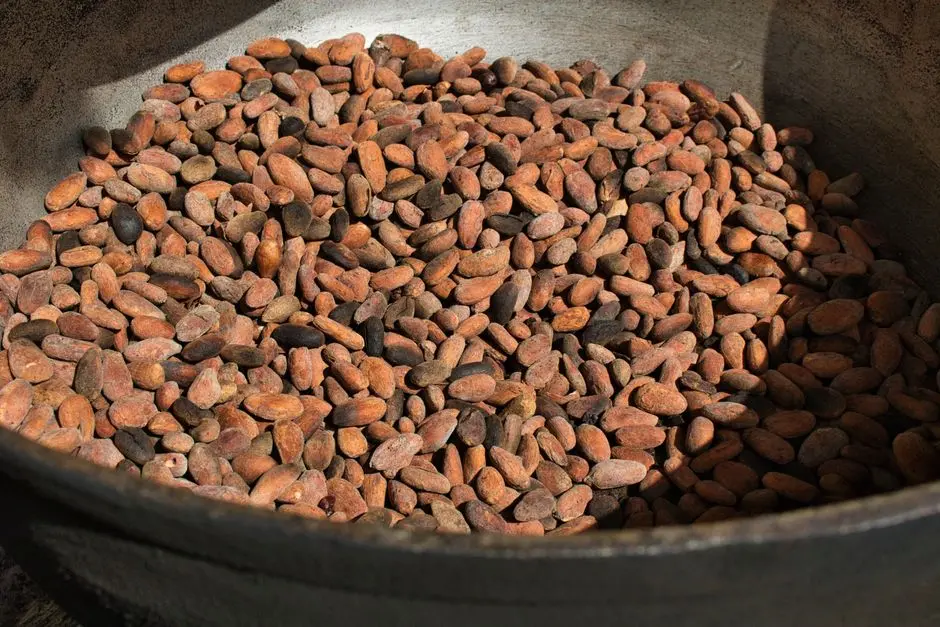
Côte d’Ivoire is unquestionably one of the most impressive economic success stories in sub-Saharan Africa over the past decade. The leading economy of UEMOA, it combines global dominance in the cocoa market — producing around 40 % of world output — with a financial services dynamism centred on Abidjan, the true economic capital of French-speaking West Africa. The Ivorian growth rate regularly ranks among the highest in the world, supported by massive public investment in infrastructure and a rapidly expanding middle class. In 2026, Côte d’Ivoire confirms its status as an indispensable regional hub.
Full analysis available here: Côte d’Ivoire’s GDP in 2026: figures, cocoa and Abidjan financial hub.
Country profile: Ghana’s GDP in 2026
Ghana is often presented as the symbol of African economic democracy — a country that has managed to combine political stability, democratic alternation and sustained growth. A gold producer for centuries, it added oil to its resource portfolio following the discovery of the Jubilee field in 2007. However, Ghana also went through a significant debt crisis in recent years, which tested the resilience of its model. In 2026, the country is entering a phase of economic reconstruction and diversification, seeking to reduce its dependence on raw materials in order to develop its services and light industry sectors.
Find our analysis of Ghana: Ghana’s GDP in 2026: gold, oil and economic democracy.
Country profile: Ethiopia’s GDP in 2026
With more than 125 million inhabitants, Ethiopia is the second most populous country in Africa and one of the fastest-growing economies in the world for two decades. This giant of the Horn of Africa relies on a diversified agriculture — coffee, flowers, cereals — and on an ambitious industrial programme embodied by the industrial parks of Hawassa and Adama. Massive investments in infrastructure, notably the Grand Ethiopian Renaissance Dam (GERD), testify to a long-term vision of regional power. Despite political turbulence linked to the Tigray conflict and pressures on external debt, Ethiopia maintains a growth trajectory that commands respect from economic analysts.
For a complete analysis: Ethiopia’s GDP in 2026: growth, agriculture and ambitions.
Country profile: Angola’s GDP in 2026
Angola is the third largest economy in sub-Saharan Africa, a position it owes essentially to its offshore oil reserves, among the most significant on the continent. After decades of civil war and a laborious reconstruction, the country has embarked on an ambitious economic diversification policy to reduce its dependence on hydrocarbons, which still account for the bulk of its export revenues. Agriculture, tourism and services are identified as the pillars of structural transformation. In 2026, Angola benefits from renewed attractiveness for foreign investors, particularly in infrastructure, agribusiness and renewable energy, even though governance and social inclusion challenges remain pressing.
The full analysis on Angola: Angola’s GDP in 2026: oil, reconstruction and diversification.
Country profile: Tanzania’s GDP in 2026
Tanzania embodies the stable and regular growth that many development economists call for in Africa. Without major oil resources — although offshore natural gas reserves are being developed — it relies on exceptional tourism (Kilimanjaro, Zanzibar, Serengeti), productive agriculture and public investment in infrastructure. The major East African Crude Oil Pipeline (EACOP) project linking Uganda to Tanga could transform the country’s economic landscape. In 2026, Tanzania displays one of the most enviable growth profiles in East Africa, confirming its role as a regional stabiliser.
Discover the Tanzanian economy in depth: Tanzania’s GDP in 2026: tourism, gas and stable growth.
Country profile: Algeria’s GDP in 2026
Algeria is the largest economy in North Africa in terms of surface area and one of the most significant by nominal GDP. Its hydrocarbon reserves — natural gas and oil — have long provided a comfortable rent, but also a structural vulnerability to shocks in global commodity markets. For several years, the Algerian government has expressed a desire to diversify the economy beyond extractive sectors, with investments in Saharan agriculture, tourism, technology and manufacturing industry. In 2026, rising energy prices have restored budgetary room for manoeuvre for Algiers, but the structural transformation of the economy remains an open and priority task.
For the complete analysis of the Algerian economy: Algeria’s GDP in 2026: figures, oil and diversification.
Beyond GDP: the Human Development Index in Africa
GDP, whether nominal or per capita, measures economic output but does not on its own account for the well-being of populations. The Human Development Index (HDI), which integrates life expectancy, education level and income per capita, offers a complementary and often more meaningful reading for citizens. In Africa, the HDI ranking differs significantly from the GDP ranking: the Seychelles, Mauritius and Algeria dominate this indicator, ahead of nominally more powerful economies such as Nigeria. This discrepancy raises questions about the quality of growth and the capacity of states to convert produced wealth into real human development.
To understand what the HDI reveals about African development, consult: Most developed countries in Africa 2026: HDI ranking. And for a substantive debate on measurement tools: GDP or HDI: how to measure the development of an African country?.
Finally, since the Seychelles, Mauritius and Algeria dominate the African HDI ranking, their respective recipes deserve to be examined in detail: Seychelles, Mauritius, Algeria: why do they dominate the African HDI?.
The poorest countries in Africa: understanding the gaps
Any honest analysis of African wealth must also face squarely the continent’s most fragile economies. Burundi, Malawi, the Central African Republic, Niger, Mozambique and the DRC regularly feature among the countries with the lowest GDP per capita in the world. These situations are not inevitable: they result from a combination of historical, geopolitical, climatic and institutional factors on which public policies, international aid and private investment can act. Understanding these gaps is essential to grasp the true complexity of Africa GDP 2026 and the challenges that remain to be met for inclusive continental development.
For a nuanced and respectful analysis of these situations: Poorest countries in Africa 2026: understanding the ranking.
All our guides on GDP and the wealth of African countries
This hub page is the starting point of a complete editorial cluster. Find below all our detailed guides to deepen every dimension of African economic wealth:
- Top 30 richest countries in Africa 2026: complete GDP ranking
- Africa GDP 2026 ranking by country: figures and analysis
- Richest African countries per capita in 2026
- Africa’s GDP compared to France: figures and perspective
- Nigeria, South Africa, Egypt: who dominates African GDP in 2026?
- Morocco’s GDP in 2026: figures, key sectors and African comparison
- Kenya’s GDP in 2026: figures, sectors and Silicon Savannah
- Côte d’Ivoire’s GDP in 2026: cocoa, services and Abidjan financial hub
- Ghana’s GDP in 2026: gold, oil and economic democracy
- Ethiopia’s GDP in 2026: growth, agriculture and continental ambitions
- Angola’s GDP in 2026: oil, reconstruction and economic diversification
- Tanzania’s GDP in 2026: tourism, natural gas and stable growth
- Algeria’s GDP in 2026: figures, oil rent and diversification
- Most developed countries in Africa in 2026: the complete HDI ranking
- Poorest countries in Africa in 2026: understanding and contextualising the ranking
- GDP or HDI: which indicator to choose for measuring development in Africa?
- Seychelles, Mauritius, Algeria: the secrets of their leadership in the African HDI
Conclusion
The GDP of African countries in 2026 depicts a continent in motion, driven by dynamics as diverse as they are complementary: oil powers seeking diversification, emerging economies capitalising on digital technology and agriculture, and small island states displaying remarkable living standards. While Nigeria, Egypt and South Africa retain their leadership, new players such as Ethiopia, Tanzania and Côte d’Ivoire are gradually redefining continental balances. To deepen your understanding of every dimension of this economic reality — global ranking, GDP per capita, regional analyses or country profiles — explore our dedicated guides. Les Afriques accompanies you in decoding, with figures to support, the African economic power of today and tomorrow.
Africa GDP 2026 ranking: key figures by economy
The Africa GDP 2026 ranking reveals a clear hierarchy dominated by three heavyweights: Nigeria at the top, followed by Egypt and South Africa. These three nations concentrate a significant share of continental wealth and constitute engines of attraction for regional investment. However, beyond this trio, the GDP ranking in Africa becomes more complex: Ethiopia, Algeria, Morocco and Tanzania are among the economies to watch, notably due to their growth rates and structural transformations.
To contextualise this African GDP ranking in 2026, it is essential to distinguish nominal GDP (which measures raw wealth) from GDP per capita (which reveals relative prosperity). A country may rank far down in the overall GDP ranking but display a higher income per capita thanks to its smaller population. This distinction clarifies the differences between absolute economic power and per capita development, two complementary dimensions for assessing the prospects of an African nation.
Consult our detailed analyses to explore the Africa GDP 2026 ranking country by country, with interactive maps, regional comparisons and growth projections.
The 30 most developed countries in Africa in 2026: criteria and ranking
When discussing the 30 most developed countries in Africa in 2026, it is essential to go beyond the sole measure of nominal GDP. Development is also assessed by GDP per capita, the human development index (HDI), economic diversification, and the quality of infrastructure. While Nigeria, Egypt and South Africa remain the continent’s economic giants, nations such as Botswana, Mauritius, Seychelles or Tunisia rank among the most advanced in terms of living standards and institutional stability. This distinction between raw economic power and genuine development reveals an Africa far more nuanced than a simple GDP ranking would suggest.
The ranking of the 30 most developed countries in Africa therefore integrates both the champions of economic growth (Ethiopia, Tanzania, Morocco, Côte d’Ivoire) and the mature economies, less spectacular but more stable (Mauritius, Seychelles, Gabon, Namibia). This panorama illustrates the diversity of African development models: from regional financial hubs to agricultural powers, through emerging digital economies and tourism centres. Consulting this complete and nuanced ranking enables a better understanding of the real development trajectories of the continent and the regions driven by the strongest dynamics.
The 30 most developed countries in Africa: beyond nominal GDP
Measuring a country’s development cannot be reduced to its nominal GDP. The 30 most developed countries in Africa are distinguished by multidimensional criteria: GDP per capita, human development index (HDI), economic diversification, infrastructure, access to education and healthcare, institutional stability. On this broader basis, the ranking holds surprises. While Nigeria dominates in economic mass, Mauritius, the Seychelles or Botswana excel in GDP per capita and quality of life. Nations such as Morocco, Kenya or Côte d’Ivoire are asserting themselves as poles of structural transformation, while Ethiopia and Tanzania are building more inclusive mass economies.
This more nuanced perspective on development reveals that the 30 most advanced African economies do not form a homogeneous group. Some are driven by mining or oil extraction, others by tourism, financial services or modern agriculture. South Africa combines industrial power and wealth concentration, while Morocco diversifies its growth sources around green energy, phosphate and services. Understanding these 30 development models means grasping the plural pathways of the continent’s emergence.
To explore the detailed profile of each economy, their competitive strengths and development challenges, consult our exhaustive and annotated ranking: Top 30 richest countries in Africa 2026: GDP ranking.
African economies to watch in 2026: the rising outsiders
Beyond the established giants — Nigeria, Egypt, South Africa — several mid-sized economies are emerging as the big surprises of 2026. Côte d’Ivoire maintains a growth rate above 6 % for the seventh consecutive year, driven by cocoa, infrastructure and a booming banking sector. Ethiopia, despite the aftermath of the Tigray conflict, confirms its status as a future East African locomotive thanks to its manufacturing industry and its massive population. Tanzania, for its part, relies on tourism, natural gas and an ambitious public investment policy to knock on the doors of the continental top 10. More unexpectedly, Senegal is entering a new economic era with the ramp-up of its offshore oil and gas production, repositioning the country in the West African regional ranking. Finally, the Democratic Republic of Congo, long underestimated despite its colossal mineral resources (cobalt, coltan, copper), is initiating an economic formalisation dynamic that is beginning to be reflected in its GDP indicators. These outsiders illustrate a fundamental reality: the African ranking is more fluid than ever, and yesterday’s hierarchies are no longer those of tomorrow.
Africa vs the world: what share of global GDP does the continent represent in 2026?
One question systematically arises when analysing Africa’s GDP: what is its real place in the global economy? In 2026, the African continent represents approximately 3.5 % of world nominal GDP, a share still modest relative to its demographic weight — nearly 18 % of the world’s population. This gap between economic weight and human weight is precisely what defines the continent’s structural potential. By comparison, the United States alone accounts for nearly 25 % of world GDP, and China around 18 %. The European Union, with a population comparable to that of sub-Saharan Africa, concentrates nearly 17 % of global wealth. This imbalance is explained by decades of under-industrialisation, institutional instability, tax evasion and unfavourable terms of trade. However, positive signals are emerging: the African Continental Free Trade Area (AfCFTA), fully operational since 2024, is beginning to stimulate intra-African trade, which historically represented less than 15 % of the continent’s total trade — compared to more than 60 % in Europe. If the projections of the IMF and the African Development Bank are confirmed, Africa could raise its share of world GDP to more than 5 % by 2035, provided it deepens its regional integration, diversifies its economies and captures more added value from its own resources.
Frequently asked questions
Which country has the highest GDP in Africa in 2026?
Nigeria remains the leading African economy in 2026 in terms of nominal GDP, ahead of Egypt and South Africa. With a GDP exceeding 500 billion dollars, it relies primarily on its oil revenues and a population of more than 220 million inhabitants, making it the continent’s largest consumer market.
Which African country has the highest GDP per capita?
The Seychelles display the highest GDP per capita in Africa, followed by Mauritius and Equatorial Guinea. These small states benefit respectively from highly developed tourism economies and oil revenues concentrated on a small population, which mechanically inflates the per capita indicator.
What is the average economic growth of Africa in 2026?
In 2026, the average economic growth of the African continent is estimated at between 3.5 % and 4.5 % according to IMF and African Development Bank projections. This average nevertheless masks strong disparities: some countries such as Ethiopia or Senegal display rates above 6 %, while fragile economies stagnate or even contract.
Why is the DRC’s GDP low despite its natural wealth?
The Democratic Republic of Congo possesses one of the richest subsoils in the world — cobalt, coltan, gold, diamonds — but its GDP per capita remains one of the lowest on the continent due to decades of armed conflict, institutional instability and near-absent infrastructure. This paradox illustrates the phenomenon known as the “resource curse”, where natural abundance benefits human development little in the absence of solid governance.
How does African GDP compare to the rest of the world?
The entire African continent represents approximately 3 to 4 % of world GDP, a figure still modest given its 1.4 billion inhabitants and its immense resources. However, with sustained demographic growth, an expanding middle class and growing investment in infrastructure and digital technology, Africa is set to carry more weight in the global economy over the next two decades.
To go further: Investing in Africa: country-by-country guide · Investing in real estate in Africa.
Read also
- Angola’s GDP in 2026: oil, reconstruction and diversification
- Ghana’s GDP in 2026: gold, oil and economic democracy
- Tanzania’s GDP in 2026: tourism, gas and stable growth
- Ethiopia’s GDP in 2026: growth, agriculture and ambitions
- Algeria’s GDP in 2026: figures, oil and diversification
- Nigeria, South Africa, Egypt: who dominates African GDP?
Total GDP vs GDP per capita: which reading should be preferred?
The answer to the question “which are the richest countries in Africa in 2026?” depends above all on the indicator chosen. Total GDP (or nominal GDP) measures the raw economic weight of a country — its productive capacity, its attractiveness for investors, its regional influence. GDP per capita, on the other hand, relates this wealth to the population and provides an approximation of the real standard of living. These two readings can lead to radically different rankings: Nigeria, a demographic giant with 200 million inhabitants, displays a GDP per capita well below that of Libya or Mauritius, whose populations are incomparably smaller. In 2026, the large African economies remain concentrated around a few poles — South Africa, Egypt, Nigeria, Algeria, Morocco — but the hierarchy is rapidly reshaping under the effect of demography, raw materials, infrastructure and the rise of digital services.
Table: Top 30 African countries by nominal GDP in 2026
The table below presents the 30 leading African economies in 2026, ranked by nominal GDP, with the corresponding GDP per capita and the main drivers of their economy. These data allow an at-a-glance understanding of the diversity of development models at work on the continent.
| Rank | Country | Nominal GDP 2026 | GDP/capita | Main economic drivers |
|---|---|---|---|---|
| 1 | Afrique du Sud | 480,0 Md $ | 7 503 $ | Diversified economy, finance and industry |
| 2 | Égypte | 429,6 Md $ | 3 904 $ | Demographic weight, industry and major projects |
| 3 | Nigeria | 377,4 Md $ | 1 556 $ | Massive domestic market, oil and services |
| 4 | Algérie | 317,2 Md $ | 6 628 $ | Hydrocarbons and domestic demand |
| 5 | Maroc | 194,3 Md $ | 5 107 $ | Export industry, tourism, finance |
| 6 | Angola | 152,4 Md $ | 3 754 $ | Oil and economic reconstruction |
| 7 | Kenya | 147,3 Md $ | 2 714 $ | Services, technology and regional logistics |
| 8 | RD Congo | 123,4 Md $ | 1 122 $ | Mining, population and domestic potential |
| 9 | Éthiopie | 121,5 Md $ | 1 081 $ | Rapid growth, industry and agriculture |
| 10 | Ghana | 118,3 Md $ | 3 314 $ | Gold, cocoa, services |
| 11 | Côte d’Ivoire | 112,1 Md $ | 3 313 $ | Agro-industry, port and consumption |
| 12 | Tanzanie | 94,9 Md $ | 1 362 $ | Mining, tourism, urban growth |
| 13 | Ouganda | 73,4 Md $ | 1 476 $ | Agriculture, energy, services |
| 14 | Cameroun | 65,1 Md $ | 2 125 $ | Central Africa hub |
| 15 | Tunisie | 60,7 Md $ | 4 893 $ | Industry, services and exports |
Sources: IMF, World Bank, 2026 projections. GDP per capita data are calculated on the basis of estimated populations for the year 2026.
Read also
- Angola’s GDP in 2026: oil, reconstruction and diversification
- Ghana’s GDP in 2026: gold, oil and economic democracy
- Tanzania’s GDP in 2026: tourism, gas and stable growth
- Ethiopia’s GDP in 2026: growth, agriculture and ambitions
- Algeria’s GDP in 2026: figures, oil and diversification
- Kenya’s GDP in 2026: figures, sectors and Silicon Savannah
Read also
Read also
Total GDP or GDP per capita: why the indicator changes everything
Comparing African economies requires a fundamental methodological choice: should one retain the total nominal GDP, which measures the raw economic weight of a country, or the GDP per capita, which reflects the real standard of living of its population? In 2026, the answer to this question shifts entire nations within the hierarchy. Nigeria, a demographic giant of 270 million inhabitants, displays a nominal GDP higher than that of Algeria, but its GDP per capita remains well below. Conversely, countries with small populations such as Mauritius or Gabon appear at the top of the per capita ranking while carrying little weight in absolute volume. To assess the power of a state, total GDP is preferred; to judge development and living standards, GDP per capita is indispensable.
Top 30 African countries by nominal GDP in 2026: the complete table
The table below presents the 30 leading African economies by nominal GDP in 2026, accompanied by GDP per capita and the main drivers of their activity. These data allow both the economic weight of each country and the structural foundations of their wealth to be grasped at a glance.
| Rank | Country | Nominal GDP 2026 | GDP/capita | Main economic drivers |
|---|---|---|---|---|
| 1 | Afrique du Sud | 480,0 Md $ | 7 503 $ | Diversified economy, finance and industry |
| 2 | Égypte | 429,6 Md $ | 3 904 $ | Demographic weight, industry and major projects |
| 3 | Nigeria | 377,4 Md $ | 1 556 $ | Massive domestic market, oil and services |
| 4 | Algérie | 317,2 Md $ | 6 628 $ | Hydrocarbons and domestic demand |
| 5 | Maroc | 194,3 Md $ | 5 107 $ | Export industry, tourism, finance |
| 6 | Angola | 152,4 Md $ | 3 754 $ | Oil and economic reconstruction |
| 7 | Kenya | 147,3 Md $ | 2 714 $ | Services, technology and regional logistics |
| 8 | RD Congo | 123,4 Md $ | 1 188 $ | Mining, critical natural resources |
| 9 | Éthiopie | 118,7 Md $ | 914 $ | Agriculture, construction and demographic boom |
| 10 | Ghana | 88,2 Md $ | 2 615 $ | Gold, oil, cocoa and financial services |
| 11 | Tanzanie | 85,4 Md $ | 1 290 $ | Agriculture, tourism and natural gas |
| 12 | Côte d’Ivoire | 78,1 Md $ | 2 717 $ | Cocoa, financial hub and infrastructure |
| 13 | Libye | 72,0 Md $ | 9 890 $ | Hydrocarbons (production recovering) |
| 14 | Cameroun | 51,3 Md $ | 1 780 $ | Oil, agriculture and services |
| 15 | Sénégal | 43,5 Md $ | 2 431 $ | Oil, offshore gas and services |
| 16 | Tunisie | 42,8 Md $ | 3 412 $ | Tourism, manufacturing industry |
| 17 | Ouganda | 42,1 Md $ | 873 $ | Agriculture and emerging oil |
| 18 | Zambie | 30,4 Md $ | 1 534 $ | Copper and agriculture |
| 19 | Zimbabwe | 28,9 Md $ | 1 694 $ | Agriculture and mining |
| 20 | Mali | 23,1 Md $ | 972 $ | Gold and agriculture |
| 21 | Mozambique | 21,7 Md $ | 606 $ | Natural gas and mineral resources |
| 22 | Madagascar | 18,9 Md $ | 590 $ | Agriculture, textiles and tourism |
| 23 | Gabon | 18,2 Md $ | 7 450 $ | Oil, manganese and forests |
| 24 | Namibie | 16,7 Md $ | 5 840 $ | Mining, fishing and tourism |
| 25 | Botswana | 15,8 Md $ | 5 930 $ | Diamonds and financial services |
| 26 | Bénin | 19,4 Md $ | 1 374 $ | Transit trade, cotton and the port of Cotonou |
| 27 | Congo-Brazzaville | 14,2 Md $ | 2 273 $ | Oil and tropical forests |
| 28 | Rwanda | 13,9 Md $ | 940 $ | Services, tourism and knowledge economy |
| 29 | Mauritanie | 11,5 Md $ | 2 280 $ | Iron ore, fishing and offshore gas |
| 30 | Maurice | 14,6 Md $ | 11 350 $ | Finance, tourism and digital economy |
Sources: IMF, World Bank, 2026 projections. Figures are estimates subject to change during the year.
Which country has the highest GDP in Africa in 2026?
In 2026, Nigeria remains the leading African economy in terms of nominal GDP, ahead of Egypt and South Africa. Nigeria exceeds 500 billion dollars in GDP, driven by its oil sector, its diaspora and a domestic market of more than 220 million consumers. However, in GDP per capita, other countries such as the Seychelles, Mauritius or South Africa rank significantly above the Nigerian giant.
What is the difference between nominal GDP and GDP in purchasing power parity (PPP) for African countries?
Nominal GDP measures a country’s wealth in current dollars, at the official exchange rate. GDP in purchasing power parity (PPP) corrects this figure by taking into account local cost of living. For African countries, PPP GDP is often significantly higher than nominal GDP, because goods and services are generally cheaper there than in Europe or North America. Thus, countries such as Ethiopia or the Democratic Republic of Congo, modest in nominal GDP, see their rank improve notably in PPP rankings, which better reflects the real standard of living of their populations.