


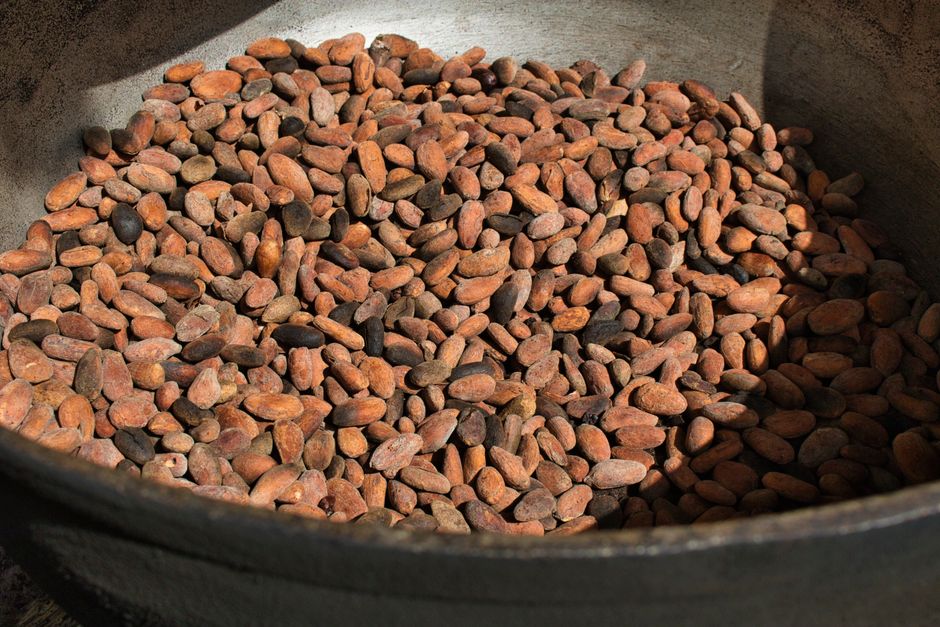
The Nawa region, the beating heart of Ivorian cocoa production, is preparing to officially enter the 2026-2027 campaign. The regional delegation of the Coffee-Cocoa Council of Soubré has announced a seven-stage tour across several sub-prefectures, beginning on 30 September 2026 in Soubré, before spreading to Méagui, Buyo, Guéyo, Dabouyo, Okrouyo and Oupoyo through to 15 October.
A tight schedule, a logic of proximity
The programme established by the regional delegation is dense: seven localities in less than three weeks, with stops scheduled on 5, 7, 9, 13, 14 and 15 October 2026. This pace reflects a desire for territorial grounding, as the Nawa region concentrates a significant share of national Ivorian production — ranked first in the world for cocoa. Involving village chiefs, administrative authorities and leaders of producer organisations in these meetings follows a cascading dissemination logic: information must reach the individual producer before the campaign is fully operational.
Doumbia Siaka, regional delegate of the Coffee-Cocoa Council of Soubré, issued an explicit call for collective mobilisation: “I invite all stakeholders in the coffee-cocoa sector, in particular producers, leaders of professional organisations and local authorities, to mobilise strongly to take part in this tour”. The wording suggests that grassroots participation is not yet assured — a recurring challenge in a sector where information takes time to reach the most isolated farms.
What the tour says — and what it does not say
According to the Coffee-Cocoa Council, the meetings are intended to “exchange in the field, gather the concerns of stakeholders and inform them about the orientations and provisions relating to the new campaign”. The formulation is deliberately open-ended. It provides no information on the central elements that producers expect as a priority: the guaranteed farmgate price for the 2026-2027 campaign, the conditions for access to subsidised inputs, marketing arrangements, or any adjustments linked to the requirements of the European regulation on deforestation, which weighs on exports to the European Union.
This silence is not trivial. The Ivorian coffee-cocoa sector is going through a significant period of regulatory and commercial transformation. Producers in the Nawa, often organised into cooperatives, are directly exposed to fluctuations in the global market and to the new traceability constraints imposed by importing markets. An awareness tour without any announcement of prices or concrete measures risks being perceived as insufficient by stakeholders accustomed to judging the campaign by the yardstick of expected net income.
The Nawa, a barometer of the sector
Choosing Soubré as the starting point is not without significance: the Nawa ranks among the most productive cocoa-growing regions in Côte d’Ivoire. The mobilisation of local stakeholders there partly conditions the success of the national harvest. The fact that the regional delegation itself is organising this tour — rather than waiting for top-down instructions — indicates a degree of operational autonomy on the part of the Coffee-Cocoa Council at the decentralised level, which can facilitate the adaptation of messages to local realities.
It remains to be seen whether the concerns raised during these meetings will find an echo in the national orientations of the sector, or whether the exercise remains essentially informative in one direction only. It is at this level that the real scope of the initiative will be measured in the weeks following the tour.
Source: AIP – Agence Ivoirienne de Presse, 29 September 2026.