


A banked diaspora, a major macroeconomic weight
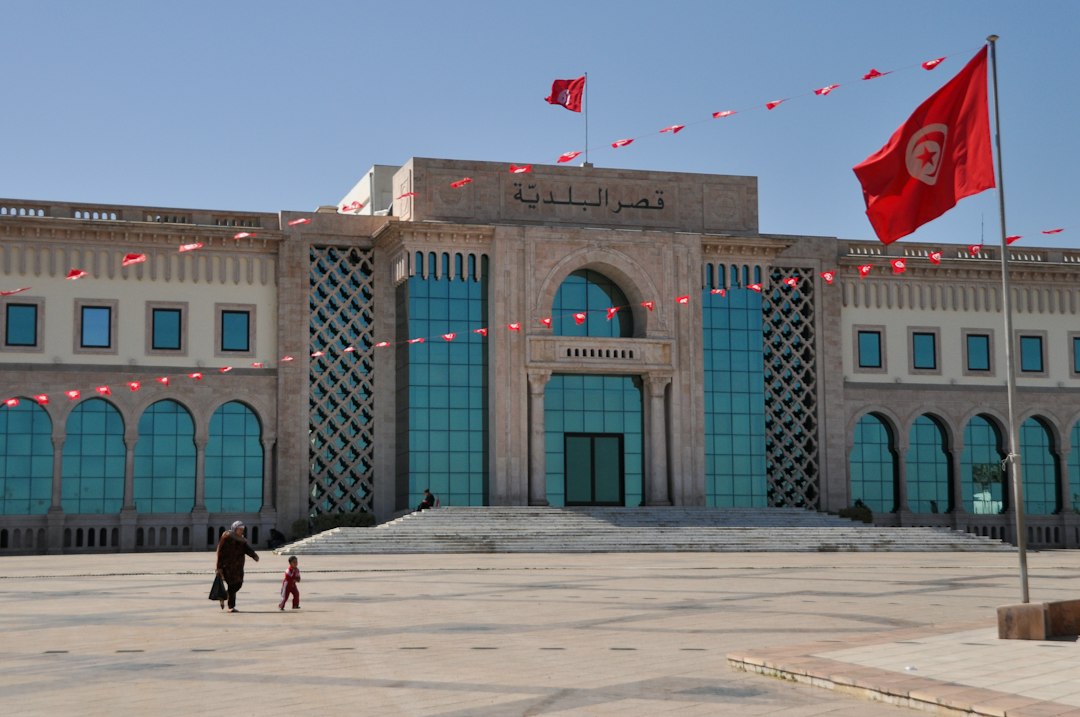
Tunisia has approximately 1.8 million nationals abroad, 84.8% of whom are settled in Europe (France leading), according to the Office des Tunisiens at l’Étranger (OTE) and the statistical migration report. Their remittances have become a leading source of foreign currency: according to data from the Banque centrale de Tunisie (BCT), transfers from Tunisians residing abroad (TRE) reached 8.761 billion dinars over the full year 2025, compared to 8.262 billion in 2024, representing a growth of approximately 6%. These flows rival tourism revenues and directly contribute to covering the country’s external financing needs. Opening a bank account in Tunisia is therefore, for the diaspora, an economically structural act — but it is governed by a strict foreign exchange framework.
The legal framework: non-resident, convertible dinar accounts and foreign currency accounts
The “non-resident” status is defined by the Code des changes et du commerce extérieur (law n°76-18 of 21 January 1976). A Tunisian is considered non-resident if they have been living abroad for at least 383 days out of the last 365 days, with a centre of activity outside Tunisia. This status determines access to foreign currency accounts or convertible dinar accounts.
Two instruments coexist:
- The convertible dinar account (or “foreign convertible dinar account”): denominated in dinars but freely convertible, it allows holders to access their assets in Tunisia or abroad, make transfers abroad and withdraw foreign currency. It can never have a negative balance.
- The foreign currency account: denominated in euros, dollars or other currencies, it allows holders to keep their assets without exchange rate risk and to invest them.
Accounts can be funded by foreign banknote deposits declared at customs, transfers from abroad, transfers from another foreign currency or convertible dinar account, or interest earned. Any other credit entry is subject to BCT authorisation.
A major reform came into effect on 1 January 2026 through the Loi de Finances 2026: Tunisian residents can now open a foreign currency or convertible dinar account without prior BCT authorisation, the measure applying to accounts opened with authorised intermediaries. For non-residents (diaspora), opening such accounts was already possible without prior authorisation. At the same time, a draft law (n°2025/115, registered in October 2025) aims to replace the 1976 Code des changes with a modernised and liberalised text.
The main banks for the diaspora
Four institutions dominate the offering for TRE, complemented by other players.
BIAT (Banque Internationale Arabe de Tunisie)
The country’s leading private bank, listed on the Bourse de Tunis, BIAT achieved a net banking income of 1,479.7 million dinars in 2024, with 20,814 million dinars in customer deposits. It was named “Best Bank in the Foreign Exchange Market in Tunisia 2025” by Global Finance. Its dedicated offering, the “Tounessna” convertible dinar account, offers a return ranging from TMM − 2% to TMM − 1% depending on the average balance, a tax exemption on interest, and remote opening via MyBIAT.
Attijari Bank Tunisie
The Tunisian subsidiary of the Moroccan group Attijariwafa bank has a comprehensive TRE portal (“Dima Tounsi”): 100% online account opening, transfers via e-transfert, Western Union and Al Ansari Exchange (with no fees on certain Middle East flows), and the “Dari Fi Bledi” home loan with an online agreement in principle. It also applies a 50% reduction on the commission for foreign banknote deposits.
BNA (Banque Nationale Agricole)
A historic public bank, BNA offers the foreign currency or convertible dinar account for non-resident natural or legal persons, Tunisian or foreign. Key features: no exchange rate risk, interest exempt from income tax, remote management via BNA eBanking and mBanking. BNA recorded one of the strongest increases in collected savings among listed banks in 2025 (+28.9%).
Amen Bank
Amen Bank explicitly targets TRE with its “Pack Watani Plus” (national and international), its “Credim Watani” home loan, and a 100% online bank (Amen First Bank) enabling remote account opening. It relies on the Western Union and Ria networks for fast transfers and provides dedicated advisors for TRE in branches.
Other institutions complement the offering: STB (foreign currency account without BCT authorisation), Wifak Bank (foreign currency account with remote opening and an international card) and Banque de Tunisie.
Comparison of TRE offerings
| Bank | Diaspora / TRE account | Foreign currency / convertible dinars | Remote opening |
|---|---|---|---|
| BIAT | Tounessna account | Convertible dinars | Yes (MyBIAT) |
| Attijari Bank | Dima Tounsi offering | Foreign currency + dinars | Yes (100% online) |
| BNA | Foreign currency account | Foreign currency + convertible dinars | Online management (eBanking) |
| Amen Bank | Pack Watani Plus | Foreign currency + dinars | Yes (Amen First Bank) |
| STB | Foreign currency account | Foreign currency | Not specified |
| Wifak Bank | TRE foreign currency account | Foreign currency + convertible dinars | Yes |
Procedures for non-residents: documents and steps
To open an account as a TRE, the documents generally required are as follows:
- Passport or national identity card (CIN);
- Consular card issued by the Tunisian authorities;
- Proof of residence and paid employment abroad (work contract, residence permit, proof of address);
- For foreign banknote deposits: an import declaration endorsed by customs.
Several banks allow remote opening (BIAT, Attijari, Amen, Wifak), avoiding the need to visit a branch in person. BCT declaration is no longer a prerequisite for non-residents opening a foreign currency or convertible dinar account; however, any account funding outside authorised sources (transfers from abroad, other foreign currency accounts, declared banknotes) remains subject to BCT authorisation.
Repatriation of funds and foreign exchange controls
The principle of Tunisian foreign exchange control is cession: outside regulatory exceptions, foreign currency income of residents must be converted into dinars and used to replenish BCT reserves. For the diaspora, the foreign currency or convertible dinar account is precisely the legal route for retaining and re-exporting their assets: transfers abroad, foreign currency withdrawals and dinar payments are authorised up to the account balance, without prior authorisation.
On the other hand, money held in a simple dinar current account (resident account) is much more difficult to repatriate. Customs also regulates the physical transport of foreign currency: any import or export of foreign currency with a value equal to or greater than 20,000 dinars must be declared at customs (order of 24 July 2019), with the declaration on return subject to a fiscal stamp of 10 dinars. Non-resident travellers may only re-export in banknotes the equivalent of 5,000 dinars without an entry declaration, and up to 30,000 dinars if they declared the currency upon entry.
Mobile money and alternatives: a still-emerging ecosystem
To be honest: Tunisian mobile money remains underdeveloped at the international level, and cash still dominates (approximately 70% of e-commerce orders are paid on delivery). The landscape is nonetheless evolving rapidly: mobile payments surged by 81% in 2025 to reach 8.4 million transactions (1,769 million dinars), driven by electronic wallets — approximately 371,000 in the first quarter of 2025 — and players such as Flouci, D17 (La Poste) and e-Dinar, united since May 2026 under the common brand TUNPAY promoted by the BCT (16 payment service providers).
For the diaspora, these solutions are mainly used for transfers to family and local payments, not for holding savings in foreign currency. Major international platforms remain limited: PayPal operates in a restricted capacity, Stripe is absent, and the BCT banned the use of cryptocurrencies as a means of payment as early as 2018 (a regulated relaxation is under discussion). Traditional transfer channels (Western Union, Ria, Al Ansari, bank e-transfer) remain the norm.
Fees and savings returns
Tunisian bank pricing is regulated by the BCT. As an indication, BNA charges 18 dinars per quarter for cheque account maintenance, 30 dinars per quarter for a current account and 6 dinars per quarter for a special savings account; Attijari Bank lists 10 dinars for the maintenance of a convertible dinar account. Since February 2024, BCT circular n°2024-3 caps account maintenance fees at 3 dinars per month for individuals whose net monthly income is less than or equal to 1,500 dinars, and has reduced transfer commissions for individuals by 30%.
In terms of returns, the BCT set the savings rate (TRE) at 6.5% per year from 1 April 2025 (circular n°2025-07), then lowered it to 6% in its decision of 30 December 2025. Demand deposits and dinar placements of less than three months are capped at 2%, while foreign convertible dinar accounts earn a minimum of TMM minus 2 points. The BCT’s key rate has stood at 7% since January 2026, after two cuts of 50 basis points in 2025, and the TMM was around 6.99% in February 2026.
Risks and points to watch
- Exchange rate risk: a convertible dinar account exposes the holder to the dinar; a foreign currency account neutralises this but remains subject to Tunisian regulations. As of 10 September 2026, 1 euro was worth approximately 3.38 dinars and 1 dollar approximately 2.91 dinars.
- Regulatory framework: the 1976 Code des changes, still in force pending the new text, imposes formalities (customs declaration, BCT authorisation for certain transactions).
- Inflation: average inflation fell back to 5.3% in 2025 (compared to 7% in 2024), but erodes the real return on dinar investments.
- Liquidity and accessibility: a non-resident account can never have a negative balance, and some services require a physical presence or regularly renewed supporting documents.
FAQ
Can a Tunisian living abroad open a foreign currency account without BCT authorisation?
Yes. The foreign currency or convertible dinar account is accessible to non-resident natural persons, Tunisian or foreign, without prior BCT authorisation. Since 1 January 2026, this facility has even been extended to Tunisian residents via the Loi de Finances 2026. Only certain credit entries outside authorised sources remain subject to authorisation.
What documents are needed to open an account as a TRE?
Generally: a passport or CIN, the consular card, proof of residence and paid employment abroad (residence permit, work contract, proof of address). A customs-endorsed import declaration is required to deposit foreign banknotes. Several banks (BIAT, Attijari, Amen, Wifak) accept remote opening.
Can funds be freely repatriated from Tunisia abroad?
Yes, provided you hold a foreign currency or convertible dinar account: transfers abroad and foreign currency withdrawals are authorised up to the account balance, without prior authorisation. However, funds held in a resident dinar current account are much more difficult to transfer abroad, as foreign exchange controls remain based on the principle of currency cession.
Also read: Our complete guide to banks and fintechs in Africa, country by country (2026).