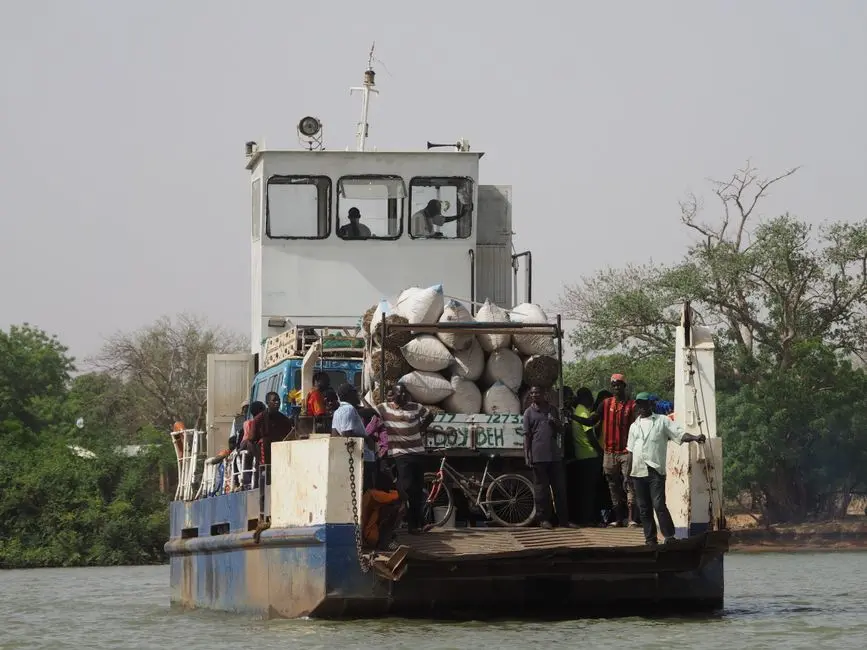



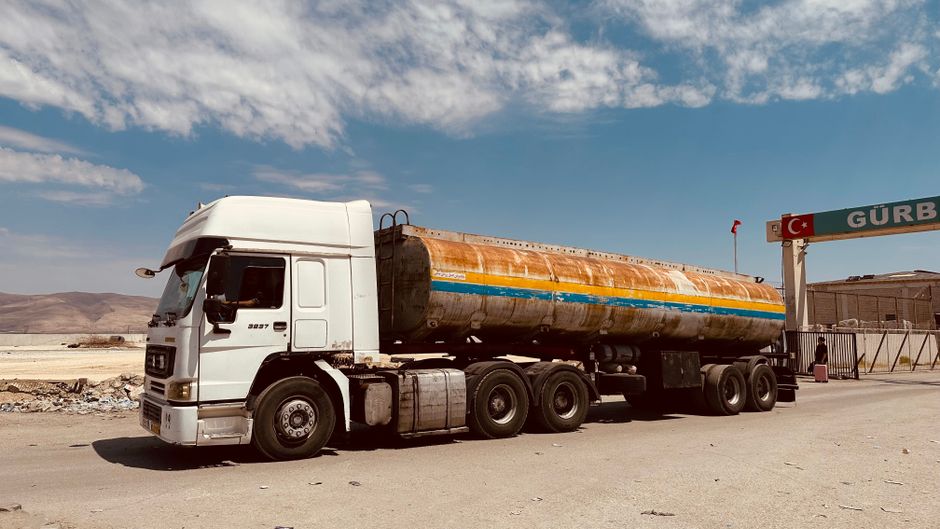
At the border between Mali and Senegal, a truck loaded with fabrics and cereals can wait up to 72 hours before being authorized to cross — when it doesn’t turn back, discouraged by a succession of unofficial fees. Meanwhile, a few kilometers away, traders use laterite tracks well known to insiders to transport the same goods without ever encountering a customs officer. This is the reality of regional trade in West Africa in 2026: between proclaimed ambitions of economic integration and persistent obstacles on the ground, small and medium-sized enterprises (SMEs) have developed a consummate art of cross-border resourcefulness.
West Africa, a still fragmented economic space
Despite decades of declarations of intent and the existence of solid regional institutions such as ECOWAS and UEMOA, the West African economic space remains deeply fragmented. In 2026, customs tariffs between Mali, Senegal and Côte d’Ivoire continue to weigh heavily on formal trade, particularly for SMEs that do not have the resources needed to navigate administrative complexity.
The ECOWAS Common External Tariff (CET), supposed to harmonize duties applied to goods imported from outside the zone, does not resolve everything. Non-tariff barriers — illegal checkpoints, different documentary requirements from one country to another, endemic corruption at borders — remain major obstacles to the fluidity of trade. According to the most recent estimates, the average cost of transporting a container between Abidjan and Bamako increased by nearly 18% between 2023 and 2026, due to the multiplication of logistical friction points.
What UEMOA regulations say about cross-border trade
UEMOA and cross-border trade for SMEs maintain a theoretically benevolent relationship. The customs union provides for the free movement of goods within the zone, with zero tariff for so-called “local” products (unprocessed agricultural and craft products) and for approved industrial products. Yet the application of these provisions remains uneven.
- Raw agricultural products theoretically benefit from a total exemption, but their classification is often disputed at border posts.
- Industrial products must demonstrate a sufficient rate of local added value to benefit from the preferential tariff — a requirement difficult to prove for small businesses.
- Administrative services related to customs clearance can represent up to 30% of the total cost of an import-export operation for a Senegalese SME.
This reality is pushing a growing number of economic operators to explore alternatives — official or otherwise.
Trade corridors: between formality and informality
The term “trade corridor” refers to a geographical axis structured around regular flows of trade between two or more countries. In West Africa, these corridors take very diverse forms, ranging from major road routes financed by international donors to informal trade routes known only to local actors.
Official corridors: underutilized infrastructure
Official corridors such as the Dakar–Bamako axis or the Abidjan–Ouagadougou–Niamey corridor have been the subject of massive investment for several years. In 2026, the Abidjan–Lagos corridor, which passes through Ghana, Togo and Benin, is the subject of an improvement program coordinated by ECOWAS aimed at reducing border crossing times through the digitization of customs documents.
Yet these initiatives are slow to produce results for SMEs. Dematerialized procedures coexist with manual practices, IT systems are often incompatible between neighboring countries, and the number of agents trained in these new tools remains insufficient. Large companies and international groups know how to exploit these formal corridors; SMEs, on the other hand, continue to face a wall.
Informal routes: a pragmatic response to a failing system
It is in this context that informal trade routes in West Africa thrive. These axes, often secondary tracks or unofficial border crossings, allow small traders to move goods without paying customs duties. This phenomenon is not new, but it has become considerably more structured in recent years.
Between Mali and Côte d’Ivoire, networks of transporters operate on well-established alternative routes, with relay points, discreet warehouses and financial arrangements based on community trust. These informal circuits drain considerable volumes: some studies estimate that informal cross-border trade accounts for between 40 and 60% of total trade in some sub-regions of West Africa.
It would be reductive to see this as nothing more than fraud. For many SMEs, informality is a rational response to a formal environment made inaccessible by its complexity and cost.
How SMEs organize themselves in practice
Faced with customs tariffs between Mali, Senegal and Côte d’Ivoire, SMEs have developed several strategies to remain competitive.
1. Cargo segmentation
Rather than shipping large volumes at once — which attracts customs attention and exposes businesses to high fees — many SMEs split their goods into small batches transported by several vehicles over several days. This technique, known as “swarming,” is particularly widespread in the trade of textiles, cosmetic products and electronics.
2. The use of local “brokers”
Each informal corridor has its indispensable intermediaries: individuals who know the agents on duty, know when controls ease up, and can facilitate passage in exchange for a commission. These brokers are an essential link in the informal cross-border economy. Their role is ambiguous: often indispensable, they also maintain a system of corruption that they contribute to perpetuating.
3. The use of border markets
Markets such as that of Sikasso (Mali) or Dimbokro (Côte d’Ivoire) play a role of regional redistribution. Traders source goods duty-free in special economic zones or take advantage of reduced rates applicable to local exchanges, before redistributing goods within the country.
4. Exploiting little-known bilateral agreements
Few SMEs are aware of it, but there are bilateral agreements between states in the sub-region that allow certain tax relief for specific categories of products. In 2026, business support organizations such as the Chamber of Commerce and Industry of Senegal launched awareness programs to help SMEs identify and activate these often-overlooked legal mechanisms.
Towards progressive formalization: hopes and limits
The question facing the horizon of 2026 is no longer whether informal trade exists — it is a documented reality — but how states and regional institutions can create the conditions for a progressive formalization that does not penalize the most vulnerable actors.
Promising initiatives are emerging. The eTrade for All program by UNCTAD supports countries such as Senegal and Côte d’Ivoire in the digitization of their trade procedures. Trade finance platforms such as Tradeling Africa or specialized fintechs offer cross-border payment tools adapted to SMEs, reducing their dependence on informal cash circuits.
But these efforts run up against a political reality: as long as states perceive customs duties as a source of fiscal revenue that is difficult to abandon, and as long as corruption at borders remains structurally tolerated, the incentives to remain in informality will outweigh the expected benefits of formalization.
Regional trade in West Africa in 2026 is at a crossroads. The corridors exist — official and informal — and SMEs have proven their capacity for adaptation. It is now up to states and regional institutions to build an environment in which formality becomes an opportunity, and not a burden.
FAQ — Frequently asked questions about cross-border trade in West Africa
What is the ECOWAS Common External Tariff (CET) and who does it concern?
The CET is a system of harmonized customs duties applied by the 15 ECOWAS member states to goods imported from third countries (outside the zone). It aims to create a unified internal market. All businesses that import or export goods from or to the ECOWAS zone are potentially concerned, but SMEs often lack the information to take full advantage of it.
Are informal trade routes legal?
No, insofar as they allow the avoidance of official customs duties, they constitute a form of smuggling in the legal sense. However, their scale and the relative tolerance of authorities in some countries reflect a complex economic reality. Institutional reforms are needed to offer viable formal alternatives to the actors concerned.
How can an SME benefit from the advantages provided by UEMOA?
SMEs wishing to benefit from UEMOA tariff preferences must first ensure that their products meet the rules of origin criteria. They can be supported by their national Chamber of Commerce, which can help them obtain the necessary certificate of origin and understand the simplified customs procedures available.
What are the main official corridors in West Africa in 2026?
The most active official corridors include: the Dakar–Bamako corridor (road and rail), the Abidjan–Ouagadougou–Niamey corridor, the Lomé–Ouagadougou corridor and the Abidjan–Lagos axis that runs along the coast through Ghana, Togo and Benin. These corridors are the subject of improvement programs coordinated by ECOWAS and international partners.
Is informal trade declining in West Africa?
The data available in 2026 does not allow for the conclusion of a significant decline. While some digitization procedures facilitate formal trade, structural obstacles — corruption, administrative burden, high compliance costs — keep informality as a rational option for a large proportion of SMEs. The general trend is rather towards hybridization: actors who combine formal and informal practices depending on the goods, destinations and local political contexts.
Read also
The Les Afriques newsletter
L’essentiel de l’économie africaine — guides, comparatifs et analyses — dans votre boîte mail chaque semaine.