



Taxing Without Suffocating: Sub-Saharan Africa’s Major Fiscal Challenge in 2026
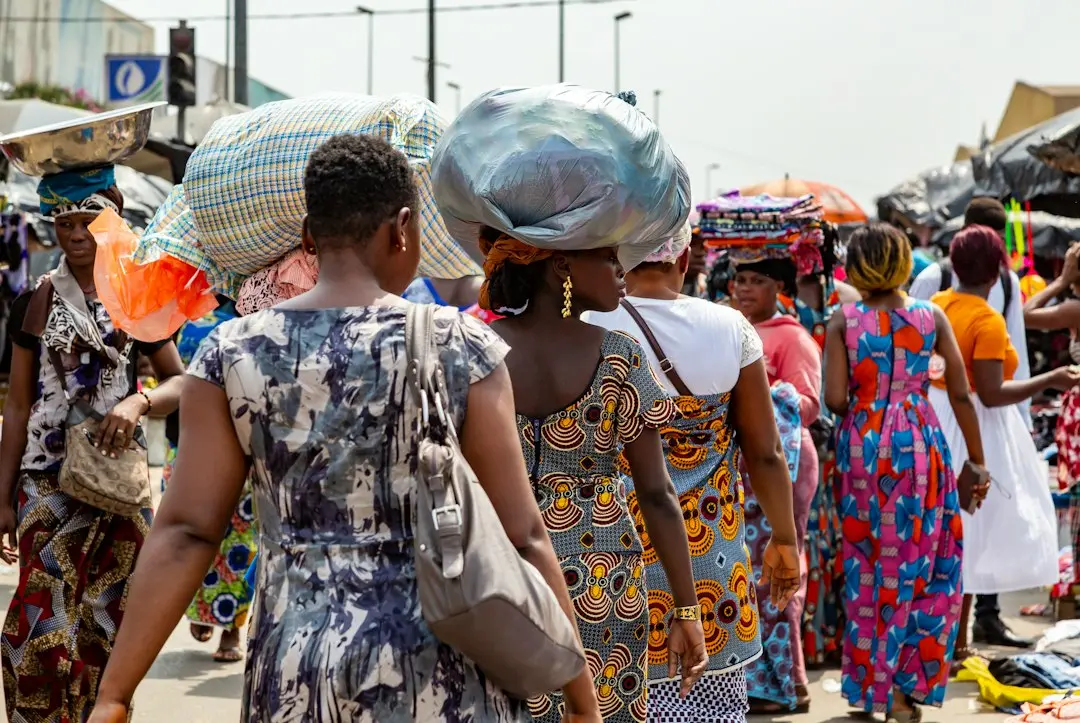
In Sub-Saharan Africa, between 60% and 80% of the active population works in the informal economy. Street vendors, artisans, small street food sellers, mobile credit resellers — all economic actors who keep towns and rural areas running, but who largely escape governments’ tax radar. Faced with growing budgetary needs — infrastructure financing, universal health coverage, education — governments can no longer afford to ignore this colossal tax pool. But how can one collect taxes in a parallel economy without discouraging millions of already vulnerable small entrepreneurs? This is the question at the heart of the continent’s most ambitious tax reforms in 2026.
The African Informal Economy: An Unavoidable Fiscal Reality
The informal sector in Sub-Saharan Africa is not merely a fringe of the economy. According to estimates from the IMF and the African Union, it represents on average 40% of GDP in the region, with peaks exceeding 50% in countries such as Niger, the Democratic Republic of Congo, and Mali. These figures are not trivial: they mean that nearly half of the wealth produced escapes all direct taxation.
The reasons for this massive informality are structural:
- High formalization costs: registering a business, keeping accounts, and declaring income represents an unbearable cost in time and money for a small shop with a daily turnover of a few thousand FCFA.
- Distrust of the State: in many countries, informal taxpayers do not perceive a clear return on taxes paid — no social protection, few quality public services.
- Administrative complexity: tax systems inherited from the colonial era, designed for formalized economies, ill-suited to local realities.
- Absence of a tax identity: without a taxpayer number, a bank account, or a fixed address, the State has no means of identification.
Strategies Adopted by States to Capture Revenue Without Penalizing Small Businesses
1. Tax Flat-Rating: Simplified Taxation for Micro-Actors
The taxation of small businesses in Africa is increasingly carried out through adapted flat-rate schemes. Rather than requiring formal accounting, several States offer a single tax calculated on the basis of simple external factors: the size of the premises, the number of employees, the geographical location, or the nature of the activity.
Senegal, for example, has consolidated its Contribution Globale Unique (CGU), a mechanism allowing micro-enterprises to pay a low annual flat-rate amount — sometimes less than 50 000 FCFA — in exchange for an official receipt. This mechanism has significantly broadened the tax base without triggering a flight into even deeper informality. Togo and Benin have developed similar approaches, with encouraging results in terms of revenue and uptake.
2. Digitalization of Collection: Mobile Money as a Tax Lever
One of the most significant turning points in tax collection in Africa’s parallel economy is the use of mobile payment platforms. With more than 800 million active mobile money accounts on the continent in 2026, States have found an unprecedented gateway into informal financial flows.
Ghana was a pioneer with its levy on electronic transactions, the well-known e-levy, a tax on money transfers via mobile. While its initial implementation sparked protests, adjustments helped strike a balance. In Côte d’Ivoire, tax authorities are working to cross-reference mobile money operators’ transaction data with taxpayer registers to identify informal actors whose activity exceeds a certain threshold.
This approach has a double advantage: it is non-intrusive — the trader does not need to travel anywhere — and it generates valuable data to refine estimates of actual income.
3. Formalized Markets and Tax Cooperatives
Several African cities are experimenting with formalization through point of sale. By grouping traders in officially registered markets, municipalities can collect a site occupation fee, which serves as a simplified tax. This method has proven effective in Dakar, Abidjan, and Kigali, where local authorities have multiplied modern covered markets equipped with an integrated collection system.
In Kigali, Rwanda has taken this logic even further by organizing cooperatives of informal traders that collectively negotiate their tax obligations with the administration. This model fosters social acceptance of taxation, as traders receive concrete benefits: access to formal credit, basic health coverage, and vocational training.
4. Local Collection Agents
In rural areas and hard-to-reach markets, several States have deployed field tax agents, often recruited locally. These collectors go directly to traders, explain obligations in local languages, and collect small but regular amounts. This approach, successfully piloted in Ethiopia and Cameroon, reduces compliance costs for taxpayers and improves trust in the tax administration.
Pitfalls to Avoid: Between Tax Harassment and Lost Revenue
The temptation is strong, for resource-strapped States, to turn to informal actors as an easy source of tax revenue. Yet this approach can prove counterproductive. Poorly calibrated tax pressure pushes traders to relocate, fragment their activities, or bribe collection agents — fueling corruption rather than filling State coffers.
Experts at the Centre Africain de Politiques Fiscales (CAPF) emphasize in 2026 that the key lies in a balance between obligation and incentive. Paying taxes must become rational for the informal trader: it must open access to services, public markets, and credit. Without this visible counterpart, no tax reform will be durably effective.
Outlook for 2026 and Beyond
The taxation of the informal sector in Sub-Saharan Africa is undergoing deep transformation. Several underlying trends are confirmed in 2026:
- Artificial intelligence in the service of tax authorities: tax administrations such as Kenya’s (KRA) use algorithms to cross-reference geolocation data, mobile money data, and social networks in order to identify and estimate the income of micro-traders.
- Simplified VAT for small actors: several countries are experimenting with a reduced VAT, applicable only above a modest turnover threshold, with filing obligations reduced to a few smartphone taps.
- Regional tax cooperation: within the UEMOA area, member States are working to harmonize their tax regimes for micro-enterprises, in order to avoid competitive distortions between neighboring countries.
- Integration with social protection: linking the tax number to the national identification number and social coverage is becoming a priority. In Ghana and Côte d’Ivoire, pilot projects show that traders agree to formalize when the taxes paid make them eligible for health insurance.
The road is still long. But the momentum is there: for the first time, African States are no longer approaching the issue of taxation of small businesses in Africa in 2026 solely from the angle of constraint, but also from that of the social contract. It is this paradigm shift that could, in time, transform the relationship between informal citizens and their States.
FAQ — Taxation and the Informal Sector in Sub-Saharan Africa
Why is the informal sector so difficult to tax in Sub-Saharan Africa?
The informal sector escapes conventional tax tools because its actors often have no registered tax identity, no formal accounting, and variable income. Geographical dispersion and distrust of the administration compound the problem. Adapted solutions — flat rates, mobile money, local collectors — are necessary to overcome these obstacles.
Does taxing the informal sector not risk impoverishing small traders?
That is the primary risk. Poorly designed or overly aggressive taxation can indeed destabilize already precarious households. This is why experts recommend adapted tax thresholds, low flat-rate amounts, and above all concrete counterparts such as access to social protection or formal credit.
Which African countries have the most advanced tax policies for the informal economy?
Rwanda, Senegal, Ghana, and Kenya are often cited as regional references. Their approaches combine administrative simplification, digitalization of collection, and integration of social protection. Rwanda stands out for its cooperative model, which encourages voluntary participation by traders.
Can mobile money truly revolutionize tax collection in Africa?
Yes, provided it is used with caution. Mobile money creates transaction records that tax administrations can exploit to estimate income and identify active economic actors. However, direct and excessive taxation of transactions, as the Ghanaian experience has shown, can discourage the use of these tools and encourage a return to cash, canceling out the benefits.
What role does trust play in the success of tax reforms targeting the informal sector?
A fundamental one. Field studies show that informal traders are more willing to pay taxes when they receive quality public services in return — roads, water, healthcare, security. Without this visible counterpart, tax resistance remains strong. The challenge for African States in 2026 is therefore as much political as technical: it is about rebuilding a social contract with citizens long excluded from the formal system.
Read also
Read also
Read also
Read also
The Les Afriques newsletter
L’essentiel de l’économie africaine — guides, comparatifs et analyses — dans votre boîte mail chaque semaine.