


When Africa Invents Its Own Finance, Outside the Banks
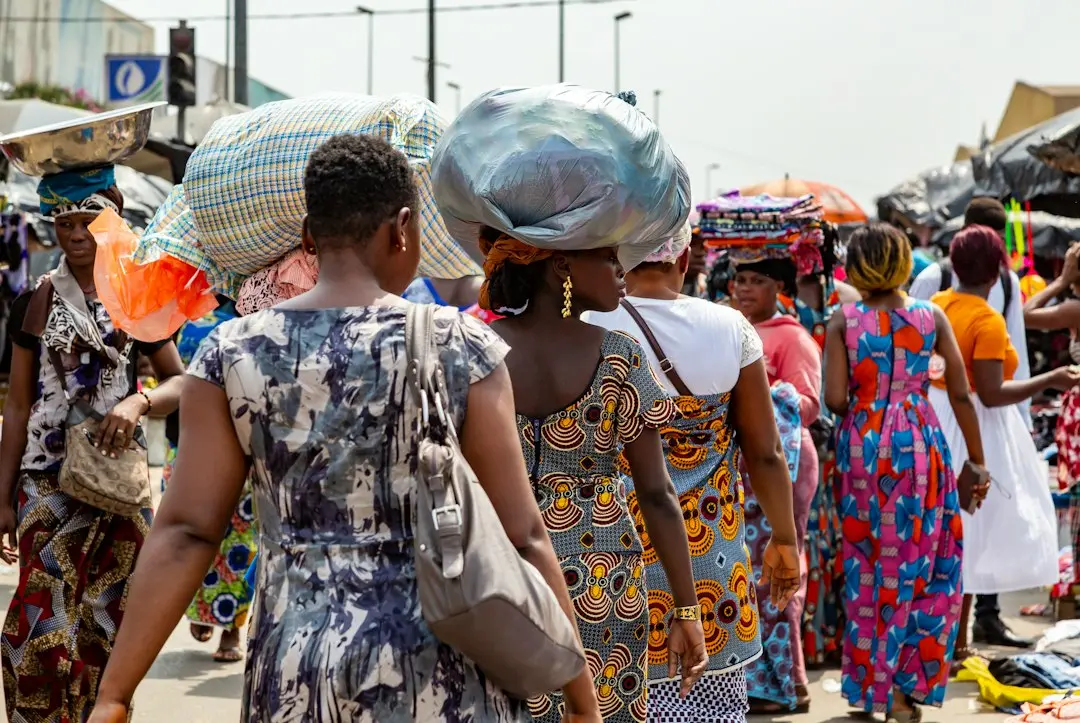
At Dakar’s Sandaga market, a shopkeeper settles his fabric delivery without a single franc CFA in cash. In Bamako, an association of women traders capitalizes thousands of euros every week through a messaging application. In Lagos, entire neighborhoods operate with a community currency that appears in no official register. This is not fiction: this is Africa in 2026, where parallel economies are no longer a symptom of underdevelopment, but a creative, robust response that is often superior to formal financial systems.
Behind the sometimes pejorative term “underground economy” lies, in reality, a complex financial architecture, endowed with its own rules, its own instruments of trust and, increasingly, its own technologies. Understanding these informal payment systems is no longer merely an academic curiosity: it is a key to grasping how more than 600 million Africans manage their money on a daily basis.
The Tontine, Historical Matrix of African Informal Finance
It all starts with the tontine. This rotating savings collection mechanism, known by dozens of names — njangi in Cameroun, susu in Ghana, djangui in Côte d’Ivoire, xessal in Sénégal — has constituted the backbone of African community finance for centuries. Its principle is disarmingly simple: a group of people regularly contributes a fixed sum, and each member takes turns receiving the total pot.
What is changing in 2026 is the digitization of this ancestral model. Digital tontines in West Africa are literally exploding. Platforms such as Wekker (Sénégal), Njangi House (Cameroun) or even WhatsApp groups structured with automated management bots now allow members dispersed between Dakar, Paris and Montréal to participate in the same tontine in real time. Trust, once guaranteed by geographical proximity and family ties, is today reinforced by peer rating mechanisms, digital guarantees and traceable payment histories.
Figures That Are Staggering
- In sub-Saharan Africa, more than 80% of economic transactions still take place outside the formal banking sector, according to estimates from the African Development Bank (2025).
- The annual volume of tontines in West Africa is said to exceed 50 billion dollars, according to certain experts in the informal financial sector.
- In Sénégal, nearly 60% of urban households participate in at least one active tontine.
- In Mali, informal savings associations finance a significant share of small trade, transport and even popular real estate.
Informal Payment Systems in Sénégal and Mali: Far More Than Bartering
When talking about informal payment systems in Sénégal and Mali, one very quickly goes beyond the simple exchange of banknotes under the table. These are complete ecosystems, with specialized intermediaries, implicit but strictly observed rules, and sophisticated credit instruments.
In Sénégal, the “bana-bana” — those itinerant traders who structure a large part of the informal retail trade — have developed an extremely elaborate oral credit system. A supplier from Touba can deliver goods to a reseller in Ziguinchor on the sole basis of a reputation built over the years, without a written contract or bank guarantee. The sanction in the event of default is not judicial; it is social and commercial — and therefore often far more dreaded.
In Mali, in the context of the institutional crisis the country has been going through since 2021, these informal networks have strengthened their structural role. The “yiriwa” (community development associations) have progressively integrated micro-financing functions, management of diaspora transfers and even arbitration of commercial disputes. In 2026, some of these structures manage financial flows comparable to those of small official microfinance institutions.
The Emergence of Local Community Currencies
More marginal but growing, local currencies in Africa represent the vanguard of this financial reinvention. Inspired by European experiments (the Sol Violette in Toulouse, the Swiss WIR) but adapted to African realities, these community currencies circulate within defined geographical or social perimeters.
In Nairobi, the Bangla-Pesa project, documented by the NGO Grassroots Economics, showed that a community currency could stabilize exchanges in a slum, reduce dependence on shilling flows and strengthen local economic resilience in the face of external shocks. The model has since been replicated in several communities in East Africa and is inspiring similar experiments in francophone Africa.
These initiatives raise a fundamental question: is currency necessarily the prerogative of states? In Africa, the practical answer of millions of people seems to be: not necessarily.
Underground Economy and African Fintech: An Inevitable Convergence
The great upheaval of the decade is the encounter between this centuries-old underground economy and new financial technologies. The most intelligent African fintechs have understood this: there is no point in trying to forcibly “formalize” informal practices. It is better to adapt to them, or even draw inspiration from them.
Players such as Wave (Sénégal/Mali), Orange Money or MTN Mobile Money achieved their breakthrough not by offering classic banking products, but by digitalizing already existing behaviors: sending money to family, paying small suppliers, managing daily cash flow. Mobile money did not create new financial behaviors; it gave a digital infrastructure to behaviors that were already well established.
In 2026, the next frontier is the tokenization of tontines. Several startups in Côte d’Ivoire, Sénégal and Nigeria are experimenting with blockchain-based digital token systems that make it possible to represent shares in a tontine, automate payments and even transfer one’s share to a third party. In doing so, they are creating a bridge between the informal economy and formal capital markets — without distorting the community logic that makes the model successful.
Challenges to Overcome
- Regulation: The financial authorities of UEMOA and CEMAC struggle to define a legal framework suited to these hybrid entities that are neither banks nor simple associations.
- Cybersecurity: Digitization exposes tontines to new risks of fraud, scams and hacking that did not exist in purely oral models.
- Digital exclusion: In rural areas, access to smartphones and a stable connection remains a major obstacle to the digitalization of informal practices.
- Taxation: African states are seeking to capture part of the value generated by these systems, but without strangling them — a delicate balance.
Toward Institutional Recognition of the Informal Sector?
The question is no longer whether African parallel economies deserve to be taken seriously. They already are — by their participants, by the fintechs courting them and, increasingly, by international institutions. The IMF itself published several working papers in 2024 acknowledging that the African informal economy is not a problem to be solved but a reality to be integrated into public policy.
This paradigm shift is fundamental. It requires ceasing to regard African community financial systems as degraded forms of Western finance, and recognizing them instead as innovations in their own right — born of specific constraints, certainly, but endowed with genuine sophistication and effectiveness.
In 2026, Africa is not “catching up” with a global financial model. It is building a different one.
FAQ — Frequently Asked Questions About Parallel Economies and Local Currencies in Africa
What Is a Tontine and How Does It Differ from a Bank?
A tontine is a rotating collective savings system: the members of a group regularly contribute a fixed sum, and each person takes turns receiving the total contributions. Unlike a bank, the tontine generates no interest, requires no credit file and relies on interpersonal trust rather than contractual guarantees. That is both its strength and its limitation.
Are African Local Currencies Legal?
Their legal status varies by country. In most UEMOA member states (including Sénégal and Mali), community currencies are not explicitly prohibited but operate in a legal vacuum. They cannot substitute for the franc CFA in official transactions, but nothing prevents their use in a purely community context. Some states are beginning to consider experimental regulatory frameworks.
How Do African Fintechs Leverage the Informal Economy?
The best-performing fintechs have understood that the African informal economy is not an obstacle but a market. They digitalize existing practices (tontines, family transfers, local trade) rather than imposing financial products foreign to local usage. Wave, for example, designed its interface and fees taking into account informal payment habits in Sénégal.
Can Members of the Diaspora Invest in African Digital Tontines?
Yes, and it is a rapidly growing practice. Several platforms allow members of the African diaspora in Europe or North America to participate in tontines in West Africa via mobile applications. Transfers are made via mobile money or bank transfer, and group management is often handled through dedicated applications or structured messaging groups. The legal framework nevertheless remains to be clarified in several countries.
Is the African Informal Economy a Barrier to Development?
This is a received idea that is increasingly contested. While the informal economy has real shortcomings (absence of social protection, difficulties in large-scale financing, exposure to fraud), it also plays an irreplaceable safety-net role and generates financial innovations that the formal sector would not have produced. In 2026, the majority of specialist economists consider that the challenge is not to eliminate the informal sector, but to make it engage intelligently with formal institutions.
Read also
Read also