


The ranking above uses nominal GDP expressed in current dollars. This is the most readable indicator for comparing the absolute size of economies and their weight on the international stage. It does, however, have one important limitation: it is sensitive to exchange rate fluctuations. A currency depreciation — such as the one Nigeria experienced with the naira — can cause a country to fall in the ranking without its real economy having contracted. This is why this ranking benefits from being read alongside GDP per capita (dedicated column) and, for comparisons of living standards, alongside GDP at purchasing power parity (PPP).
It looks like the HTML content got cut off — only the opening comment <!-- wp:heading --> was included, with no actual content following it.
The outsiders to watch: who is progressing the fastest?
Behind the classic podium of South Africa – Egypt – Nigeria, the African economic map is being redrawn at a rapid pace. Several economies are quickly gaining ground thanks to ambitious structural reforms and new flows of foreign direct investment:
It looks like the HTML content got cut off — only the opening comment tag <!-- wp:list --> was included, with no actual content to translate.
- ` tag. Could you please share the complete HTML content you’d like me to translate from French to English?
- Côte d’Ivoire : driven by an upgrading agro-industry, the rise of the port of Abidjan and sustained domestic consumption, it stands out as the engine of French-speaking West Africa.
- Ethiopia : despite internal tensions, the country maintains one of the fastest growth rates on the continent thanks to textile industrialization, commercial agriculture, and major infrastructure projects.
- Senegal : the entry into production of offshore oil and gas fields (Sangomar, GTA) propels Senegal into a new economic category, with growth projections among the highest in sub-Saharan Africa over the 2025-2027 period.
These trajectories serve as a reminder that the Africa GDP ranking 2026 is not set in stone: the hierarchy of Africa’s major economies is structurally in motion, and today’s positions do not prejudge those of 2030.
The 30 most developed countries in Africa: beyond GDP
The question “what are the 30 most developed countries in Africa” calls for a nuanced answer. Development is not limited to total GDP: it also encompasses GDP per capita, access to infrastructure, education, health and institutional stability. Our 30 listed countries reflect this multidimensional reality, from Botswana (very high income per capita despite a moderate total GDP) to major economies such as South Africa, Egypt and Nigeria.
Among these 30 nations, three development profiles emerge: diversified and stabilized economies (South Africa, Morocco, Tunisia), fast-growing demographic giants (Egypt, Nigeria, Ethiopia, DRC), and mining or energy economies (Angola, Algeria, Zambia, Namibia). Each follows a distinct trajectory based on its strengths — natural resources, human capital, port infrastructure, or regional integration.
The 30 most developed African economies concentrate more than 90% of the continental GDP. Consulting this list helps understand the regional growth drivers and the per capita income disparities that shape current African inequalities.
GDP per Capita in Africa: Who Really Lives the Best?
Total GDP measures a country’s gross economic weight, but it masks very contrasting realities. In this regard, Nigeria shows $377 billion in nominal GDP but only $1,556 per capita — one of the lowest in the top 10. Conversely, smaller economies stand out on the criterion of actual standard of living.
In 2026, the African countries with the highest GDP per capita are:
- Seychelles : approximately 18 000 $ — island economy driven by high-end tourism and offshore financial services.
- Mauritius : around 11 500 $ — a leading financial and tourist hub in sub-Saharan Africa.
- Gabon: approximately 8,200 $ — oil and forests as pillars, small population.
- South Africa : 7 503 $ — the largest diversified economy on the continent.
- Algeria : 6 628 $ — oil revenue redistributed through state subsidies.
This alternative ranking reveals a truth that is often overlooked: a country’s aggregate wealth does not automatically translate into individual prosperity. The DRC, with over 100 billion in GDP and one of the richest subsoils in the world, displays a GDP per capita below $1,200. A structural paradox that governance reforms and the formalization of the mining economy are still struggling to correct.
African economies to watch by 2030
Beyond the current ranking, several African countries show growth trajectories that could reshape the landscape by the end of the decade. The IMF and the African Development Bank identify several candidates for rising power:
- Senegal : The entry into production of offshore oil and gas fields (Sangomar, GTA) is propelling the country toward projected growth of around 8 to 9% per year. With a GDP of 40.5 billion dollars in 2026, Dakar is aiming for the ranks of the major West African economies by 2030.
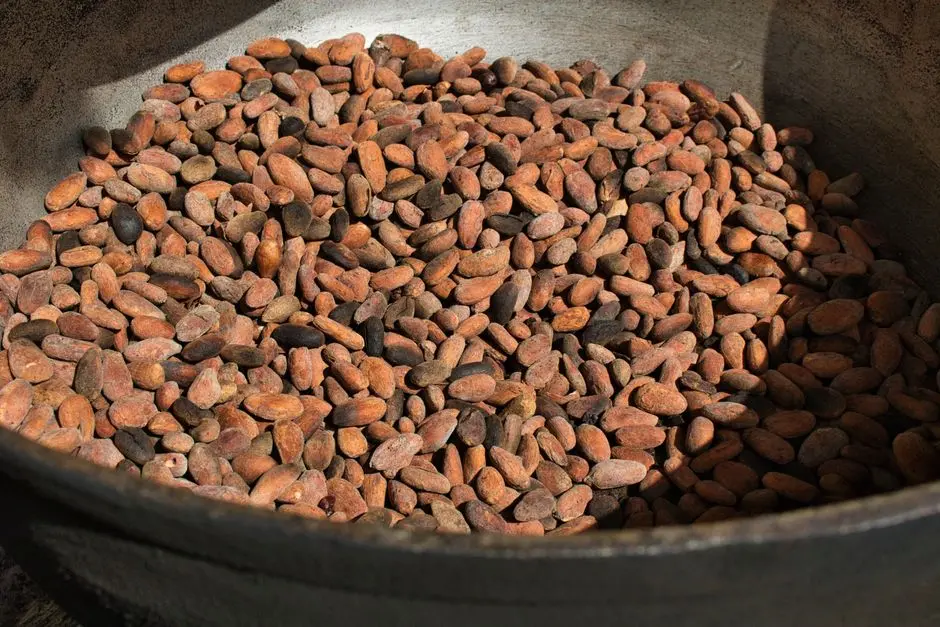
- Côte d’Ivoire : Engine of UEMOA, Abidjan consolidates its role as a logistical and financial hub. The upgrading of the cocoa sector — towards local processing — boosts value-added exports.
- Ethiopia: Despite regional tensions, the country remains one of the fastest-growing economies in sub-Saharan Africa, driven by the textile industry, agri-food, and a vast domestic market of more than 130 million inhabitants.
- RD Congo : Congolese cobalt and lithium are at the heart of the global energy transition. If mining governance improves and infrastructure follows, the DRC has the potential to double its GDP by 2035.
- Kenya : Pioneer of M-Pesa and African fintech, Nairobi aims to become the continent’s Silicon Savannah. Technology services, regional logistics and eco-tourism make it a model of economic diversification.
These dynamics serve as a reminder that the ranking of the richest countries in Africa is not set in stone. Tomorrow’s wealth is built today on choices of industrial policy, investment in human capital, and management of natural resources.
What is the richest country in Africa per capita in 2026?
In 2026, Seychelles is the African country with the highest GDP per capita, at approximately 18 000 dollars per person, thanks to an economy built on luxury tourism and financial services. Mauritius comes in second place with approximately 11 500 dollars per capita. These small island economies far outperform continental giants such as Nigeria or Egypt on this indicator of real living standards.
Is Nigeria really the richest country in Africa?
It depends on the indicator used. In total nominal GDP, Nigeria ranks 3rd in 2026 with approximately 377 billion dollars, behind South Africa and Egypt. But with more than 220 million inhabitants, its GDP per capita does not exceed 1,556 dollars, placing it far from the top in terms of standard of living. South Africa remains the most diversified and best-structured economy on the continent, while Egypt is rapidly rising in power thanks to its major infrastructure projects and its demographics.
The richest countries in Africa: definitions and ranking criteria
The notion of “Africa’s richest countries” covers several economic realities. Nominal GDP measures the raw economic weight of a nation — it is this indicator that places South Africa, Egypt, and Nigeria at the top. But a country rich in resources can remain poor on a per capita basis: Nigeria, with more than 223 million inhabitants, generates a pharaonic GDP but a per-person income limited to $1,556 in 2026. Conversely, Algeria and Tunisia display per capita GDPs 4 to 5 times higher, thanks to less fragmented hydrocarbon and services economies.
For the richest countries in Africa by real income, South Africa leads all its competitors with $7,503 per capita, followed by Algeria ($6,628) and Morocco ($5,107). These three nations combine economic diversification, institutional stability, and structured export sectors. Kenya and Ghana, rising powers in the technology and extractive sectors, are progressively closing in on this traditional hierarchy — a repositioning that is redefining the ranking of the wealthiest nations on the horizon of 2026.
Consulting this complete top 30 allows us to grasp the two dimensions of African wealth: absolute economic volume versus per capita prosperity. These two approaches explain why some countries dominate regional markets and attract capital and talent, while others remain reservoirs of domestic demand and long-term potential.
The 20 Richest Countries in Africa in 2026: Beyond the Top 10
The query “the 20 richest countries in Africa in 2026” targets a broader ranking than the usual top 10. The current content stops at that threshold, but there is genuine demand to see which countries complete the unmissable top 5 (South Africa, Egypt, Nigeria, Algeria, Morocco) through to positions 11 to 20. This middle tier of the ranking reveals growth relay economies: diversified economies such as Kenya or Côte d’Ivoire, mining powerhouses such as the RD Congo or Tanzania, and rising regional players.
Between 11th and 20th place, the stakes of the continent’s economic restructuring come into play. Côte d’Ivoire (agro-industry and port), Tanzanie (mining and tourism), Ouganda (energy and agriculture), Cameroun (regional hub), Tunisie (manufacturing industry) and Zimbabwe feature in this top 20. This segment reveals where FDI investments, infrastructure projects and emerging value chains are concentrated — well beyond the established giants.
Consulting the complete table of the 30 most developed countries makes it possible to map this hierarchy in detail: nominal GDP, GDP per capita, and specific growth drivers of each economy. The African top 20 in 2026 is not set in stone: demographics, critical raw materials, and the digital boom are reshuffling the cards faster than expected.
The 30 most developed countries in Africa: how to rank development?
The query “what are the 30 most developed countries in Africa” is ambiguous but critical. Many readers confuse economic wealth (total GDP) with real level of development (GDP per capita, access to services, infrastructure). A country can have a massive GDP but low per capita development — this is the case of Nigeria, the 3rd largest economy by volume but ranked 47th in GDP per capita. Conversely, Mauritius or Botswana offer superior human development despite a modest total GDP.
To answer this query precisely, it is necessary to distinguish: the 30 wealthiest countries by nominal GDP (gross economic volume) presented in this ranking, and the 30 most developed countries according to the Human Development Index (HDI), which incorporates life expectancy, education and income per capita. The table above covers the first approach. If you are looking for the most prosperous economies per capita, Seychelles, Mauritius, Botswana and Djibouti dominate, although they are absent from the top 30 by total GDP.
This distinction explains why the “30 most developed countries in Africa” depends entirely on your definition: economic volume? Well-being per person? Infrastructure and stability? The ranking below prioritizes raw economic power, a key indicator for investors and geopolitical analysts.
GDP per Capita in Africa 2026: Which Countries Are Really the Richest?
Nominal GDP measures the size of an economy, but it masks deep inequalities in living standards. To assess the real wealth of populations, GDP per capita is the reference indicator. In 2026, this alternative ranking disrupts the usual hierarchy.
The Seychelles top the list with an estimated GDP per capita of more than 17 000 $, far ahead of all other African nations. Mauritius (around 11 500 $) and Gabon (around 8 200 $) complete the podium. Libya (6 962 $) and Algeria (6 628 $) also feature near the top of the rankings, driven by their oil and gas revenues. Conversely, Nigeria, despite its total GDP of 377 billion dollars — third on the continent — shows only 1 556 $ per capita due to its massive demographics (more than 220 million inhabitants).
This gap between raw economic power and per capita wealth illustrates one of the major paradoxes of African development: economic giants coexist with mass poverty, while small island or oil-producing states offer living standards comparable to some emerging countries in Asia or Eastern Europe. For investors and policymakers, these two perspectives are complementary and indispensable.
Which African countries are experiencing the strongest economic growth in 2026?
Beyond the wealth stock, growth dynamics are the other major indicator to watch. In 2026, several African economies are posting some of the highest GDP growth rates in the world, driven by rapidly expanding sectors.
Ethiopia maintains an impressive trajectory with growth estimated at around 6 to 7% per year, driven by manufacturing, major infrastructure projects, and a population of over 130 million people. Côte d’Ivoire remains one of West Africa’s leading economies, with growth of around 6.5%, supported by agro-industry, the port of Abidjan, and an expanding middle class. Tanzania and Rwanda confirm their status as regional success stories, with rates close to 6% sustained by tourism, mining, and ongoing structural reforms.
On the surprise side, Senegal is entering a new economic era with the start of exploitation of its offshore oil and gas reserves, which could propel its growth to double digits in the coming years. The DRC, rich in cobalt and copper deposits essential to the global energy transition, is also seeing its potential reassessed upward by international institutions.
These growth dynamics suggest that the ranking of the richest countries in Africa could undergo significant upheaval by 2030, with countries such as Senegal, Tanzania, or Rwanda potentially joining or strengthening their position in the continental top 15.
What is the richest country in Africa per capita in 2026?
In 2026, Seychelles is the African country with the highest GDP per capita, exceeding 17 000 dollars. It is followed by Mauritius (approximately 11 500 $) and Gabon (approximately 8 200 $). This per capita ranking differs greatly from the total GDP ranking, where South Africa, Egypt and Nigeria dominate. Small island states and oil-exporting countries with low populations perform well on this indicator.
Which African country will become the richest in the coming years?
Several countries are in a position to transform their economic ranking by 2030. Senegal, thanks to its new offshore oil and gas resources, is cited as one of the most serious candidates for a rapid rise. Ethiopia, with its massive demographics and industrialization policy, could surpass Ghana or Angola. The DRC, whose subsoil contains a major share of the world’s cobalt reserves, represents the most colossal potential on the continent if its political stability improves. Côte d’Ivoire and Tanzania are also economies to watch closely.
What is the richest country in Africa?
South Africa is the richest country in Africa in 2026, with a nominal GDP of 480 billion dollars. It surpasses Egypt (429.6 Bn $) and Nigeria (377.4 Bn $). But this answer depends entirely on the chosen criterion: in terms of raw economic power, South Africa comes first; in terms of consumer market, Nigeria and Egypt, with their massive populations, can carry more weight.
If we measure wealth by GDP per capita — a more accurate indicator of the real standard of living — the ranking changes. Algeria (6,628 $/hab) and South Africa (7,503 $/hab) dominate, while Nigeria (1,556 $/hab) and the DRC (1,122 $/hab) fall despite their impressive total GDPs. The question “Which is the richest country in Africa?” therefore has no single answer: it depends on your definition of wealth.
To go further: Investing in Africa: a country-by-country guide · Investing in real estate in Africa.
📌 Complete guide: Africa GDP 2026: ranking and analysis by country
Top 10 of the Richest Countries in Africa in 2026: Focus on the Leaders
Within the overall ranking of Africa’s top 30 economies, the top 10 alone accounts for more than 75% of the continent’s total GDP. Here is what distinguishes each of these ten countries in 2026.
1. South Africa (480 Bn $) — The most diversified economy on the continent. Johannesburg’s financial sector, the mining industry, automotive and services make it Africa’s largest nominal GDP. GDP per capita reaches 7,503 $, one of the highest outside oil states.
2. Egypt (429.6 Bn $) — The Suez Canal, tourism, construction, and a population of over 110 million people drive this economy. Major infrastructure projects such as the New Administrative Capital reinforce the momentum.
3. Nigeria (377.4 Bn $) — Africa’s largest consumer market with more than 220 million inhabitants. Despite oil price volatility and naira depreciation, the services sector, fintech, and the creative economy (Nollywood) keep the country in the top 3.
4. Algeria (317.2 B $) — Hydrocarbon revenues finance sustained domestic demand. Algeria posts a GDP per capita of 6,628 $, supported by social transfers and massive public investments.
5. Morocco (194.3 B $) — Exporting automotive and aeronautics industry, strongly recovering tourism, phosphates and green energy ambitions. Morocco remains the model of economic diversification in the MENA-Africa region.
6. Angola (152.4 Bn $) — Second largest African oil producer. The post-oil era is under construction, with investments in agriculture, infrastructure, and port logistics.
7. Kenya (147.3 Bn $) — Technological and logistical hub of East Africa. Nairobi concentrates the regional headquarters of multinationals and Kenya is the African leader in mobile money with M-Pesa.
8. DR Congo (123.4 Bn $) — A massive GDP driven by mineral resources (cobalt, coltan, copper), but a GDP per capita of only 1,122 $ reveals immense structural inequalities and a potential still largely untapped.
9. Ethiopia (121.5 B $) — One of the fastest-growing economies on the continent over the past decade. The textile industry, agriculture, and a domestic market of more than 125 million inhabitants make it an unavoidable player.
10. Ghana (118.3 B $) — Gold, cocoa, offshore oil and a dynamic services sector. Ghana went through a debt crisis in 2023-2024, but is beginning a recovery in 2026 supported by the IMF and the rebound in exports.
GDP Ranking Africa 2026: What Has Changed Compared to Previous Years
The Africa GDP ranking 2026 is not set in stone. Several notable developments distinguish this edition from previous rankings and deserve to be highlighted in order to understand the continent’s real dynamics.
Nigeria falls back in nominal terms despite its size. The massive depreciation of the naira since 2023 has mechanically reduced the dollar value of Nigeria’s GDP. In purchasing power parity (PPP), Nigeria nevertheless remains Africa’s largest economy, which illustrates the gap between the two calculation methods.
Egypt holds firm thanks to major construction projects. Despite pressure on the Egyptian pound and high inflation, investments in infrastructure and energy (particularly liquefied natural gas) are supporting nominal GDP in 2026.
Côte d’Ivoire crosses the 100 billion mark. With 112.1 Md $, Côte d’Ivoire confirms its status as the locomotive of UEMOA. Agro-industry (cocoa, rubber), the port of Abidjan and domestic consumption drive this growth.
Senegal enters a new oil era. The start of offshore oil and gas production (Sangomar and GTA fields) positions Senegal as an emerging energy player in 2026, with effects on GDP that are gradually consolidating.
The DRC is rising in power. Global demand for cobalt and energy transition minerals is driving Congolese exports. GDP crosses the 123 Md $ mark in 2026, but the redistribution of this wealth remains the central challenge.
Countries like Zimbabwe and Guinea are making progress thanks to the valorization of their mining resources, while Sudan remains weakened by the armed conflict that weighs heavily on its economy and its GDP per capita (864 $, one of the lowest in the ranking).
In summary, the 2026 Africa GDP ranking reflects three underlying trends: the rise of emerging oil and gas economies (Sénégal, Mozambique), the resilience of diversifiers (Maroc, Kenya, Côte d’Ivoire), and the vulnerability of economies under political or monetary pressure (Nigeria, Soudan, Zimbabwe).
What is the top 10 richest countries in Africa in 2026?
In 2026, the top 10 richest countries in Africa by nominal GDP is as follows: 1. South Africa (480 Md $), 2. Egypt (429.6 Md $), 3. Nigeria (377.4 Md $), 4. Algeria (317.2 Md $), 5. Morocco (194.3 Md $), 6. Angola (152.4 Md $), 7. Kenya (147.3 Md $), 8. DR Congo (123.4 Md $), 9. Ethiopia (121.5 Md $), 10. Ghana (118.3 Md $). It should be noted that this ranking changes significantly when using GDP in purchasing power parity (PPP), which places Nigeria at the top ahead of South Africa.
What is the difference between the total GDP ranking and GDP per capita in Africa?
Total GDP measures the overall size of an economy: a large, populous country like Nigeria or Ethiopia may show a high GDP while having a low average standard of living. GDP per capita, on the other hand, divides this wealth by the population and gives a better idea of the average standard of living. In Africa in 2026, Gabon (approximately $9,900), South Africa ($7,503) and Libya ($6,962) have the highest GDP per capita, while countries such as Niger ($822) or Sudan ($864) rank among the lowest, despite sometimes considerable natural resources.
It seems your HTML content got cut off — only the opening comment was included, with no actual HTML to translate.
Why Nominal GDP? A Methodological Note
The ranking above uses nominal GDP expressed in current dollars. This is the most readable indicator for comparing the absolute size of economies and their weight on the international stage. It does, however, have one important limitation: it is sensitive to exchange rate fluctuations. A currency depreciation — such as the one Nigeria experienced with the naira — can cause a country to fall in the ranking without its real economy having contracted. This is why this ranking benefits from being read alongside GDP per capita (dedicated column) and, for comparisons of living standards, alongside GDP at purchasing power parity (PPP).
It looks like the HTML content got cut off — only the opening comment <!-- wp:heading --> was included, with no actual content following it.
The outsiders to watch: who is progressing the fastest?
Behind the classic podium of South Africa – Egypt – Nigeria, the African economic map is being redrawn at a rapid pace. Several economies are quickly gaining ground thanks to ambitious structural reforms and new flows of foreign direct investment:
It looks like the HTML content got cut off — only the opening comment tag <!-- wp:list --> was included, with no actual content to translate.
- ` tag. Could you please share the complete HTML content you’d like me to translate from French to English?
- Côte d’Ivoire : driven by an upgrading agro-industry, the rise of the port of Abidjan and sustained domestic consumption, it stands out as the engine of French-speaking West Africa.
- Ethiopia : despite internal tensions, the country maintains one of the fastest growth rates on the continent thanks to textile industrialization, commercial agriculture, and major infrastructure projects.
- Senegal : the entry into production of offshore oil and gas fields (Sangomar, GTA) propels Senegal into a new economic category, with growth projections among the highest in sub-Saharan Africa over the 2025-2027 period.
These trajectories serve as a reminder that the Africa GDP ranking 2026 is not set in stone: the hierarchy of Africa’s major economies is structurally in motion, and today’s positions do not prejudge those of 2030.
The 30 most developed countries in Africa: beyond GDP
The question “what are the 30 most developed countries in Africa” calls for a nuanced answer. Development is not limited to total GDP: it also encompasses GDP per capita, access to infrastructure, education, health and institutional stability. Our 30 listed countries reflect this multidimensional reality, from Botswana (very high income per capita despite a moderate total GDP) to major economies such as South Africa, Egypt and Nigeria.
Among these 30 nations, three development profiles emerge: diversified and stabilized economies (South Africa, Morocco, Tunisia), fast-growing demographic giants (Egypt, Nigeria, Ethiopia, DRC), and mining or energy economies (Angola, Algeria, Zambia, Namibia). Each follows a distinct trajectory based on its strengths — natural resources, human capital, port infrastructure, or regional integration.
The 30 most developed African economies concentrate more than 90% of the continental GDP. Consulting this list helps understand the regional growth drivers and the per capita income disparities that shape current African inequalities.
GDP per Capita in Africa: Who Really Lives the Best?
Total GDP measures a country’s gross economic weight, but it masks very contrasting realities. In this regard, Nigeria shows $377 billion in nominal GDP but only $1,556 per capita — one of the lowest in the top 10. Conversely, smaller economies stand out on the criterion of actual standard of living.
In 2026, the African countries with the highest GDP per capita are:
- Seychelles : approximately 18 000 $ — island economy driven by high-end tourism and offshore financial services.
- Mauritius : around 11 500 $ — a leading financial and tourist hub in sub-Saharan Africa.
- Gabon: approximately 8,200 $ — oil and forests as pillars, small population.
- South Africa : 7 503 $ — the largest diversified economy on the continent.
- Algeria : 6 628 $ — oil revenue redistributed through state subsidies.
This alternative ranking reveals a truth that is often overlooked: a country’s aggregate wealth does not automatically translate into individual prosperity. The DRC, with over 100 billion in GDP and one of the richest subsoils in the world, displays a GDP per capita below $1,200. A structural paradox that governance reforms and the formalization of the mining economy are still struggling to correct.
African economies to watch by 2030
Beyond the current ranking, several African countries show growth trajectories that could reshape the landscape by the end of the decade. The IMF and the African Development Bank identify several candidates for rising power:
- Senegal : The entry into production of offshore oil and gas fields (Sangomar, GTA) is propelling the country toward projected growth of around 8 to 9% per year. With a GDP of 40.5 billion dollars in 2026, Dakar is aiming for the ranks of the major West African economies by 2030.
- Côte d’Ivoire : Engine of UEMOA, Abidjan consolidates its role as a logistical and financial hub. The upgrading of the cocoa sector — towards local processing — boosts value-added exports.
- Ethiopia: Despite regional tensions, the country remains one of the fastest-growing economies in sub-Saharan Africa, driven by the textile industry, agri-food, and a vast domestic market of more than 130 million inhabitants.
- RD Congo : Congolese cobalt and lithium are at the heart of the global energy transition. If mining governance improves and infrastructure follows, the DRC has the potential to double its GDP by 2035.
- Kenya : Pioneer of M-Pesa and African fintech, Nairobi aims to become the continent’s Silicon Savannah. Technology services, regional logistics and eco-tourism make it a model of economic diversification.
These dynamics serve as a reminder that the ranking of the richest countries in Africa is not set in stone. Tomorrow’s wealth is built today on choices of industrial policy, investment in human capital, and management of natural resources.
What is the richest country in Africa per capita in 2026?
In 2026, Seychelles is the African country with the highest GDP per capita, at approximately 18 000 dollars per person, thanks to an economy built on luxury tourism and financial services. Mauritius comes in second place with approximately 11 500 dollars per capita. These small island economies far outperform continental giants such as Nigeria or Egypt on this indicator of real living standards.
Is Nigeria really the richest country in Africa?
It depends on the indicator used. In total nominal GDP, Nigeria ranks 3rd in 2026 with approximately 377 billion dollars, behind South Africa and Egypt. But with more than 220 million inhabitants, its GDP per capita does not exceed 1,556 dollars, placing it far from the top in terms of standard of living. South Africa remains the most diversified and best-structured economy on the continent, while Egypt is rapidly rising in power thanks to its major infrastructure projects and its demographics.
The richest countries in Africa: definitions and ranking criteria
The notion of “Africa’s richest countries” covers several economic realities. Nominal GDP measures the raw economic weight of a nation — it is this indicator that places South Africa, Egypt, and Nigeria at the top. But a country rich in resources can remain poor on a per capita basis: Nigeria, with more than 223 million inhabitants, generates a pharaonic GDP but a per-person income limited to $1,556 in 2026. Conversely, Algeria and Tunisia display per capita GDPs 4 to 5 times higher, thanks to less fragmented hydrocarbon and services economies.
For the richest countries in Africa by real income, South Africa leads all its competitors with $7,503 per capita, followed by Algeria ($6,628) and Morocco ($5,107). These three nations combine economic diversification, institutional stability, and structured export sectors. Kenya and Ghana, rising powers in the technology and extractive sectors, are progressively closing in on this traditional hierarchy — a repositioning that is redefining the ranking of the wealthiest nations on the horizon of 2026.
Consulting this complete top 30 allows us to grasp the two dimensions of African wealth: absolute economic volume versus per capita prosperity. These two approaches explain why some countries dominate regional markets and attract capital and talent, while others remain reservoirs of domestic demand and long-term potential.
The 20 Richest Countries in Africa in 2026: Beyond the Top 10
The query “the 20 richest countries in Africa in 2026” targets a broader ranking than the usual top 10. The current content stops at that threshold, but there is genuine demand to see which countries complete the unmissable top 5 (South Africa, Egypt, Nigeria, Algeria, Morocco) through to positions 11 to 20. This middle tier of the ranking reveals growth relay economies: diversified economies such as Kenya or Côte d’Ivoire, mining powerhouses such as the RD Congo or Tanzania, and rising regional players.
Between 11th and 20th place, the stakes of the continent’s economic restructuring come into play. Côte d’Ivoire (agro-industry and port), Tanzanie (mining and tourism), Ouganda (energy and agriculture), Cameroun (regional hub), Tunisie (manufacturing industry) and Zimbabwe feature in this top 20. This segment reveals where FDI investments, infrastructure projects and emerging value chains are concentrated — well beyond the established giants.
Consulting the complete table of the 30 most developed countries makes it possible to map this hierarchy in detail: nominal GDP, GDP per capita, and specific growth drivers of each economy. The African top 20 in 2026 is not set in stone: demographics, critical raw materials, and the digital boom are reshuffling the cards faster than expected.
The 30 most developed countries in Africa: how to rank development?
The query “what are the 30 most developed countries in Africa” is ambiguous but critical. Many readers confuse economic wealth (total GDP) with real level of development (GDP per capita, access to services, infrastructure). A country can have a massive GDP but low per capita development — this is the case of Nigeria, the 3rd largest economy by volume but ranked 47th in GDP per capita. Conversely, Mauritius or Botswana offer superior human development despite a modest total GDP.
To answer this query precisely, it is necessary to distinguish: the 30 wealthiest countries by nominal GDP (gross economic volume) presented in this ranking, and the 30 most developed countries according to the Human Development Index (HDI), which incorporates life expectancy, education and income per capita. The table above covers the first approach. If you are looking for the most prosperous economies per capita, Seychelles, Mauritius, Botswana and Djibouti dominate, although they are absent from the top 30 by total GDP.
This distinction explains why the “30 most developed countries in Africa” depends entirely on your definition: economic volume? Well-being per person? Infrastructure and stability? The ranking below prioritizes raw economic power, a key indicator for investors and geopolitical analysts.
GDP per Capita in Africa 2026: Which Countries Are Really the Richest?
Nominal GDP measures the size of an economy, but it masks deep inequalities in living standards. To assess the real wealth of populations, GDP per capita is the reference indicator. In 2026, this alternative ranking disrupts the usual hierarchy.
The Seychelles top the list with an estimated GDP per capita of more than 17 000 $, far ahead of all other African nations. Mauritius (around 11 500 $) and Gabon (around 8 200 $) complete the podium. Libya (6 962 $) and Algeria (6 628 $) also feature near the top of the rankings, driven by their oil and gas revenues. Conversely, Nigeria, despite its total GDP of 377 billion dollars — third on the continent — shows only 1 556 $ per capita due to its massive demographics (more than 220 million inhabitants).
This gap between raw economic power and per capita wealth illustrates one of the major paradoxes of African development: economic giants coexist with mass poverty, while small island or oil-producing states offer living standards comparable to some emerging countries in Asia or Eastern Europe. For investors and policymakers, these two perspectives are complementary and indispensable.
Which African countries are experiencing the strongest economic growth in 2026?
Beyond the wealth stock, growth dynamics are the other major indicator to watch. In 2026, several African economies are posting some of the highest GDP growth rates in the world, driven by rapidly expanding sectors.
Ethiopia maintains an impressive trajectory with growth estimated at around 6 to 7% per year, driven by manufacturing, major infrastructure projects, and a population of over 130 million people. Côte d’Ivoire remains one of West Africa’s leading economies, with growth of around 6.5%, supported by agro-industry, the port of Abidjan, and an expanding middle class. Tanzania and Rwanda confirm their status as regional success stories, with rates close to 6% sustained by tourism, mining, and ongoing structural reforms.
On the surprise side, Senegal is entering a new economic era with the start of exploitation of its offshore oil and gas reserves, which could propel its growth to double digits in the coming years. The DRC, rich in cobalt and copper deposits essential to the global energy transition, is also seeing its potential reassessed upward by international institutions.
These growth dynamics suggest that the ranking of the richest countries in Africa could undergo significant upheaval by 2030, with countries such as Senegal, Tanzania, or Rwanda potentially joining or strengthening their position in the continental top 15.
What is the richest country in Africa per capita in 2026?
In 2026, Seychelles is the African country with the highest GDP per capita, exceeding 17 000 dollars. It is followed by Mauritius (approximately 11 500 $) and Gabon (approximately 8 200 $). This per capita ranking differs greatly from the total GDP ranking, where South Africa, Egypt and Nigeria dominate. Small island states and oil-exporting countries with low populations perform well on this indicator.
Which African country will become the richest in the coming years?
Several countries are in a position to transform their economic ranking by 2030. Senegal, thanks to its new offshore oil and gas resources, is cited as one of the most serious candidates for a rapid rise. Ethiopia, with its massive demographics and industrialization policy, could surpass Ghana or Angola. The DRC, whose subsoil contains a major share of the world’s cobalt reserves, represents the most colossal potential on the continent if its political stability improves. Côte d’Ivoire and Tanzania are also economies to watch closely.
What is the richest country in Africa?
South Africa is the richest country in Africa in 2026, with a nominal GDP of 480 billion dollars. It surpasses Egypt (429.6 Bn $) and Nigeria (377.4 Bn $). But this answer depends entirely on the chosen criterion: in terms of raw economic power, South Africa comes first; in terms of consumer market, Nigeria and Egypt, with their massive populations, can carry more weight.
If we measure wealth by GDP per capita — a more accurate indicator of the real standard of living — the ranking changes. Algeria (6,628 $/hab) and South Africa (7,503 $/hab) dominate, while Nigeria (1,556 $/hab) and the DRC (1,122 $/hab) fall despite their impressive total GDPs. The question “Which is the richest country in Africa?” therefore has no single answer: it depends on your definition of wealth.
To go further: Investing in Africa: a country-by-country guide · Investing in real estate in Africa.
To go further on each economy, find our detailed analyses:
The HTML content you provided appears to be incomplete – it only contains an opening comment tag with no actual content to translate.
- Morocco’s GDP in 2026 — 5th African economy, cocoa phosphates, 2030 World Cup
- Kenya’s GDP in 2026 — 6th economy, Silicon Savannah, East Africa hub
- GDP of Côte d’Ivoire in 2026 — 1st UEMOA economy, cocoa and Abidjan hub
- Nigeria, South Africa, Egypt — the leading trio of African GDP
- The poorest countries in Africa in 2026 — the other side of the ranking
See also: Investing in Africa — Investing in Africa 2026: complete guide by country
📌 Complete guide: Africa GDP 2026: ranking and analysis by country
Top 10 of the Richest Countries in Africa in 2026: Focus on the Leaders
Within the overall ranking of Africa’s top 30 economies, the top 10 alone accounts for more than 75% of the continent’s total GDP. Here is what distinguishes each of these ten countries in 2026.
1. South Africa (480 Bn $) — The most diversified economy on the continent. Johannesburg’s financial sector, the mining industry, automotive and services make it Africa’s largest nominal GDP. GDP per capita reaches 7,503 $, one of the highest outside oil states.
2. Egypt (429.6 Bn $) — The Suez Canal, tourism, construction, and a population of over 110 million people drive this economy. Major infrastructure projects such as the New Administrative Capital reinforce the momentum.
3. Nigeria (377.4 Bn $) — Africa’s largest consumer market with more than 220 million inhabitants. Despite oil price volatility and naira depreciation, the services sector, fintech, and the creative economy (Nollywood) keep the country in the top 3.
4. Algeria (317.2 B $) — Hydrocarbon revenues finance sustained domestic demand. Algeria posts a GDP per capita of 6,628 $, supported by social transfers and massive public investments.
5. Morocco (194.3 B $) — Exporting automotive and aeronautics industry, strongly recovering tourism, phosphates and green energy ambitions. Morocco remains the model of economic diversification in the MENA-Africa region.
6. Angola (152.4 Bn $) — Second largest African oil producer. The post-oil era is under construction, with investments in agriculture, infrastructure, and port logistics.
7. Kenya (147.3 Bn $) — Technological and logistical hub of East Africa. Nairobi concentrates the regional headquarters of multinationals and Kenya is the African leader in mobile money with M-Pesa.
8. DR Congo (123.4 Bn $) — A massive GDP driven by mineral resources (cobalt, coltan, copper), but a GDP per capita of only 1,122 $ reveals immense structural inequalities and a potential still largely untapped.
9. Ethiopia (121.5 B $) — One of the fastest-growing economies on the continent over the past decade. The textile industry, agriculture, and a domestic market of more than 125 million inhabitants make it an unavoidable player.
10. Ghana (118.3 B $) — Gold, cocoa, offshore oil and a dynamic services sector. Ghana went through a debt crisis in 2023-2024, but is beginning a recovery in 2026 supported by the IMF and the rebound in exports.
GDP Ranking Africa 2026: What Has Changed Compared to Previous Years
The Africa GDP ranking 2026 is not set in stone. Several notable developments distinguish this edition from previous rankings and deserve to be highlighted in order to understand the continent’s real dynamics.
Nigeria falls back in nominal terms despite its size. The massive depreciation of the naira since 2023 has mechanically reduced the dollar value of Nigeria’s GDP. In purchasing power parity (PPP), Nigeria nevertheless remains Africa’s largest economy, which illustrates the gap between the two calculation methods.
Egypt holds firm thanks to major construction projects. Despite pressure on the Egyptian pound and high inflation, investments in infrastructure and energy (particularly liquefied natural gas) are supporting nominal GDP in 2026.
Côte d’Ivoire crosses the 100 billion mark. With 112.1 Md $, Côte d’Ivoire confirms its status as the locomotive of UEMOA. Agro-industry (cocoa, rubber), the port of Abidjan and domestic consumption drive this growth.
Senegal enters a new oil era. The start of offshore oil and gas production (Sangomar and GTA fields) positions Senegal as an emerging energy player in 2026, with effects on GDP that are gradually consolidating.
The DRC is rising in power. Global demand for cobalt and energy transition minerals is driving Congolese exports. GDP crosses the 123 Md $ mark in 2026, but the redistribution of this wealth remains the central challenge.
Countries like Zimbabwe and Guinea are making progress thanks to the valorization of their mining resources, while Sudan remains weakened by the armed conflict that weighs heavily on its economy and its GDP per capita (864 $, one of the lowest in the ranking).
In summary, the 2026 Africa GDP ranking reflects three underlying trends: the rise of emerging oil and gas economies (Sénégal, Mozambique), the resilience of diversifiers (Maroc, Kenya, Côte d’Ivoire), and the vulnerability of economies under political or monetary pressure (Nigeria, Soudan, Zimbabwe).
What is the top 10 richest countries in Africa in 2026?
In 2026, the top 10 richest countries in Africa by nominal GDP is as follows: 1. South Africa (480 Md $), 2. Egypt (429.6 Md $), 3. Nigeria (377.4 Md $), 4. Algeria (317.2 Md $), 5. Morocco (194.3 Md $), 6. Angola (152.4 Md $), 7. Kenya (147.3 Md $), 8. DR Congo (123.4 Md $), 9. Ethiopia (121.5 Md $), 10. Ghana (118.3 Md $). It should be noted that this ranking changes significantly when using GDP in purchasing power parity (PPP), which places Nigeria at the top ahead of South Africa.
What is the difference between the total GDP ranking and GDP per capita in Africa?
Total GDP measures the overall size of an economy: a large, populous country like Nigeria or Ethiopia may show a high GDP while having a low average standard of living. GDP per capita, on the other hand, divides this wealth by the population and gives a better idea of the average standard of living. In Africa in 2026, Gabon (approximately $9,900), South Africa ($7,503) and Libya ($6,962) have the highest GDP per capita, while countries such as Niger ($822) or Sudan ($864) rank among the lowest, despite sometimes considerable natural resources.
It seems your HTML content got cut off — only the opening comment was included, with no actual HTML to translate.
Why Nominal GDP? A Methodological Note
The ranking above uses nominal GDP expressed in current dollars. This is the most readable indicator for comparing the absolute size of economies and their weight on the international stage. It does, however, have one important limitation: it is sensitive to exchange rate fluctuations. A currency depreciation — such as the one Nigeria experienced with the naira — can cause a country to fall in the ranking without its real economy having contracted. This is why this ranking benefits from being read alongside GDP per capita (dedicated column) and, for comparisons of living standards, alongside GDP at purchasing power parity (PPP).
It looks like the HTML content got cut off — only the opening comment <!-- wp:heading --> was included, with no actual content following it.
The outsiders to watch: who is progressing the fastest?
Behind the classic podium of South Africa – Egypt – Nigeria, the African economic map is being redrawn at a rapid pace. Several economies are quickly gaining ground thanks to ambitious structural reforms and new flows of foreign direct investment:
It looks like the HTML content got cut off — only the opening comment tag <!-- wp:list --> was included, with no actual content to translate.
- ` tag. Could you please share the complete HTML content you’d like me to translate from French to English?
- Côte d’Ivoire : driven by an upgrading agro-industry, the rise of the port of Abidjan and sustained domestic consumption, it stands out as the engine of French-speaking West Africa.
- Ethiopia : despite internal tensions, the country maintains one of the fastest growth rates on the continent thanks to textile industrialization, commercial agriculture, and major infrastructure projects.
- Senegal : the entry into production of offshore oil and gas fields (Sangomar, GTA) propels Senegal into a new economic category, with growth projections among the highest in sub-Saharan Africa over the 2025-2027 period.
These trajectories serve as a reminder that the Africa GDP ranking 2026 is not set in stone: the hierarchy of Africa’s major economies is structurally in motion, and today’s positions do not prejudge those of 2030.
The 30 most developed countries in Africa: beyond GDP
The question “what are the 30 most developed countries in Africa” calls for a nuanced answer. Development is not limited to total GDP: it also encompasses GDP per capita, access to infrastructure, education, health and institutional stability. Our 30 listed countries reflect this multidimensional reality, from Botswana (very high income per capita despite a moderate total GDP) to major economies such as South Africa, Egypt and Nigeria.
Among these 30 nations, three development profiles emerge: diversified and stabilized economies (South Africa, Morocco, Tunisia), fast-growing demographic giants (Egypt, Nigeria, Ethiopia, DRC), and mining or energy economies (Angola, Algeria, Zambia, Namibia). Each follows a distinct trajectory based on its strengths — natural resources, human capital, port infrastructure, or regional integration.
The 30 most developed African economies concentrate more than 90% of the continental GDP. Consulting this list helps understand the regional growth drivers and the per capita income disparities that shape current African inequalities.
GDP per Capita in Africa: Who Really Lives the Best?
Total GDP measures a country’s gross economic weight, but it masks very contrasting realities. In this regard, Nigeria shows $377 billion in nominal GDP but only $1,556 per capita — one of the lowest in the top 10. Conversely, smaller economies stand out on the criterion of actual standard of living.
In 2026, the African countries with the highest GDP per capita are:
- Seychelles : approximately 18 000 $ — island economy driven by high-end tourism and offshore financial services.
- Mauritius : around 11 500 $ — a leading financial and tourist hub in sub-Saharan Africa.
- Gabon: approximately 8,200 $ — oil and forests as pillars, small population.
- South Africa : 7 503 $ — the largest diversified economy on the continent.
- Algeria : 6 628 $ — oil revenue redistributed through state subsidies.
This alternative ranking reveals a truth that is often overlooked: a country’s aggregate wealth does not automatically translate into individual prosperity. The DRC, with over 100 billion in GDP and one of the richest subsoils in the world, displays a GDP per capita below $1,200. A structural paradox that governance reforms and the formalization of the mining economy are still struggling to correct.
African economies to watch by 2030
Beyond the current ranking, several African countries show growth trajectories that could reshape the landscape by the end of the decade. The IMF and the African Development Bank identify several candidates for rising power:
- Senegal : The entry into production of offshore oil and gas fields (Sangomar, GTA) is propelling the country toward projected growth of around 8 to 9% per year. With a GDP of 40.5 billion dollars in 2026, Dakar is aiming for the ranks of the major West African economies by 2030.
- Côte d’Ivoire : Engine of UEMOA, Abidjan consolidates its role as a logistical and financial hub. The upgrading of the cocoa sector — towards local processing — boosts value-added exports.
- Ethiopia: Despite regional tensions, the country remains one of the fastest-growing economies in sub-Saharan Africa, driven by the textile industry, agri-food, and a vast domestic market of more than 130 million inhabitants.
- RD Congo : Congolese cobalt and lithium are at the heart of the global energy transition. If mining governance improves and infrastructure follows, the DRC has the potential to double its GDP by 2035.
- Kenya : Pioneer of M-Pesa and African fintech, Nairobi aims to become the continent’s Silicon Savannah. Technology services, regional logistics and eco-tourism make it a model of economic diversification.
These dynamics serve as a reminder that the ranking of the richest countries in Africa is not set in stone. Tomorrow’s wealth is built today on choices of industrial policy, investment in human capital, and management of natural resources.
What is the richest country in Africa per capita in 2026?
In 2026, Seychelles is the African country with the highest GDP per capita, at approximately 18 000 dollars per person, thanks to an economy built on luxury tourism and financial services. Mauritius comes in second place with approximately 11 500 dollars per capita. These small island economies far outperform continental giants such as Nigeria or Egypt on this indicator of real living standards.
Is Nigeria really the richest country in Africa?
It depends on the indicator used. In total nominal GDP, Nigeria ranks 3rd in 2026 with approximately 377 billion dollars, behind South Africa and Egypt. But with more than 220 million inhabitants, its GDP per capita does not exceed 1,556 dollars, placing it far from the top in terms of standard of living. South Africa remains the most diversified and best-structured economy on the continent, while Egypt is rapidly rising in power thanks to its major infrastructure projects and its demographics.
The richest countries in Africa: definitions and ranking criteria
The notion of “Africa’s richest countries” covers several economic realities. Nominal GDP measures the raw economic weight of a nation — it is this indicator that places South Africa, Egypt, and Nigeria at the top. But a country rich in resources can remain poor on a per capita basis: Nigeria, with more than 223 million inhabitants, generates a pharaonic GDP but a per-person income limited to $1,556 in 2026. Conversely, Algeria and Tunisia display per capita GDPs 4 to 5 times higher, thanks to less fragmented hydrocarbon and services economies.
For the richest countries in Africa by real income, South Africa leads all its competitors with $7,503 per capita, followed by Algeria ($6,628) and Morocco ($5,107). These three nations combine economic diversification, institutional stability, and structured export sectors. Kenya and Ghana, rising powers in the technology and extractive sectors, are progressively closing in on this traditional hierarchy — a repositioning that is redefining the ranking of the wealthiest nations on the horizon of 2026.
Consulting this complete top 30 allows us to grasp the two dimensions of African wealth: absolute economic volume versus per capita prosperity. These two approaches explain why some countries dominate regional markets and attract capital and talent, while others remain reservoirs of domestic demand and long-term potential.
The 20 Richest Countries in Africa in 2026: Beyond the Top 10
The query “the 20 richest countries in Africa in 2026” targets a broader ranking than the usual top 10. The current content stops at that threshold, but there is genuine demand to see which countries complete the unmissable top 5 (South Africa, Egypt, Nigeria, Algeria, Morocco) through to positions 11 to 20. This middle tier of the ranking reveals growth relay economies: diversified economies such as Kenya or Côte d’Ivoire, mining powerhouses such as the RD Congo or Tanzania, and rising regional players.
Between 11th and 20th place, the stakes of the continent’s economic restructuring come into play. Côte d’Ivoire (agro-industry and port), Tanzanie (mining and tourism), Ouganda (energy and agriculture), Cameroun (regional hub), Tunisie (manufacturing industry) and Zimbabwe feature in this top 20. This segment reveals where FDI investments, infrastructure projects and emerging value chains are concentrated — well beyond the established giants.
Consulting the complete table of the 30 most developed countries makes it possible to map this hierarchy in detail: nominal GDP, GDP per capita, and specific growth drivers of each economy. The African top 20 in 2026 is not set in stone: demographics, critical raw materials, and the digital boom are reshuffling the cards faster than expected.
The 30 most developed countries in Africa: how to rank development?
The query “what are the 30 most developed countries in Africa” is ambiguous but critical. Many readers confuse economic wealth (total GDP) with real level of development (GDP per capita, access to services, infrastructure). A country can have a massive GDP but low per capita development — this is the case of Nigeria, the 3rd largest economy by volume but ranked 47th in GDP per capita. Conversely, Mauritius or Botswana offer superior human development despite a modest total GDP.
To answer this query precisely, it is necessary to distinguish: the 30 wealthiest countries by nominal GDP (gross economic volume) presented in this ranking, and the 30 most developed countries according to the Human Development Index (HDI), which incorporates life expectancy, education and income per capita. The table above covers the first approach. If you are looking for the most prosperous economies per capita, Seychelles, Mauritius, Botswana and Djibouti dominate, although they are absent from the top 30 by total GDP.
This distinction explains why the “30 most developed countries in Africa” depends entirely on your definition: economic volume? Well-being per person? Infrastructure and stability? The ranking below prioritizes raw economic power, a key indicator for investors and geopolitical analysts.
GDP per Capita in Africa 2026: Which Countries Are Really the Richest?
Nominal GDP measures the size of an economy, but it masks deep inequalities in living standards. To assess the real wealth of populations, GDP per capita is the reference indicator. In 2026, this alternative ranking disrupts the usual hierarchy.
The Seychelles top the list with an estimated GDP per capita of more than 17 000 $, far ahead of all other African nations. Mauritius (around 11 500 $) and Gabon (around 8 200 $) complete the podium. Libya (6 962 $) and Algeria (6 628 $) also feature near the top of the rankings, driven by their oil and gas revenues. Conversely, Nigeria, despite its total GDP of 377 billion dollars — third on the continent — shows only 1 556 $ per capita due to its massive demographics (more than 220 million inhabitants).
This gap between raw economic power and per capita wealth illustrates one of the major paradoxes of African development: economic giants coexist with mass poverty, while small island or oil-producing states offer living standards comparable to some emerging countries in Asia or Eastern Europe. For investors and policymakers, these two perspectives are complementary and indispensable.
Which African countries are experiencing the strongest economic growth in 2026?
Beyond the wealth stock, growth dynamics are the other major indicator to watch. In 2026, several African economies are posting some of the highest GDP growth rates in the world, driven by rapidly expanding sectors.
Ethiopia maintains an impressive trajectory with growth estimated at around 6 to 7% per year, driven by manufacturing, major infrastructure projects, and a population of over 130 million people. Côte d’Ivoire remains one of West Africa’s leading economies, with growth of around 6.5%, supported by agro-industry, the port of Abidjan, and an expanding middle class. Tanzania and Rwanda confirm their status as regional success stories, with rates close to 6% sustained by tourism, mining, and ongoing structural reforms.
On the surprise side, Senegal is entering a new economic era with the start of exploitation of its offshore oil and gas reserves, which could propel its growth to double digits in the coming years. The DRC, rich in cobalt and copper deposits essential to the global energy transition, is also seeing its potential reassessed upward by international institutions.
These growth dynamics suggest that the ranking of the richest countries in Africa could undergo significant upheaval by 2030, with countries such as Senegal, Tanzania, or Rwanda potentially joining or strengthening their position in the continental top 15.
What is the richest country in Africa per capita in 2026?
In 2026, Seychelles is the African country with the highest GDP per capita, exceeding 17 000 dollars. It is followed by Mauritius (approximately 11 500 $) and Gabon (approximately 8 200 $). This per capita ranking differs greatly from the total GDP ranking, where South Africa, Egypt and Nigeria dominate. Small island states and oil-exporting countries with low populations perform well on this indicator.
Which African country will become the richest in the coming years?
Several countries are in a position to transform their economic ranking by 2030. Senegal, thanks to its new offshore oil and gas resources, is cited as one of the most serious candidates for a rapid rise. Ethiopia, with its massive demographics and industrialization policy, could surpass Ghana or Angola. The DRC, whose subsoil contains a major share of the world’s cobalt reserves, represents the most colossal potential on the continent if its political stability improves. Côte d’Ivoire and Tanzania are also economies to watch closely.
What is the richest country in Africa?
South Africa is the richest country in Africa in 2026, with a nominal GDP of 480 billion dollars. It surpasses Egypt (429.6 Bn $) and Nigeria (377.4 Bn $). But this answer depends entirely on the chosen criterion: in terms of raw economic power, South Africa comes first; in terms of consumer market, Nigeria and Egypt, with their massive populations, can carry more weight.
If we measure wealth by GDP per capita — a more accurate indicator of the real standard of living — the ranking changes. Algeria (6,628 $/hab) and South Africa (7,503 $/hab) dominate, while Nigeria (1,556 $/hab) and the DRC (1,122 $/hab) fall despite their impressive total GDPs. The question “Which is the richest country in Africa?” therefore has no single answer: it depends on your definition of wealth.
To go further: Investing in Africa: a country-by-country guide · Investing in real estate in Africa.
It seems the HTML content was cut off after the opening tag. Could you please provide the complete HTML content you’d like me to translate? I’m ready to translate it following all the strict rules you’ve outlined.Detailed GDP fact sheets by country
To go further on each economy, find our detailed analyses:
The HTML content you provided appears to be incomplete – it only contains an opening comment tag with no actual content to translate.
- Morocco’s GDP in 2026 — 5th African economy, cocoa phosphates, 2030 World Cup
- Kenya’s GDP in 2026 — 6th economy, Silicon Savannah, East Africa hub
- GDP of Côte d’Ivoire in 2026 — 1st UEMOA economy, cocoa and Abidjan hub
- Nigeria, South Africa, Egypt — the leading trio of African GDP
- The poorest countries in Africa in 2026 — the other side of the ranking
See also: Investing in Africa — Investing in Africa 2026: complete guide by country
📌 Complete guide: Africa GDP 2026: ranking and analysis by country
Top 10 of the Richest Countries in Africa in 2026: Focus on the Leaders
Within the overall ranking of Africa’s top 30 economies, the top 10 alone accounts for more than 75% of the continent’s total GDP. Here is what distinguishes each of these ten countries in 2026.
1. South Africa (480 Bn $) — The most diversified economy on the continent. Johannesburg’s financial sector, the mining industry, automotive and services make it Africa’s largest nominal GDP. GDP per capita reaches 7,503 $, one of the highest outside oil states.
2. Egypt (429.6 Bn $) — The Suez Canal, tourism, construction, and a population of over 110 million people drive this economy. Major infrastructure projects such as the New Administrative Capital reinforce the momentum.
3. Nigeria (377.4 Bn $) — Africa’s largest consumer market with more than 220 million inhabitants. Despite oil price volatility and naira depreciation, the services sector, fintech, and the creative economy (Nollywood) keep the country in the top 3.
4. Algeria (317.2 B $) — Hydrocarbon revenues finance sustained domestic demand. Algeria posts a GDP per capita of 6,628 $, supported by social transfers and massive public investments.
5. Morocco (194.3 B $) — Exporting automotive and aeronautics industry, strongly recovering tourism, phosphates and green energy ambitions. Morocco remains the model of economic diversification in the MENA-Africa region.
6. Angola (152.4 Bn $) — Second largest African oil producer. The post-oil era is under construction, with investments in agriculture, infrastructure, and port logistics.
7. Kenya (147.3 Bn $) — Technological and logistical hub of East Africa. Nairobi concentrates the regional headquarters of multinationals and Kenya is the African leader in mobile money with M-Pesa.
8. DR Congo (123.4 Bn $) — A massive GDP driven by mineral resources (cobalt, coltan, copper), but a GDP per capita of only 1,122 $ reveals immense structural inequalities and a potential still largely untapped.
9. Ethiopia (121.5 B $) — One of the fastest-growing economies on the continent over the past decade. The textile industry, agriculture, and a domestic market of more than 125 million inhabitants make it an unavoidable player.
10. Ghana (118.3 B $) — Gold, cocoa, offshore oil and a dynamic services sector. Ghana went through a debt crisis in 2023-2024, but is beginning a recovery in 2026 supported by the IMF and the rebound in exports.
GDP Ranking Africa 2026: What Has Changed Compared to Previous Years
The Africa GDP ranking 2026 is not set in stone. Several notable developments distinguish this edition from previous rankings and deserve to be highlighted in order to understand the continent’s real dynamics.
Nigeria falls back in nominal terms despite its size. The massive depreciation of the naira since 2023 has mechanically reduced the dollar value of Nigeria’s GDP. In purchasing power parity (PPP), Nigeria nevertheless remains Africa’s largest economy, which illustrates the gap between the two calculation methods.
Egypt holds firm thanks to major construction projects. Despite pressure on the Egyptian pound and high inflation, investments in infrastructure and energy (particularly liquefied natural gas) are supporting nominal GDP in 2026.
Côte d’Ivoire crosses the 100 billion mark. With 112.1 Md $, Côte d’Ivoire confirms its status as the locomotive of UEMOA. Agro-industry (cocoa, rubber), the port of Abidjan and domestic consumption drive this growth.
Senegal enters a new oil era. The start of offshore oil and gas production (Sangomar and GTA fields) positions Senegal as an emerging energy player in 2026, with effects on GDP that are gradually consolidating.
The DRC is rising in power. Global demand for cobalt and energy transition minerals is driving Congolese exports. GDP crosses the 123 Md $ mark in 2026, but the redistribution of this wealth remains the central challenge.
Countries like Zimbabwe and Guinea are making progress thanks to the valorization of their mining resources, while Sudan remains weakened by the armed conflict that weighs heavily on its economy and its GDP per capita (864 $, one of the lowest in the ranking).
In summary, the 2026 Africa GDP ranking reflects three underlying trends: the rise of emerging oil and gas economies (Sénégal, Mozambique), the resilience of diversifiers (Maroc, Kenya, Côte d’Ivoire), and the vulnerability of economies under political or monetary pressure (Nigeria, Soudan, Zimbabwe).
What is the top 10 richest countries in Africa in 2026?
In 2026, the top 10 richest countries in Africa by nominal GDP is as follows: 1. South Africa (480 Md $), 2. Egypt (429.6 Md $), 3. Nigeria (377.4 Md $), 4. Algeria (317.2 Md $), 5. Morocco (194.3 Md $), 6. Angola (152.4 Md $), 7. Kenya (147.3 Md $), 8. DR Congo (123.4 Md $), 9. Ethiopia (121.5 Md $), 10. Ghana (118.3 Md $). It should be noted that this ranking changes significantly when using GDP in purchasing power parity (PPP), which places Nigeria at the top ahead of South Africa.
What is the difference between the total GDP ranking and GDP per capita in Africa?
Total GDP measures the overall size of an economy: a large, populous country like Nigeria or Ethiopia may show a high GDP while having a low average standard of living. GDP per capita, on the other hand, divides this wealth by the population and gives a better idea of the average standard of living. In Africa in 2026, Gabon (approximately $9,900), South Africa ($7,503) and Libya ($6,962) have the highest GDP per capita, while countries such as Niger ($822) or Sudan ($864) rank among the lowest, despite sometimes considerable natural resources.
It seems your HTML content got cut off — only the opening comment was included, with no actual HTML to translate.
Why Nominal GDP? A Methodological Note
The ranking above uses nominal GDP expressed in current dollars. This is the most readable indicator for comparing the absolute size of economies and their weight on the international stage. It does, however, have one important limitation: it is sensitive to exchange rate fluctuations. A currency depreciation — such as the one Nigeria experienced with the naira — can cause a country to fall in the ranking without its real economy having contracted. This is why this ranking benefits from being read alongside GDP per capita (dedicated column) and, for comparisons of living standards, alongside GDP at purchasing power parity (PPP).
It looks like the HTML content got cut off — only the opening comment <!-- wp:heading --> was included, with no actual content following it.
The outsiders to watch: who is progressing the fastest?
Behind the classic podium of South Africa – Egypt – Nigeria, the African economic map is being redrawn at a rapid pace. Several economies are quickly gaining ground thanks to ambitious structural reforms and new flows of foreign direct investment:
It looks like the HTML content got cut off — only the opening comment tag <!-- wp:list --> was included, with no actual content to translate.
- ` tag. Could you please share the complete HTML content you’d like me to translate from French to English?
- Côte d’Ivoire : driven by an upgrading agro-industry, the rise of the port of Abidjan and sustained domestic consumption, it stands out as the engine of French-speaking West Africa.
- Ethiopia : despite internal tensions, the country maintains one of the fastest growth rates on the continent thanks to textile industrialization, commercial agriculture, and major infrastructure projects.
- Senegal : the entry into production of offshore oil and gas fields (Sangomar, GTA) propels Senegal into a new economic category, with growth projections among the highest in sub-Saharan Africa over the 2025-2027 period.
These trajectories serve as a reminder that the Africa GDP ranking 2026 is not set in stone: the hierarchy of Africa’s major economies is structurally in motion, and today’s positions do not prejudge those of 2030.
The 30 most developed countries in Africa: beyond GDP
The question “what are the 30 most developed countries in Africa” calls for a nuanced answer. Development is not limited to total GDP: it also encompasses GDP per capita, access to infrastructure, education, health and institutional stability. Our 30 listed countries reflect this multidimensional reality, from Botswana (very high income per capita despite a moderate total GDP) to major economies such as South Africa, Egypt and Nigeria.
Among these 30 nations, three development profiles emerge: diversified and stabilized economies (South Africa, Morocco, Tunisia), fast-growing demographic giants (Egypt, Nigeria, Ethiopia, DRC), and mining or energy economies (Angola, Algeria, Zambia, Namibia). Each follows a distinct trajectory based on its strengths — natural resources, human capital, port infrastructure, or regional integration.
The 30 most developed African economies concentrate more than 90% of the continental GDP. Consulting this list helps understand the regional growth drivers and the per capita income disparities that shape current African inequalities.
GDP per Capita in Africa: Who Really Lives the Best?
Total GDP measures a country’s gross economic weight, but it masks very contrasting realities. In this regard, Nigeria shows $377 billion in nominal GDP but only $1,556 per capita — one of the lowest in the top 10. Conversely, smaller economies stand out on the criterion of actual standard of living.
In 2026, the African countries with the highest GDP per capita are:
- Seychelles : approximately 18 000 $ — island economy driven by high-end tourism and offshore financial services.
- Mauritius : around 11 500 $ — a leading financial and tourist hub in sub-Saharan Africa.
- Gabon: approximately 8,200 $ — oil and forests as pillars, small population.
- South Africa : 7 503 $ — the largest diversified economy on the continent.
- Algeria : 6 628 $ — oil revenue redistributed through state subsidies.
This alternative ranking reveals a truth that is often overlooked: a country’s aggregate wealth does not automatically translate into individual prosperity. The DRC, with over 100 billion in GDP and one of the richest subsoils in the world, displays a GDP per capita below $1,200. A structural paradox that governance reforms and the formalization of the mining economy are still struggling to correct.
African economies to watch by 2030
Beyond the current ranking, several African countries show growth trajectories that could reshape the landscape by the end of the decade. The IMF and the African Development Bank identify several candidates for rising power:
- Senegal : The entry into production of offshore oil and gas fields (Sangomar, GTA) is propelling the country toward projected growth of around 8 to 9% per year. With a GDP of 40.5 billion dollars in 2026, Dakar is aiming for the ranks of the major West African economies by 2030.
- Côte d’Ivoire : Engine of UEMOA, Abidjan consolidates its role as a logistical and financial hub. The upgrading of the cocoa sector — towards local processing — boosts value-added exports.
- Ethiopia: Despite regional tensions, the country remains one of the fastest-growing economies in sub-Saharan Africa, driven by the textile industry, agri-food, and a vast domestic market of more than 130 million inhabitants.
- RD Congo : Congolese cobalt and lithium are at the heart of the global energy transition. If mining governance improves and infrastructure follows, the DRC has the potential to double its GDP by 2035.
- Kenya : Pioneer of M-Pesa and African fintech, Nairobi aims to become the continent’s Silicon Savannah. Technology services, regional logistics and eco-tourism make it a model of economic diversification.
These dynamics serve as a reminder that the ranking of the richest countries in Africa is not set in stone. Tomorrow’s wealth is built today on choices of industrial policy, investment in human capital, and management of natural resources.
What is the richest country in Africa per capita in 2026?
In 2026, Seychelles is the African country with the highest GDP per capita, at approximately 18 000 dollars per person, thanks to an economy built on luxury tourism and financial services. Mauritius comes in second place with approximately 11 500 dollars per capita. These small island economies far outperform continental giants such as Nigeria or Egypt on this indicator of real living standards.
Is Nigeria really the richest country in Africa?
It depends on the indicator used. In total nominal GDP, Nigeria ranks 3rd in 2026 with approximately 377 billion dollars, behind South Africa and Egypt. But with more than 220 million inhabitants, its GDP per capita does not exceed 1,556 dollars, placing it far from the top in terms of standard of living. South Africa remains the most diversified and best-structured economy on the continent, while Egypt is rapidly rising in power thanks to its major infrastructure projects and its demographics.
The richest countries in Africa: definitions and ranking criteria
The notion of “Africa’s richest countries” covers several economic realities. Nominal GDP measures the raw economic weight of a nation — it is this indicator that places South Africa, Egypt, and Nigeria at the top. But a country rich in resources can remain poor on a per capita basis: Nigeria, with more than 223 million inhabitants, generates a pharaonic GDP but a per-person income limited to $1,556 in 2026. Conversely, Algeria and Tunisia display per capita GDPs 4 to 5 times higher, thanks to less fragmented hydrocarbon and services economies.
For the richest countries in Africa by real income, South Africa leads all its competitors with $7,503 per capita, followed by Algeria ($6,628) and Morocco ($5,107). These three nations combine economic diversification, institutional stability, and structured export sectors. Kenya and Ghana, rising powers in the technology and extractive sectors, are progressively closing in on this traditional hierarchy — a repositioning that is redefining the ranking of the wealthiest nations on the horizon of 2026.
Consulting this complete top 30 allows us to grasp the two dimensions of African wealth: absolute economic volume versus per capita prosperity. These two approaches explain why some countries dominate regional markets and attract capital and talent, while others remain reservoirs of domestic demand and long-term potential.
The 20 Richest Countries in Africa in 2026: Beyond the Top 10
The query “the 20 richest countries in Africa in 2026” targets a broader ranking than the usual top 10. The current content stops at that threshold, but there is genuine demand to see which countries complete the unmissable top 5 (South Africa, Egypt, Nigeria, Algeria, Morocco) through to positions 11 to 20. This middle tier of the ranking reveals growth relay economies: diversified economies such as Kenya or Côte d’Ivoire, mining powerhouses such as the RD Congo or Tanzania, and rising regional players.
Between 11th and 20th place, the stakes of the continent’s economic restructuring come into play. Côte d’Ivoire (agro-industry and port), Tanzanie (mining and tourism), Ouganda (energy and agriculture), Cameroun (regional hub), Tunisie (manufacturing industry) and Zimbabwe feature in this top 20. This segment reveals where FDI investments, infrastructure projects and emerging value chains are concentrated — well beyond the established giants.
Consulting the complete table of the 30 most developed countries makes it possible to map this hierarchy in detail: nominal GDP, GDP per capita, and specific growth drivers of each economy. The African top 20 in 2026 is not set in stone: demographics, critical raw materials, and the digital boom are reshuffling the cards faster than expected.
The 30 most developed countries in Africa: how to rank development?
The query “what are the 30 most developed countries in Africa” is ambiguous but critical. Many readers confuse economic wealth (total GDP) with real level of development (GDP per capita, access to services, infrastructure). A country can have a massive GDP but low per capita development — this is the case of Nigeria, the 3rd largest economy by volume but ranked 47th in GDP per capita. Conversely, Mauritius or Botswana offer superior human development despite a modest total GDP.
To answer this query precisely, it is necessary to distinguish: the 30 wealthiest countries by nominal GDP (gross economic volume) presented in this ranking, and the 30 most developed countries according to the Human Development Index (HDI), which incorporates life expectancy, education and income per capita. The table above covers the first approach. If you are looking for the most prosperous economies per capita, Seychelles, Mauritius, Botswana and Djibouti dominate, although they are absent from the top 30 by total GDP.
This distinction explains why the “30 most developed countries in Africa” depends entirely on your definition: economic volume? Well-being per person? Infrastructure and stability? The ranking below prioritizes raw economic power, a key indicator for investors and geopolitical analysts.
GDP per Capita in Africa 2026: Which Countries Are Really the Richest?
Nominal GDP measures the size of an economy, but it masks deep inequalities in living standards. To assess the real wealth of populations, GDP per capita is the reference indicator. In 2026, this alternative ranking disrupts the usual hierarchy.
The Seychelles top the list with an estimated GDP per capita of more than 17 000 $, far ahead of all other African nations. Mauritius (around 11 500 $) and Gabon (around 8 200 $) complete the podium. Libya (6 962 $) and Algeria (6 628 $) also feature near the top of the rankings, driven by their oil and gas revenues. Conversely, Nigeria, despite its total GDP of 377 billion dollars — third on the continent — shows only 1 556 $ per capita due to its massive demographics (more than 220 million inhabitants).
This gap between raw economic power and per capita wealth illustrates one of the major paradoxes of African development: economic giants coexist with mass poverty, while small island or oil-producing states offer living standards comparable to some emerging countries in Asia or Eastern Europe. For investors and policymakers, these two perspectives are complementary and indispensable.
Which African countries are experiencing the strongest economic growth in 2026?
Beyond the wealth stock, growth dynamics are the other major indicator to watch. In 2026, several African economies are posting some of the highest GDP growth rates in the world, driven by rapidly expanding sectors.
Ethiopia maintains an impressive trajectory with growth estimated at around 6 to 7% per year, driven by manufacturing, major infrastructure projects, and a population of over 130 million people. Côte d’Ivoire remains one of West Africa’s leading economies, with growth of around 6.5%, supported by agro-industry, the port of Abidjan, and an expanding middle class. Tanzania and Rwanda confirm their status as regional success stories, with rates close to 6% sustained by tourism, mining, and ongoing structural reforms.
On the surprise side, Senegal is entering a new economic era with the start of exploitation of its offshore oil and gas reserves, which could propel its growth to double digits in the coming years. The DRC, rich in cobalt and copper deposits essential to the global energy transition, is also seeing its potential reassessed upward by international institutions.
These growth dynamics suggest that the ranking of the richest countries in Africa could undergo significant upheaval by 2030, with countries such as Senegal, Tanzania, or Rwanda potentially joining or strengthening their position in the continental top 15.
What is the richest country in Africa per capita in 2026?
In 2026, Seychelles is the African country with the highest GDP per capita, exceeding 17 000 dollars. It is followed by Mauritius (approximately 11 500 $) and Gabon (approximately 8 200 $). This per capita ranking differs greatly from the total GDP ranking, where South Africa, Egypt and Nigeria dominate. Small island states and oil-exporting countries with low populations perform well on this indicator.
Which African country will become the richest in the coming years?
Several countries are in a position to transform their economic ranking by 2030. Senegal, thanks to its new offshore oil and gas resources, is cited as one of the most serious candidates for a rapid rise. Ethiopia, with its massive demographics and industrialization policy, could surpass Ghana or Angola. The DRC, whose subsoil contains a major share of the world’s cobalt reserves, represents the most colossal potential on the continent if its political stability improves. Côte d’Ivoire and Tanzania are also economies to watch closely.
What is the richest country in Africa?
South Africa is the richest country in Africa in 2026, with a nominal GDP of 480 billion dollars. It surpasses Egypt (429.6 Bn $) and Nigeria (377.4 Bn $). But this answer depends entirely on the chosen criterion: in terms of raw economic power, South Africa comes first; in terms of consumer market, Nigeria and Egypt, with their massive populations, can carry more weight.
If we measure wealth by GDP per capita — a more accurate indicator of the real standard of living — the ranking changes. Algeria (6,628 $/hab) and South Africa (7,503 $/hab) dominate, while Nigeria (1,556 $/hab) and the DRC (1,122 $/hab) fall despite their impressive total GDPs. The question “Which is the richest country in Africa?” therefore has no single answer: it depends on your definition of wealth.
To go further: Investing in Africa: a country-by-country guide · Investing in real estate in Africa.
The total GDP gives an idea of the market size. GDP per capita signals the average purchasing power. For an investment decision, one must also consider stability, logistics, law, taxation, labor availability, and the speed of client payments.
It seems your HTML content got cut off — only the opening comment was included, with no actual HTML to translate.
Sources and methodology
The figures should be read as orders of magnitude, as projections change with exchange rates, inflation, and statistical revisions. Sources used: IMF, World Economic Outlook, World Bank, UNDP.
It seems the HTML content was cut off after the opening tag. Could you please provide the complete HTML content you’d like me to translate? I’m ready to translate it following all the strict rules you’ve outlined.Detailed GDP fact sheets by country
To go further on each economy, find our detailed analyses:
The HTML content you provided appears to be incomplete – it only contains an opening comment tag with no actual content to translate.
- Morocco’s GDP in 2026 — 5th African economy, cocoa phosphates, 2030 World Cup
- Kenya’s GDP in 2026 — 6th economy, Silicon Savannah, East Africa hub
- GDP of Côte d’Ivoire in 2026 — 1st UEMOA economy, cocoa and Abidjan hub
- Nigeria, South Africa, Egypt — the leading trio of African GDP
- The poorest countries in Africa in 2026 — the other side of the ranking
See also: Investing in Africa — Investing in Africa 2026: complete guide by country
📌 Complete guide: Africa GDP 2026: ranking and analysis by country
Top 10 of the Richest Countries in Africa in 2026: Focus on the Leaders
Within the overall ranking of Africa’s top 30 economies, the top 10 alone accounts for more than 75% of the continent’s total GDP. Here is what distinguishes each of these ten countries in 2026.
1. South Africa (480 Bn $) — The most diversified economy on the continent. Johannesburg’s financial sector, the mining industry, automotive and services make it Africa’s largest nominal GDP. GDP per capita reaches 7,503 $, one of the highest outside oil states.
2. Egypt (429.6 Bn $) — The Suez Canal, tourism, construction, and a population of over 110 million people drive this economy. Major infrastructure projects such as the New Administrative Capital reinforce the momentum.
3. Nigeria (377.4 Bn $) — Africa’s largest consumer market with more than 220 million inhabitants. Despite oil price volatility and naira depreciation, the services sector, fintech, and the creative economy (Nollywood) keep the country in the top 3.
4. Algeria (317.2 B $) — Hydrocarbon revenues finance sustained domestic demand. Algeria posts a GDP per capita of 6,628 $, supported by social transfers and massive public investments.
5. Morocco (194.3 B $) — Exporting automotive and aeronautics industry, strongly recovering tourism, phosphates and green energy ambitions. Morocco remains the model of economic diversification in the MENA-Africa region.
6. Angola (152.4 Bn $) — Second largest African oil producer. The post-oil era is under construction, with investments in agriculture, infrastructure, and port logistics.
7. Kenya (147.3 Bn $) — Technological and logistical hub of East Africa. Nairobi concentrates the regional headquarters of multinationals and Kenya is the African leader in mobile money with M-Pesa.
8. DR Congo (123.4 Bn $) — A massive GDP driven by mineral resources (cobalt, coltan, copper), but a GDP per capita of only 1,122 $ reveals immense structural inequalities and a potential still largely untapped.
9. Ethiopia (121.5 B $) — One of the fastest-growing economies on the continent over the past decade. The textile industry, agriculture, and a domestic market of more than 125 million inhabitants make it an unavoidable player.
10. Ghana (118.3 B $) — Gold, cocoa, offshore oil and a dynamic services sector. Ghana went through a debt crisis in 2023-2024, but is beginning a recovery in 2026 supported by the IMF and the rebound in exports.
GDP Ranking Africa 2026: What Has Changed Compared to Previous Years
The Africa GDP ranking 2026 is not set in stone. Several notable developments distinguish this edition from previous rankings and deserve to be highlighted in order to understand the continent’s real dynamics.
Nigeria falls back in nominal terms despite its size. The massive depreciation of the naira since 2023 has mechanically reduced the dollar value of Nigeria’s GDP. In purchasing power parity (PPP), Nigeria nevertheless remains Africa’s largest economy, which illustrates the gap between the two calculation methods.
Egypt holds firm thanks to major construction projects. Despite pressure on the Egyptian pound and high inflation, investments in infrastructure and energy (particularly liquefied natural gas) are supporting nominal GDP in 2026.
Côte d’Ivoire crosses the 100 billion mark. With 112.1 Md $, Côte d’Ivoire confirms its status as the locomotive of UEMOA. Agro-industry (cocoa, rubber), the port of Abidjan and domestic consumption drive this growth.
Senegal enters a new oil era. The start of offshore oil and gas production (Sangomar and GTA fields) positions Senegal as an emerging energy player in 2026, with effects on GDP that are gradually consolidating.
The DRC is rising in power. Global demand for cobalt and energy transition minerals is driving Congolese exports. GDP crosses the 123 Md $ mark in 2026, but the redistribution of this wealth remains the central challenge.
Countries like Zimbabwe and Guinea are making progress thanks to the valorization of their mining resources, while Sudan remains weakened by the armed conflict that weighs heavily on its economy and its GDP per capita (864 $, one of the lowest in the ranking).
In summary, the 2026 Africa GDP ranking reflects three underlying trends: the rise of emerging oil and gas economies (Sénégal, Mozambique), the resilience of diversifiers (Maroc, Kenya, Côte d’Ivoire), and the vulnerability of economies under political or monetary pressure (Nigeria, Soudan, Zimbabwe).
What is the top 10 richest countries in Africa in 2026?
In 2026, the top 10 richest countries in Africa by nominal GDP is as follows: 1. South Africa (480 Md $), 2. Egypt (429.6 Md $), 3. Nigeria (377.4 Md $), 4. Algeria (317.2 Md $), 5. Morocco (194.3 Md $), 6. Angola (152.4 Md $), 7. Kenya (147.3 Md $), 8. DR Congo (123.4 Md $), 9. Ethiopia (121.5 Md $), 10. Ghana (118.3 Md $). It should be noted that this ranking changes significantly when using GDP in purchasing power parity (PPP), which places Nigeria at the top ahead of South Africa.
What is the difference between the total GDP ranking and GDP per capita in Africa?
Total GDP measures the overall size of an economy: a large, populous country like Nigeria or Ethiopia may show a high GDP while having a low average standard of living. GDP per capita, on the other hand, divides this wealth by the population and gives a better idea of the average standard of living. In Africa in 2026, Gabon (approximately $9,900), South Africa ($7,503) and Libya ($6,962) have the highest GDP per capita, while countries such as Niger ($822) or Sudan ($864) rank among the lowest, despite sometimes considerable natural resources.
It seems your HTML content got cut off — only the opening comment was included, with no actual HTML to translate.
Why Nominal GDP? A Methodological Note
The ranking above uses nominal GDP expressed in current dollars. This is the most readable indicator for comparing the absolute size of economies and their weight on the international stage. It does, however, have one important limitation: it is sensitive to exchange rate fluctuations. A currency depreciation — such as the one Nigeria experienced with the naira — can cause a country to fall in the ranking without its real economy having contracted. This is why this ranking benefits from being read alongside GDP per capita (dedicated column) and, for comparisons of living standards, alongside GDP at purchasing power parity (PPP).
It looks like the HTML content got cut off — only the opening comment <!-- wp:heading --> was included, with no actual content following it.
The outsiders to watch: who is progressing the fastest?
Behind the classic podium of South Africa – Egypt – Nigeria, the African economic map is being redrawn at a rapid pace. Several economies are quickly gaining ground thanks to ambitious structural reforms and new flows of foreign direct investment:
It looks like the HTML content got cut off — only the opening comment tag <!-- wp:list --> was included, with no actual content to translate.
- ` tag. Could you please share the complete HTML content you’d like me to translate from French to English?
- Côte d’Ivoire : driven by an upgrading agro-industry, the rise of the port of Abidjan and sustained domestic consumption, it stands out as the engine of French-speaking West Africa.
- Ethiopia : despite internal tensions, the country maintains one of the fastest growth rates on the continent thanks to textile industrialization, commercial agriculture, and major infrastructure projects.
- Senegal : the entry into production of offshore oil and gas fields (Sangomar, GTA) propels Senegal into a new economic category, with growth projections among the highest in sub-Saharan Africa over the 2025-2027 period.
These trajectories serve as a reminder that the Africa GDP ranking 2026 is not set in stone: the hierarchy of Africa’s major economies is structurally in motion, and today’s positions do not prejudge those of 2030.
The 30 most developed countries in Africa: beyond GDP
The question “what are the 30 most developed countries in Africa” calls for a nuanced answer. Development is not limited to total GDP: it also encompasses GDP per capita, access to infrastructure, education, health and institutional stability. Our 30 listed countries reflect this multidimensional reality, from Botswana (very high income per capita despite a moderate total GDP) to major economies such as South Africa, Egypt and Nigeria.
Among these 30 nations, three development profiles emerge: diversified and stabilized economies (South Africa, Morocco, Tunisia), fast-growing demographic giants (Egypt, Nigeria, Ethiopia, DRC), and mining or energy economies (Angola, Algeria, Zambia, Namibia). Each follows a distinct trajectory based on its strengths — natural resources, human capital, port infrastructure, or regional integration.
The 30 most developed African economies concentrate more than 90% of the continental GDP. Consulting this list helps understand the regional growth drivers and the per capita income disparities that shape current African inequalities.
GDP per Capita in Africa: Who Really Lives the Best?
Total GDP measures a country’s gross economic weight, but it masks very contrasting realities. In this regard, Nigeria shows $377 billion in nominal GDP but only $1,556 per capita — one of the lowest in the top 10. Conversely, smaller economies stand out on the criterion of actual standard of living.
In 2026, the African countries with the highest GDP per capita are:
- Seychelles : approximately 18 000 $ — island economy driven by high-end tourism and offshore financial services.
- Mauritius : around 11 500 $ — a leading financial and tourist hub in sub-Saharan Africa.
- Gabon: approximately 8,200 $ — oil and forests as pillars, small population.
- South Africa : 7 503 $ — the largest diversified economy on the continent.
- Algeria : 6 628 $ — oil revenue redistributed through state subsidies.
This alternative ranking reveals a truth that is often overlooked: a country’s aggregate wealth does not automatically translate into individual prosperity. The DRC, with over 100 billion in GDP and one of the richest subsoils in the world, displays a GDP per capita below $1,200. A structural paradox that governance reforms and the formalization of the mining economy are still struggling to correct.
African economies to watch by 2030
Beyond the current ranking, several African countries show growth trajectories that could reshape the landscape by the end of the decade. The IMF and the African Development Bank identify several candidates for rising power:
- Senegal : The entry into production of offshore oil and gas fields (Sangomar, GTA) is propelling the country toward projected growth of around 8 to 9% per year. With a GDP of 40.5 billion dollars in 2026, Dakar is aiming for the ranks of the major West African economies by 2030.
- Côte d’Ivoire : Engine of UEMOA, Abidjan consolidates its role as a logistical and financial hub. The upgrading of the cocoa sector — towards local processing — boosts value-added exports.
- Ethiopia: Despite regional tensions, the country remains one of the fastest-growing economies in sub-Saharan Africa, driven by the textile industry, agri-food, and a vast domestic market of more than 130 million inhabitants.
- RD Congo : Congolese cobalt and lithium are at the heart of the global energy transition. If mining governance improves and infrastructure follows, the DRC has the potential to double its GDP by 2035.
- Kenya : Pioneer of M-Pesa and African fintech, Nairobi aims to become the continent’s Silicon Savannah. Technology services, regional logistics and eco-tourism make it a model of economic diversification.
These dynamics serve as a reminder that the ranking of the richest countries in Africa is not set in stone. Tomorrow’s wealth is built today on choices of industrial policy, investment in human capital, and management of natural resources.
What is the richest country in Africa per capita in 2026?
In 2026, Seychelles is the African country with the highest GDP per capita, at approximately 18 000 dollars per person, thanks to an economy built on luxury tourism and financial services. Mauritius comes in second place with approximately 11 500 dollars per capita. These small island economies far outperform continental giants such as Nigeria or Egypt on this indicator of real living standards.
Is Nigeria really the richest country in Africa?
It depends on the indicator used. In total nominal GDP, Nigeria ranks 3rd in 2026 with approximately 377 billion dollars, behind South Africa and Egypt. But with more than 220 million inhabitants, its GDP per capita does not exceed 1,556 dollars, placing it far from the top in terms of standard of living. South Africa remains the most diversified and best-structured economy on the continent, while Egypt is rapidly rising in power thanks to its major infrastructure projects and its demographics.
The richest countries in Africa: definitions and ranking criteria
The notion of “Africa’s richest countries” covers several economic realities. Nominal GDP measures the raw economic weight of a nation — it is this indicator that places South Africa, Egypt, and Nigeria at the top. But a country rich in resources can remain poor on a per capita basis: Nigeria, with more than 223 million inhabitants, generates a pharaonic GDP but a per-person income limited to $1,556 in 2026. Conversely, Algeria and Tunisia display per capita GDPs 4 to 5 times higher, thanks to less fragmented hydrocarbon and services economies.
For the richest countries in Africa by real income, South Africa leads all its competitors with $7,503 per capita, followed by Algeria ($6,628) and Morocco ($5,107). These three nations combine economic diversification, institutional stability, and structured export sectors. Kenya and Ghana, rising powers in the technology and extractive sectors, are progressively closing in on this traditional hierarchy — a repositioning that is redefining the ranking of the wealthiest nations on the horizon of 2026.
Consulting this complete top 30 allows us to grasp the two dimensions of African wealth: absolute economic volume versus per capita prosperity. These two approaches explain why some countries dominate regional markets and attract capital and talent, while others remain reservoirs of domestic demand and long-term potential.
The 20 Richest Countries in Africa in 2026: Beyond the Top 10
The query “the 20 richest countries in Africa in 2026” targets a broader ranking than the usual top 10. The current content stops at that threshold, but there is genuine demand to see which countries complete the unmissable top 5 (South Africa, Egypt, Nigeria, Algeria, Morocco) through to positions 11 to 20. This middle tier of the ranking reveals growth relay economies: diversified economies such as Kenya or Côte d’Ivoire, mining powerhouses such as the RD Congo or Tanzania, and rising regional players.
Between 11th and 20th place, the stakes of the continent’s economic restructuring come into play. Côte d’Ivoire (agro-industry and port), Tanzanie (mining and tourism), Ouganda (energy and agriculture), Cameroun (regional hub), Tunisie (manufacturing industry) and Zimbabwe feature in this top 20. This segment reveals where FDI investments, infrastructure projects and emerging value chains are concentrated — well beyond the established giants.
Consulting the complete table of the 30 most developed countries makes it possible to map this hierarchy in detail: nominal GDP, GDP per capita, and specific growth drivers of each economy. The African top 20 in 2026 is not set in stone: demographics, critical raw materials, and the digital boom are reshuffling the cards faster than expected.
The 30 most developed countries in Africa: how to rank development?
The query “what are the 30 most developed countries in Africa” is ambiguous but critical. Many readers confuse economic wealth (total GDP) with real level of development (GDP per capita, access to services, infrastructure). A country can have a massive GDP but low per capita development — this is the case of Nigeria, the 3rd largest economy by volume but ranked 47th in GDP per capita. Conversely, Mauritius or Botswana offer superior human development despite a modest total GDP.
To answer this query precisely, it is necessary to distinguish: the 30 wealthiest countries by nominal GDP (gross economic volume) presented in this ranking, and the 30 most developed countries according to the Human Development Index (HDI), which incorporates life expectancy, education and income per capita. The table above covers the first approach. If you are looking for the most prosperous economies per capita, Seychelles, Mauritius, Botswana and Djibouti dominate, although they are absent from the top 30 by total GDP.
This distinction explains why the “30 most developed countries in Africa” depends entirely on your definition: economic volume? Well-being per person? Infrastructure and stability? The ranking below prioritizes raw economic power, a key indicator for investors and geopolitical analysts.
GDP per Capita in Africa 2026: Which Countries Are Really the Richest?
Nominal GDP measures the size of an economy, but it masks deep inequalities in living standards. To assess the real wealth of populations, GDP per capita is the reference indicator. In 2026, this alternative ranking disrupts the usual hierarchy.
The Seychelles top the list with an estimated GDP per capita of more than 17 000 $, far ahead of all other African nations. Mauritius (around 11 500 $) and Gabon (around 8 200 $) complete the podium. Libya (6 962 $) and Algeria (6 628 $) also feature near the top of the rankings, driven by their oil and gas revenues. Conversely, Nigeria, despite its total GDP of 377 billion dollars — third on the continent — shows only 1 556 $ per capita due to its massive demographics (more than 220 million inhabitants).
This gap between raw economic power and per capita wealth illustrates one of the major paradoxes of African development: economic giants coexist with mass poverty, while small island or oil-producing states offer living standards comparable to some emerging countries in Asia or Eastern Europe. For investors and policymakers, these two perspectives are complementary and indispensable.
Which African countries are experiencing the strongest economic growth in 2026?
Beyond the wealth stock, growth dynamics are the other major indicator to watch. In 2026, several African economies are posting some of the highest GDP growth rates in the world, driven by rapidly expanding sectors.
Ethiopia maintains an impressive trajectory with growth estimated at around 6 to 7% per year, driven by manufacturing, major infrastructure projects, and a population of over 130 million people. Côte d’Ivoire remains one of West Africa’s leading economies, with growth of around 6.5%, supported by agro-industry, the port of Abidjan, and an expanding middle class. Tanzania and Rwanda confirm their status as regional success stories, with rates close to 6% sustained by tourism, mining, and ongoing structural reforms.
On the surprise side, Senegal is entering a new economic era with the start of exploitation of its offshore oil and gas reserves, which could propel its growth to double digits in the coming years. The DRC, rich in cobalt and copper deposits essential to the global energy transition, is also seeing its potential reassessed upward by international institutions.
These growth dynamics suggest that the ranking of the richest countries in Africa could undergo significant upheaval by 2030, with countries such as Senegal, Tanzania, or Rwanda potentially joining or strengthening their position in the continental top 15.
What is the richest country in Africa per capita in 2026?
In 2026, Seychelles is the African country with the highest GDP per capita, exceeding 17 000 dollars. It is followed by Mauritius (approximately 11 500 $) and Gabon (approximately 8 200 $). This per capita ranking differs greatly from the total GDP ranking, where South Africa, Egypt and Nigeria dominate. Small island states and oil-exporting countries with low populations perform well on this indicator.
Which African country will become the richest in the coming years?
Several countries are in a position to transform their economic ranking by 2030. Senegal, thanks to its new offshore oil and gas resources, is cited as one of the most serious candidates for a rapid rise. Ethiopia, with its massive demographics and industrialization policy, could surpass Ghana or Angola. The DRC, whose subsoil contains a major share of the world’s cobalt reserves, represents the most colossal potential on the continent if its political stability improves. Côte d’Ivoire and Tanzania are also economies to watch closely.
What is the richest country in Africa?
South Africa is the richest country in Africa in 2026, with a nominal GDP of 480 billion dollars. It surpasses Egypt (429.6 Bn $) and Nigeria (377.4 Bn $). But this answer depends entirely on the chosen criterion: in terms of raw economic power, South Africa comes first; in terms of consumer market, Nigeria and Egypt, with their massive populations, can carry more weight.
If we measure wealth by GDP per capita — a more accurate indicator of the real standard of living — the ranking changes. Algeria (6,628 $/hab) and South Africa (7,503 $/hab) dominate, while Nigeria (1,556 $/hab) and the DRC (1,122 $/hab) fall despite their impressive total GDPs. The question “Which is the richest country in Africa?” therefore has no single answer: it depends on your definition of wealth.
To go further: Investing in Africa: a country-by-country guide · Investing in real estate in Africa.
Which ranking should you use to decide where to invest?
The total GDP gives an idea of the market size. GDP per capita signals the average purchasing power. For an investment decision, one must also consider stability, logistics, law, taxation, labor availability, and the speed of client payments.
It seems your HTML content got cut off — only the opening comment was included, with no actual HTML to translate.
Sources and methodology
The figures should be read as orders of magnitude, as projections change with exchange rates, inflation, and statistical revisions. Sources used: IMF, World Economic Outlook, World Bank, UNDP.
It seems the HTML content was cut off after the opening tag. Could you please provide the complete HTML content you’d like me to translate? I’m ready to translate it following all the strict rules you’ve outlined.Detailed GDP fact sheets by country
To go further on each economy, find our detailed analyses:
The HTML content you provided appears to be incomplete – it only contains an opening comment tag with no actual content to translate.
- Morocco’s GDP in 2026 — 5th African economy, cocoa phosphates, 2030 World Cup
- Kenya’s GDP in 2026 — 6th economy, Silicon Savannah, East Africa hub
- GDP of Côte d’Ivoire in 2026 — 1st UEMOA economy, cocoa and Abidjan hub
- Nigeria, South Africa, Egypt — the leading trio of African GDP
- The poorest countries in Africa in 2026 — the other side of the ranking
See also: Investing in Africa — Investing in Africa 2026: complete guide by country
📌 Complete guide: Africa GDP 2026: ranking and analysis by country
Top 10 of the Richest Countries in Africa in 2026: Focus on the Leaders
Within the overall ranking of Africa’s top 30 economies, the top 10 alone accounts for more than 75% of the continent’s total GDP. Here is what distinguishes each of these ten countries in 2026.
1. South Africa (480 Bn $) — The most diversified economy on the continent. Johannesburg’s financial sector, the mining industry, automotive and services make it Africa’s largest nominal GDP. GDP per capita reaches 7,503 $, one of the highest outside oil states.
2. Egypt (429.6 Bn $) — The Suez Canal, tourism, construction, and a population of over 110 million people drive this economy. Major infrastructure projects such as the New Administrative Capital reinforce the momentum.
3. Nigeria (377.4 Bn $) — Africa’s largest consumer market with more than 220 million inhabitants. Despite oil price volatility and naira depreciation, the services sector, fintech, and the creative economy (Nollywood) keep the country in the top 3.
4. Algeria (317.2 B $) — Hydrocarbon revenues finance sustained domestic demand. Algeria posts a GDP per capita of 6,628 $, supported by social transfers and massive public investments.
5. Morocco (194.3 B $) — Exporting automotive and aeronautics industry, strongly recovering tourism, phosphates and green energy ambitions. Morocco remains the model of economic diversification in the MENA-Africa region.
6. Angola (152.4 Bn $) — Second largest African oil producer. The post-oil era is under construction, with investments in agriculture, infrastructure, and port logistics.
7. Kenya (147.3 Bn $) — Technological and logistical hub of East Africa. Nairobi concentrates the regional headquarters of multinationals and Kenya is the African leader in mobile money with M-Pesa.
8. DR Congo (123.4 Bn $) — A massive GDP driven by mineral resources (cobalt, coltan, copper), but a GDP per capita of only 1,122 $ reveals immense structural inequalities and a potential still largely untapped.
9. Ethiopia (121.5 B $) — One of the fastest-growing economies on the continent over the past decade. The textile industry, agriculture, and a domestic market of more than 125 million inhabitants make it an unavoidable player.
10. Ghana (118.3 B $) — Gold, cocoa, offshore oil and a dynamic services sector. Ghana went through a debt crisis in 2023-2024, but is beginning a recovery in 2026 supported by the IMF and the rebound in exports.
GDP Ranking Africa 2026: What Has Changed Compared to Previous Years
The Africa GDP ranking 2026 is not set in stone. Several notable developments distinguish this edition from previous rankings and deserve to be highlighted in order to understand the continent’s real dynamics.
Nigeria falls back in nominal terms despite its size. The massive depreciation of the naira since 2023 has mechanically reduced the dollar value of Nigeria’s GDP. In purchasing power parity (PPP), Nigeria nevertheless remains Africa’s largest economy, which illustrates the gap between the two calculation methods.
Egypt holds firm thanks to major construction projects. Despite pressure on the Egyptian pound and high inflation, investments in infrastructure and energy (particularly liquefied natural gas) are supporting nominal GDP in 2026.
Côte d’Ivoire crosses the 100 billion mark. With 112.1 Md $, Côte d’Ivoire confirms its status as the locomotive of UEMOA. Agro-industry (cocoa, rubber), the port of Abidjan and domestic consumption drive this growth.
Senegal enters a new oil era. The start of offshore oil and gas production (Sangomar and GTA fields) positions Senegal as an emerging energy player in 2026, with effects on GDP that are gradually consolidating.
The DRC is rising in power. Global demand for cobalt and energy transition minerals is driving Congolese exports. GDP crosses the 123 Md $ mark in 2026, but the redistribution of this wealth remains the central challenge.
Countries like Zimbabwe and Guinea are making progress thanks to the valorization of their mining resources, while Sudan remains weakened by the armed conflict that weighs heavily on its economy and its GDP per capita (864 $, one of the lowest in the ranking).
In summary, the 2026 Africa GDP ranking reflects three underlying trends: the rise of emerging oil and gas economies (Sénégal, Mozambique), the resilience of diversifiers (Maroc, Kenya, Côte d’Ivoire), and the vulnerability of economies under political or monetary pressure (Nigeria, Soudan, Zimbabwe).
What is the top 10 richest countries in Africa in 2026?
In 2026, the top 10 richest countries in Africa by nominal GDP is as follows: 1. South Africa (480 Md $), 2. Egypt (429.6 Md $), 3. Nigeria (377.4 Md $), 4. Algeria (317.2 Md $), 5. Morocco (194.3 Md $), 6. Angola (152.4 Md $), 7. Kenya (147.3 Md $), 8. DR Congo (123.4 Md $), 9. Ethiopia (121.5 Md $), 10. Ghana (118.3 Md $). It should be noted that this ranking changes significantly when using GDP in purchasing power parity (PPP), which places Nigeria at the top ahead of South Africa.
What is the difference between the total GDP ranking and GDP per capita in Africa?
Total GDP measures the overall size of an economy: a large, populous country like Nigeria or Ethiopia may show a high GDP while having a low average standard of living. GDP per capita, on the other hand, divides this wealth by the population and gives a better idea of the average standard of living. In Africa in 2026, Gabon (approximately $9,900), South Africa ($7,503) and Libya ($6,962) have the highest GDP per capita, while countries such as Niger ($822) or Sudan ($864) rank among the lowest, despite sometimes considerable natural resources.
It seems your HTML content got cut off — only the opening comment was included, with no actual HTML to translate.
Why Nominal GDP? A Methodological Note
The ranking above uses nominal GDP expressed in current dollars. This is the most readable indicator for comparing the absolute size of economies and their weight on the international stage. It does, however, have one important limitation: it is sensitive to exchange rate fluctuations. A currency depreciation — such as the one Nigeria experienced with the naira — can cause a country to fall in the ranking without its real economy having contracted. This is why this ranking benefits from being read alongside GDP per capita (dedicated column) and, for comparisons of living standards, alongside GDP at purchasing power parity (PPP).
It looks like the HTML content got cut off — only the opening comment <!-- wp:heading --> was included, with no actual content following it.
The outsiders to watch: who is progressing the fastest?
Behind the classic podium of South Africa – Egypt – Nigeria, the African economic map is being redrawn at a rapid pace. Several economies are quickly gaining ground thanks to ambitious structural reforms and new flows of foreign direct investment:
It looks like the HTML content got cut off — only the opening comment tag <!-- wp:list --> was included, with no actual content to translate.
- ` tag. Could you please share the complete HTML content you’d like me to translate from French to English?
- Côte d’Ivoire : driven by an upgrading agro-industry, the rise of the port of Abidjan and sustained domestic consumption, it stands out as the engine of French-speaking West Africa.
- Ethiopia : despite internal tensions, the country maintains one of the fastest growth rates on the continent thanks to textile industrialization, commercial agriculture, and major infrastructure projects.
- Senegal : the entry into production of offshore oil and gas fields (Sangomar, GTA) propels Senegal into a new economic category, with growth projections among the highest in sub-Saharan Africa over the 2025-2027 period.
These trajectories serve as a reminder that the Africa GDP ranking 2026 is not set in stone: the hierarchy of Africa’s major economies is structurally in motion, and today’s positions do not prejudge those of 2030.
The 30 most developed countries in Africa: beyond GDP
The question “what are the 30 most developed countries in Africa” calls for a nuanced answer. Development is not limited to total GDP: it also encompasses GDP per capita, access to infrastructure, education, health and institutional stability. Our 30 listed countries reflect this multidimensional reality, from Botswana (very high income per capita despite a moderate total GDP) to major economies such as South Africa, Egypt and Nigeria.
Among these 30 nations, three development profiles emerge: diversified and stabilized economies (South Africa, Morocco, Tunisia), fast-growing demographic giants (Egypt, Nigeria, Ethiopia, DRC), and mining or energy economies (Angola, Algeria, Zambia, Namibia). Each follows a distinct trajectory based on its strengths — natural resources, human capital, port infrastructure, or regional integration.
The 30 most developed African economies concentrate more than 90% of the continental GDP. Consulting this list helps understand the regional growth drivers and the per capita income disparities that shape current African inequalities.
GDP per Capita in Africa: Who Really Lives the Best?
Total GDP measures a country’s gross economic weight, but it masks very contrasting realities. In this regard, Nigeria shows $377 billion in nominal GDP but only $1,556 per capita — one of the lowest in the top 10. Conversely, smaller economies stand out on the criterion of actual standard of living.
In 2026, the African countries with the highest GDP per capita are:
- Seychelles : approximately 18 000 $ — island economy driven by high-end tourism and offshore financial services.
- Mauritius : around 11 500 $ — a leading financial and tourist hub in sub-Saharan Africa.
- Gabon: approximately 8,200 $ — oil and forests as pillars, small population.
- South Africa : 7 503 $ — the largest diversified economy on the continent.
- Algeria : 6 628 $ — oil revenue redistributed through state subsidies.
This alternative ranking reveals a truth that is often overlooked: a country’s aggregate wealth does not automatically translate into individual prosperity. The DRC, with over 100 billion in GDP and one of the richest subsoils in the world, displays a GDP per capita below $1,200. A structural paradox that governance reforms and the formalization of the mining economy are still struggling to correct.
African economies to watch by 2030
Beyond the current ranking, several African countries show growth trajectories that could reshape the landscape by the end of the decade. The IMF and the African Development Bank identify several candidates for rising power:
- Senegal : The entry into production of offshore oil and gas fields (Sangomar, GTA) is propelling the country toward projected growth of around 8 to 9% per year. With a GDP of 40.5 billion dollars in 2026, Dakar is aiming for the ranks of the major West African economies by 2030.
- Côte d’Ivoire : Engine of UEMOA, Abidjan consolidates its role as a logistical and financial hub. The upgrading of the cocoa sector — towards local processing — boosts value-added exports.
- Ethiopia: Despite regional tensions, the country remains one of the fastest-growing economies in sub-Saharan Africa, driven by the textile industry, agri-food, and a vast domestic market of more than 130 million inhabitants.
- RD Congo : Congolese cobalt and lithium are at the heart of the global energy transition. If mining governance improves and infrastructure follows, the DRC has the potential to double its GDP by 2035.
- Kenya : Pioneer of M-Pesa and African fintech, Nairobi aims to become the continent’s Silicon Savannah. Technology services, regional logistics and eco-tourism make it a model of economic diversification.
These dynamics serve as a reminder that the ranking of the richest countries in Africa is not set in stone. Tomorrow’s wealth is built today on choices of industrial policy, investment in human capital, and management of natural resources.
What is the richest country in Africa per capita in 2026?
In 2026, Seychelles is the African country with the highest GDP per capita, at approximately 18 000 dollars per person, thanks to an economy built on luxury tourism and financial services. Mauritius comes in second place with approximately 11 500 dollars per capita. These small island economies far outperform continental giants such as Nigeria or Egypt on this indicator of real living standards.
Is Nigeria really the richest country in Africa?
It depends on the indicator used. In total nominal GDP, Nigeria ranks 3rd in 2026 with approximately 377 billion dollars, behind South Africa and Egypt. But with more than 220 million inhabitants, its GDP per capita does not exceed 1,556 dollars, placing it far from the top in terms of standard of living. South Africa remains the most diversified and best-structured economy on the continent, while Egypt is rapidly rising in power thanks to its major infrastructure projects and its demographics.
The richest countries in Africa: definitions and ranking criteria
The notion of “Africa’s richest countries” covers several economic realities. Nominal GDP measures the raw economic weight of a nation — it is this indicator that places South Africa, Egypt, and Nigeria at the top. But a country rich in resources can remain poor on a per capita basis: Nigeria, with more than 223 million inhabitants, generates a pharaonic GDP but a per-person income limited to $1,556 in 2026. Conversely, Algeria and Tunisia display per capita GDPs 4 to 5 times higher, thanks to less fragmented hydrocarbon and services economies.
For the richest countries in Africa by real income, South Africa leads all its competitors with $7,503 per capita, followed by Algeria ($6,628) and Morocco ($5,107). These three nations combine economic diversification, institutional stability, and structured export sectors. Kenya and Ghana, rising powers in the technology and extractive sectors, are progressively closing in on this traditional hierarchy — a repositioning that is redefining the ranking of the wealthiest nations on the horizon of 2026.
Consulting this complete top 30 allows us to grasp the two dimensions of African wealth: absolute economic volume versus per capita prosperity. These two approaches explain why some countries dominate regional markets and attract capital and talent, while others remain reservoirs of domestic demand and long-term potential.
The 20 Richest Countries in Africa in 2026: Beyond the Top 10
The query “the 20 richest countries in Africa in 2026” targets a broader ranking than the usual top 10. The current content stops at that threshold, but there is genuine demand to see which countries complete the unmissable top 5 (South Africa, Egypt, Nigeria, Algeria, Morocco) through to positions 11 to 20. This middle tier of the ranking reveals growth relay economies: diversified economies such as Kenya or Côte d’Ivoire, mining powerhouses such as the RD Congo or Tanzania, and rising regional players.
Between 11th and 20th place, the stakes of the continent’s economic restructuring come into play. Côte d’Ivoire (agro-industry and port), Tanzanie (mining and tourism), Ouganda (energy and agriculture), Cameroun (regional hub), Tunisie (manufacturing industry) and Zimbabwe feature in this top 20. This segment reveals where FDI investments, infrastructure projects and emerging value chains are concentrated — well beyond the established giants.
Consulting the complete table of the 30 most developed countries makes it possible to map this hierarchy in detail: nominal GDP, GDP per capita, and specific growth drivers of each economy. The African top 20 in 2026 is not set in stone: demographics, critical raw materials, and the digital boom are reshuffling the cards faster than expected.
The 30 most developed countries in Africa: how to rank development?
The query “what are the 30 most developed countries in Africa” is ambiguous but critical. Many readers confuse economic wealth (total GDP) with real level of development (GDP per capita, access to services, infrastructure). A country can have a massive GDP but low per capita development — this is the case of Nigeria, the 3rd largest economy by volume but ranked 47th in GDP per capita. Conversely, Mauritius or Botswana offer superior human development despite a modest total GDP.
To answer this query precisely, it is necessary to distinguish: the 30 wealthiest countries by nominal GDP (gross economic volume) presented in this ranking, and the 30 most developed countries according to the Human Development Index (HDI), which incorporates life expectancy, education and income per capita. The table above covers the first approach. If you are looking for the most prosperous economies per capita, Seychelles, Mauritius, Botswana and Djibouti dominate, although they are absent from the top 30 by total GDP.
This distinction explains why the “30 most developed countries in Africa” depends entirely on your definition: economic volume? Well-being per person? Infrastructure and stability? The ranking below prioritizes raw economic power, a key indicator for investors and geopolitical analysts.
GDP per Capita in Africa 2026: Which Countries Are Really the Richest?
Nominal GDP measures the size of an economy, but it masks deep inequalities in living standards. To assess the real wealth of populations, GDP per capita is the reference indicator. In 2026, this alternative ranking disrupts the usual hierarchy.
The Seychelles top the list with an estimated GDP per capita of more than 17 000 $, far ahead of all other African nations. Mauritius (around 11 500 $) and Gabon (around 8 200 $) complete the podium. Libya (6 962 $) and Algeria (6 628 $) also feature near the top of the rankings, driven by their oil and gas revenues. Conversely, Nigeria, despite its total GDP of 377 billion dollars — third on the continent — shows only 1 556 $ per capita due to its massive demographics (more than 220 million inhabitants).
This gap between raw economic power and per capita wealth illustrates one of the major paradoxes of African development: economic giants coexist with mass poverty, while small island or oil-producing states offer living standards comparable to some emerging countries in Asia or Eastern Europe. For investors and policymakers, these two perspectives are complementary and indispensable.
Which African countries are experiencing the strongest economic growth in 2026?
Beyond the wealth stock, growth dynamics are the other major indicator to watch. In 2026, several African economies are posting some of the highest GDP growth rates in the world, driven by rapidly expanding sectors.
Ethiopia maintains an impressive trajectory with growth estimated at around 6 to 7% per year, driven by manufacturing, major infrastructure projects, and a population of over 130 million people. Côte d’Ivoire remains one of West Africa’s leading economies, with growth of around 6.5%, supported by agro-industry, the port of Abidjan, and an expanding middle class. Tanzania and Rwanda confirm their status as regional success stories, with rates close to 6% sustained by tourism, mining, and ongoing structural reforms.
On the surprise side, Senegal is entering a new economic era with the start of exploitation of its offshore oil and gas reserves, which could propel its growth to double digits in the coming years. The DRC, rich in cobalt and copper deposits essential to the global energy transition, is also seeing its potential reassessed upward by international institutions.
These growth dynamics suggest that the ranking of the richest countries in Africa could undergo significant upheaval by 2030, with countries such as Senegal, Tanzania, or Rwanda potentially joining or strengthening their position in the continental top 15.
What is the richest country in Africa per capita in 2026?
In 2026, Seychelles is the African country with the highest GDP per capita, exceeding 17 000 dollars. It is followed by Mauritius (approximately 11 500 $) and Gabon (approximately 8 200 $). This per capita ranking differs greatly from the total GDP ranking, where South Africa, Egypt and Nigeria dominate. Small island states and oil-exporting countries with low populations perform well on this indicator.
Which African country will become the richest in the coming years?
Several countries are in a position to transform their economic ranking by 2030. Senegal, thanks to its new offshore oil and gas resources, is cited as one of the most serious candidates for a rapid rise. Ethiopia, with its massive demographics and industrialization policy, could surpass Ghana or Angola. The DRC, whose subsoil contains a major share of the world’s cobalt reserves, represents the most colossal potential on the continent if its political stability improves. Côte d’Ivoire and Tanzania are also economies to watch closely.
What is the richest country in Africa?
South Africa is the richest country in Africa in 2026, with a nominal GDP of 480 billion dollars. It surpasses Egypt (429.6 Bn $) and Nigeria (377.4 Bn $). But this answer depends entirely on the chosen criterion: in terms of raw economic power, South Africa comes first; in terms of consumer market, Nigeria and Egypt, with their massive populations, can carry more weight.
If we measure wealth by GDP per capita — a more accurate indicator of the real standard of living — the ranking changes. Algeria (6,628 $/hab) and South Africa (7,503 $/hab) dominate, while Nigeria (1,556 $/hab) and the DRC (1,122 $/hab) fall despite their impressive total GDPs. The question “Which is the richest country in Africa?” therefore has no single answer: it depends on your definition of wealth.
To go further: Investing in Africa: a country-by-country guide · Investing in real estate in Africa.
For an entrepreneur, this ranking is mainly useful for identifying deep markets: consumption, banking, telecoms, energy, transport, real estate, agro-industry. A highly populated country with a rising GDP can offer more business opportunities than a small, wealthier country per capita.
The HTML content you provided appears to be incomplete – it only contains the opening comment tag without any actual content to translate.
- For details on macro figures, also read the Africa GDP ranking 2026.
- To compare differently, see GDP per capita in Africa.
- To distinguish wealth from quality of life, see the most developed countries in Africa.
- To understand the limits of these indicators, read GDP or HDI: how to measure development.
- Algeria GDP in 2026
- Ethiopia GDP in 2026
- Tanzania GDP in 2026
- GDP Ghana in 2026
- Angola GDP in 2026
It seems your HTML content got cut off — only the opening comment <!-- wp:heading --> was included, with no actual HTML to translate.
Frequently asked questions
No content was provided to translate.
The HTML you provided appears to be incomplete — it only contains an opening WordPress heading comment block with no actual content inside or after it.Please provide the full HTML content you’d like translated, and I’ll apply all the strict rules you’ve outlined.What is the richest country in Africa in 2026?
In nominal GDP, South Africa comes first in the projections used here. But the podium remains tight with Egypt and Nigeria. An exchange rate fluctuation or a statistical revision can quickly change the order.
It looks like the HTML content got cut off — only the opening tag of a heading block was included, with no actual text or closing tag.
Could you please paste the **full HTML content** you’d like me to translate? Once you share the complete HTML, I’ll translate it following all your rules strictly.Why is Nigeria not always first?
Nigeria remains the largest demographic market on the continent. But the value of the naira, inflation, and changes in statistical methodology weigh heavily on GDP expressed in dollars.
Which ranking should you use to decide where to invest?
The total GDP gives an idea of the market size. GDP per capita signals the average purchasing power. For an investment decision, one must also consider stability, logistics, law, taxation, labor availability, and the speed of client payments.
It seems your HTML content got cut off — only the opening comment was included, with no actual HTML to translate.
Sources and methodology
The figures should be read as orders of magnitude, as projections change with exchange rates, inflation, and statistical revisions. Sources used: IMF, World Economic Outlook, World Bank, UNDP.
It seems the HTML content was cut off after the opening tag. Could you please provide the complete HTML content you’d like me to translate? I’m ready to translate it following all the strict rules you’ve outlined.Detailed GDP fact sheets by country
To go further on each economy, find our detailed analyses:
The HTML content you provided appears to be incomplete – it only contains an opening comment tag with no actual content to translate.
- Morocco’s GDP in 2026 — 5th African economy, cocoa phosphates, 2030 World Cup
- Kenya’s GDP in 2026 — 6th economy, Silicon Savannah, East Africa hub
- GDP of Côte d’Ivoire in 2026 — 1st UEMOA economy, cocoa and Abidjan hub
- Nigeria, South Africa, Egypt — the leading trio of African GDP
- The poorest countries in Africa in 2026 — the other side of the ranking
See also: Investing in Africa — Investing in Africa 2026: complete guide by country
📌 Complete guide: Africa GDP 2026: ranking and analysis by country
Top 10 of the Richest Countries in Africa in 2026: Focus on the Leaders
Within the overall ranking of Africa’s top 30 economies, the top 10 alone accounts for more than 75% of the continent’s total GDP. Here is what distinguishes each of these ten countries in 2026.
1. South Africa (480 Bn $) — The most diversified economy on the continent. Johannesburg’s financial sector, the mining industry, automotive and services make it Africa’s largest nominal GDP. GDP per capita reaches 7,503 $, one of the highest outside oil states.
2. Egypt (429.6 Bn $) — The Suez Canal, tourism, construction, and a population of over 110 million people drive this economy. Major infrastructure projects such as the New Administrative Capital reinforce the momentum.
3. Nigeria (377.4 Bn $) — Africa’s largest consumer market with more than 220 million inhabitants. Despite oil price volatility and naira depreciation, the services sector, fintech, and the creative economy (Nollywood) keep the country in the top 3.
4. Algeria (317.2 B $) — Hydrocarbon revenues finance sustained domestic demand. Algeria posts a GDP per capita of 6,628 $, supported by social transfers and massive public investments.
5. Morocco (194.3 B $) — Exporting automotive and aeronautics industry, strongly recovering tourism, phosphates and green energy ambitions. Morocco remains the model of economic diversification in the MENA-Africa region.
6. Angola (152.4 Bn $) — Second largest African oil producer. The post-oil era is under construction, with investments in agriculture, infrastructure, and port logistics.
7. Kenya (147.3 Bn $) — Technological and logistical hub of East Africa. Nairobi concentrates the regional headquarters of multinationals and Kenya is the African leader in mobile money with M-Pesa.
8. DR Congo (123.4 Bn $) — A massive GDP driven by mineral resources (cobalt, coltan, copper), but a GDP per capita of only 1,122 $ reveals immense structural inequalities and a potential still largely untapped.
9. Ethiopia (121.5 B $) — One of the fastest-growing economies on the continent over the past decade. The textile industry, agriculture, and a domestic market of more than 125 million inhabitants make it an unavoidable player.
10. Ghana (118.3 B $) — Gold, cocoa, offshore oil and a dynamic services sector. Ghana went through a debt crisis in 2023-2024, but is beginning a recovery in 2026 supported by the IMF and the rebound in exports.
GDP Ranking Africa 2026: What Has Changed Compared to Previous Years
The Africa GDP ranking 2026 is not set in stone. Several notable developments distinguish this edition from previous rankings and deserve to be highlighted in order to understand the continent’s real dynamics.
Nigeria falls back in nominal terms despite its size. The massive depreciation of the naira since 2023 has mechanically reduced the dollar value of Nigeria’s GDP. In purchasing power parity (PPP), Nigeria nevertheless remains Africa’s largest economy, which illustrates the gap between the two calculation methods.
Egypt holds firm thanks to major construction projects. Despite pressure on the Egyptian pound and high inflation, investments in infrastructure and energy (particularly liquefied natural gas) are supporting nominal GDP in 2026.
Côte d’Ivoire crosses the 100 billion mark. With 112.1 Md $, Côte d’Ivoire confirms its status as the locomotive of UEMOA. Agro-industry (cocoa, rubber), the port of Abidjan and domestic consumption drive this growth.
Senegal enters a new oil era. The start of offshore oil and gas production (Sangomar and GTA fields) positions Senegal as an emerging energy player in 2026, with effects on GDP that are gradually consolidating.
The DRC is rising in power. Global demand for cobalt and energy transition minerals is driving Congolese exports. GDP crosses the 123 Md $ mark in 2026, but the redistribution of this wealth remains the central challenge.
Countries like Zimbabwe and Guinea are making progress thanks to the valorization of their mining resources, while Sudan remains weakened by the armed conflict that weighs heavily on its economy and its GDP per capita (864 $, one of the lowest in the ranking).
In summary, the 2026 Africa GDP ranking reflects three underlying trends: the rise of emerging oil and gas economies (Sénégal, Mozambique), the resilience of diversifiers (Maroc, Kenya, Côte d’Ivoire), and the vulnerability of economies under political or monetary pressure (Nigeria, Soudan, Zimbabwe).
What is the top 10 richest countries in Africa in 2026?
In 2026, the top 10 richest countries in Africa by nominal GDP is as follows: 1. South Africa (480 Md $), 2. Egypt (429.6 Md $), 3. Nigeria (377.4 Md $), 4. Algeria (317.2 Md $), 5. Morocco (194.3 Md $), 6. Angola (152.4 Md $), 7. Kenya (147.3 Md $), 8. DR Congo (123.4 Md $), 9. Ethiopia (121.5 Md $), 10. Ghana (118.3 Md $). It should be noted that this ranking changes significantly when using GDP in purchasing power parity (PPP), which places Nigeria at the top ahead of South Africa.
What is the difference between the total GDP ranking and GDP per capita in Africa?
Total GDP measures the overall size of an economy: a large, populous country like Nigeria or Ethiopia may show a high GDP while having a low average standard of living. GDP per capita, on the other hand, divides this wealth by the population and gives a better idea of the average standard of living. In Africa in 2026, Gabon (approximately $9,900), South Africa ($7,503) and Libya ($6,962) have the highest GDP per capita, while countries such as Niger ($822) or Sudan ($864) rank among the lowest, despite sometimes considerable natural resources.
It seems your HTML content got cut off — only the opening comment was included, with no actual HTML to translate.
Why Nominal GDP? A Methodological Note
The ranking above uses nominal GDP expressed in current dollars. This is the most readable indicator for comparing the absolute size of economies and their weight on the international stage. It does, however, have one important limitation: it is sensitive to exchange rate fluctuations. A currency depreciation — such as the one Nigeria experienced with the naira — can cause a country to fall in the ranking without its real economy having contracted. This is why this ranking benefits from being read alongside GDP per capita (dedicated column) and, for comparisons of living standards, alongside GDP at purchasing power parity (PPP).
It looks like the HTML content got cut off — only the opening comment <!-- wp:heading --> was included, with no actual content following it.
The outsiders to watch: who is progressing the fastest?
Behind the classic podium of South Africa – Egypt – Nigeria, the African economic map is being redrawn at a rapid pace. Several economies are quickly gaining ground thanks to ambitious structural reforms and new flows of foreign direct investment:
It looks like the HTML content got cut off — only the opening comment tag <!-- wp:list --> was included, with no actual content to translate.
- ` tag. Could you please share the complete HTML content you’d like me to translate from French to English?
- Côte d’Ivoire : driven by an upgrading agro-industry, the rise of the port of Abidjan and sustained domestic consumption, it stands out as the engine of French-speaking West Africa.
- Ethiopia : despite internal tensions, the country maintains one of the fastest growth rates on the continent thanks to textile industrialization, commercial agriculture, and major infrastructure projects.
- Senegal : the entry into production of offshore oil and gas fields (Sangomar, GTA) propels Senegal into a new economic category, with growth projections among the highest in sub-Saharan Africa over the 2025-2027 period.
These trajectories serve as a reminder that the Africa GDP ranking 2026 is not set in stone: the hierarchy of Africa’s major economies is structurally in motion, and today’s positions do not prejudge those of 2030.
The 30 most developed countries in Africa: beyond GDP
The question “what are the 30 most developed countries in Africa” calls for a nuanced answer. Development is not limited to total GDP: it also encompasses GDP per capita, access to infrastructure, education, health and institutional stability. Our 30 listed countries reflect this multidimensional reality, from Botswana (very high income per capita despite a moderate total GDP) to major economies such as South Africa, Egypt and Nigeria.
Among these 30 nations, three development profiles emerge: diversified and stabilized economies (South Africa, Morocco, Tunisia), fast-growing demographic giants (Egypt, Nigeria, Ethiopia, DRC), and mining or energy economies (Angola, Algeria, Zambia, Namibia). Each follows a distinct trajectory based on its strengths — natural resources, human capital, port infrastructure, or regional integration.
The 30 most developed African economies concentrate more than 90% of the continental GDP. Consulting this list helps understand the regional growth drivers and the per capita income disparities that shape current African inequalities.
GDP per Capita in Africa: Who Really Lives the Best?
Total GDP measures a country’s gross economic weight, but it masks very contrasting realities. In this regard, Nigeria shows $377 billion in nominal GDP but only $1,556 per capita — one of the lowest in the top 10. Conversely, smaller economies stand out on the criterion of actual standard of living.
In 2026, the African countries with the highest GDP per capita are:
- Seychelles : approximately 18 000 $ — island economy driven by high-end tourism and offshore financial services.
- Mauritius : around 11 500 $ — a leading financial and tourist hub in sub-Saharan Africa.
- Gabon: approximately 8,200 $ — oil and forests as pillars, small population.
- South Africa : 7 503 $ — the largest diversified economy on the continent.
- Algeria : 6 628 $ — oil revenue redistributed through state subsidies.
This alternative ranking reveals a truth that is often overlooked: a country’s aggregate wealth does not automatically translate into individual prosperity. The DRC, with over 100 billion in GDP and one of the richest subsoils in the world, displays a GDP per capita below $1,200. A structural paradox that governance reforms and the formalization of the mining economy are still struggling to correct.
African economies to watch by 2030
Beyond the current ranking, several African countries show growth trajectories that could reshape the landscape by the end of the decade. The IMF and the African Development Bank identify several candidates for rising power:
- Senegal : The entry into production of offshore oil and gas fields (Sangomar, GTA) is propelling the country toward projected growth of around 8 to 9% per year. With a GDP of 40.5 billion dollars in 2026, Dakar is aiming for the ranks of the major West African economies by 2030.
- Côte d’Ivoire : Engine of UEMOA, Abidjan consolidates its role as a logistical and financial hub. The upgrading of the cocoa sector — towards local processing — boosts value-added exports.
- Ethiopia: Despite regional tensions, the country remains one of the fastest-growing economies in sub-Saharan Africa, driven by the textile industry, agri-food, and a vast domestic market of more than 130 million inhabitants.
- RD Congo : Congolese cobalt and lithium are at the heart of the global energy transition. If mining governance improves and infrastructure follows, the DRC has the potential to double its GDP by 2035.
- Kenya : Pioneer of M-Pesa and African fintech, Nairobi aims to become the continent’s Silicon Savannah. Technology services, regional logistics and eco-tourism make it a model of economic diversification.
These dynamics serve as a reminder that the ranking of the richest countries in Africa is not set in stone. Tomorrow’s wealth is built today on choices of industrial policy, investment in human capital, and management of natural resources.
What is the richest country in Africa per capita in 2026?
In 2026, Seychelles is the African country with the highest GDP per capita, at approximately 18 000 dollars per person, thanks to an economy built on luxury tourism and financial services. Mauritius comes in second place with approximately 11 500 dollars per capita. These small island economies far outperform continental giants such as Nigeria or Egypt on this indicator of real living standards.
Is Nigeria really the richest country in Africa?
It depends on the indicator used. In total nominal GDP, Nigeria ranks 3rd in 2026 with approximately 377 billion dollars, behind South Africa and Egypt. But with more than 220 million inhabitants, its GDP per capita does not exceed 1,556 dollars, placing it far from the top in terms of standard of living. South Africa remains the most diversified and best-structured economy on the continent, while Egypt is rapidly rising in power thanks to its major infrastructure projects and its demographics.
The richest countries in Africa: definitions and ranking criteria
The notion of “Africa’s richest countries” covers several economic realities. Nominal GDP measures the raw economic weight of a nation — it is this indicator that places South Africa, Egypt, and Nigeria at the top. But a country rich in resources can remain poor on a per capita basis: Nigeria, with more than 223 million inhabitants, generates a pharaonic GDP but a per-person income limited to $1,556 in 2026. Conversely, Algeria and Tunisia display per capita GDPs 4 to 5 times higher, thanks to less fragmented hydrocarbon and services economies.
For the richest countries in Africa by real income, South Africa leads all its competitors with $7,503 per capita, followed by Algeria ($6,628) and Morocco ($5,107). These three nations combine economic diversification, institutional stability, and structured export sectors. Kenya and Ghana, rising powers in the technology and extractive sectors, are progressively closing in on this traditional hierarchy — a repositioning that is redefining the ranking of the wealthiest nations on the horizon of 2026.
Consulting this complete top 30 allows us to grasp the two dimensions of African wealth: absolute economic volume versus per capita prosperity. These two approaches explain why some countries dominate regional markets and attract capital and talent, while others remain reservoirs of domestic demand and long-term potential.
The 20 Richest Countries in Africa in 2026: Beyond the Top 10
The query “the 20 richest countries in Africa in 2026” targets a broader ranking than the usual top 10. The current content stops at that threshold, but there is genuine demand to see which countries complete the unmissable top 5 (South Africa, Egypt, Nigeria, Algeria, Morocco) through to positions 11 to 20. This middle tier of the ranking reveals growth relay economies: diversified economies such as Kenya or Côte d’Ivoire, mining powerhouses such as the RD Congo or Tanzania, and rising regional players.
Between 11th and 20th place, the stakes of the continent’s economic restructuring come into play. Côte d’Ivoire (agro-industry and port), Tanzanie (mining and tourism), Ouganda (energy and agriculture), Cameroun (regional hub), Tunisie (manufacturing industry) and Zimbabwe feature in this top 20. This segment reveals where FDI investments, infrastructure projects and emerging value chains are concentrated — well beyond the established giants.
Consulting the complete table of the 30 most developed countries makes it possible to map this hierarchy in detail: nominal GDP, GDP per capita, and specific growth drivers of each economy. The African top 20 in 2026 is not set in stone: demographics, critical raw materials, and the digital boom are reshuffling the cards faster than expected.
The 30 most developed countries in Africa: how to rank development?
The query “what are the 30 most developed countries in Africa” is ambiguous but critical. Many readers confuse economic wealth (total GDP) with real level of development (GDP per capita, access to services, infrastructure). A country can have a massive GDP but low per capita development — this is the case of Nigeria, the 3rd largest economy by volume but ranked 47th in GDP per capita. Conversely, Mauritius or Botswana offer superior human development despite a modest total GDP.
To answer this query precisely, it is necessary to distinguish: the 30 wealthiest countries by nominal GDP (gross economic volume) presented in this ranking, and the 30 most developed countries according to the Human Development Index (HDI), which incorporates life expectancy, education and income per capita. The table above covers the first approach. If you are looking for the most prosperous economies per capita, Seychelles, Mauritius, Botswana and Djibouti dominate, although they are absent from the top 30 by total GDP.
This distinction explains why the “30 most developed countries in Africa” depends entirely on your definition: economic volume? Well-being per person? Infrastructure and stability? The ranking below prioritizes raw economic power, a key indicator for investors and geopolitical analysts.
GDP per Capita in Africa 2026: Which Countries Are Really the Richest?
Nominal GDP measures the size of an economy, but it masks deep inequalities in living standards. To assess the real wealth of populations, GDP per capita is the reference indicator. In 2026, this alternative ranking disrupts the usual hierarchy.
The Seychelles top the list with an estimated GDP per capita of more than 17 000 $, far ahead of all other African nations. Mauritius (around 11 500 $) and Gabon (around 8 200 $) complete the podium. Libya (6 962 $) and Algeria (6 628 $) also feature near the top of the rankings, driven by their oil and gas revenues. Conversely, Nigeria, despite its total GDP of 377 billion dollars — third on the continent — shows only 1 556 $ per capita due to its massive demographics (more than 220 million inhabitants).
This gap between raw economic power and per capita wealth illustrates one of the major paradoxes of African development: economic giants coexist with mass poverty, while small island or oil-producing states offer living standards comparable to some emerging countries in Asia or Eastern Europe. For investors and policymakers, these two perspectives are complementary and indispensable.
Which African countries are experiencing the strongest economic growth in 2026?
Beyond the wealth stock, growth dynamics are the other major indicator to watch. In 2026, several African economies are posting some of the highest GDP growth rates in the world, driven by rapidly expanding sectors.
Ethiopia maintains an impressive trajectory with growth estimated at around 6 to 7% per year, driven by manufacturing, major infrastructure projects, and a population of over 130 million people. Côte d’Ivoire remains one of West Africa’s leading economies, with growth of around 6.5%, supported by agro-industry, the port of Abidjan, and an expanding middle class. Tanzania and Rwanda confirm their status as regional success stories, with rates close to 6% sustained by tourism, mining, and ongoing structural reforms.
On the surprise side, Senegal is entering a new economic era with the start of exploitation of its offshore oil and gas reserves, which could propel its growth to double digits in the coming years. The DRC, rich in cobalt and copper deposits essential to the global energy transition, is also seeing its potential reassessed upward by international institutions.
These growth dynamics suggest that the ranking of the richest countries in Africa could undergo significant upheaval by 2030, with countries such as Senegal, Tanzania, or Rwanda potentially joining or strengthening their position in the continental top 15.
What is the richest country in Africa per capita in 2026?
In 2026, Seychelles is the African country with the highest GDP per capita, exceeding 17 000 dollars. It is followed by Mauritius (approximately 11 500 $) and Gabon (approximately 8 200 $). This per capita ranking differs greatly from the total GDP ranking, where South Africa, Egypt and Nigeria dominate. Small island states and oil-exporting countries with low populations perform well on this indicator.
Which African country will become the richest in the coming years?
Several countries are in a position to transform their economic ranking by 2030. Senegal, thanks to its new offshore oil and gas resources, is cited as one of the most serious candidates for a rapid rise. Ethiopia, with its massive demographics and industrialization policy, could surpass Ghana or Angola. The DRC, whose subsoil contains a major share of the world’s cobalt reserves, represents the most colossal potential on the continent if its political stability improves. Côte d’Ivoire and Tanzania are also economies to watch closely.
What is the richest country in Africa?
South Africa is the richest country in Africa in 2026, with a nominal GDP of 480 billion dollars. It surpasses Egypt (429.6 Bn $) and Nigeria (377.4 Bn $). But this answer depends entirely on the chosen criterion: in terms of raw economic power, South Africa comes first; in terms of consumer market, Nigeria and Egypt, with their massive populations, can carry more weight.
If we measure wealth by GDP per capita — a more accurate indicator of the real standard of living — the ranking changes. Algeria (6,628 $/hab) and South Africa (7,503 $/hab) dominate, while Nigeria (1,556 $/hab) and the DRC (1,122 $/hab) fall despite their impressive total GDPs. The question “Which is the richest country in Africa?” therefore has no single answer: it depends on your definition of wealth.
To go further: Investing in Africa: a country-by-country guide · Investing in real estate in Africa.
It looks like the HTML content got cut off — only the opening comment <!-- wp:heading --> was included, with no actual HTML to translate.
Why this ranking matters to investors
For an entrepreneur, this ranking is mainly useful for identifying deep markets: consumption, banking, telecoms, energy, transport, real estate, agro-industry. A highly populated country with a rising GDP can offer more business opportunities than a small, wealthier country per capita.
The HTML content you provided appears to be incomplete – it only contains the opening comment tag without any actual content to translate.
- For details on macro figures, also read the Africa GDP ranking 2026.
- To compare differently, see GDP per capita in Africa.
- To distinguish wealth from quality of life, see the most developed countries in Africa.
- To understand the limits of these indicators, read GDP or HDI: how to measure development.
- Algeria GDP in 2026
- Ethiopia GDP in 2026
- Tanzania GDP in 2026
- GDP Ghana in 2026
- Angola GDP in 2026
It seems your HTML content got cut off — only the opening comment <!-- wp:heading --> was included, with no actual HTML to translate.
Frequently asked questions
No content was provided to translate.
The HTML you provided appears to be incomplete — it only contains an opening WordPress heading comment block with no actual content inside or after it.Please provide the full HTML content you’d like translated, and I’ll apply all the strict rules you’ve outlined.What is the richest country in Africa in 2026?
In nominal GDP, South Africa comes first in the projections used here. But the podium remains tight with Egypt and Nigeria. An exchange rate fluctuation or a statistical revision can quickly change the order.
It looks like the HTML content got cut off — only the opening tag of a heading block was included, with no actual text or closing tag.
Could you please paste the **full HTML content** you’d like me to translate? Once you share the complete HTML, I’ll translate it following all your rules strictly.Why is Nigeria not always first?
Nigeria remains the largest demographic market on the continent. But the value of the naira, inflation, and changes in statistical methodology weigh heavily on GDP expressed in dollars.
Which ranking should you use to decide where to invest?
The total GDP gives an idea of the market size. GDP per capita signals the average purchasing power. For an investment decision, one must also consider stability, logistics, law, taxation, labor availability, and the speed of client payments.
It seems your HTML content got cut off — only the opening comment was included, with no actual HTML to translate.
Sources and methodology
The figures should be read as orders of magnitude, as projections change with exchange rates, inflation, and statistical revisions. Sources used: IMF, World Economic Outlook, World Bank, UNDP.
It seems the HTML content was cut off after the opening tag. Could you please provide the complete HTML content you’d like me to translate? I’m ready to translate it following all the strict rules you’ve outlined.Detailed GDP fact sheets by country
To go further on each economy, find our detailed analyses:
The HTML content you provided appears to be incomplete – it only contains an opening comment tag with no actual content to translate.
- Morocco’s GDP in 2026 — 5th African economy, cocoa phosphates, 2030 World Cup
- Kenya’s GDP in 2026 — 6th economy, Silicon Savannah, East Africa hub
- GDP of Côte d’Ivoire in 2026 — 1st UEMOA economy, cocoa and Abidjan hub
- Nigeria, South Africa, Egypt — the leading trio of African GDP
- The poorest countries in Africa in 2026 — the other side of the ranking
See also: Investing in Africa — Investing in Africa 2026: complete guide by country
📌 Complete guide: Africa GDP 2026: ranking and analysis by country
Top 10 of the Richest Countries in Africa in 2026: Focus on the Leaders
Within the overall ranking of Africa’s top 30 economies, the top 10 alone accounts for more than 75% of the continent’s total GDP. Here is what distinguishes each of these ten countries in 2026.
1. South Africa (480 Bn $) — The most diversified economy on the continent. Johannesburg’s financial sector, the mining industry, automotive and services make it Africa’s largest nominal GDP. GDP per capita reaches 7,503 $, one of the highest outside oil states.
2. Egypt (429.6 Bn $) — The Suez Canal, tourism, construction, and a population of over 110 million people drive this economy. Major infrastructure projects such as the New Administrative Capital reinforce the momentum.
3. Nigeria (377.4 Bn $) — Africa’s largest consumer market with more than 220 million inhabitants. Despite oil price volatility and naira depreciation, the services sector, fintech, and the creative economy (Nollywood) keep the country in the top 3.
4. Algeria (317.2 B $) — Hydrocarbon revenues finance sustained domestic demand. Algeria posts a GDP per capita of 6,628 $, supported by social transfers and massive public investments.
5. Morocco (194.3 B $) — Exporting automotive and aeronautics industry, strongly recovering tourism, phosphates and green energy ambitions. Morocco remains the model of economic diversification in the MENA-Africa region.
6. Angola (152.4 Bn $) — Second largest African oil producer. The post-oil era is under construction, with investments in agriculture, infrastructure, and port logistics.
7. Kenya (147.3 Bn $) — Technological and logistical hub of East Africa. Nairobi concentrates the regional headquarters of multinationals and Kenya is the African leader in mobile money with M-Pesa.
8. DR Congo (123.4 Bn $) — A massive GDP driven by mineral resources (cobalt, coltan, copper), but a GDP per capita of only 1,122 $ reveals immense structural inequalities and a potential still largely untapped.
9. Ethiopia (121.5 B $) — One of the fastest-growing economies on the continent over the past decade. The textile industry, agriculture, and a domestic market of more than 125 million inhabitants make it an unavoidable player.
10. Ghana (118.3 B $) — Gold, cocoa, offshore oil and a dynamic services sector. Ghana went through a debt crisis in 2023-2024, but is beginning a recovery in 2026 supported by the IMF and the rebound in exports.
GDP Ranking Africa 2026: What Has Changed Compared to Previous Years
The Africa GDP ranking 2026 is not set in stone. Several notable developments distinguish this edition from previous rankings and deserve to be highlighted in order to understand the continent’s real dynamics.
Nigeria falls back in nominal terms despite its size. The massive depreciation of the naira since 2023 has mechanically reduced the dollar value of Nigeria’s GDP. In purchasing power parity (PPP), Nigeria nevertheless remains Africa’s largest economy, which illustrates the gap between the two calculation methods.
Egypt holds firm thanks to major construction projects. Despite pressure on the Egyptian pound and high inflation, investments in infrastructure and energy (particularly liquefied natural gas) are supporting nominal GDP in 2026.
Côte d’Ivoire crosses the 100 billion mark. With 112.1 Md $, Côte d’Ivoire confirms its status as the locomotive of UEMOA. Agro-industry (cocoa, rubber), the port of Abidjan and domestic consumption drive this growth.
Senegal enters a new oil era. The start of offshore oil and gas production (Sangomar and GTA fields) positions Senegal as an emerging energy player in 2026, with effects on GDP that are gradually consolidating.
The DRC is rising in power. Global demand for cobalt and energy transition minerals is driving Congolese exports. GDP crosses the 123 Md $ mark in 2026, but the redistribution of this wealth remains the central challenge.
Countries like Zimbabwe and Guinea are making progress thanks to the valorization of their mining resources, while Sudan remains weakened by the armed conflict that weighs heavily on its economy and its GDP per capita (864 $, one of the lowest in the ranking).
In summary, the 2026 Africa GDP ranking reflects three underlying trends: the rise of emerging oil and gas economies (Sénégal, Mozambique), the resilience of diversifiers (Maroc, Kenya, Côte d’Ivoire), and the vulnerability of economies under political or monetary pressure (Nigeria, Soudan, Zimbabwe).
What is the top 10 richest countries in Africa in 2026?
In 2026, the top 10 richest countries in Africa by nominal GDP is as follows: 1. South Africa (480 Md $), 2. Egypt (429.6 Md $), 3. Nigeria (377.4 Md $), 4. Algeria (317.2 Md $), 5. Morocco (194.3 Md $), 6. Angola (152.4 Md $), 7. Kenya (147.3 Md $), 8. DR Congo (123.4 Md $), 9. Ethiopia (121.5 Md $), 10. Ghana (118.3 Md $). It should be noted that this ranking changes significantly when using GDP in purchasing power parity (PPP), which places Nigeria at the top ahead of South Africa.
What is the difference between the total GDP ranking and GDP per capita in Africa?
Total GDP measures the overall size of an economy: a large, populous country like Nigeria or Ethiopia may show a high GDP while having a low average standard of living. GDP per capita, on the other hand, divides this wealth by the population and gives a better idea of the average standard of living. In Africa in 2026, Gabon (approximately $9,900), South Africa ($7,503) and Libya ($6,962) have the highest GDP per capita, while countries such as Niger ($822) or Sudan ($864) rank among the lowest, despite sometimes considerable natural resources.
It seems your HTML content got cut off — only the opening comment was included, with no actual HTML to translate.
Why Nominal GDP? A Methodological Note
The ranking above uses nominal GDP expressed in current dollars. This is the most readable indicator for comparing the absolute size of economies and their weight on the international stage. It does, however, have one important limitation: it is sensitive to exchange rate fluctuations. A currency depreciation — such as the one Nigeria experienced with the naira — can cause a country to fall in the ranking without its real economy having contracted. This is why this ranking benefits from being read alongside GDP per capita (dedicated column) and, for comparisons of living standards, alongside GDP at purchasing power parity (PPP).
It looks like the HTML content got cut off — only the opening comment <!-- wp:heading --> was included, with no actual content following it.
The outsiders to watch: who is progressing the fastest?
Behind the classic podium of South Africa – Egypt – Nigeria, the African economic map is being redrawn at a rapid pace. Several economies are quickly gaining ground thanks to ambitious structural reforms and new flows of foreign direct investment:
It looks like the HTML content got cut off — only the opening comment tag <!-- wp:list --> was included, with no actual content to translate.
- ` tag. Could you please share the complete HTML content you’d like me to translate from French to English?
- Côte d’Ivoire : driven by an upgrading agro-industry, the rise of the port of Abidjan and sustained domestic consumption, it stands out as the engine of French-speaking West Africa.
- Ethiopia : despite internal tensions, the country maintains one of the fastest growth rates on the continent thanks to textile industrialization, commercial agriculture, and major infrastructure projects.
- Senegal : the entry into production of offshore oil and gas fields (Sangomar, GTA) propels Senegal into a new economic category, with growth projections among the highest in sub-Saharan Africa over the 2025-2027 period.
These trajectories serve as a reminder that the Africa GDP ranking 2026 is not set in stone: the hierarchy of Africa’s major economies is structurally in motion, and today’s positions do not prejudge those of 2030.
The 30 most developed countries in Africa: beyond GDP
The question “what are the 30 most developed countries in Africa” calls for a nuanced answer. Development is not limited to total GDP: it also encompasses GDP per capita, access to infrastructure, education, health and institutional stability. Our 30 listed countries reflect this multidimensional reality, from Botswana (very high income per capita despite a moderate total GDP) to major economies such as South Africa, Egypt and Nigeria.
Among these 30 nations, three development profiles emerge: diversified and stabilized economies (South Africa, Morocco, Tunisia), fast-growing demographic giants (Egypt, Nigeria, Ethiopia, DRC), and mining or energy economies (Angola, Algeria, Zambia, Namibia). Each follows a distinct trajectory based on its strengths — natural resources, human capital, port infrastructure, or regional integration.
The 30 most developed African economies concentrate more than 90% of the continental GDP. Consulting this list helps understand the regional growth drivers and the per capita income disparities that shape current African inequalities.
GDP per Capita in Africa: Who Really Lives the Best?
Total GDP measures a country’s gross economic weight, but it masks very contrasting realities. In this regard, Nigeria shows $377 billion in nominal GDP but only $1,556 per capita — one of the lowest in the top 10. Conversely, smaller economies stand out on the criterion of actual standard of living.
In 2026, the African countries with the highest GDP per capita are:
- Seychelles : approximately 18 000 $ — island economy driven by high-end tourism and offshore financial services.
- Mauritius : around 11 500 $ — a leading financial and tourist hub in sub-Saharan Africa.
- Gabon: approximately 8,200 $ — oil and forests as pillars, small population.
- South Africa : 7 503 $ — the largest diversified economy on the continent.
- Algeria : 6 628 $ — oil revenue redistributed through state subsidies.
This alternative ranking reveals a truth that is often overlooked: a country’s aggregate wealth does not automatically translate into individual prosperity. The DRC, with over 100 billion in GDP and one of the richest subsoils in the world, displays a GDP per capita below $1,200. A structural paradox that governance reforms and the formalization of the mining economy are still struggling to correct.
African economies to watch by 2030
Beyond the current ranking, several African countries show growth trajectories that could reshape the landscape by the end of the decade. The IMF and the African Development Bank identify several candidates for rising power:
- Senegal : The entry into production of offshore oil and gas fields (Sangomar, GTA) is propelling the country toward projected growth of around 8 to 9% per year. With a GDP of 40.5 billion dollars in 2026, Dakar is aiming for the ranks of the major West African economies by 2030.
- Côte d’Ivoire : Engine of UEMOA, Abidjan consolidates its role as a logistical and financial hub. The upgrading of the cocoa sector — towards local processing — boosts value-added exports.
- Ethiopia: Despite regional tensions, the country remains one of the fastest-growing economies in sub-Saharan Africa, driven by the textile industry, agri-food, and a vast domestic market of more than 130 million inhabitants.
- RD Congo : Congolese cobalt and lithium are at the heart of the global energy transition. If mining governance improves and infrastructure follows, the DRC has the potential to double its GDP by 2035.
- Kenya : Pioneer of M-Pesa and African fintech, Nairobi aims to become the continent’s Silicon Savannah. Technology services, regional logistics and eco-tourism make it a model of economic diversification.
These dynamics serve as a reminder that the ranking of the richest countries in Africa is not set in stone. Tomorrow’s wealth is built today on choices of industrial policy, investment in human capital, and management of natural resources.
What is the richest country in Africa per capita in 2026?
In 2026, Seychelles is the African country with the highest GDP per capita, at approximately 18 000 dollars per person, thanks to an economy built on luxury tourism and financial services. Mauritius comes in second place with approximately 11 500 dollars per capita. These small island economies far outperform continental giants such as Nigeria or Egypt on this indicator of real living standards.
Is Nigeria really the richest country in Africa?
It depends on the indicator used. In total nominal GDP, Nigeria ranks 3rd in 2026 with approximately 377 billion dollars, behind South Africa and Egypt. But with more than 220 million inhabitants, its GDP per capita does not exceed 1,556 dollars, placing it far from the top in terms of standard of living. South Africa remains the most diversified and best-structured economy on the continent, while Egypt is rapidly rising in power thanks to its major infrastructure projects and its demographics.
The richest countries in Africa: definitions and ranking criteria
The notion of “Africa’s richest countries” covers several economic realities. Nominal GDP measures the raw economic weight of a nation — it is this indicator that places South Africa, Egypt, and Nigeria at the top. But a country rich in resources can remain poor on a per capita basis: Nigeria, with more than 223 million inhabitants, generates a pharaonic GDP but a per-person income limited to $1,556 in 2026. Conversely, Algeria and Tunisia display per capita GDPs 4 to 5 times higher, thanks to less fragmented hydrocarbon and services economies.
For the richest countries in Africa by real income, South Africa leads all its competitors with $7,503 per capita, followed by Algeria ($6,628) and Morocco ($5,107). These three nations combine economic diversification, institutional stability, and structured export sectors. Kenya and Ghana, rising powers in the technology and extractive sectors, are progressively closing in on this traditional hierarchy — a repositioning that is redefining the ranking of the wealthiest nations on the horizon of 2026.
Consulting this complete top 30 allows us to grasp the two dimensions of African wealth: absolute economic volume versus per capita prosperity. These two approaches explain why some countries dominate regional markets and attract capital and talent, while others remain reservoirs of domestic demand and long-term potential.
The 20 Richest Countries in Africa in 2026: Beyond the Top 10
The query “the 20 richest countries in Africa in 2026” targets a broader ranking than the usual top 10. The current content stops at that threshold, but there is genuine demand to see which countries complete the unmissable top 5 (South Africa, Egypt, Nigeria, Algeria, Morocco) through to positions 11 to 20. This middle tier of the ranking reveals growth relay economies: diversified economies such as Kenya or Côte d’Ivoire, mining powerhouses such as the RD Congo or Tanzania, and rising regional players.
Between 11th and 20th place, the stakes of the continent’s economic restructuring come into play. Côte d’Ivoire (agro-industry and port), Tanzanie (mining and tourism), Ouganda (energy and agriculture), Cameroun (regional hub), Tunisie (manufacturing industry) and Zimbabwe feature in this top 20. This segment reveals where FDI investments, infrastructure projects and emerging value chains are concentrated — well beyond the established giants.
Consulting the complete table of the 30 most developed countries makes it possible to map this hierarchy in detail: nominal GDP, GDP per capita, and specific growth drivers of each economy. The African top 20 in 2026 is not set in stone: demographics, critical raw materials, and the digital boom are reshuffling the cards faster than expected.
The 30 most developed countries in Africa: how to rank development?
The query “what are the 30 most developed countries in Africa” is ambiguous but critical. Many readers confuse economic wealth (total GDP) with real level of development (GDP per capita, access to services, infrastructure). A country can have a massive GDP but low per capita development — this is the case of Nigeria, the 3rd largest economy by volume but ranked 47th in GDP per capita. Conversely, Mauritius or Botswana offer superior human development despite a modest total GDP.
To answer this query precisely, it is necessary to distinguish: the 30 wealthiest countries by nominal GDP (gross economic volume) presented in this ranking, and the 30 most developed countries according to the Human Development Index (HDI), which incorporates life expectancy, education and income per capita. The table above covers the first approach. If you are looking for the most prosperous economies per capita, Seychelles, Mauritius, Botswana and Djibouti dominate, although they are absent from the top 30 by total GDP.
This distinction explains why the “30 most developed countries in Africa” depends entirely on your definition: economic volume? Well-being per person? Infrastructure and stability? The ranking below prioritizes raw economic power, a key indicator for investors and geopolitical analysts.
GDP per Capita in Africa 2026: Which Countries Are Really the Richest?
Nominal GDP measures the size of an economy, but it masks deep inequalities in living standards. To assess the real wealth of populations, GDP per capita is the reference indicator. In 2026, this alternative ranking disrupts the usual hierarchy.
The Seychelles top the list with an estimated GDP per capita of more than 17 000 $, far ahead of all other African nations. Mauritius (around 11 500 $) and Gabon (around 8 200 $) complete the podium. Libya (6 962 $) and Algeria (6 628 $) also feature near the top of the rankings, driven by their oil and gas revenues. Conversely, Nigeria, despite its total GDP of 377 billion dollars — third on the continent — shows only 1 556 $ per capita due to its massive demographics (more than 220 million inhabitants).
This gap between raw economic power and per capita wealth illustrates one of the major paradoxes of African development: economic giants coexist with mass poverty, while small island or oil-producing states offer living standards comparable to some emerging countries in Asia or Eastern Europe. For investors and policymakers, these two perspectives are complementary and indispensable.
Which African countries are experiencing the strongest economic growth in 2026?
Beyond the wealth stock, growth dynamics are the other major indicator to watch. In 2026, several African economies are posting some of the highest GDP growth rates in the world, driven by rapidly expanding sectors.
Ethiopia maintains an impressive trajectory with growth estimated at around 6 to 7% per year, driven by manufacturing, major infrastructure projects, and a population of over 130 million people. Côte d’Ivoire remains one of West Africa’s leading economies, with growth of around 6.5%, supported by agro-industry, the port of Abidjan, and an expanding middle class. Tanzania and Rwanda confirm their status as regional success stories, with rates close to 6% sustained by tourism, mining, and ongoing structural reforms.
On the surprise side, Senegal is entering a new economic era with the start of exploitation of its offshore oil and gas reserves, which could propel its growth to double digits in the coming years. The DRC, rich in cobalt and copper deposits essential to the global energy transition, is also seeing its potential reassessed upward by international institutions.
These growth dynamics suggest that the ranking of the richest countries in Africa could undergo significant upheaval by 2030, with countries such as Senegal, Tanzania, or Rwanda potentially joining or strengthening their position in the continental top 15.
What is the richest country in Africa per capita in 2026?
In 2026, Seychelles is the African country with the highest GDP per capita, exceeding 17 000 dollars. It is followed by Mauritius (approximately 11 500 $) and Gabon (approximately 8 200 $). This per capita ranking differs greatly from the total GDP ranking, where South Africa, Egypt and Nigeria dominate. Small island states and oil-exporting countries with low populations perform well on this indicator.
Which African country will become the richest in the coming years?
Several countries are in a position to transform their economic ranking by 2030. Senegal, thanks to its new offshore oil and gas resources, is cited as one of the most serious candidates for a rapid rise. Ethiopia, with its massive demographics and industrialization policy, could surpass Ghana or Angola. The DRC, whose subsoil contains a major share of the world’s cobalt reserves, represents the most colossal potential on the continent if its political stability improves. Côte d’Ivoire and Tanzania are also economies to watch closely.
What is the richest country in Africa?
South Africa is the richest country in Africa in 2026, with a nominal GDP of 480 billion dollars. It surpasses Egypt (429.6 Bn $) and Nigeria (377.4 Bn $). But this answer depends entirely on the chosen criterion: in terms of raw economic power, South Africa comes first; in terms of consumer market, Nigeria and Egypt, with their massive populations, can carry more weight.
If we measure wealth by GDP per capita — a more accurate indicator of the real standard of living — the ranking changes. Algeria (6,628 $/hab) and South Africa (7,503 $/hab) dominate, while Nigeria (1,556 $/hab) and the DRC (1,122 $/hab) fall despite their impressive total GDPs. The question “Which is the richest country in Africa?” therefore has no single answer: it depends on your definition of wealth.
To go further: Investing in Africa: a country-by-country guide · Investing in real estate in Africa.
The 10 Richest Countries in Africa 2026 | GDP
In 2026, South Africa, Egypt, and Nigeria remain the three largest economies on the continent by nominal GDP — but Africa’s economic map is being redrawn at full speed. Demographics, critical raw materials, digital technology, and new trade routes are propelling unexpected challengers. Total GDP or GDP per capita: the choice of indicator radically changes the ranking.
In 2026, which are the richest countries in Africa? South Africa, Egypt and Nigeria top the ranking by nominal GDP, but the hierarchy is reshaping itself at an accelerating pace. Galloping demographics, a boom in critical raw materials, digital expansion: behind the established giants, new powers are emerging. Total GDP or GDP per capita — the choice of indicator changes everything.
Which are the richest countries in Africa in 2026? The answer depends on the indicator used: total GDP to measure a country’s economic weight, GDP per capita to assess the actual standard of living. In 2026, South Africa, Egypt, Nigeria, Algeria and Morocco dominate the ranking by volume. But behind this top 5, the hierarchy is rapidly reshaping under the effect of demographics, raw materials and the rise of digital services.
Il semble que le contenu HTML français n’ait pas été inclus dans votre message. Vous avez mentionné « HTML FR : » suivi de la balise d’ouverture d’un paragraphe, mais le reste du contenu est manquant.
Pourriez-vous coller le contenu HTML complet que vous souhaitez faire traduire ?
In 2026, the major African economies remain concentrated around a few hubs: South Africa, Egypt, Nigeria, Algeria, and Morocco. Behind this group, the hierarchy is shifting fast, driven by demographics, raw materials, infrastructure, and the rise of services.
It looks like the HTML content got cut off — only the opening comment <!-- wp:heading --> was provided, with no actual HTML to translate.
Top 30 of the Richest Countries in Africa in 2026
It seems the HTML content was cut off after the opening table comment tag. Could you please provide the full HTML content you’d like me to translate? The message appears to end with:
Please share the complete HTML and I’ll translate it following all your strict rules.
| Country | GDP nominal 2026 | GDP per capita | What weighs on the economy | |
|---|---|---|---|---|
| 1 | Southern Africa | 480,0 Md $ | 7 503 $ | économie diversifiée, finance et industrie |
| 2 | Égypte | 429,6 Md $ | 3 904 $ | poids démographique, industrie et grands projets |
| 3 | Nigeria | 377,4 Md $ | 1 556 $ | marché intérieur massif, pétrole et services |
| 4 | Algérie | 317,2 Md $ | 6 628 $ | hydrocarbures et demande intérieure |
| 5 | Maroc | 194,3 Md $ | 5 107 $ | industrie exportatrice, tourisme, finance |
| 6 | Angola | 152,4 Md $ | 3 754 $ | pétrole et reconstruction économique |
| 7 | Kenya | 147,3 Md $ | 2 714 $ | services, technologie et logistique régionale |
| 8 | RD Congo | 123,4 Md $ | 1 122 $ | mines, population et potentiel intérieur |
| 9 | Éthiopie | 121,5 Md $ | 1 081 $ | croissance rapide, industrie et agriculture |
| 10 | Ghana | 118,3 Md $ | 3 314 $ | or, cacao, services |
| 11 | Côte d’Ivoire | 112,1 Md $ | 3 313 $ | agro-industrie, port et consommation |
| 12 | Tanzanie | 94,9 Md $ | 1 362 $ | mines, tourisme, croissance urbaine |
| 13 | Ouganda | 73,4 Md $ | 1 476 $ | agriculture, énergie, services |
| 14 | Cameroun | 65,1 Md $ | 2 125 $ | hub d’Afrique centrale |
| 15 | Tunisie | 60,7 Md $ | 4 893 $ | industrie, services et export |
| 16 | Zimbabwe | 56,7 Md $ | 3 199 $ | mines et agriculture |
| 17 | Libye | 52,5 Md $ | 6 962 $ | pétrole, mais forte volatilité |
| 18 | Soudan | 44,7 Md $ | 864 $ | économie fragilisée par le conflit |
| 19 | Zambie | 41,2 Md $ | 1 831 $ | cuivre et énergie |
| 20 | Sénégal | 40,5 Md $ | 2 054 $ | services, énergie, logistique |
| 21 | Mali | 33,8 Md $ | 1 301 $ | or, agriculture, commerce |
| 22 | Burkina Faso | 32,5 Md $ | 1 319 $ | or et économie intérieure |
| 23 | Guinée | 29,9 Md $ | 1 848 $ | bauxite et infrastructures |
| 24 | Bénin | 27,8 Md $ | 1 809 $ | port, coton, commerce régional |
| 25 | Tchad | 25,6 Md $ | 1 315 $ | pétrole et agriculture |
| 26 | Niger | 24,8 Md $ | 822 $ | uranium, agriculture, sécurité fragile |
| 27 | Gabon | 23,4 Md $ | 9 918 $ | pétrole, bois, population réduite |
| 28 | Mozambique | 23,3 Md $ | 632 $ | gaz, mines, agriculture |
| 29 | Botswana | 21,9 Md $ | 8 490 $ | diamants, stabilité, population limitée |
| 30 | Madagascar | 21,2 Md $ | 656 $ | agriculture, tourisme, textile |
This table shows the size of economies, not the actual standard of living of each inhabitant. Nigeria remains a huge market, even though its GDP per capita is lower than that of Gabon, Botswana, or Mauritius. Conversely, a less populous country can display a high GDP per capita without carrying as much weight in the continental economy.
It looks like the HTML content got cut off — only the opening comment <!-- wp:heading --> was included, with no actual HTML to translate.
Why this ranking matters to investors
For an entrepreneur, this ranking is mainly useful for identifying deep markets: consumption, banking, telecoms, energy, transport, real estate, agro-industry. A highly populated country with a rising GDP can offer more business opportunities than a small, wealthier country per capita.
The HTML content you provided appears to be incomplete – it only contains the opening comment tag without any actual content to translate.
- For details on macro figures, also read the Africa GDP ranking 2026.
- To compare differently, see GDP per capita in Africa.
- To distinguish wealth from quality of life, see the most developed countries in Africa.
- To understand the limits of these indicators, read GDP or HDI: how to measure development.
- Algeria GDP in 2026
- Ethiopia GDP in 2026
- Tanzania GDP in 2026
- GDP Ghana in 2026
- Angola GDP in 2026
It seems your HTML content got cut off — only the opening comment <!-- wp:heading --> was included, with no actual HTML to translate.
Frequently asked questions
No content was provided to translate.
The HTML you provided appears to be incomplete — it only contains an opening WordPress heading comment block with no actual content inside or after it.Please provide the full HTML content you’d like translated, and I’ll apply all the strict rules you’ve outlined.What is the richest country in Africa in 2026?
In nominal GDP, South Africa comes first in the projections used here. But the podium remains tight with Egypt and Nigeria. An exchange rate fluctuation or a statistical revision can quickly change the order.
It looks like the HTML content got cut off — only the opening tag of a heading block was included, with no actual text or closing tag.
Could you please paste the **full HTML content** you’d like me to translate? Once you share the complete HTML, I’ll translate it following all your rules strictly.Why is Nigeria not always first?
Nigeria remains the largest demographic market on the continent. But the value of the naira, inflation, and changes in statistical methodology weigh heavily on GDP expressed in dollars.
Which ranking should you use to decide where to invest?
The total GDP gives an idea of the market size. GDP per capita signals the average purchasing power. For an investment decision, one must also consider stability, logistics, law, taxation, labor availability, and the speed of client payments.
It seems your HTML content got cut off — only the opening comment was included, with no actual HTML to translate.
Sources and methodology
The figures should be read as orders of magnitude, as projections change with exchange rates, inflation, and statistical revisions. Sources used: IMF, World Economic Outlook, World Bank, UNDP.
It seems the HTML content was cut off after the opening tag. Could you please provide the complete HTML content you’d like me to translate? I’m ready to translate it following all the strict rules you’ve outlined.Detailed GDP fact sheets by country
To go further on each economy, find our detailed analyses:
The HTML content you provided appears to be incomplete – it only contains an opening comment tag with no actual content to translate.
- Morocco’s GDP in 2026 — 5th African economy, cocoa phosphates, 2030 World Cup
- Kenya’s GDP in 2026 — 6th economy, Silicon Savannah, East Africa hub
- GDP of Côte d’Ivoire in 2026 — 1st UEMOA economy, cocoa and Abidjan hub
- Nigeria, South Africa, Egypt — the leading trio of African GDP
- The poorest countries in Africa in 2026 — the other side of the ranking
See also: Investing in Africa — Investing in Africa 2026: complete guide by country
📌 Complete guide: Africa GDP 2026: ranking and analysis by country
Top 10 of the Richest Countries in Africa in 2026: Focus on the Leaders
Within the overall ranking of Africa’s top 30 economies, the top 10 alone accounts for more than 75% of the continent’s total GDP. Here is what distinguishes each of these ten countries in 2026.
1. South Africa (480 Bn $) — The most diversified economy on the continent. Johannesburg’s financial sector, the mining industry, automotive and services make it Africa’s largest nominal GDP. GDP per capita reaches 7,503 $, one of the highest outside oil states.
2. Egypt (429.6 Bn $) — The Suez Canal, tourism, construction, and a population of over 110 million people drive this economy. Major infrastructure projects such as the New Administrative Capital reinforce the momentum.
3. Nigeria (377.4 Bn $) — Africa’s largest consumer market with more than 220 million inhabitants. Despite oil price volatility and naira depreciation, the services sector, fintech, and the creative economy (Nollywood) keep the country in the top 3.
4. Algeria (317.2 B $) — Hydrocarbon revenues finance sustained domestic demand. Algeria posts a GDP per capita of 6,628 $, supported by social transfers and massive public investments.
5. Morocco (194.3 B $) — Exporting automotive and aeronautics industry, strongly recovering tourism, phosphates and green energy ambitions. Morocco remains the model of economic diversification in the MENA-Africa region.
6. Angola (152.4 Bn $) — Second largest African oil producer. The post-oil era is under construction, with investments in agriculture, infrastructure, and port logistics.
7. Kenya (147.3 Bn $) — Technological and logistical hub of East Africa. Nairobi concentrates the regional headquarters of multinationals and Kenya is the African leader in mobile money with M-Pesa.
8. DR Congo (123.4 Bn $) — A massive GDP driven by mineral resources (cobalt, coltan, copper), but a GDP per capita of only 1,122 $ reveals immense structural inequalities and a potential still largely untapped.
9. Ethiopia (121.5 B $) — One of the fastest-growing economies on the continent over the past decade. The textile industry, agriculture, and a domestic market of more than 125 million inhabitants make it an unavoidable player.
10. Ghana (118.3 B $) — Gold, cocoa, offshore oil and a dynamic services sector. Ghana went through a debt crisis in 2023-2024, but is beginning a recovery in 2026 supported by the IMF and the rebound in exports.
GDP Ranking Africa 2026: What Has Changed Compared to Previous Years
The Africa GDP ranking 2026 is not set in stone. Several notable developments distinguish this edition from previous rankings and deserve to be highlighted in order to understand the continent’s real dynamics.
Nigeria falls back in nominal terms despite its size. The massive depreciation of the naira since 2023 has mechanically reduced the dollar value of Nigeria’s GDP. In purchasing power parity (PPP), Nigeria nevertheless remains Africa’s largest economy, which illustrates the gap between the two calculation methods.
Egypt holds firm thanks to major construction projects. Despite pressure on the Egyptian pound and high inflation, investments in infrastructure and energy (particularly liquefied natural gas) are supporting nominal GDP in 2026.
Côte d’Ivoire crosses the 100 billion mark. With 112.1 Md $, Côte d’Ivoire confirms its status as the locomotive of UEMOA. Agro-industry (cocoa, rubber), the port of Abidjan and domestic consumption drive this growth.
Senegal enters a new oil era. The start of offshore oil and gas production (Sangomar and GTA fields) positions Senegal as an emerging energy player in 2026, with effects on GDP that are gradually consolidating.
The DRC is rising in power. Global demand for cobalt and energy transition minerals is driving Congolese exports. GDP crosses the 123 Md $ mark in 2026, but the redistribution of this wealth remains the central challenge.
Countries like Zimbabwe and Guinea are making progress thanks to the valorization of their mining resources, while Sudan remains weakened by the armed conflict that weighs heavily on its economy and its GDP per capita (864 $, one of the lowest in the ranking).
In summary, the 2026 Africa GDP ranking reflects three underlying trends: the rise of emerging oil and gas economies (Sénégal, Mozambique), the resilience of diversifiers (Maroc, Kenya, Côte d’Ivoire), and the vulnerability of economies under political or monetary pressure (Nigeria, Soudan, Zimbabwe).
What is the top 10 richest countries in Africa in 2026?
In 2026, the top 10 richest countries in Africa by nominal GDP is as follows: 1. South Africa (480 Md $), 2. Egypt (429.6 Md $), 3. Nigeria (377.4 Md $), 4. Algeria (317.2 Md $), 5. Morocco (194.3 Md $), 6. Angola (152.4 Md $), 7. Kenya (147.3 Md $), 8. DR Congo (123.4 Md $), 9. Ethiopia (121.5 Md $), 10. Ghana (118.3 Md $). It should be noted that this ranking changes significantly when using GDP in purchasing power parity (PPP), which places Nigeria at the top ahead of South Africa.
What is the difference between the total GDP ranking and GDP per capita in Africa?
Total GDP measures the overall size of an economy: a large, populous country like Nigeria or Ethiopia may show a high GDP while having a low average standard of living. GDP per capita, on the other hand, divides this wealth by the population and gives a better idea of the average standard of living. In Africa in 2026, Gabon (approximately $9,900), South Africa ($7,503) and Libya ($6,962) have the highest GDP per capita, while countries such as Niger ($822) or Sudan ($864) rank among the lowest, despite sometimes considerable natural resources.
It seems your HTML content got cut off — only the opening comment was included, with no actual HTML to translate.
Why Nominal GDP? A Methodological Note
The ranking above uses nominal GDP expressed in current dollars. This is the most readable indicator for comparing the absolute size of economies and their weight on the international stage. It does, however, have one important limitation: it is sensitive to exchange rate fluctuations. A currency depreciation — such as the one Nigeria experienced with the naira — can cause a country to fall in the ranking without its real economy having contracted. This is why this ranking benefits from being read alongside GDP per capita (dedicated column) and, for comparisons of living standards, alongside GDP at purchasing power parity (PPP).
It looks like the HTML content got cut off — only the opening comment <!-- wp:heading --> was included, with no actual content following it.
The outsiders to watch: who is progressing the fastest?
Behind the classic podium of South Africa – Egypt – Nigeria, the African economic map is being redrawn at a rapid pace. Several economies are quickly gaining ground thanks to ambitious structural reforms and new flows of foreign direct investment:
It looks like the HTML content got cut off — only the opening comment tag <!-- wp:list --> was included, with no actual content to translate.
- ` tag. Could you please share the complete HTML content you’d like me to translate from French to English?
- Côte d’Ivoire : driven by an upgrading agro-industry, the rise of the port of Abidjan and sustained domestic consumption, it stands out as the engine of French-speaking West Africa.
- Ethiopia : despite internal tensions, the country maintains one of the fastest growth rates on the continent thanks to textile industrialization, commercial agriculture, and major infrastructure projects.
- Senegal : the entry into production of offshore oil and gas fields (Sangomar, GTA) propels Senegal into a new economic category, with growth projections among the highest in sub-Saharan Africa over the 2025-2027 period.
These trajectories serve as a reminder that the Africa GDP ranking 2026 is not set in stone: the hierarchy of Africa’s major economies is structurally in motion, and today’s positions do not prejudge those of 2030.
The 30 most developed countries in Africa: beyond GDP
The question “what are the 30 most developed countries in Africa” calls for a nuanced answer. Development is not limited to total GDP: it also encompasses GDP per capita, access to infrastructure, education, health and institutional stability. Our 30 listed countries reflect this multidimensional reality, from Botswana (very high income per capita despite a moderate total GDP) to major economies such as South Africa, Egypt and Nigeria.
Among these 30 nations, three development profiles emerge: diversified and stabilized economies (South Africa, Morocco, Tunisia), fast-growing demographic giants (Egypt, Nigeria, Ethiopia, DRC), and mining or energy economies (Angola, Algeria, Zambia, Namibia). Each follows a distinct trajectory based on its strengths — natural resources, human capital, port infrastructure, or regional integration.
The 30 most developed African economies concentrate more than 90% of the continental GDP. Consulting this list helps understand the regional growth drivers and the per capita income disparities that shape current African inequalities.
GDP per Capita in Africa: Who Really Lives the Best?
Total GDP measures a country’s gross economic weight, but it masks very contrasting realities. In this regard, Nigeria shows $377 billion in nominal GDP but only $1,556 per capita — one of the lowest in the top 10. Conversely, smaller economies stand out on the criterion of actual standard of living.
In 2026, the African countries with the highest GDP per capita are:
- Seychelles : approximately 18 000 $ — island economy driven by high-end tourism and offshore financial services.
- Mauritius : around 11 500 $ — a leading financial and tourist hub in sub-Saharan Africa.
- Gabon: approximately 8,200 $ — oil and forests as pillars, small population.
- South Africa : 7 503 $ — the largest diversified economy on the continent.
- Algeria : 6 628 $ — oil revenue redistributed through state subsidies.
This alternative ranking reveals a truth that is often overlooked: a country’s aggregate wealth does not automatically translate into individual prosperity. The DRC, with over 100 billion in GDP and one of the richest subsoils in the world, displays a GDP per capita below $1,200. A structural paradox that governance reforms and the formalization of the mining economy are still struggling to correct.
African economies to watch by 2030
Beyond the current ranking, several African countries show growth trajectories that could reshape the landscape by the end of the decade. The IMF and the African Development Bank identify several candidates for rising power:
- Senegal : The entry into production of offshore oil and gas fields (Sangomar, GTA) is propelling the country toward projected growth of around 8 to 9% per year. With a GDP of 40.5 billion dollars in 2026, Dakar is aiming for the ranks of the major West African economies by 2030.
- Côte d’Ivoire : Engine of UEMOA, Abidjan consolidates its role as a logistical and financial hub. The upgrading of the cocoa sector — towards local processing — boosts value-added exports.
- Ethiopia: Despite regional tensions, the country remains one of the fastest-growing economies in sub-Saharan Africa, driven by the textile industry, agri-food, and a vast domestic market of more than 130 million inhabitants.
- RD Congo : Congolese cobalt and lithium are at the heart of the global energy transition. If mining governance improves and infrastructure follows, the DRC has the potential to double its GDP by 2035.
- Kenya : Pioneer of M-Pesa and African fintech, Nairobi aims to become the continent’s Silicon Savannah. Technology services, regional logistics and eco-tourism make it a model of economic diversification.
These dynamics serve as a reminder that the ranking of the richest countries in Africa is not set in stone. Tomorrow’s wealth is built today on choices of industrial policy, investment in human capital, and management of natural resources.
What is the richest country in Africa per capita in 2026?
In 2026, Seychelles is the African country with the highest GDP per capita, at approximately 18 000 dollars per person, thanks to an economy built on luxury tourism and financial services. Mauritius comes in second place with approximately 11 500 dollars per capita. These small island economies far outperform continental giants such as Nigeria or Egypt on this indicator of real living standards.
Is Nigeria really the richest country in Africa?
It depends on the indicator used. In total nominal GDP, Nigeria ranks 3rd in 2026 with approximately 377 billion dollars, behind South Africa and Egypt. But with more than 220 million inhabitants, its GDP per capita does not exceed 1,556 dollars, placing it far from the top in terms of standard of living. South Africa remains the most diversified and best-structured economy on the continent, while Egypt is rapidly rising in power thanks to its major infrastructure projects and its demographics.
The richest countries in Africa: definitions and ranking criteria
The notion of “Africa’s richest countries” covers several economic realities. Nominal GDP measures the raw economic weight of a nation — it is this indicator that places South Africa, Egypt, and Nigeria at the top. But a country rich in resources can remain poor on a per capita basis: Nigeria, with more than 223 million inhabitants, generates a pharaonic GDP but a per-person income limited to $1,556 in 2026. Conversely, Algeria and Tunisia display per capita GDPs 4 to 5 times higher, thanks to less fragmented hydrocarbon and services economies.
For the richest countries in Africa by real income, South Africa leads all its competitors with $7,503 per capita, followed by Algeria ($6,628) and Morocco ($5,107). These three nations combine economic diversification, institutional stability, and structured export sectors. Kenya and Ghana, rising powers in the technology and extractive sectors, are progressively closing in on this traditional hierarchy — a repositioning that is redefining the ranking of the wealthiest nations on the horizon of 2026.
Consulting this complete top 30 allows us to grasp the two dimensions of African wealth: absolute economic volume versus per capita prosperity. These two approaches explain why some countries dominate regional markets and attract capital and talent, while others remain reservoirs of domestic demand and long-term potential.
The 20 Richest Countries in Africa in 2026: Beyond the Top 10
The query “the 20 richest countries in Africa in 2026” targets a broader ranking than the usual top 10. The current content stops at that threshold, but there is genuine demand to see which countries complete the unmissable top 5 (South Africa, Egypt, Nigeria, Algeria, Morocco) through to positions 11 to 20. This middle tier of the ranking reveals growth relay economies: diversified economies such as Kenya or Côte d’Ivoire, mining powerhouses such as the RD Congo or Tanzania, and rising regional players.
Between 11th and 20th place, the stakes of the continent’s economic restructuring come into play. Côte d’Ivoire (agro-industry and port), Tanzanie (mining and tourism), Ouganda (energy and agriculture), Cameroun (regional hub), Tunisie (manufacturing industry) and Zimbabwe feature in this top 20. This segment reveals where FDI investments, infrastructure projects and emerging value chains are concentrated — well beyond the established giants.
Consulting the complete table of the 30 most developed countries makes it possible to map this hierarchy in detail: nominal GDP, GDP per capita, and specific growth drivers of each economy. The African top 20 in 2026 is not set in stone: demographics, critical raw materials, and the digital boom are reshuffling the cards faster than expected.
The 30 most developed countries in Africa: how to rank development?
The query “what are the 30 most developed countries in Africa” is ambiguous but critical. Many readers confuse economic wealth (total GDP) with real level of development (GDP per capita, access to services, infrastructure). A country can have a massive GDP but low per capita development — this is the case of Nigeria, the 3rd largest economy by volume but ranked 47th in GDP per capita. Conversely, Mauritius or Botswana offer superior human development despite a modest total GDP.
To answer this query precisely, it is necessary to distinguish: the 30 wealthiest countries by nominal GDP (gross economic volume) presented in this ranking, and the 30 most developed countries according to the Human Development Index (HDI), which incorporates life expectancy, education and income per capita. The table above covers the first approach. If you are looking for the most prosperous economies per capita, Seychelles, Mauritius, Botswana and Djibouti dominate, although they are absent from the top 30 by total GDP.
This distinction explains why the “30 most developed countries in Africa” depends entirely on your definition: economic volume? Well-being per person? Infrastructure and stability? The ranking below prioritizes raw economic power, a key indicator for investors and geopolitical analysts.
GDP per Capita in Africa 2026: Which Countries Are Really the Richest?
Nominal GDP measures the size of an economy, but it masks deep inequalities in living standards. To assess the real wealth of populations, GDP per capita is the reference indicator. In 2026, this alternative ranking disrupts the usual hierarchy.
The Seychelles top the list with an estimated GDP per capita of more than 17 000 $, far ahead of all other African nations. Mauritius (around 11 500 $) and Gabon (around 8 200 $) complete the podium. Libya (6 962 $) and Algeria (6 628 $) also feature near the top of the rankings, driven by their oil and gas revenues. Conversely, Nigeria, despite its total GDP of 377 billion dollars — third on the continent — shows only 1 556 $ per capita due to its massive demographics (more than 220 million inhabitants).
This gap between raw economic power and per capita wealth illustrates one of the major paradoxes of African development: economic giants coexist with mass poverty, while small island or oil-producing states offer living standards comparable to some emerging countries in Asia or Eastern Europe. For investors and policymakers, these two perspectives are complementary and indispensable.
Which African countries are experiencing the strongest economic growth in 2026?
Beyond the wealth stock, growth dynamics are the other major indicator to watch. In 2026, several African economies are posting some of the highest GDP growth rates in the world, driven by rapidly expanding sectors.
Ethiopia maintains an impressive trajectory with growth estimated at around 6 to 7% per year, driven by manufacturing, major infrastructure projects, and a population of over 130 million people. Côte d’Ivoire remains one of West Africa’s leading economies, with growth of around 6.5%, supported by agro-industry, the port of Abidjan, and an expanding middle class. Tanzania and Rwanda confirm their status as regional success stories, with rates close to 6% sustained by tourism, mining, and ongoing structural reforms.
On the surprise side, Senegal is entering a new economic era with the start of exploitation of its offshore oil and gas reserves, which could propel its growth to double digits in the coming years. The DRC, rich in cobalt and copper deposits essential to the global energy transition, is also seeing its potential reassessed upward by international institutions.
These growth dynamics suggest that the ranking of the richest countries in Africa could undergo significant upheaval by 2030, with countries such as Senegal, Tanzania, or Rwanda potentially joining or strengthening their position in the continental top 15.
What is the richest country in Africa per capita in 2026?
In 2026, Seychelles is the African country with the highest GDP per capita, exceeding 17 000 dollars. It is followed by Mauritius (approximately 11 500 $) and Gabon (approximately 8 200 $). This per capita ranking differs greatly from the total GDP ranking, where South Africa, Egypt and Nigeria dominate. Small island states and oil-exporting countries with low populations perform well on this indicator.
Which African country will become the richest in the coming years?
Several countries are in a position to transform their economic ranking by 2030. Senegal, thanks to its new offshore oil and gas resources, is cited as one of the most serious candidates for a rapid rise. Ethiopia, with its massive demographics and industrialization policy, could surpass Ghana or Angola. The DRC, whose subsoil contains a major share of the world’s cobalt reserves, represents the most colossal potential on the continent if its political stability improves. Côte d’Ivoire and Tanzania are also economies to watch closely.
What is the richest country in Africa?
South Africa is the richest country in Africa in 2026, with a nominal GDP of 480 billion dollars. It surpasses Egypt (429.6 Bn $) and Nigeria (377.4 Bn $). But this answer depends entirely on the chosen criterion: in terms of raw economic power, South Africa comes first; in terms of consumer market, Nigeria and Egypt, with their massive populations, can carry more weight.
If we measure wealth by GDP per capita — a more accurate indicator of the real standard of living — the ranking changes. Algeria (6,628 $/hab) and South Africa (7,503 $/hab) dominate, while Nigeria (1,556 $/hab) and the DRC (1,122 $/hab) fall despite their impressive total GDPs. The question “Which is the richest country in Africa?” therefore has no single answer: it depends on your definition of wealth.
To go further: Investing in Africa: a country-by-country guide · Investing in real estate in Africa.
The 10 Richest Countries in Africa 2026 | GDP
In 2026, South Africa, Egypt, and Nigeria remain the three largest economies on the continent by nominal GDP — but Africa’s economic map is being redrawn at full speed. Demographics, critical raw materials, digital technology, and new trade routes are propelling unexpected challengers. Total GDP or GDP per capita: the choice of indicator radically changes the ranking.
In 2026, which are the richest countries in Africa? South Africa, Egypt and Nigeria top the ranking by nominal GDP, but the hierarchy is reshaping itself at an accelerating pace. Galloping demographics, a boom in critical raw materials, digital expansion: behind the established giants, new powers are emerging. Total GDP or GDP per capita — the choice of indicator changes everything.
Which are the richest countries in Africa in 2026? The answer depends on the indicator used: total GDP to measure a country’s economic weight, GDP per capita to assess the actual standard of living. In 2026, South Africa, Egypt, Nigeria, Algeria and Morocco dominate the ranking by volume. But behind this top 5, the hierarchy is rapidly reshaping under the effect of demographics, raw materials and the rise of digital services.
Il semble que le contenu HTML français n’ait pas été inclus dans votre message. Vous avez mentionné « HTML FR : » suivi de la balise d’ouverture d’un paragraphe, mais le reste du contenu est manquant.
Pourriez-vous coller le contenu HTML complet que vous souhaitez faire traduire ?
In 2026, the major African economies remain concentrated around a few hubs: South Africa, Egypt, Nigeria, Algeria, and Morocco. Behind this group, the hierarchy is shifting fast, driven by demographics, raw materials, infrastructure, and the rise of services.
It looks like the HTML content got cut off — only the opening comment <!-- wp:heading --> was provided, with no actual HTML to translate.
Top 30 of the Richest Countries in Africa in 2026
It seems the HTML content was cut off after the opening table comment tag. Could you please provide the full HTML content you’d like me to translate? The message appears to end with:
Please share the complete HTML and I’ll translate it following all your strict rules.
| Country | GDP nominal 2026 | GDP per capita | What weighs on the economy | |
|---|---|---|---|---|
| 1 | Southern Africa | 480,0 Md $ | 7 503 $ | économie diversifiée, finance et industrie |
| 2 | Égypte | 429,6 Md $ | 3 904 $ | poids démographique, industrie et grands projets |
| 3 | Nigeria | 377,4 Md $ | 1 556 $ | marché intérieur massif, pétrole et services |
| 4 | Algérie | 317,2 Md $ | 6 628 $ | hydrocarbures et demande intérieure |
| 5 | Maroc | 194,3 Md $ | 5 107 $ | industrie exportatrice, tourisme, finance |
| 6 | Angola | 152,4 Md $ | 3 754 $ | pétrole et reconstruction économique |
| 7 | Kenya | 147,3 Md $ | 2 714 $ | services, technologie et logistique régionale |
| 8 | RD Congo | 123,4 Md $ | 1 122 $ | mines, population et potentiel intérieur |
| 9 | Éthiopie | 121,5 Md $ | 1 081 $ | croissance rapide, industrie et agriculture |
| 10 | Ghana | 118,3 Md $ | 3 314 $ | or, cacao, services |
| 11 | Côte d’Ivoire | 112,1 Md $ | 3 313 $ | agro-industrie, port et consommation |
| 12 | Tanzanie | 94,9 Md $ | 1 362 $ | mines, tourisme, croissance urbaine |
| 13 | Ouganda | 73,4 Md $ | 1 476 $ | agriculture, énergie, services |
| 14 | Cameroun | 65,1 Md $ | 2 125 $ | hub d’Afrique centrale |
| 15 | Tunisie | 60,7 Md $ | 4 893 $ | industrie, services et export |
| 16 | Zimbabwe | 56,7 Md $ | 3 199 $ | mines et agriculture |
| 17 | Libye | 52,5 Md $ | 6 962 $ | pétrole, mais forte volatilité |
| 18 | Soudan | 44,7 Md $ | 864 $ | économie fragilisée par le conflit |
| 19 | Zambie | 41,2 Md $ | 1 831 $ | cuivre et énergie |
| 20 | Sénégal | 40,5 Md $ | 2 054 $ | services, énergie, logistique |
| 21 | Mali | 33,8 Md $ | 1 301 $ | or, agriculture, commerce |
| 22 | Burkina Faso | 32,5 Md $ | 1 319 $ | or et économie intérieure |
| 23 | Guinée | 29,9 Md $ | 1 848 $ | bauxite et infrastructures |
| 24 | Bénin | 27,8 Md $ | 1 809 $ | port, coton, commerce régional |
| 25 | Tchad | 25,6 Md $ | 1 315 $ | pétrole et agriculture |
| 26 | Niger | 24,8 Md $ | 822 $ | uranium, agriculture, sécurité fragile |
| 27 | Gabon | 23,4 Md $ | 9 918 $ | pétrole, bois, population réduite |
| 28 | Mozambique | 23,3 Md $ | 632 $ | gaz, mines, agriculture |
| 29 | Botswana | 21,9 Md $ | 8 490 $ | diamants, stabilité, population limitée |
| 30 | Madagascar | 21,2 Md $ | 656 $ | agriculture, tourisme, textile |
This table shows the size of economies, not the actual standard of living of each inhabitant. Nigeria remains a huge market, even though its GDP per capita is lower than that of Gabon, Botswana, or Mauritius. Conversely, a less populous country can display a high GDP per capita without carrying as much weight in the continental economy.
It looks like the HTML content got cut off — only the opening comment <!-- wp:heading --> was included, with no actual HTML to translate.
Why this ranking matters to investors
For an entrepreneur, this ranking is mainly useful for identifying deep markets: consumption, banking, telecoms, energy, transport, real estate, agro-industry. A highly populated country with a rising GDP can offer more business opportunities than a small, wealthier country per capita.
The HTML content you provided appears to be incomplete – it only contains the opening comment tag without any actual content to translate.
- For details on macro figures, also read the Africa GDP ranking 2026.
- To compare differently, see GDP per capita in Africa.
- To distinguish wealth from quality of life, see the most developed countries in Africa.
- To understand the limits of these indicators, read GDP or HDI: how to measure development.
- Algeria GDP in 2026
- Ethiopia GDP in 2026
- Tanzania GDP in 2026
- GDP Ghana in 2026
- Angola GDP in 2026
It seems your HTML content got cut off — only the opening comment <!-- wp:heading --> was included, with no actual HTML to translate.
Frequently asked questions
No content was provided to translate.
The HTML you provided appears to be incomplete — it only contains an opening WordPress heading comment block with no actual content inside or after it.Please provide the full HTML content you’d like translated, and I’ll apply all the strict rules you’ve outlined.What is the richest country in Africa in 2026?
In nominal GDP, South Africa comes first in the projections used here. But the podium remains tight with Egypt and Nigeria. An exchange rate fluctuation or a statistical revision can quickly change the order.
It looks like the HTML content got cut off — only the opening tag of a heading block was included, with no actual text or closing tag.
Could you please paste the **full HTML content** you’d like me to translate? Once you share the complete HTML, I’ll translate it following all your rules strictly.Why is Nigeria not always first?
Nigeria remains the largest demographic market on the continent. But the value of the naira, inflation, and changes in statistical methodology weigh heavily on GDP expressed in dollars.
Which ranking should you use to decide where to invest?
The total GDP gives an idea of the market size. GDP per capita signals the average purchasing power. For an investment decision, one must also consider stability, logistics, law, taxation, labor availability, and the speed of client payments.
It seems your HTML content got cut off — only the opening comment was included, with no actual HTML to translate.
Sources and methodology
The figures should be read as orders of magnitude, as projections change with exchange rates, inflation, and statistical revisions. Sources used: IMF, World Economic Outlook, World Bank, UNDP.
It seems the HTML content was cut off after the opening tag. Could you please provide the complete HTML content you’d like me to translate? I’m ready to translate it following all the strict rules you’ve outlined.Detailed GDP fact sheets by country
To go further on each economy, find our detailed analyses:
The HTML content you provided appears to be incomplete – it only contains an opening comment tag with no actual content to translate.
- Morocco’s GDP in 2026 — 5th African economy, cocoa phosphates, 2030 World Cup
- Kenya’s GDP in 2026 — 6th economy, Silicon Savannah, East Africa hub
- GDP of Côte d’Ivoire in 2026 — 1st UEMOA economy, cocoa and Abidjan hub
- Nigeria, South Africa, Egypt — the leading trio of African GDP
- The poorest countries in Africa in 2026 — the other side of the ranking
See also: Investing in Africa — Investing in Africa 2026: complete guide by country
📌 Complete guide: Africa GDP 2026: ranking and analysis by country
Top 10 of the Richest Countries in Africa in 2026: Focus on the Leaders
Within the overall ranking of Africa’s top 30 economies, the top 10 alone accounts for more than 75% of the continent’s total GDP. Here is what distinguishes each of these ten countries in 2026.
1. South Africa (480 Bn $) — The most diversified economy on the continent. Johannesburg’s financial sector, the mining industry, automotive and services make it Africa’s largest nominal GDP. GDP per capita reaches 7,503 $, one of the highest outside oil states.
2. Egypt (429.6 Bn $) — The Suez Canal, tourism, construction, and a population of over 110 million people drive this economy. Major infrastructure projects such as the New Administrative Capital reinforce the momentum.
3. Nigeria (377.4 Bn $) — Africa’s largest consumer market with more than 220 million inhabitants. Despite oil price volatility and naira depreciation, the services sector, fintech, and the creative economy (Nollywood) keep the country in the top 3.
4. Algeria (317.2 B $) — Hydrocarbon revenues finance sustained domestic demand. Algeria posts a GDP per capita of 6,628 $, supported by social transfers and massive public investments.
5. Morocco (194.3 B $) — Exporting automotive and aeronautics industry, strongly recovering tourism, phosphates and green energy ambitions. Morocco remains the model of economic diversification in the MENA-Africa region.
6. Angola (152.4 Bn $) — Second largest African oil producer. The post-oil era is under construction, with investments in agriculture, infrastructure, and port logistics.
7. Kenya (147.3 Bn $) — Technological and logistical hub of East Africa. Nairobi concentrates the regional headquarters of multinationals and Kenya is the African leader in mobile money with M-Pesa.
8. DR Congo (123.4 Bn $) — A massive GDP driven by mineral resources (cobalt, coltan, copper), but a GDP per capita of only 1,122 $ reveals immense structural inequalities and a potential still largely untapped.
9. Ethiopia (121.5 B $) — One of the fastest-growing economies on the continent over the past decade. The textile industry, agriculture, and a domestic market of more than 125 million inhabitants make it an unavoidable player.
10. Ghana (118.3 B $) — Gold, cocoa, offshore oil and a dynamic services sector. Ghana went through a debt crisis in 2023-2024, but is beginning a recovery in 2026 supported by the IMF and the rebound in exports.
GDP Ranking Africa 2026: What Has Changed Compared to Previous Years
The Africa GDP ranking 2026 is not set in stone. Several notable developments distinguish this edition from previous rankings and deserve to be highlighted in order to understand the continent’s real dynamics.
Nigeria falls back in nominal terms despite its size. The massive depreciation of the naira since 2023 has mechanically reduced the dollar value of Nigeria’s GDP. In purchasing power parity (PPP), Nigeria nevertheless remains Africa’s largest economy, which illustrates the gap between the two calculation methods.
Egypt holds firm thanks to major construction projects. Despite pressure on the Egyptian pound and high inflation, investments in infrastructure and energy (particularly liquefied natural gas) are supporting nominal GDP in 2026.
Côte d’Ivoire crosses the 100 billion mark. With 112.1 Md $, Côte d’Ivoire confirms its status as the locomotive of UEMOA. Agro-industry (cocoa, rubber), the port of Abidjan and domestic consumption drive this growth.
Senegal enters a new oil era. The start of offshore oil and gas production (Sangomar and GTA fields) positions Senegal as an emerging energy player in 2026, with effects on GDP that are gradually consolidating.
The DRC is rising in power. Global demand for cobalt and energy transition minerals is driving Congolese exports. GDP crosses the 123 Md $ mark in 2026, but the redistribution of this wealth remains the central challenge.
Countries like Zimbabwe and Guinea are making progress thanks to the valorization of their mining resources, while Sudan remains weakened by the armed conflict that weighs heavily on its economy and its GDP per capita (864 $, one of the lowest in the ranking).
In summary, the 2026 Africa GDP ranking reflects three underlying trends: the rise of emerging oil and gas economies (Sénégal, Mozambique), the resilience of diversifiers (Maroc, Kenya, Côte d’Ivoire), and the vulnerability of economies under political or monetary pressure (Nigeria, Soudan, Zimbabwe).
What is the top 10 richest countries in Africa in 2026?
In 2026, the top 10 richest countries in Africa by nominal GDP is as follows: 1. South Africa (480 Md $), 2. Egypt (429.6 Md $), 3. Nigeria (377.4 Md $), 4. Algeria (317.2 Md $), 5. Morocco (194.3 Md $), 6. Angola (152.4 Md $), 7. Kenya (147.3 Md $), 8. DR Congo (123.4 Md $), 9. Ethiopia (121.5 Md $), 10. Ghana (118.3 Md $). It should be noted that this ranking changes significantly when using GDP in purchasing power parity (PPP), which places Nigeria at the top ahead of South Africa.
What is the difference between the total GDP ranking and GDP per capita in Africa?
Total GDP measures the overall size of an economy: a large, populous country like Nigeria or Ethiopia may show a high GDP while having a low average standard of living. GDP per capita, on the other hand, divides this wealth by the population and gives a better idea of the average standard of living. In Africa in 2026, Gabon (approximately $9,900), South Africa ($7,503) and Libya ($6,962) have the highest GDP per capita, while countries such as Niger ($822) or Sudan ($864) rank among the lowest, despite sometimes considerable natural resources.
It seems your HTML content got cut off — only the opening comment was included, with no actual HTML to translate.
Why Nominal GDP? A Methodological Note
The ranking above uses nominal GDP expressed in current dollars. This is the most readable indicator for comparing the absolute size of economies and their weight on the international stage. It does, however, have one important limitation: it is sensitive to exchange rate fluctuations. A currency depreciation — such as the one Nigeria experienced with the naira — can cause a country to fall in the ranking without its real economy having contracted. This is why this ranking benefits from being read alongside GDP per capita (dedicated column) and, for comparisons of living standards, alongside GDP at purchasing power parity (PPP).
It looks like the HTML content got cut off — only the opening comment <!-- wp:heading --> was included, with no actual content following it.
The outsiders to watch: who is progressing the fastest?
Behind the classic podium of South Africa – Egypt – Nigeria, the African economic map is being redrawn at a rapid pace. Several economies are quickly gaining ground thanks to ambitious structural reforms and new flows of foreign direct investment:
It looks like the HTML content got cut off — only the opening comment tag <!-- wp:list --> was included, with no actual content to translate.
- ` tag. Could you please share the complete HTML content you’d like me to translate from French to English?
- Côte d’Ivoire : driven by an upgrading agro-industry, the rise of the port of Abidjan and sustained domestic consumption, it stands out as the engine of French-speaking West Africa.
- Ethiopia : despite internal tensions, the country maintains one of the fastest growth rates on the continent thanks to textile industrialization, commercial agriculture, and major infrastructure projects.
- Senegal : the entry into production of offshore oil and gas fields (Sangomar, GTA) propels Senegal into a new economic category, with growth projections among the highest in sub-Saharan Africa over the 2025-2027 period.
These trajectories serve as a reminder that the Africa GDP ranking 2026 is not set in stone: the hierarchy of Africa’s major economies is structurally in motion, and today’s positions do not prejudge those of 2030.
The 30 most developed countries in Africa: beyond GDP
The question “what are the 30 most developed countries in Africa” calls for a nuanced answer. Development is not limited to total GDP: it also encompasses GDP per capita, access to infrastructure, education, health and institutional stability. Our 30 listed countries reflect this multidimensional reality, from Botswana (very high income per capita despite a moderate total GDP) to major economies such as South Africa, Egypt and Nigeria.
Among these 30 nations, three development profiles emerge: diversified and stabilized economies (South Africa, Morocco, Tunisia), fast-growing demographic giants (Egypt, Nigeria, Ethiopia, DRC), and mining or energy economies (Angola, Algeria, Zambia, Namibia). Each follows a distinct trajectory based on its strengths — natural resources, human capital, port infrastructure, or regional integration.
The 30 most developed African economies concentrate more than 90% of the continental GDP. Consulting this list helps understand the regional growth drivers and the per capita income disparities that shape current African inequalities.
GDP per Capita in Africa: Who Really Lives the Best?
Total GDP measures a country’s gross economic weight, but it masks very contrasting realities. In this regard, Nigeria shows $377 billion in nominal GDP but only $1,556 per capita — one of the lowest in the top 10. Conversely, smaller economies stand out on the criterion of actual standard of living.
In 2026, the African countries with the highest GDP per capita are:
- Seychelles : approximately 18 000 $ — island economy driven by high-end tourism and offshore financial services.
- Mauritius : around 11 500 $ — a leading financial and tourist hub in sub-Saharan Africa.
- Gabon: approximately 8,200 $ — oil and forests as pillars, small population.
- South Africa : 7 503 $ — the largest diversified economy on the continent.
- Algeria : 6 628 $ — oil revenue redistributed through state subsidies.
This alternative ranking reveals a truth that is often overlooked: a country’s aggregate wealth does not automatically translate into individual prosperity. The DRC, with over 100 billion in GDP and one of the richest subsoils in the world, displays a GDP per capita below $1,200. A structural paradox that governance reforms and the formalization of the mining economy are still struggling to correct.
African economies to watch by 2030
Beyond the current ranking, several African countries show growth trajectories that could reshape the landscape by the end of the decade. The IMF and the African Development Bank identify several candidates for rising power:
- Senegal : The entry into production of offshore oil and gas fields (Sangomar, GTA) is propelling the country toward projected growth of around 8 to 9% per year. With a GDP of 40.5 billion dollars in 2026, Dakar is aiming for the ranks of the major West African economies by 2030.
- Côte d’Ivoire : Engine of UEMOA, Abidjan consolidates its role as a logistical and financial hub. The upgrading of the cocoa sector — towards local processing — boosts value-added exports.
- Ethiopia: Despite regional tensions, the country remains one of the fastest-growing economies in sub-Saharan Africa, driven by the textile industry, agri-food, and a vast domestic market of more than 130 million inhabitants.
- RD Congo : Congolese cobalt and lithium are at the heart of the global energy transition. If mining governance improves and infrastructure follows, the DRC has the potential to double its GDP by 2035.
- Kenya : Pioneer of M-Pesa and African fintech, Nairobi aims to become the continent’s Silicon Savannah. Technology services, regional logistics and eco-tourism make it a model of economic diversification.
These dynamics serve as a reminder that the ranking of the richest countries in Africa is not set in stone. Tomorrow’s wealth is built today on choices of industrial policy, investment in human capital, and management of natural resources.
What is the richest country in Africa per capita in 2026?
In 2026, Seychelles is the African country with the highest GDP per capita, at approximately 18 000 dollars per person, thanks to an economy built on luxury tourism and financial services. Mauritius comes in second place with approximately 11 500 dollars per capita. These small island economies far outperform continental giants such as Nigeria or Egypt on this indicator of real living standards.
Is Nigeria really the richest country in Africa?
It depends on the indicator used. In total nominal GDP, Nigeria ranks 3rd in 2026 with approximately 377 billion dollars, behind South Africa and Egypt. But with more than 220 million inhabitants, its GDP per capita does not exceed 1,556 dollars, placing it far from the top in terms of standard of living. South Africa remains the most diversified and best-structured economy on the continent, while Egypt is rapidly rising in power thanks to its major infrastructure projects and its demographics.
The richest countries in Africa: definitions and ranking criteria
The notion of “Africa’s richest countries” covers several economic realities. Nominal GDP measures the raw economic weight of a nation — it is this indicator that places South Africa, Egypt, and Nigeria at the top. But a country rich in resources can remain poor on a per capita basis: Nigeria, with more than 223 million inhabitants, generates a pharaonic GDP but a per-person income limited to $1,556 in 2026. Conversely, Algeria and Tunisia display per capita GDPs 4 to 5 times higher, thanks to less fragmented hydrocarbon and services economies.
For the richest countries in Africa by real income, South Africa leads all its competitors with $7,503 per capita, followed by Algeria ($6,628) and Morocco ($5,107). These three nations combine economic diversification, institutional stability, and structured export sectors. Kenya and Ghana, rising powers in the technology and extractive sectors, are progressively closing in on this traditional hierarchy — a repositioning that is redefining the ranking of the wealthiest nations on the horizon of 2026.
Consulting this complete top 30 allows us to grasp the two dimensions of African wealth: absolute economic volume versus per capita prosperity. These two approaches explain why some countries dominate regional markets and attract capital and talent, while others remain reservoirs of domestic demand and long-term potential.
The 20 Richest Countries in Africa in 2026: Beyond the Top 10
The query “the 20 richest countries in Africa in 2026” targets a broader ranking than the usual top 10. The current content stops at that threshold, but there is genuine demand to see which countries complete the unmissable top 5 (South Africa, Egypt, Nigeria, Algeria, Morocco) through to positions 11 to 20. This middle tier of the ranking reveals growth relay economies: diversified economies such as Kenya or Côte d’Ivoire, mining powerhouses such as the RD Congo or Tanzania, and rising regional players.
Between 11th and 20th place, the stakes of the continent’s economic restructuring come into play. Côte d’Ivoire (agro-industry and port), Tanzanie (mining and tourism), Ouganda (energy and agriculture), Cameroun (regional hub), Tunisie (manufacturing industry) and Zimbabwe feature in this top 20. This segment reveals where FDI investments, infrastructure projects and emerging value chains are concentrated — well beyond the established giants.
Consulting the complete table of the 30 most developed countries makes it possible to map this hierarchy in detail: nominal GDP, GDP per capita, and specific growth drivers of each economy. The African top 20 in 2026 is not set in stone: demographics, critical raw materials, and the digital boom are reshuffling the cards faster than expected.
The 30 most developed countries in Africa: how to rank development?
The query “what are the 30 most developed countries in Africa” is ambiguous but critical. Many readers confuse economic wealth (total GDP) with real level of development (GDP per capita, access to services, infrastructure). A country can have a massive GDP but low per capita development — this is the case of Nigeria, the 3rd largest economy by volume but ranked 47th in GDP per capita. Conversely, Mauritius or Botswana offer superior human development despite a modest total GDP.
To answer this query precisely, it is necessary to distinguish: the 30 wealthiest countries by nominal GDP (gross economic volume) presented in this ranking, and the 30 most developed countries according to the Human Development Index (HDI), which incorporates life expectancy, education and income per capita. The table above covers the first approach. If you are looking for the most prosperous economies per capita, Seychelles, Mauritius, Botswana and Djibouti dominate, although they are absent from the top 30 by total GDP.
This distinction explains why the “30 most developed countries in Africa” depends entirely on your definition: economic volume? Well-being per person? Infrastructure and stability? The ranking below prioritizes raw economic power, a key indicator for investors and geopolitical analysts.
GDP per Capita in Africa 2026: Which Countries Are Really the Richest?
Nominal GDP measures the size of an economy, but it masks deep inequalities in living standards. To assess the real wealth of populations, GDP per capita is the reference indicator. In 2026, this alternative ranking disrupts the usual hierarchy.
The Seychelles top the list with an estimated GDP per capita of more than 17 000 $, far ahead of all other African nations. Mauritius (around 11 500 $) and Gabon (around 8 200 $) complete the podium. Libya (6 962 $) and Algeria (6 628 $) also feature near the top of the rankings, driven by their oil and gas revenues. Conversely, Nigeria, despite its total GDP of 377 billion dollars — third on the continent — shows only 1 556 $ per capita due to its massive demographics (more than 220 million inhabitants).
This gap between raw economic power and per capita wealth illustrates one of the major paradoxes of African development: economic giants coexist with mass poverty, while small island or oil-producing states offer living standards comparable to some emerging countries in Asia or Eastern Europe. For investors and policymakers, these two perspectives are complementary and indispensable.
Which African countries are experiencing the strongest economic growth in 2026?
Beyond the wealth stock, growth dynamics are the other major indicator to watch. In 2026, several African economies are posting some of the highest GDP growth rates in the world, driven by rapidly expanding sectors.
Ethiopia maintains an impressive trajectory with growth estimated at around 6 to 7% per year, driven by manufacturing, major infrastructure projects, and a population of over 130 million people. Côte d’Ivoire remains one of West Africa’s leading economies, with growth of around 6.5%, supported by agro-industry, the port of Abidjan, and an expanding middle class. Tanzania and Rwanda confirm their status as regional success stories, with rates close to 6% sustained by tourism, mining, and ongoing structural reforms.
On the surprise side, Senegal is entering a new economic era with the start of exploitation of its offshore oil and gas reserves, which could propel its growth to double digits in the coming years. The DRC, rich in cobalt and copper deposits essential to the global energy transition, is also seeing its potential reassessed upward by international institutions.
These growth dynamics suggest that the ranking of the richest countries in Africa could undergo significant upheaval by 2030, with countries such as Senegal, Tanzania, or Rwanda potentially joining or strengthening their position in the continental top 15.
What is the richest country in Africa per capita in 2026?
In 2026, Seychelles is the African country with the highest GDP per capita, exceeding 17 000 dollars. It is followed by Mauritius (approximately 11 500 $) and Gabon (approximately 8 200 $). This per capita ranking differs greatly from the total GDP ranking, where South Africa, Egypt and Nigeria dominate. Small island states and oil-exporting countries with low populations perform well on this indicator.
Which African country will become the richest in the coming years?
Several countries are in a position to transform their economic ranking by 2030. Senegal, thanks to its new offshore oil and gas resources, is cited as one of the most serious candidates for a rapid rise. Ethiopia, with its massive demographics and industrialization policy, could surpass Ghana or Angola. The DRC, whose subsoil contains a major share of the world’s cobalt reserves, represents the most colossal potential on the continent if its political stability improves. Côte d’Ivoire and Tanzania are also economies to watch closely.
What is the richest country in Africa?
South Africa is the richest country in Africa in 2026, with a nominal GDP of 480 billion dollars. It surpasses Egypt (429.6 Bn $) and Nigeria (377.4 Bn $). But this answer depends entirely on the chosen criterion: in terms of raw economic power, South Africa comes first; in terms of consumer market, Nigeria and Egypt, with their massive populations, can carry more weight.
If we measure wealth by GDP per capita — a more accurate indicator of the real standard of living — the ranking changes. Algeria (6,628 $/hab) and South Africa (7,503 $/hab) dominate, while Nigeria (1,556 $/hab) and the DRC (1,122 $/hab) fall despite their impressive total GDPs. The question “Which is the richest country in Africa?” therefore has no single answer: it depends on your definition of wealth.
To go further: Investing in Africa: a country-by-country guide · Investing in real estate in Africa.