



The sun rises over the heights of Addis-Abeba. In the still-cool alleyways of the Bole neighborhood, young entrepreneurs cross paths, laptop under their arm, coffee in hand. At first glance, nothing extraordinary. And yet, behind the glass walls of the incubators, a silent revolution is underway. Ethiopia, long perceived through the lens of poverty or conflict, is rewriting its story. A new social and economic ecosystem is emerging, driven by a generation determined to change the rules of the game.
A youth in search of meaning and solutions
With more than 70% of its population under the age of 30, Ethiopia is one of the youngest countries on the African continent. This youth, long marginalized in political and economic decisions, is now taking the lead.
“We cannot wait for change to come from above. We have decided to build it ourselves,” says Sena Tesfaye, 27, founder of YegnaTech, a start-up that develops digital solutions for rural education. Her company, launched with three friends in a small apartment in Arada, has already reached more than 50,000 students in the Amhara and Oromia regions.
Young Ethiopians are not only looking to innovate: they want to address concrete needs. Sustainable agriculture, access to healthcare, renewable energy… Projects are born at the intersection of technology and social impact.
Incubators shaking up the codes
In Addis-Abeba, the urban landscape is changing. Traditional cafés now sit alongside technology hubs where engineers, designers, and activists mingle. Among them, IceAddis, the country’s very first technology incubator, plays a key role.
Founded in 2011, IceAddis has supported more than 200 projects over a decade. “We are not here to create unicorns, but to build sustainable solutions for Ethiopia,” explains its co-founder, Markos Lemma. The incubator offers training, mentoring, and above all a space where ideas can take root outside traditional frameworks.
At the same time, organizations like BlueMoon, founded by economist Eleni Gabre-Madhin, are betting on agro-entrepreneurship. Their goal: to modernize agriculture, which still employs 70% of the active population, while creating local added value.
The return of diasporas and the circulation of ideas
In recent years, a discreet but massive phenomenon has been transforming the social fabric of the country: the return of the diaspora. Thousands of Ethiopians trained abroad are coming back home, bringing with them skills, networks, and a new vision.
“I worked ten years in finance in London. But I felt I could have a greater impact here,” says Daniel Mekonnen, who launched a blockchain-based microcredit platform in Bahir Dar. His initiative has enabled more than 3,000 rural women to access financing without going through traditional banks.
This return is not only economic. It is also cultural. Diasporas are reinjecting ideas, management practices, and a renewed confidence into the country. They serve as a bridge between local realities and international standards.
A civil society in full effervescence
Beyond start-ups, another face of Ethiopia is emerging: that of a more active, more structured civil society. Local NGOs, citizen collectives, feminist and ecological movements are organizing to address social challenges.
“For too long, we believed that solutions came from international aid. Today, communities themselves are taking over,” explains Meaza Ashenafi, judge and long-time activist for women’s rights.
In Hawassa, a collective of young artists transformed a former textile factory into a cultural center. In Dire Dawa, local associations are rehabilitating traditional irrigation systems to combat drought. These initiatives, often invisible to international radars, are weaving a new type of social bond — horizontal, inclusive.
Persistent tensions, but shifting lines
This renewal does not come without friction. Ethiopia continues to face ethnic tensions, political challenges, and rampant inflation that weakens the poorest. But despite these obstacles, the momentum of change seems irreversible.
“What is new is that people are no longer simply enduring. They are acting, at their own scale,” observes Solomon Getachew, sociologist at the university of Addis-Abeba. He notes a rise in local engagement, particularly among women and young people, who are often excluded from traditional spheres of power.
The authorities, aware of this ferment, are beginning to integrate these actors into their policies. Public funds are being allocated to social innovation, and educational reforms aim to encourage entrepreneurship from secondary school onward.
Toward an Ethiopian model of development?
Ethiopia does not imitate. It invents. Far from imported models, it seems to be charting its own path, at the crossroads of tradition and modernity. What some are already calling the “emerging Ethiopian model” rests on a hybridization: between cutting-edge technologies and ancestral knowledge, between local initiatives and global ambitions.
“We have our own challenges, but also our own answers,” says Hiwot Alemu, co-founder of a network of women’s cooperatives in the Tigré region. For her, development can only be endogenous: “It is not a matter of money, but of shared vision.”
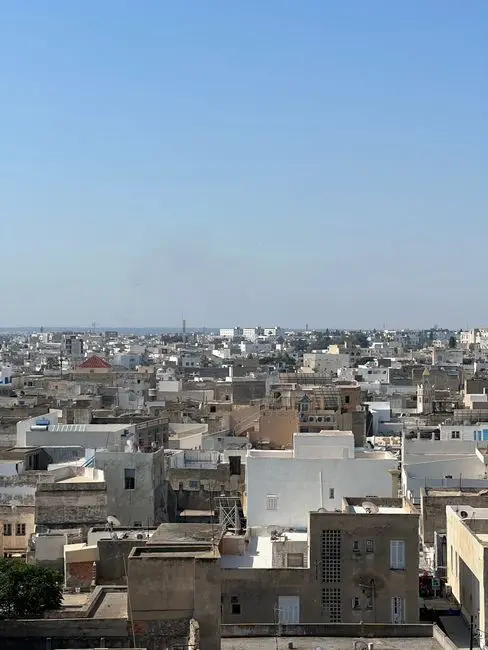
In the streets of Addis-Abeba, construction sites are multiplying. Cranes stand alongside donkeys, glass towers rise next to tin-roofed houses. This contrast is not a contradiction, but the reflection of a society in rapid transformation, still seeking its balance.
What if Ethiopia, rather than catching up to a Western model, is in the process of inventing another one?