



In a bustling alley in Libreville, a young man adjusts his helmet, eyes fixed on his smartphone screen. He is not delivering food, nor playing a game. He is coding. At 23, Jules is a self-taught developer and founder of a start-up specializing in mobile payment solutions. “Here, we can no longer wait for things to come to us. We have to create, even with little,” he confides, fingers always in motion. Gabon, long dependent on its natural resources, seems to be undergoing a silent transformation. A revolution driven by technology, boldness, and the urgency to reinvent the economy.
A connected youth, driving a renewal
With nearly 60% of its population under the age of 25, Gabon possesses an invaluable driving force. This youth, urban and hyper-connected, no longer waits for five-year plans or electoral promises to act. It creates, innovates, and organizes.
“My phone is my office, my school, my network,” explains Amina, 27, founder of an online store selling natural cosmetics. Launched on Instagram during the pandemic, her business now employs three people. “Before, we dreamed of leaving. Now, we dream of succeeding here,” she adds.
According to ARCEP, the mobile Internet penetration rate in Gabon exceeds 90%. A figure that is changing the rules of the game: access to information, training, and the global market is no longer the preserve of large companies. It is now in the palm of everyone’s hand.
An ecosystem under construction, between challenges and resilience
But building a business in Gabon is no easy path. Access to financing remains one of the main obstacles. Fewer than 5% of young entrepreneurs obtain a bank loan. Administrative procedures, often lengthy and opaque, slow down momentum.
“Setting up my business took me eight months. Eight months of paperwork, back-and-forth, and waiting,” says Alain, founder of an e-learning platform. Yet he has no regrets. “The day I received my first payment from Canada, I knew it was worth it.”
Faced with these difficulties, structures are emerging. The Gabon Numérique program, launched by the government, aims to digitize public administration and support innovation. Incubators such as Ogooué Labs and the Centre d’Innovation Numérique de Libreville support project holders. The road is still long, but the foundations are being laid.
Technology, a lever for inclusion and transformation
Beyond technology, a new way of thinking about the economy is taking hold. Technology is becoming a tool for inclusion, transparency, and sovereignty.
In the villages of Haut-Ogooué, a mobile application allows farmers to sell their products directly without going through intermediaries. “Before, I was selling my bunches of bananas at a loss. Now, I set my own price and deliver them myself,” says Jean-Baptiste, a producer in Franceville.
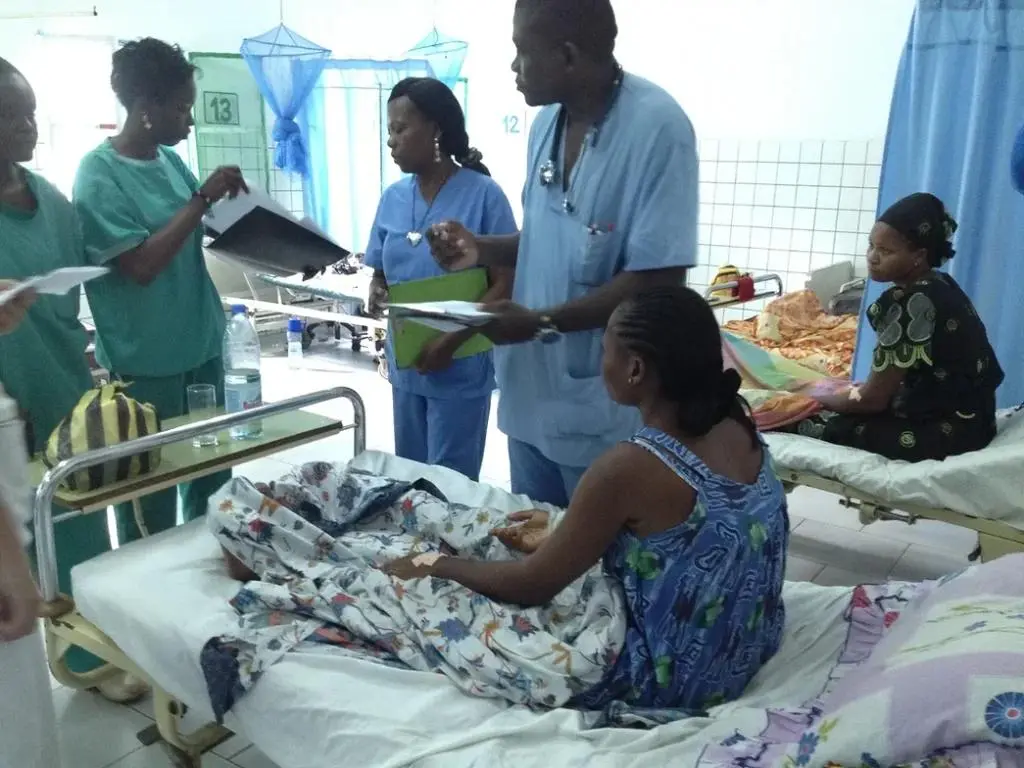
In the healthcare sector, start-ups are offering remote consultations, reducing inequalities in access to care. In education, local platforms are gradually replacing imported textbooks, with content adapted to Gabonese realities.
“Technology is not a luxury here. It is a necessity,” summarizes Mireille Ndong, a sociologist specializing in development. “It reconnects citizens to the economy, to their rights, to their future.”
A diaspora that returns and invests differently
Long perceived as a brain drain, the Gabonese diaspora is now becoming a key player in entrepreneurial renewal. An increasing number of expatriates are returning, driven by the desire to contribute to this transformation.
“I left Paris to open a coworking space in Libreville. My friends thought I was crazy,” smiles Stéphane, a graduate in engineering. Three years later, his space welcomes around a hundred freelancers, developers, and content creators. “Here, everything is yet to be done. It’s exhilarating.”
Money transfers, once intended for family expenses, are being transformed into investments in local projects. In 2023, more than 40% of funds sent by the Gabonese diaspora were reinvested in economic activities, according to the World Bank.
Women at the forefront of innovation
In this new entrepreneurial landscape, women occupy a central place. Many are launching start-ups, leading incubators, or training future generations in coding and entrepreneurship.
“Technology gave me a voice and a place,” says Clarisse, founder of a financial management application for women. “People often talk about women as victims of the system. I want people to talk about us as builders.”
Networks such as Les Femmes Numériques du Gabon and She Leads Africa are multiplying training sessions, fundraising efforts, and connections between women entrepreneurs. The change is visible, tangible, and above all, lasting.
Towards a Gabonese model of innovation?
Gabon is not trying to copy Silicon Valley. It is attempting to build a model that reflects its own identity, rooted in its realities, its resources, and its aspirations. A model where technology does not replace human beings, but strengthens them. Where innovation does not mean disconnection, but inclusion.
“What we are building here is not just a digital economy. It is a new way of living together, of producing, of dreaming,” concludes the Minister of the Digital Economy, Jean-François Yoka. “And this is only the beginning.”
As lines shift and codes change, one question remains: will Gabon succeed in turning this digital effervescence into the foundation of sustainable and equitable development?
To go further on innovation in Africa
This topic gains in value when linked to economic indicators, capitals, professions, and business opportunities across the continent.