
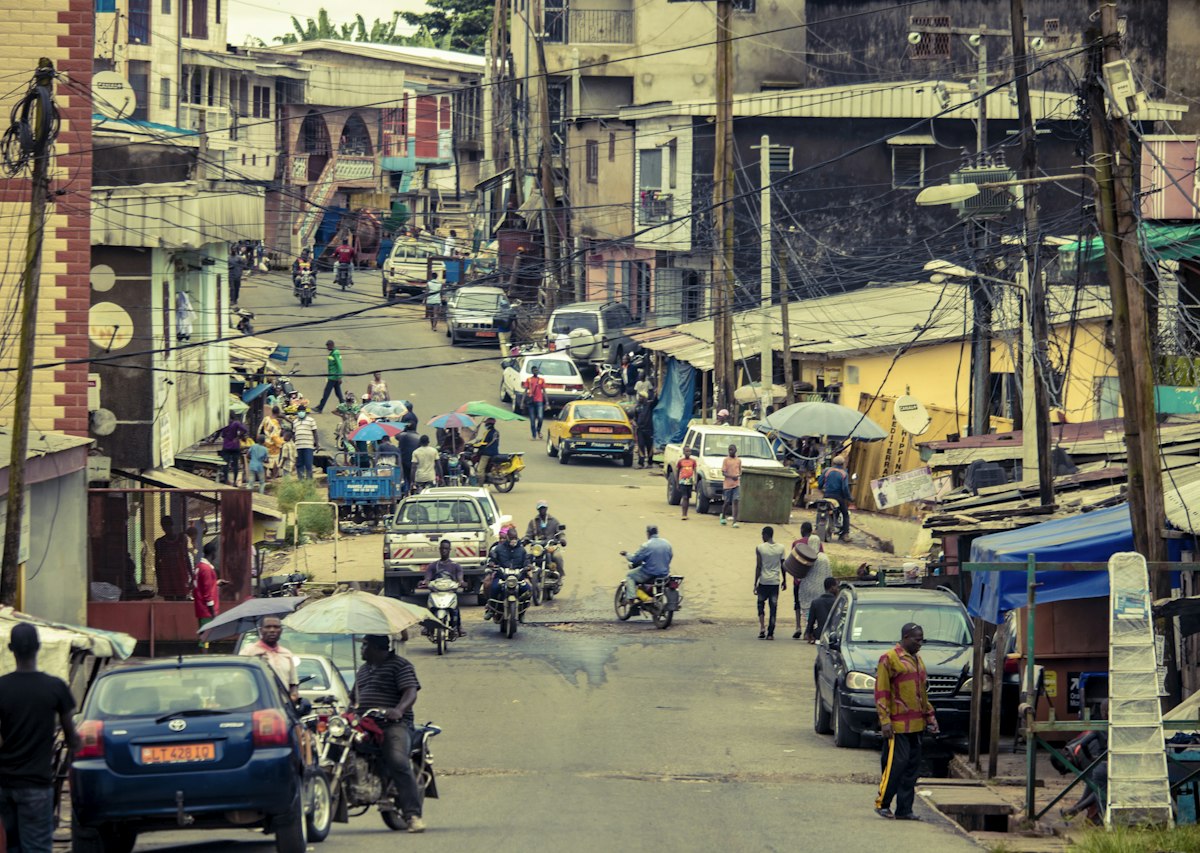
On paper, Central Africa has several of the ingredients necessary to build a genuine common economic area: a regional organization, a common currency, considerable resources, and more than 50 million consumers. Yet, for those who actually cross CEMAC’s borders, economic integration sometimes remains a promise more visible in texts than in daily life.
This is the central contradiction of the Economic and Monetary Community of Central Africa.
The free movement of people and goods is regularly presented as one of the pillars of this regional construction. But on the ground, traders, transporters, and workers can still find that moving from one member country to another does not necessarily mean traveling as within a genuine common market.
The Afriques newsletter
- Free & no spam
- 1 email per day
- Unsubscribe in 1 click
One scene sums up this reality quite well. A trader may have legally purchased goods in a neighboring country, have all their documents in order, and yet still lose several hours — or even more — at a border post dealing with formalities, checks, or procedures whose complexity ends up directly weighing on the final price of the product.
For those who make economic policy decisions, this is merely an administrative delay. For the trader, it is a lost working day. For the transporter, it means extra fuel and time. For the consumer, it ultimately means a more expensive product.
This is where economic integration must be judged: not only in texts, but in the wallets of those who live off the real economy.
CEMAC brings together Cameroun, the Central African Republic, Congo, Gabon, Equatorial Guinea, and Chad. These economies are different, but they are also deeply complementary.
Cameroun has a relatively diversified agricultural sector and entrepreneurial fabric. Gabon and Equatorial Guinea have significant natural resources. Congo has substantial oil, mining, and forestry resources. Chad occupies a strategic position between Central Africa and the Sahelian region. The Central African Republic also has significant agricultural and mineral resources.
Why, then, do trade flows between these economies still fall so far short of their potential?
The answer does not lie solely in production volumes. It also lies in the cost of circulation.
A company may produce more, but if transporting its goods to a neighboring country costs too much or takes too long, it loses part of its competitiveness. A poorly streamlined border then becomes an economic border, even when it should be nothing more than an administrative one.
This situation is particularly significant for small businesses.
For a large group, a logistical delay may represent just one difficulty among many. For a small business, it can jeopardize an entire commercial operation. It is often this reality — far less visible in macroeconomic statistics — that determines whether integration is actually working.
The common currency is nonetheless an important advantage. The Central African CFA franc facilitates transactions between member states and eliminates exchange rate risk within this area.
But a common currency does not automatically create a common market.
For that to happen, businesses must also be able to move, sell, invest, hire, and access financing under reasonably comparable conditions.
Economic convergence must therefore be conceived beyond the major budgetary indicators alone. It must also be measured by very concrete realities: how much does it cost to transport goods from Douala to Libreville? How long does it take to cross certain borders? How much does access to financing cost for an SME? How many procedures must be completed to set up or develop a business in another country of the community?
These questions may seem technical. They are not.
They directly determine the competitiveness of economies and the purchasing power of populations.
Another reality deserves to be faced squarely: regional integration is still largely driven by institutions, when it should be driven more by businesses and populations.
A Cameroonian SME wishing to capture the Gabonese market does not think in terms of community summits. It looks at its costs, timelines, taxes, payment terms, and the reliability of the logistics chain.
A young professional wishing to work in another CEMAC country does not think first about macroeconomic convergence. They want to know whether they will actually be able to cross the border, find a job, and have their skills recognized.
This may be the true test of integration.
CEMAC has the institutions. It has a common currency. It has resources and a significant regional market. But it must still transform this architecture into a simpler daily experience for those who produce, work, and invest.
Because successful economic integration should not only be perceptible in official communiqués. It should be visible in markets, in businesses, on roads, and at borders.
Conclusion
Central Africa does not necessarily need new ambitions. Above all, it needs the ambitions already declared to become measurable in real life.
The day an entrepreneur can consider the six CEMAC countries no longer as six separate markets, but as a genuine economic area; the day a worker can cross a border without it becoming a professional obstacle; the day goods can move with greater predictability and speed — then integration will have truly changed in nature.
The challenge is therefore no longer simply to build CEMAC on paper.
It is to ensure that citizens, traders, and businesses can finally feel it.

Guy Samuel Nyoumsi
Guy Samuel Nyoumsi is a geopolitical analyst, president of Solidarité Africaine de France (SAF), former vice-president of the Representative Council of Black Associations of France (CRAN), international election observer and head of an electoral observation mission in Cameroon in 2018. Engaged for several years on African issues, sovereignty, international relations and the condition of Black populations in France, he develops an approach combining strategic analysis, historical perspective and analysis of contemporary political dynamics.
View all articles →