



When you walk along the quays of the port of Tanger Med in the early morning, the ballet of containers, the honking of trucks and the brief shouts of dockers compose an unexpected industrial symphony. On the horizon, the metallic silhouettes of giant cargo ships bear witness to a profound change: this city in northern Morocco, once a peaceful Mediterranean stopover, has become one of the nerve centres of African industry.
A shift that began in the early 2000s
It all began with a major political decision in 2003: the construction of the port of Tanger Med. At the time, few could have imagined the scale of this project. Located 45 kilometres east of Tanger, this deep-water port was intended, according to the Moroccan authorities, to reposition the country in global trade.
« It was a crazy bet », recalls Youssef Benhaddou, an engineer who took part in the first phases of the construction project. « We were starting from scratch, on a virgin coastline. But the ambitions were clear: to make Tanger a gateway to Europe, Africa and America. »
The port of Tanger Med is today the leading container port in Africa and the leading port in the Mediterranean in terms of capacity. In 2023, it handled more than 8 million TEU (twenty-foot equivalent units) containers, surpassing historic ports such as Valencia or Piraeus.
A geographical position that changes everything
What is the secret of Tanger? Its location. Just 14 kilometres from Spain, the city sits at the crossroads of two continents and on the world’s busiest shipping route: the Strait of Gibraltar.
« Tanger is three days’ sailing from New York, ten hours from Rotterdam and two hours from Casablanca by train », explains Salma El Idrissi, an international logistics consultant. « It is a strategic transit point for East-West and North-South flows. »
This geographical situation has convinced many multinationals to set up their industrial bases there. Today, more than 1,100 companies operate in the region, in sectors as varied as automotive, aeronautics, textiles and agri-food.
The automotive industry boom
The decisive turning point came in 2012 with the inauguration of the Renault-Nissan plant in Melloussa, about thirty kilometres from Tanger. It is the largest automotive plant in Africa, with a production capacity of 400,000 vehicles per year.
« This site changed everything », says Ahmed Tazi, a worker who has been on the assembly line for ten years. « Before, people went to look for work in Rabat or Casablanca. Now, this is where people come. »
The models produced in Tanger, such as the Dacia Sandero or the Renault Express, are exported to more than 70 countries. The automotive industry now accounts for more than 50% of Morocco’s industrial exports, with a turnover exceeding 10 billion euros in 2022.
Around Renault, an ecosystem of more than 250 suppliers has developed, creating tens of thousands of direct and indirect jobs. Among them, names such as Valeo, Yazaki and Lear Corporation have invested heavily in the region.
A model of logistical integration
What also sets Tanger apart is its integrated logistics model. The port of Tanger Med is connected to an industrial free zone of more than 2,000 hectares, called Tanger Med Zones, where companies benefit from tax advantages and state-of-the-art infrastructure.
« Here, a container can travel from the quayside to the factory in less than two hours », assures Fatima Zahra El Amrani, director of a logistics warehouse. « It is a fluidity that cannot be found anywhere else in Africa. »
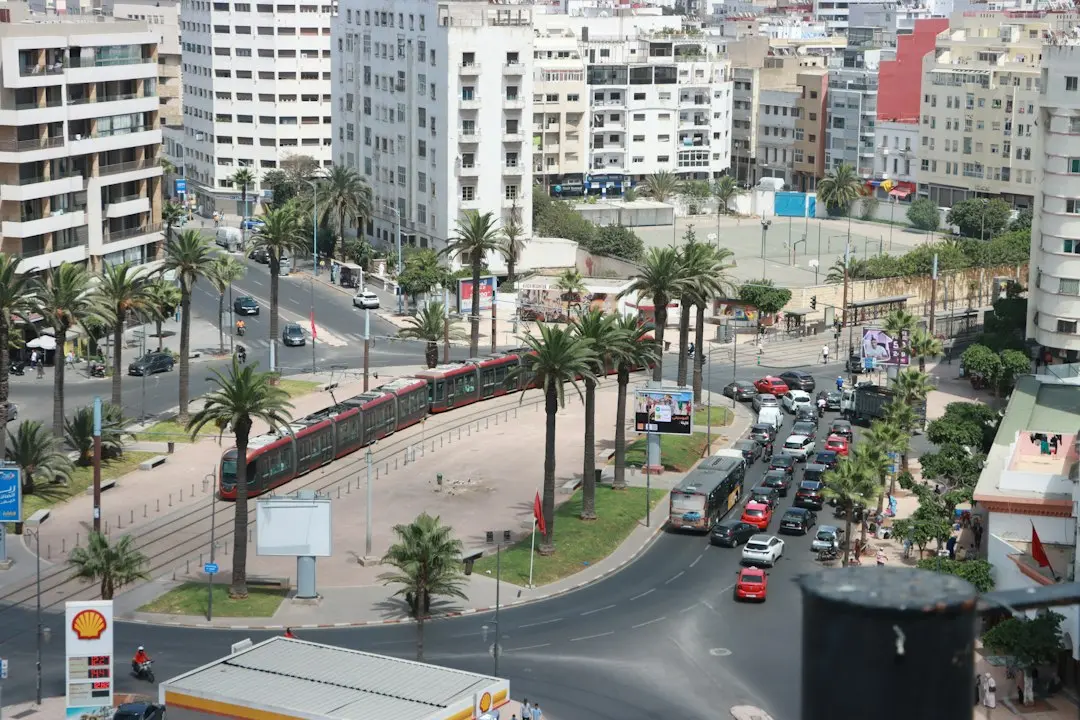
The high-speed rail network, modern motorways and air connections further enhance this efficiency. In 2018, Morocco inaugurated Africa’s first high-speed rail line, connecting Tanger to Casablanca in two hours.
The result: logistics costs are reduced, lead times shortened, and the region’s competitiveness boosted.
A pool of skilled labour
But Tanger’s success does not rest solely on infrastructure. The other pillar is training. The Moroccan government, in partnership with industrialists, has invested in vocational training centres tailored to the needs of the market.
« Before being hired, I completed six months of training at a centre dedicated to the automotive sector », says Samira, 26, a quality technician. « You learn the techniques, the rigour, the safety standards. It really prepares you for the job. »
Each year, nearly 20,000 young people graduate from the region’s specialist institutes. A dynamic, often bilingual youth that attracts foreign investors looking for talent at lower cost.
The average salary in Tanger’s industry remains modest – around 3,000 dirhams per month (approximately 270 euros) – but it offers stability and prospects to a population that has long been marginalised.
Challenges to be addressed for the future
Despite this impressive picture, Tanger faces several challenges. The rapid urbanisation of the city, whose population has doubled in twenty years, is putting pressure on public infrastructure, housing and social services.
The environmental issue is also crucial. Massive industrialisation is having an impact on water resources, air quality and coastal ecosystems. Local NGOs are raising the alarm about pollution generated by certain factories and the lack of effective oversight.
Finally, dependence on a few large groups, particularly in the automotive sector, exposes the region to the vagaries of the global market. A more advanced diversification of industrial sectors would be necessary to guarantee sustainable growth.
Yet, despite these shadows, Tanger continues to attract. In 2023, more than 3 billion euros of investment were announced, particularly in renewable energies, green logistics and cutting-edge technologies.
As the sun rises over the shores of the strait, one question remains: how far will Tanger go in its industrial metamorphosis?