

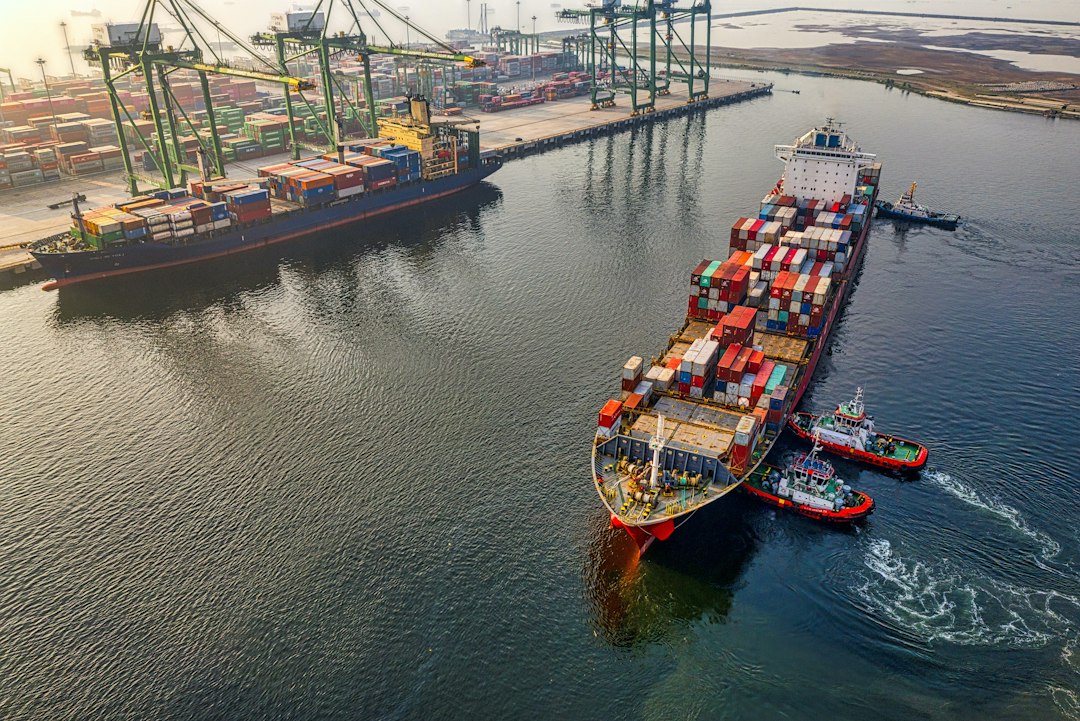
Strange formatting of our brains, more accustomed to binary visions than to the nuance of balanced systemic analyses, in which the world is never black or white but closer to a rainbow of which we need every colour. This is what must be discovered and understood in the case of the place of India and China in Africa, because these two giants now present themselves as the continent’s major partners, if one excludes the rather artificial aggregate of the European Union — which has no real consistency as a whole and is now in decline — while the third great American power is more preoccupied with the Asia-Pacific.
We know the ready-made ideas: China has invaded Africa, to the point of almost having neo-colonised it, and India would now come, in a certain way, to the rescue of Africans by offering an alternative to the wicked predatory dragon. Things seem far less caricatured, and understanding the respective place of each of the two Asian giants in the great African game is a major key in the development of winning strategies for Africa, but also for Europeans on the continent.
India’s growing place in African trade
On their respective places first, it is entirely accurate that India is asserting itself as a growing partner for Africa. The paradox is even that the African continent now counts more in Indian foreign trade — where it ranks at the top of Delhi’s exports — than in Chinese trade, where it ultimately occupies a fairly marginal place compared to the American, European and Asian markets. And this, simply given the relative size of Africa, which remains a commercial dwarf (apologies for the expression) quite incapable of driving Chinese exports, still the only engine of that country’s growth.
The Afriques newsletter
- Free & no spam
- 1 email per day
- Unsubscribe in 1 click
India’s geographical and historical dynamic
On the dynamic next, it is appropriate to call upon geography, which serves not only to wage war, but also to understand the map of international relations, with neighbourhood effects that are mostly determining for obvious reasons of transport costs and, more broadly, transaction costs. Here, India’s proximity to Africa is striking for anyone who, like me, travels regularly between Bombay and most African capitals in the East. Knowing furthermore that the great Indian conglomerates are all based in the Gulf countries, where they conduct their pan-African strategy, or more directly from a little-known base, Mauritius, through which half of India’s foreign direct investments transit for tax reasons. But geographical proximity goes well beyond the 4,000 km separating Bombay and Addis-Abeba, for example, against 8,000 with Pékin. This is a historical proximity and one of economic models.
Historical proximity, with maritime exchanges in that inland sea of monsoon winds that is the Indian Ocean, dating back to Antiquity (the spice route), which also explains why the intensity of the Indian presence decreases as one moves from east to west across the African continent. A colouring found in the importance of Indian diasporas in Africa, with veritable Little India in all East African countries, such as Dar es Salam or Kampala for example. But the shift westward has been very rapid since the discovery of nuggets like Nigeria or Sénégal, very attractive to Indian companies that have generally operated on the western part of the continent from an extraordinary base: South Africa. There one finds a veritable colony of Indian billionaires, such as Atul Gupta, Satyanarayan Nandlal Nuwa or the Reddy, who took root there following migrations brought along by English colonisers (and French ones too for that matter, as in Réunion, Maurice or Madagascar). How could one forget, indeed, that the lawyer Gandhi made his first experiences of non-violent struggle there. In total, nearly 4 to 5 million Indians in Africa, compared to barely one for the Chinese diaspora.
Economic models that are cousins of Africa
Most important, however, is the proximity of Indo-African economic models, exemplified by Made in India products that have made their fortune in Africa in recent years: two- or three-wheelers, including those famous Bajaj three-wheelers capable of transporting around twenty schoolchildren for a few cents each; or the Kirloskar water pumps, omnipresent in rural areas; or all the other Indian products considered simple and robust, where China has evolved towards products that are no doubt much cheaper but of poor quality and more costly in use, in terms of repair and tinkering. One recalls finally the incredible success of Indian telecommunications leader, Airtel. This Indian giant has in fact established in Africa the business model allowing every African to use their mobile for a few cents a day thanks to prepaid cards, and in particular for Internet applications such as mobile banking, which has established itself in Africa as the only winning model in the sector.
The reason for these silent Indian successes: exceptional entrepreneurs, who never come in an imperial delegation like the Chinese, but as veritable small streams of voracious entrepreneurs, whose business model can be summed up in one word: being adapted to populations living frugally. For such is the lot of life for Indians, half of whose population lives on less than five dollars a day, much like in Africa, whereas this proportion has fallen to less than 5% of the Chinese population. The same applies to the role of states and collective infrastructure, hyper-developed in China but in total distress in India and Africa. Hence radically different economic solutions, as in health or energy, with the crucial role of generic medicines or hyper-decentralised solar and wind installations, instead of veritable fields of Chinese wind turbines or panels.
Complementarity rather than rivalry
But this does not mean that the Chinese offering would be ill-suited to African conditions. Quite the contrary, for anyone who sees every day Made in China invading markets across a growing range of products ranging from shoes to textiles, and of course covering the entire range of electronic products. As many domains where India is absent, because it does not know how to engage in this kind of mass production for mass distribution. Such is the key to the respective place of China and India in Africa: each has its place, and in its place, according to their respective endowments in comparative advantages, as one says in economic theory. China impresses with its financing and the efficiency of its workers on construction sites, while India appears rather in a much more discreet way, through networks of decentralised family traders and industrialists, and in domains very complementary to China’s strengths and weaknesses. What is certain is that both Asian giants consider Africa to be one of the keys to their commercial future, but equally their geopolitical future, for a continent that carries 55 votes at the UN.
It is up to Africans to understand the strengths and weaknesses of each and to play finely on their competition and complementarity for their own benefit. Examples abound where placing Chinese and Indian partners in the same project can be an optimal solution to ensure the maximum chances of success for the project and the maximum autonomy for project holders. Such is the case in mining, energy, but also now in textile factories and tomorrow in automobiles. I will always remember a visit to the Dangote conglomerate in Lagos, for example, where most of the equipment came from China, but whose number two in the group was an Indian exceptional manager, where the Chinese generally make a poor showing due to a very vertical and rigid social model, as opposed to the agility of Indians, linked to their survival instinct in a universe characterised by generalised chaos — a common point with most African countries, is it not?

Jean-Joseph Boillot
Economist and associate research fellow at IRIS, and author of Chindiafrique, a reference work on China-India-Africa relations.
View all articles → · LinkedIn ↗ · www.iris-france.org/chercheurs/jean-joseph-boillot/ ↗