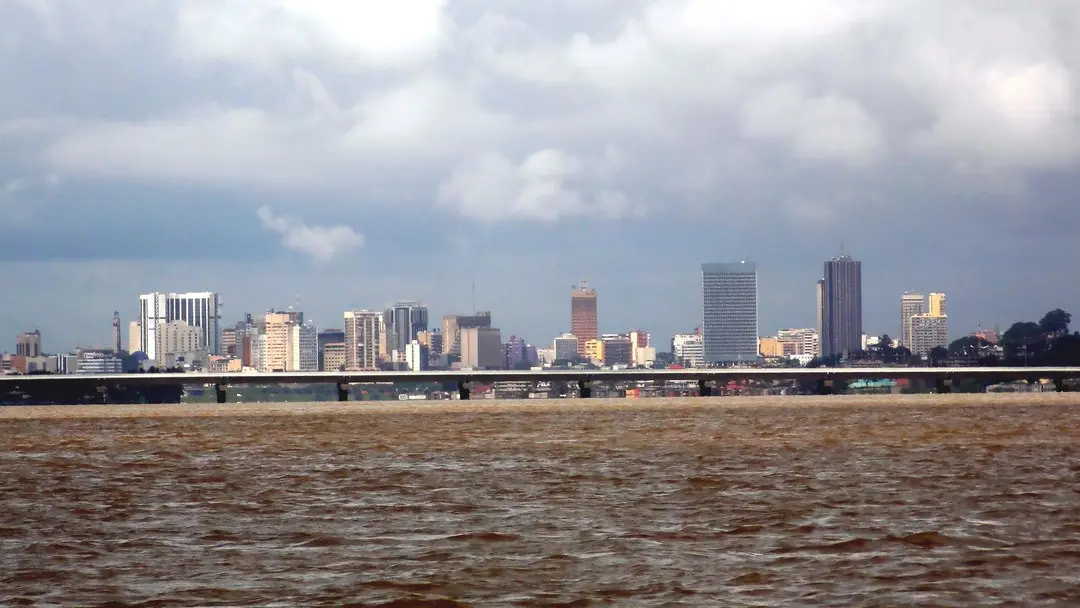

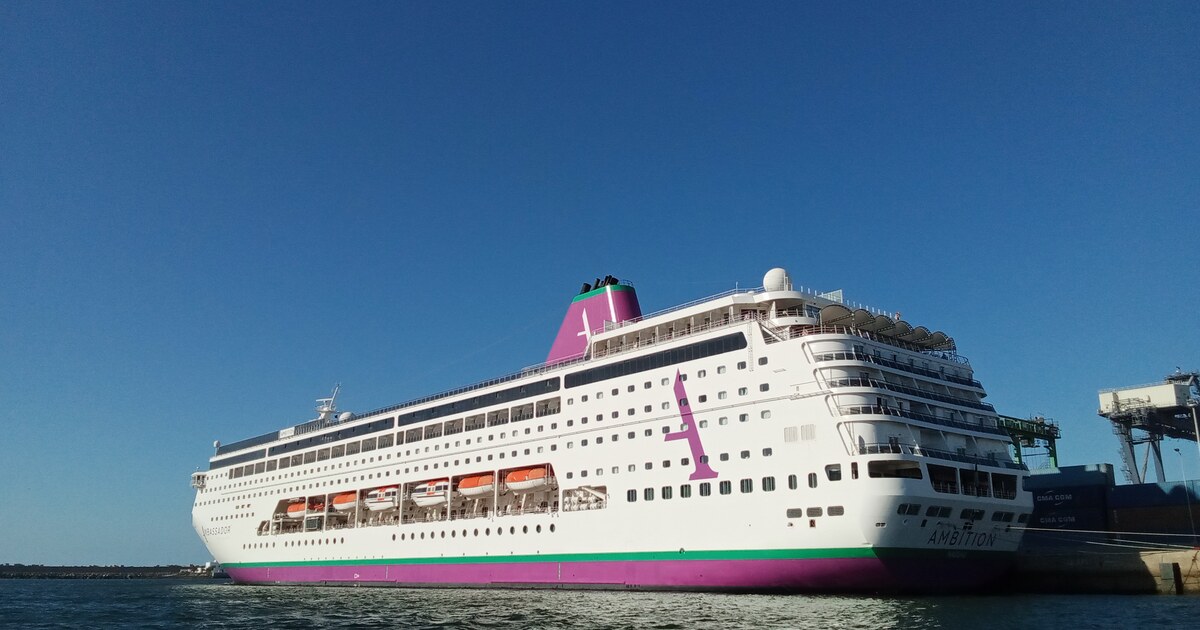
Morocco handled 383,231 cruise passengers in 2025 — a 41.7% year-on-year increase — according to port-traffic data published by the National Ports Agency (Agence Nationale des Ports, ANP) and the Ministry of Infrastructure and Water. That figure brings the country back to levels last seen in the early 2010s, when Moroccan ports were receiving up to half a million cruise visitors a year.
The headline number deserves context. The global cruise industry is booming, but the Africa and Middle East destination region actually lost 11.6% of its passengers in 2025. Morocco now accounts for roughly 84% of all cruise arrivals in that entire region — a dominance that flatters the Kingdom while underlining how thin the continent’s overall cruise footprint remains.
The Global Picture: 37.3 Million Passengers and Counting
Cruising recorded its fourth straight year of growth in 2025. The Cruise Lines International Association (CLIA) global economic-impact study, presented in November 2026 at the Cruise Forward summit in Miami, confirmed 37.3 million ocean cruise passengers — up 7.7% on 2024. CLIA projects 39.1 million passengers in 2026, an all-time industry record.
The Afriques newsletter
- Free & no spam
- 1 email per day
- Unsubscribe in 1 click
| Year | Global Cruise Passengers | Change |
|---|---|---|
| 2024 | 34.6 million | — |
| 2025 | 37.3 million | +7.7% |
| 2026 (CLIA forecast) | 39.1 million | +4.8% |
| 2027 (CLIA forecast) | 40.3 million | +3.1% |
Supply is heavily concentrated. For 2026, the Caribbean accounts for 37% of available passenger-days, followed by the catch-all “rest of world” category at 28% and the Mediterranean at 17%. Northern Europe holds 12%, Alaska and British Columbia 6%, and the Middle East less than 1%.
On the demand side, North America generated 22 million cruise passengers in 2025, Europe 8.8 million, Asia 3 million, Australia and the Pacific 1.5 million, and Latin America 1.2 million. CLIA’s global order book stands at 91 vessels scheduled for delivery through 2039, representing more than $100 billion in investment — 52 of those ships are designed to run on multiple fuel types.
Morocco: The Numbers Behind the 41.7% Surge
Total Moroccan port throughput also set records in 2025 — 262.6 million tonnes of freight (+8.9%) and 5.59 million total passengers (+5.4%), according to the Ministry of Infrastructure and Water. Cruise traffic outpaced overall passenger growth by a wide margin: 383,231 cruise arrivals represents growth nearly eight times faster than the broader passenger segment.
The momentum was already clear in the first half of the year. Between January and June 2025, Moroccan ports received 170,257 cruise passengers, up from 96,664 in the same period of 2024 — a 76.1% jump. Three ports drove the gains: Tangier-Ville, Casablanca and Agadir.
| Port | Cruise Passengers, H1 2025 | Year-on-Year Change |
|---|---|---|
| Tangier-Ville | 68,555 | +185.6% |
| Casablanca | 57,608 | +43.0% |
| Agadir | 43,762 | +36.0% |
| All Moroccan Ports | 170,257 | +76.1% |
Two structural shifts explain most of the recovery. First, Casablanca’s new dedicated cruise terminal opened on 18 September 2025: within fewer than four months it had handled 53 vessel calls and 93,970 passengers, according to ANP. Second, Tangier-Ville has scaled rapidly — by end-October 2025 it had logged 123,124 cruise passengers, up 114.8% year-on-year, building on the roughly 104,000 passengers it received across all of 2024.
Safi does not yet appear in ANP’s cruise breakdown for the period, pointing to irregular berthing activity. The recovery is also worth measuring against the country’s own history: after a golden era in the early 2010s — up to 500,000 cruise passengers a year — traffic had fallen to around 227,000 in 2018 before the near-total shutdown triggered by the pandemic.
Africa’s Uncomfortable Reality: 1.2% of World Cruise Traffic
The marketing releases tend to skip over this part. While global cruise volumes climbed, the Africa and Middle East destination region contracted: 457,800 passengers in 2025, down 11.6% year-on-year, representing just 1.23% of the world total, according to CLIA data. The industry’s growth engine is running in the Caribbean and Mediterranean — not on this side of the Atlantic or the Indian Ocean.
Morocco’s outperformance is real, but it also distorts the regional picture. At 383,231 passengers, the Kingdom absorbs an estimated 84% of all cruise arrivals in Africa and the Middle East. Strip Morocco out and the rest of the region is negligible by global standards.
| Market | Passengers | Period | Change |
|---|---|---|---|
| Africa & Middle East (destination region) | 457,800 | 2025 | −11.6% |
| of which Morocco | 383,231 | 2025 | +41.7% |
| Cape Town, South Africa | 127,000 | 2024/25 season | +63% vs 2022/23 |
| Cabo Verde | 110,554 | 2024 | +27.2% |
| Mombasa, Kenya | 4,889 | 2025/26 season | Record high |
Cape Town offers an instructive comparison. The city welcomed 70 ships and around 78,000 passengers in 2022/23, then 79 ships and 127,000 passengers in 2024/25 — average annual growth of 16%, against the global industry’s 9%, according to Western Cape tourism-promotion agency Wesgro. Cruise activity contributed 5.32 billion rand (≈ $290 million at prevailing rates) to South Africa’s GDP over three seasons, including 3.04 billion rand (≈ $166 million) in foreign-currency earnings.
Kenya is pursuing a different angle: the hinterland. The Kenya Wildlife Service introduced a 30% group discount in March 2026 for cruise passengers visiting Tsavo and Amboseli national parks, with the stated goal of lifting the share of passengers who extend their stay into the parks from 20% to 40%. The country is targeting 2 billion Kenyan shillings (≈ $15.5 million) in revenue from 12,000 cruise visitors.
What a Port Call Is Actually Worth
The economic case for chasing cruise traffic hinges on onshore spending. Moroccan industry professionals estimate the average cruise passenger spends between 50 euros (≈ $54) and $100 per port call — covering excursions, meals, crafts and local transport. Scaled to 383,231 passengers, that range translates to roughly 19–38 million euros (≈ $20–41 million) in direct annual expenditure, before indirect effects on hotels, licensed guides and port logistics are counted.
By Mediterranean or Caribbean standards, those figures are modest. Longer dwell times and higher average onshore spend in those mature markets set the bar Morocco is working toward. That is precisely why Moroccan authorities are focusing less on raw vessel numbers and more on extending call durations and increasing the value of each visit.
Transit Stop vs. Home Port: The Structural Ceiling
Morocco remains overwhelmingly a port-of-call destination, not a departure point. Major cruise lines — MSC Cruises, Costa, Explora Journeys, Ponant and Club Med — route vessels through Tangier, Casablanca and Agadir, but no operator currently begins or ends large-scale rotations there. The country has no domestic cruise fleet.
Moroccan operators therefore focus on high-value land-side services: travel agencies distributing international cruise products, shore-excursion specialists, licensed guides, tourist transport and port logistics providers. Several have developed Fly & Cruise packages that combine a flight, a stay in Morocco, and embarkation from a European port such as Barcelona, Genoa or Lisbon.
The constraints are well-documented. Port call durations are short. Dedicated passenger infrastructure remains insufficient at several ports. Throughput efficiency at reception points needs improvement. Spanish, Portuguese and Italian ports compete directly for itinerary slots. And environmental compliance is increasingly non-negotiable: cruise lines now prioritise ports offering shore power (cold-ironing) and certified waste management. CLIA reports that 73% of its current fleet capacity — 193 vessels — is already equipped for shore-power connection.
Several industry professionals believe Morocco could double its cruise traffic over the medium term if it upgrades port attractiveness and builds genuine homeport capability. The 2030 FIFA World Cup, which Morocco is co-hosting, is the focal point for that ambition.
A Domestic Market Takes Shape
Outbound demand from Moroccan residents is also growing. Travel agency MaCroisiere.ma reports that cruise bookings rose 44% in September–October 2026 compared with the same period the prior year. That figure comes from a commercial press release by the agency and has not been corroborated by any public statistical source; it should be read as an operator-level activity indicator, not a port-traffic measurement.
The broader trend, however, is documented. Cruising long carried a reputation in Morocco — as elsewhere — as a product for older, high-income travellers. The spread of early-booking promotions and all-inclusive pricing has widened the customer base. Moroccan agencies partnering with MSC or Norwegian Cruise Line are investing in higher marketing budgets, VIP events and influencer campaigns to accelerate awareness.
One caveat matters for anyone assessing local economic impact: an increase in Moroccan residents booking cruises does not automatically translate into more vessel calls at Moroccan ports. If those residents embark in Barcelona or Lisbon, the revenue accrues to foreign ports and operators. Converting domestic cruise demand into local port revenue depends entirely on Morocco’s ability to develop homeport infrastructure — the same challenge it has yet to fully crack.
Frequently asked questions
How many cruise passengers did Morocco receive in 2025?
383,231, a rise of 41.7% on 2024, according to ANP and the Ministry of Infrastructure and Water. Total Moroccan port passenger traffic — including ferry services — reached 5.59 million (+5.4%).
Which Moroccan port leads for cruise arrivals?
Tangier-Ville, with 68,555 cruise passengers in the first half of 2025 alone (+185.6%), ahead of Casablanca (57,608, +43.0%) and Agadir (43,762, +36.0%). By end-October 2025, Tangier had registered 123,124 cruise passengers for the year, up 114.8% year-on-year.
What share of global cruise traffic does Africa hold?
The Africa and Middle East destination region accounted for 457,800 cruise passengers in 2025 — roughly 1.2% of the global total — and that figure fell 11.6% year-on-year, according to CLIA. Morocco alone represents approximately 84% of that regional total.
When did Casablanca’s new cruise terminal open, and what has it delivered?
The terminal opened on 18 September 2025. Within fewer than four months it processed 53 ship calls and 93,970 passengers, according to ANP data.
Also read: Investing in Morocco: promising sectors, risks and opportunities 2026 · Morocco vs Tunisia: where should you invest in 2026?
Source: Cruise Lines International Association (CLIA) — State of the Cruise Industry Report 2026 and Global Economic Impact Study 2025; National Ports Agency (ANP) — national traffic statistics; Ministry of Tourism, Handicrafts and Social Economy — 2025 key figures. Methodology note: global volumes are drawn from CLIA publications; Moroccan volumes from ANP and Ministry communiqués. African market data for Cape Town, Cabo Verde and Mombasa are sourced from promotional agencies and specialist press as indicated. The 2026 and 2027 growth rates are calculated from CLIA forecasts. This article contains a sponsored link to MaCroisiere.ma.