
The irrigated perimeter of Baguinéda, one of Mali’s key agricultural zones, is changing leadership. Adama Daou officially took the helm of the Office du Périmètre Irrigué de Baguinéda (OPIB) on Thursday, October 1st, 2026, following a handover ceremony held at the institution’s premises. A transition made in continuity: the new director general had until then been serving as deputy director general of the same organization.
A profile forged in irrigated agriculture
An Agricultural Engineer holding a master’s degree in project management, Adama Daou has nearly 30 years of experience in Mali’s agricultural sector. His career, primarily focused on agricultural development and support for rural stakeholders, led him to occupy the number two position at OPIB before becoming its director general. This internal trajectory offers a distinct advantage: a thorough understanding of the perimeter’s operational realities, including its land, hydraulic, and human constraints. It nonetheless raises a question the communiqué does not address — that of the strategic renewal that an internal promotion may or may not bring to an institution.

The Afriques newsletter
- Free & no spam
- 1 email per day
- Unsubscribe in 1 click
An office at the heart of food security
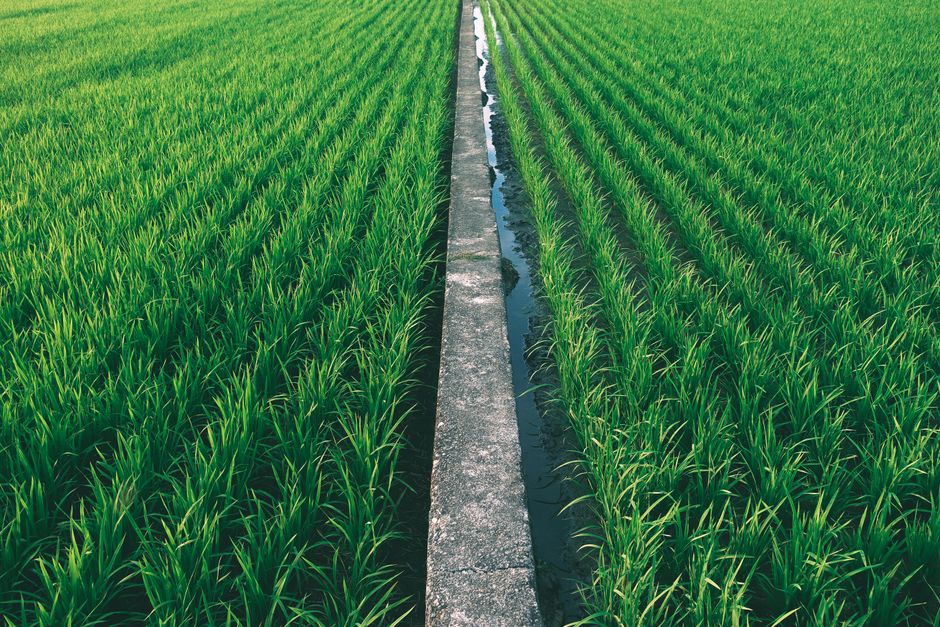
OPIB manages one of Mali’s oldest irrigated perimeters. Located about forty kilometers northeast of Bamako, Baguinéda concentrates irrigated agriculture oriented toward market gardening and rice cultivation, contributing to the supply of the capital. In a context where Mali faces structural challenges around food security — exacerbated by security tensions in some of the country’s producing zones — the performance of state-controlled irrigated perimeters takes on particular importance.
According to AMAP, Adama Daou intends to focus his efforts on improving agricultural production and strengthening the Office’s contribution to food security. These are broad objectives, whose concrete details — timeline, indicators, resources mobilized — are not specified in the information available at this stage.
What the handover does not say
The communiqué remains silent on several points that nonetheless condition the real scope of this appointment. The outgoing director general’s track record is not mentioned: what objectives had been set, and which ones were achieved? Is OPIB facing specific challenges — underfunding, aging hydraulic infrastructure, water use conflicts — that the new director will need to address as a priority? Finally, the question of resources allocated to the Office, in a context of budgetary constraints for the Malian state, is not addressed.
The appointment of an experienced internal executive may signal a desire for institutional stability and continuity. It may also reflect a degree of caution in the face of the scale of the work ahead. Adama Daou’s ability to bring new momentum while capitalizing on his knowledge of the field will be the true test in the months to come.
Source: AMAP (Agence Malienne de Presse et de Publicité), 2 October 2026