


Why Côte d’Ivoire attracts diaspora investors
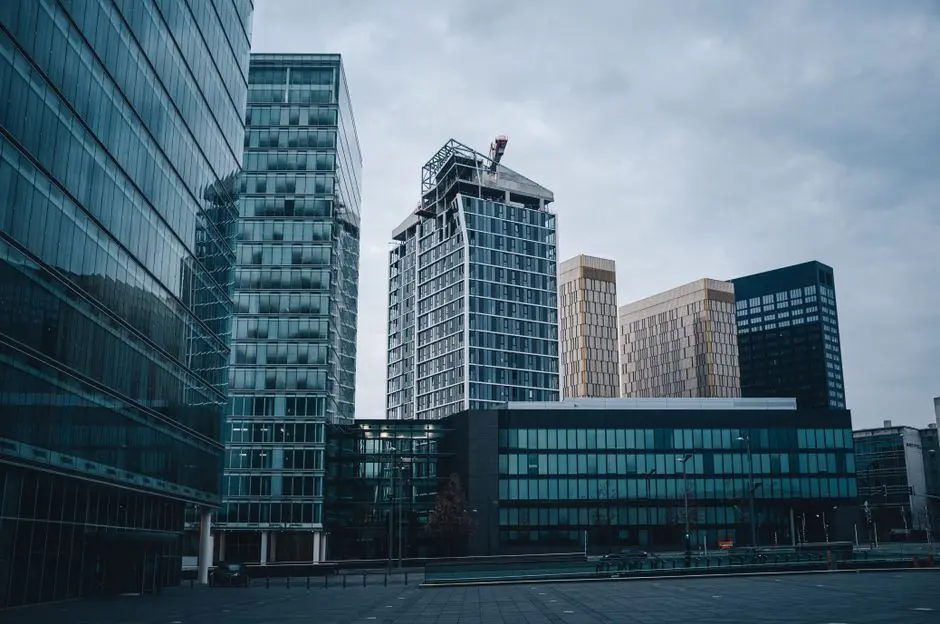
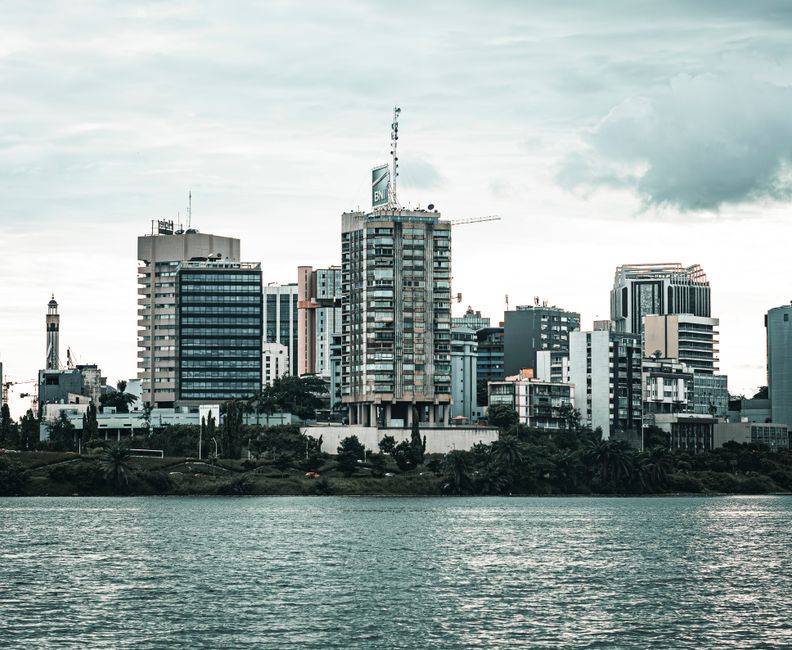
Côte d’Ivoire has become one of the most closely watched real estate destinations in West Africa. As the economic engine of UEMOA, the country boasts sustained growth and rapid urbanization, driven by Abidjan and its metropolitan area of more than 6 million inhabitants. Rental demand is structurally strong: expatriate executives, international institutions, companies, and an expanding middle class are competing for a housing stock that remains insufficient, particularly in the mid- and high-end segments.
The weight of the diaspora is a decisive lever. Estimated at more than 1.2 million people spread across more than 140 countries, the Ivorian diaspora transferred approximately 938.8 billion CFA francs to the country in 2025, after 840 billion in 2024 and 640 billion in 2023 — a rise of more than 540% over fifteen years according to the ministry responsible for Ivorians abroad. A growing share of these flows is being directed toward real estate, perceived as a tangible, transferable asset denominated in a stable currency, the CFA franc (XOF), pegged to the euro.
Investing from abroad is possible and even encouraged: in urban areas, land ownership is open to everyone, including non-nationals and legal entities. However, it is essential to master the actual prices, the yields, and above all the documentary chain for land, where most of the risks are concentrated. Here is the data-driven overview for 2026.
Price per m² in Abidjan, district by district
Abidjan concentrates most of the value. The average price per habitable square metre comes out at around 560,000 FCFA according to market aggregators, but the gaps between districts range from 1 to 4: buying in Le Plateau or in Yopougon is almost like buying in two different cities.
Cocody remains the residential safe haven, with its international schools, embassies, and security. Prices observed in 2025 range from 480,000 to 650,000 FCFA/m² in Riviera 2 and 3, from 550,000 to 700,000 FCFA/m² in Deux-Plateaux Vallon, and from 600,000 to 800,000 FCFA/m² in Riviera Golf and Bonoumin. In the most upmarket segments of Angré or Riviera Golf, some listings exceed 1 million FCFA/m².
Marcory Zone 4 and Biétry, close to the airport and popular with expatriates and NGOs, are trading between 500,000 and 750,000 FCFA/m², with peaks at 900,000 FCFA/m² for lofts on the lagoon’s edge. This is one of the most dynamic markets in Abidjan in 2026.
Le Plateau, the administrative and business heart, offers little residential property but the highest price per square metre: from 850,000 to 1,200,000 FCFA/m², and up to 1,300,000 to 1,500,000 FCFA/m² for upscale apartments in the city centre. Demand here comes mainly from senior executives and expatriates on assignment.
Yopougon is the most accessible entry point: the price per m² starts at around 200,000 to 350,000 FCFA, making it the most affordable district in Abidjan for a first purchase. Bingerville, rapidly expanding to the east, attracts young professionals and first-time buyers with villas starting at around 50 million FCFA and plots whose price per m² remains well below those of the city centre (around 40,000 FCFA/m² in some housing developments).
| District / area | Price per m² (purchase) | Estimated gross rental yield |
|---|---|---|
| Plateau (city centre) | 850,000 – 1,500,000 FCFA | 8 – 10 % |
| Cocody (Riviera, Deux-Plateaux) | 480,000 – 800,000 FCFA | 8 – 12 % |
| Marcory Zone 4 / Biétry | 500,000 – 900,000 FCFA | 10 – 12 % |
| Yopougon | 200,000 – 350,000 FCFA | 10 – 14 % |
| Bingerville (eastern outskirts) | 250,000 – 450,000 FCFA (villas from 50 M) | 8 – 12 % |
These ranges are indicative and vary considerably depending on the standard, floor, proximity to main roads, and the nature of the title. A property “without papers” or with a simple village attestation is negotiated well below these prices, but carries a major legal risk.
Rental yields among the highest in the region
Profitability is the central argument of the Ivorian market. Reference data indicates a gross rental yield of approximately 10% in the city centre and up to 14.26% outside the city centre — levels well above those of major European cities, with peaks of around 12% in the high-end segment.
These yields are explained by high rents relative to still-contained purchase prices, and by sustained rental demand. As an example, unfurnished monthly rents in Cocody range from 150,000 to 400,000 FCFA for a 2-to-4-room apartment in Riviera 2, from 300,000 to 1,200,000 FCFA for a 3-to-5-room apartment in Riviera 3 and 4, and from 400,000 to 1,700,000 FCFA in Deux-Plateaux Vallon. In Angré, a studio or 2-room apartment rents for between 80,000 and 250,000 FCFA. A one-bedroom apartment in the city centre rents on average for around 395,000 FCFA, and a three-room apartment for up to 2 million FCFA at the best addresses.
The short-term and furnished rental segment, driven by visiting diaspora members, business travellers, and expatriates, offers even higher income, at the cost of more active management and an occupancy rate to monitor.
Legal framework: what you need to know before buying
Ivorian land law distinguishes two regimes. In urban areas, ownership is open to everyone, including foreigners and legal entities, by virtue of law n° 2020-624 of 9 October 2020 establishing the Urban Planning and Urban Land Code. In rural areas, full ownership remains reserved for the State, public authorities, and persons of Ivorian nationality; a non-Ivorian may hold rights there through a long-term lease (bail emphytéotique) of 18 to 99 years. For a diaspora investor, the rule is therefore simple: prioritise the urban domain.
The key document is the Arrêté de Concession Définitive (ACD). It is the one and only act that confers ownership over the urban land domain. It is signed by the minister responsible for Construction for the autonomous District of Abidjan, and by the prefect outside Abidjan for residential plots of less than one hectare resulting from an approved housing development. Its official cost is 100,000 FCFA per plot for an individual and 450,000 FCFA for a company. Note the essential distinction: the ACD and the title deed are two stages of the same procedure. The title deed is created by the Conservation de la Propriété Foncière et des Hypothèques (CPFH) during the procedure, and publication in the land register makes the right enforceable against all parties. An ACD published in the land register is equivalent to a title deed.
Since 1 January 2025, the Attestation de Droit d’Usage Coutumier (ADU) has replaced the former village attestation; it is now the sole document accepted in support of an ACD application. Furthermore, each plot has a unique 20-character identifier (IDUFCI), shared between the land registry, the land register, notaries, and banks, which facilitates remote verification.
To buy from abroad, the recommended approach involves a notarised power of attorney (legalised by apostille if your country has signed the Hague Convention, such as France or Canada, otherwise by consular legalisation) and a notary registered with the Chambre des notaires de Côte d’Ivoire. Before signing anything, have the title verified with the issuing authority: the domanial status certificate (5,000 FCFA) at the Ministry of Construction for land under an ACD procedure, and the land status certificate (3,000 FCFA) at the Conservation foncière for an already-created title. In the event of resale of a property whose ACD is in the name of a previous owner, the transfer requires a Certificat de Mutation de Propriété Foncière (CMPF), approximately 15,000 FCFA.
As a budgetary reference, for a 500 m² plot at 25,000 FCFA/m² in a peri-urban area, the total cost (land, ACD, CMPF, notary, surveyor, registration fees) comes out at around 13.5 million FCFA, or approximately 20,600 €. Allow a margin of 10 to 20% for unforeseen expenses.
The most promising sectors in 2026
- Mid-to-high-end property in Cocody and Marcory Zone 4: strong demand from expatriates and executives, high rents, good resale prospects.
- Affordable entry-level in Yopougon and Bingerville: lower entry price, high rental volume, among the highest gross yields.
- Short-term furnished rental: driven by visiting diaspora members and business tourism, with daily rents of 15,000 to 80,000 FCFA depending on the standard.
- Titled land on the outskirts (Bingerville, Songon, Bassam): anticipating urban expansion, but requires impeccable land due diligence.
Risks to be aware of
- Land fraud: sales of non-existent plots, forged titles, double sales. Never sign a preliminary agreement without verifying the title with the issuing authority.
- Developers without accreditation: the Ministry of Construction has publicly flagged non-accredited operators; always check the developer’s licence.
- Administrative delays: the official timeframe for issuing an ACD is 180 days, but in practice can stretch from 6 to 12 months until publication.
- Liquidity risk: the secondary market is less deep than in Europe; a quick resale may require a discount.
- Remote management: without a reliable local representative, maintenance and rent collection can erode the gross yield.
FAQ
Can a foreigner or a diaspora member buy property in Côte d’Ivoire?
Yes. In urban areas, land ownership is open to everyone, including non-nationals and legal entities (law n° 2020-624). In rural areas, full ownership is reserved for the State and Ivorians; a foreigner may hold rights there through a long-term lease (bail emphytéotique) of 18 to 99 years.
What document actually proves ownership of a plot of land in Abidjan?
The Arrêté de Concession Définitive (ACD), the only act conferring ownership in an urban area, once published in the land register. The title deed is created during the procedure by the Conservation foncière; its publication makes the right enforceable against all parties. Require an up-to-date land or domanial status certificate before signing.
What budget should be planned for a first profitable rental investment?
Count on approximately 30 million FCFA for an entry-level apartment in Yopougon or Angré, and from 60 to 90 million FCFA for mid-range property in Cocody or Marcory. Observed gross yields range from approximately 10% in the city centre to more than 14% on the outskirts.
Also read: Investing in real estate in Africa — full comparison of 6 markets.