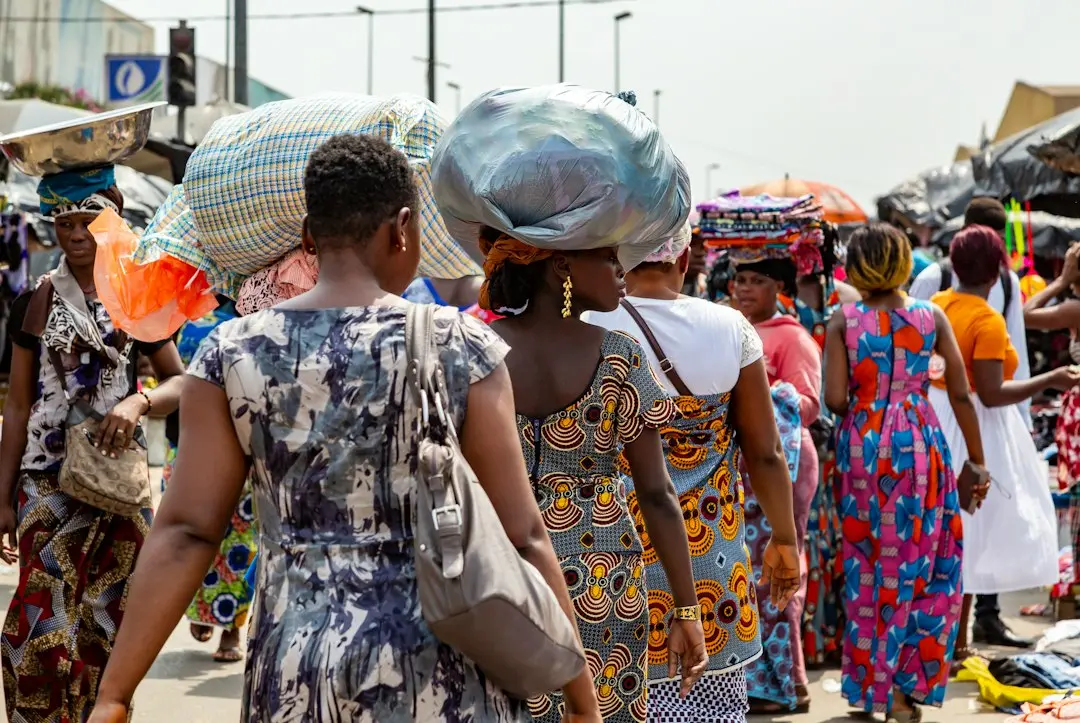




In a dusty alleyway in the Bonamoussadi neighborhood of Douala, a bluish light filters through the shutters of a small office. Inside, three young people are frantically tapping on their laptops. They’re not selling phone credit or fritters. They’re designing a mobile payment application tailored for Cameroon’s informal markets. “We want even the cassava stick seller to be able to collect payments without change,” smiles Yannick, 27, co-founder of the start-up. This is just one example among many: a new generation of entrepreneurs is reinventing the economic face of the country.
Entrepreneurship in Cameroon: which sectors are moving forward?
Entrepreneurship in Cameroon is developing in agri-food, digital, fintech, logistics, education, health and SME services. Cameroonian entrepreneurs have access to a large market, but still face difficulties in accessing financing, formalization and technical support.
Fertile ground despite the obstacles
Cameroon, nicknamed “Africa in miniature” for its geographical and cultural diversity, has also become a dynamic microcosm of African entrepreneurship. According to the Global Entrepreneurship Monitor, more than 30% of Cameroonian adults say they are involved in an entrepreneurial activity — one of the highest rates on the continent.
But this effervescence hides a paradox. “The potential is enormous, but the challenges are just as great,” explains Christelle Mbarga, economist in Yaoundé. “Access to financing, administrative burdens, failing infrastructure… it’s an obstacle course.”
Despite these obstacles, initiatives are flourishing. In major cities like Douala and Yaoundé, but also in Bafoussam, Garoua and Kribi, incubators, technology hubs and coworking spaces are emerging. The country now has more than 50 support structures, compared to barely 5 ten years ago.
Tech as a driver of disruption
New technologies are at the heart of this transformation. From delivery applications to e-commerce platforms, agritech and fintech, Cameroonian start-ups are banking on digital technology to bypass traditional obstacles.
“We want to solve local problems with local solutions,” affirms Aïcha Njoya, founder of NjangiPay, a fintech that offers microloans via WhatsApp. In less than two years, her solution has attracted more than 15,000 users in the rural areas of Adamaoua and the North.
The success of platforms like Diool, a mobile payment solution, or Kmerpad, which manufactures biodegradable sanitary pads, shows that Cameroonian innovation is no longer content to imitate: it invents.
“We no longer want to depend on aid or imported models,” insists Lionel Tchoumi, mentor at the ActivSpaces innovation center in Douala. “We want to create our own path.”
A youth in search of meaning and impact
What stands out in this ecosystem is the mindset of young entrepreneurs. More than profit, it is often social impact that motivates their projects.
“I didn’t just want a well-paying job. I wanted to do something that matters,” confides Mireille Tientcheu, 25, who launched AgroHope, a start-up that connects small producers to urban markets via a mobile application.
This desire for purpose is reflected in the most promising sectors: sustainable agriculture, renewable energy, education, community health. Areas long neglected by traditional investors, but which are now attracting the attention of impact funds and international accelerators.
In 2023, Cameroon recorded more than 12 million dollars in investments in impact start-ups — a record. “It’s still modest, but it’s a strong signal,” notes financial analyst Boris Ewane.
Women shaking up the norms
Another notable phenomenon: the rise of women in the entrepreneurial ecosystem. Long confined to informal activities, they are now taking the reins of innovative and ambitious companies.
“Ten years ago, people asked me where my husband was when I pitched a project. Today, I’m invited to international panels,” smiles Danièle Fotso, founder of Green Energy Solutions, which installs mini solar power plants in isolated areas.
The Women in Tech Cameroon network, launched in 2018, now has more than 3,000 members. Programs such as the Tony Elumelu Foundation or the GIZ Women Entrepreneurship Program have enabled hundreds of Cameroonian women to train, secure funding and connect to global markets.
“Women are taking their place. And they won’t give it back,” asserts Clarisse Nkou, leadership coach in Yaoundé, with confidence.
When the State begins to follow the movement
Long perceived as an obstacle, the Cameroonian State seems to be gradually becoming aware of the strategic role of entrepreneurship. In 2021, the Ministry of SMEs launched the National Start-up Development Plan, aimed at creating a more attractive legal and fiscal framework.
Initiatives such as the PIAASI program (Integrated Support Program for Actors in the Informal Sector) or the Special Fund for Innovation are attempting to support young companies. But the results remain mixed.
“There is a will, but it runs up against bureaucracy and a lack of coordination,” tempers entrepreneur Serge Atangana. “We need to move faster, otherwise we will lose this generation.”
For many, salvation will come mainly from public-private partnerships and decentralization. Cities like Buea or Bamenda, once marginalized, are today becoming innovation hubs through local synergies.
A silent but irreversible revolution
What is currently unfolding in Cameroon goes beyond the simple creation of businesses. It is a revolution in mindsets, a reinvention of economic models, a reclaiming of the future by a youth long relegated to the sidelines.
“We no longer wait for things to change. We change them ourselves,” Kevin Nguimfack, co-founder of a recycling start-up in Bafoussam, summarizes simply.
This energy, this boldness, this resilience, are reshaping the country’s economic landscape. Slowly, but surely. With mistakes, failures, but also unexpected successes.
What if Cameroon were to become, tomorrow, a model for French-speaking Africa? The question remains open. But one thing is certain: something profound is being born, far from the spotlight, in the bustling alleyways of Douala, the hills of Bamenda or the plains of the North. And it would be unwise not to pay attention.
On the same topic
Quick answer
This page first addresses the query “entrepreneuriat au cameroun”, then broadens the subject with useful information for understanding the African context.
To go further
FAQ targeted at Google Search Console
What is the quick answer on “entrepreneuriat au cameroun”?
This query points to a need for a direct answer: definition, ranking, country context or comparison. The article above provides the detail; to go further, consult our dossiers on the GDP of African countries, the most developed countries in Africa and profitable businesses in Africa.
Why might this information evolve?
Economic data, appointments, sector regulations and rankings change with official updates. It is therefore necessary to check the year of publication and the source before using a figure.
To go further on the economy in Africa
This subject gains in value when it is linked to economic indicators, capitals, professions and business opportunities on the continent.