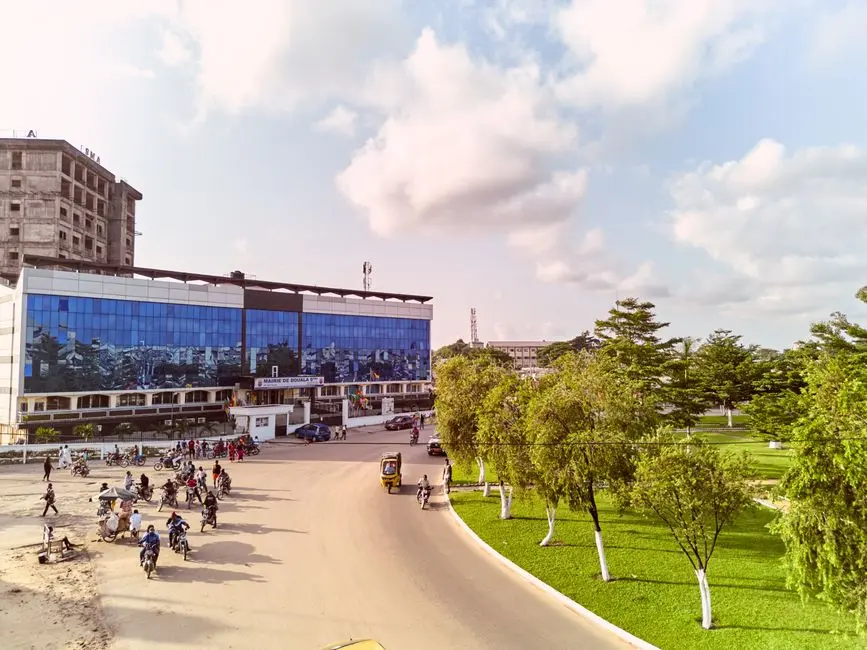




In a bustling alley in Douala, amid the honking of motorcycle taxis and street vendors, a young engineer frantically taps away on his laptop. He is working on a mobile payment application designed to function even without an Internet connection. “If we don’t adapt now, we’ll be swept away,” he murmurs. Cameroon, like much of the African continent, stands at a crossroads: the great global technological transformations are knocking at its door, bringing hope but also profound upheaval.
A young country facing the digital revolution
With more than 60% of its population under the age of 25, Cameroon is fertile ground for innovation. The Internet penetration rate has doubled in less than five years, reaching 45% in 2023. Smartphones are ubiquitous, even in rural areas, and social networks now shape opinions, consumption habits, and even politics.
“Young Cameroonians are ultra-connected, curious, creative. They want to create, code, transform their environment,” says Sylvie Ndongo, founder of a technology incubator in Yaoundé. “But they often lack support, funding, and above all recognition.”
Local initiatives are nonetheless multiplying: mobile health applications, e-commerce platforms, smart agricultural solutions… But these innovations struggle to reach profitability or industrialization. And in the shadow of global digital giants, competition is fierce.
The silent invasion of foreign technologies
In big cities and in the countryside alike, Chinese, American, and European applications dominate usage. TikTok, WhatsApp, Facebook, YouTube: foreign platforms capture the attention and data of millions of Cameroonians every day.
“We consume, share, and express ourselves on these platforms, but we control nothing,” laments Alain Mvondo, a cybersecurity researcher. “The data goes abroad, and so do the advertising revenues. We become dependent without realizing it.”
This technological dependency raises crucial questions of digital sovereignty. Cameroon still lacks a clear policy on personal data protection. And digital infrastructures, often built with the support of foreign partners, pose challenges in terms of security and control.
In 2022, a massive cyberattack paralyzed several public administrations for nearly a week. The origin of the attack was never officially identified, but it highlighted the vulnerability of Cameroon’s digital system.
The artificial intelligence dilemma
As artificial intelligence revolutionizes the worlds of work, health, and education, Cameroon looks on with fascination… and concern. Generative AI tools, such as ChatGPT or Midjourney, are generating growing enthusiasm among students, artists, and entrepreneurs. But they also raise profound questions about employment, culture, and ethics.
“AI can help us translate our national languages, diagnose diseases in remote areas, improve agriculture,” explains Dr. Ernestine Tchatchoua, a computer science professor at the University of Buea. “But if we do not master these technologies, they will end up replacing us.”
According to a study conducted by the Pan-African Institute for Digital Foresight, nearly 30% of current jobs in Cameroon could be automated by 2035. The banking sector, call centers, logistics, and even education are particularly exposed.
Faced with this, the country has been slow to integrate AI into its public policies. No legal framework governs its use, and specialized training remains rare. A missed opportunity?
Pockets of resistance and hope
Yet, despite the obstacles, pockets of resilience are emerging. In Bamenda, a team of young developers has designed a chatbot in pidgin to help farmers better manage their harvests. In Kribi, a training center teaches robotics to children as young as 10 years old. In Garoua, a start-up offers telemedicine solutions tailored to areas without doctors.
“We no longer wait for the State to act. We act with the means at hand,” proudly declares Joël Nguimfack, founder of the educational platform eKole. “Our generation wants to create a future in our own image, not copy that of others.”
Cameroonian diasporas also play an increasingly important role. They invest, transfer skills, and build bridges between African and Western digital ecosystems. In 2023, more than 300 Cameroonian start-ups were founded or co-founded by members of the diaspora.
Still unclear digital governance
But for this momentum to gain scale, a clear political vision is essential. Yet Cameroon struggles to define a coherent digital strategy. Initiatives are scattered, institutions often overwhelmed, and regulation lags behind actual usage.
“What is needed is genuine political will, not just speeches,” insists Marie-Claire Owona, a public policy analyst. “Innovation cannot develop in a vague, unstable, and bureaucratic environment.”
In 2021, the government launched a National Digital Development Strategy with a horizon of 2030. But on the ground, few stakeholders know its details. And public investment in the sector remains below what is needed: less than 1% of the national budget is allocated to it.
The digital divide, between urban and rural areas, between rich and poor, between men and women, remains wide open. And without inclusive policies, innovations risk deepening existing inequalities.
Between urgency and opportunity
Cameroon is not alone in this frantic race toward a digital future. But its positioning, both strategically in Central Africa and rich in talent, could make it a major player if it manages to meet the challenges in time.
“It is not a question of technology, but of vision. Either we endure the change, or we shape it,” Rodrigue Tientcheu, entrepreneur and mentor in Douala, soberly sums up. “And time is pressing.”
In the streets of Yaoundé, cybercafés are constantly full. In villages, young people tinker with antennas to catch the 4G signal. In universities, ideas are flying. Cameroon is bubbling, hesitating, moving forward by trial and error. But the question remains: will it be able to transform this ferment into lasting power, or will it remain a spectator of the revolution that is taking shape?