



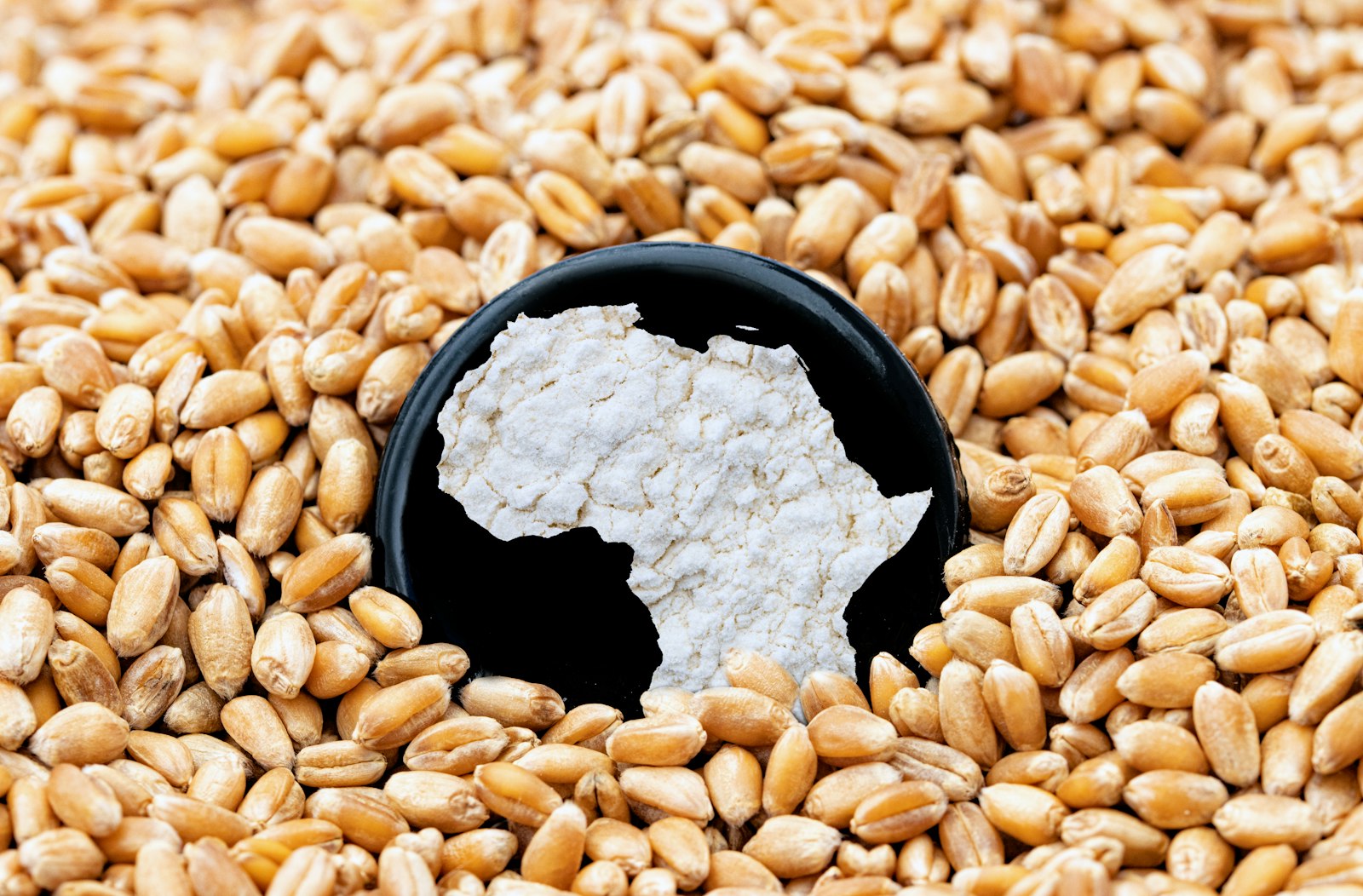
When exporters restrict, Africa absorbs the shock
A new edition of the OECD Inventory of Export Restrictions on Staple Crops — covering the period from July 2025 to June 2026 — confirms a pattern that African food importers cannot afford to ignore: the countries that dominate global supply of wheat and rice are also the most likely to close their borders when domestic conditions tighten.
The report tracks export restrictive measures on four major staple crops — wheat, maize, rice and soybeans — across the countries that produce and ship them in meaningful volumes. The findings are sobering for any economy that relies on those same countries to feed its population.
Three countries, three-quarters of the problem
According to the OECD, Russia, India and Argentina collectively accounted for approximately 75% of all export restrictions in force during the reference period. While the total number of active measures rose modestly compared to the previous year, the report notes it remained well below the peak recorded in 2024.

The Afriques newsletter
- Free & no spam
- 1 email per day
- Unsubscribe in 1 click
That concentration matters enormously for African buyers. Russia is the world’s largest wheat exporter; India is the dominant supplier of rice to global markets, particularly affordable broken rice varieties that several West and East African countries depend on for daily consumption. Argentina is a critical source of soybeans and maize. When any one of these three tightens export conditions — through taxes, quotas or outright bans — the price signal travels almost instantly to port cities from Dakar to Mombasa.
Wheat restrictions are rising; rice remains the most constrained commodity
The OECD data shows wheat accounted for 36% of newly introduced restrictions during the period, the single largest share by crop for new measures. Rice, however, retained its status as the most restricted crop overall — meaning the cumulative stock of barriers on rice trade is heavier than on any other staple tracked in the inventory.
For sub-Saharan Africa, this dual pressure on wheat and rice is a structural vulnerability. Many coastal African cities — Lagos, Abidjan, Nairobi, Accra — have built their urban food systems around imported wheat flour and rice over the past three decades. Breaking that dependency requires investment in domestic production and regional trade infrastructure that, in most cases, remains incomplete.
Export taxes dominate; most measures have no clear end date
The most common instrument used by restricting countries was the export tax, accounting for 46% of new measures introduced. Export quotas followed at 39%. Together, these two tools allow governments to retain domestic supply and suppress local prices — often at the direct expense of importing countries that have no leverage over another government’s fiscal policy.
Perhaps the most telling finding concerns duration. The OECD reports that 62% of measures either carried no end date or remained in force for more than six months. This is not crisis management. Measures with no sunset clause function as semi-permanent trade barriers, making them extremely difficult for African governments and private importers to plan around.
What this means for investors and diaspora readers
For investors watching African agribusiness, the OECD inventory reinforces the commercial case for local staple crop production and intra-African grain trade. Each time a major exporter restricts supply, the price of imported wheat or rice climbs, squeezing household budgets and food processors alike. That price volatility creates both risk and opportunity.
The African Continental Free Trade Area (AfCFTA) includes provisions on agricultural trade, and several regional bodies — including the Economic Community of West African States (ECOWAS) and the Common Market for Eastern and Southern Africa (COMESA) — have frameworks aimed at reducing intra-regional food trade barriers. The gap between those frameworks and operational reality remains wide, but the commercial logic for closing it grows stronger each time New Delhi or Moscow restricts an export.
For diaspora communities sending remittances home, prolonged import restrictions by major suppliers translate directly into higher food bills for family members — a connection that is easy to miss when reading headline inflation figures without understanding the upstream cause.
What the OECD data leaves open
The inventory is a counting exercise: it documents measures that exist and catalogues their characteristics. It does not model the precise price impact on specific African import markets, nor does it assess the effectiveness of domestic policy responses. The report also does not cover informal cross-border trade, which plays a significant role in food distribution across parts of the Sahel and the Great Lakes region, and which responds to formal export restrictions in ways that are poorly understood.
The questions worth watching over the coming months are whether the modest rise in active measures continues into the second half of 2026, whether India’s rice export posture shifts as its domestic harvest picture becomes clearer, and whether any African government or regional body translates the OECD’s data into concrete procurement diversification or stockholding policy.
Source: OECD, Inventory of Export Restrictions on Staple Crops, 2026 edition.

Moussa D.
Editor-in-chief of lesafriques.com. An economic journalist trained in Tunis, he sets the editorial line and reviews every article before publication. He ensures every figure is sourced, verified and dated, in line with the site's methodology.
View all articles → · LinkedIn ↗


