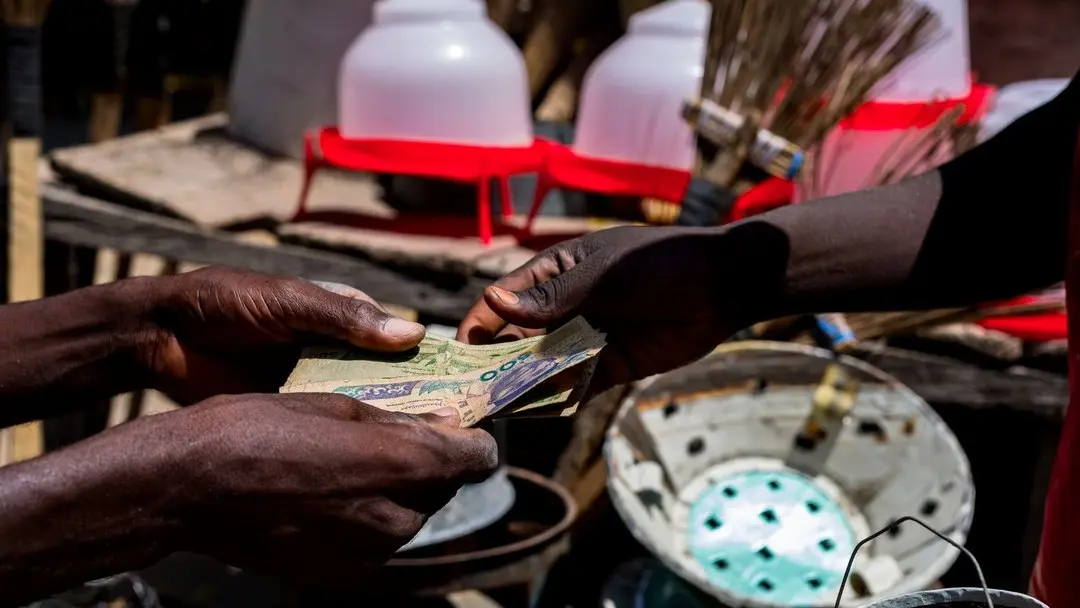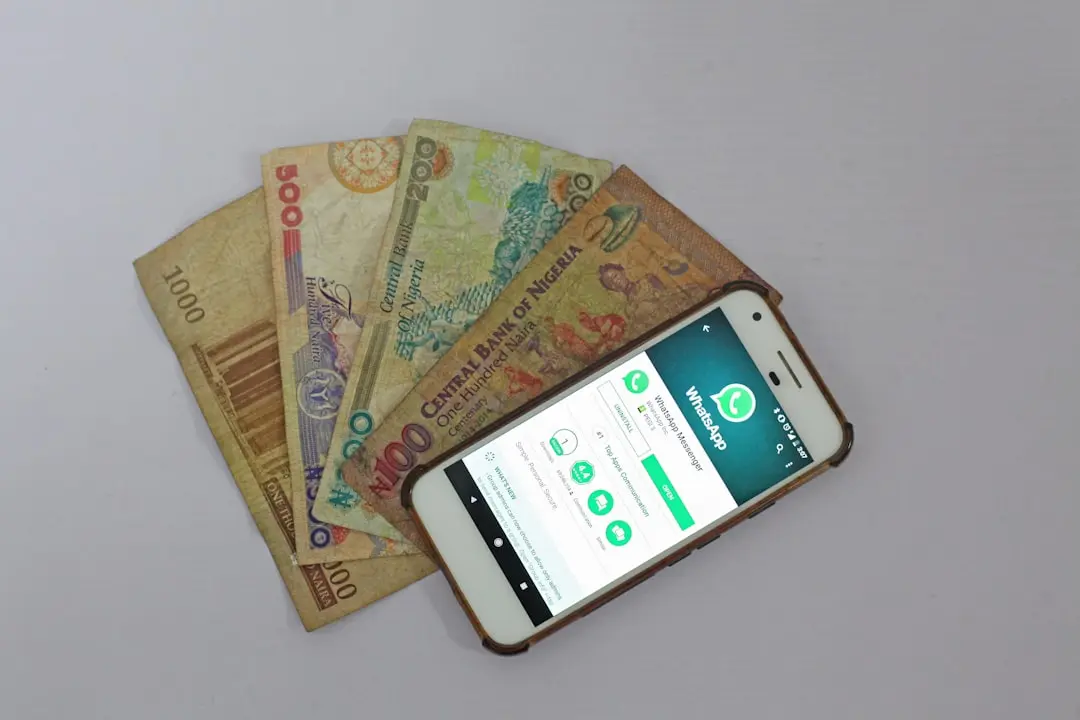


This is a major tariff and regulatory shift for mobile money in the UEMOA area. From 2 November 2026, electronic money transfers between individuals of 8,000 FCFA or less per day per operator become entirely free — with no limit on the number of transactions. The measure stems from Instruction No. 020 of 8 October 2026 issued by the Central Bank of West African States (BCEAO), signed in Dakar by Governor Jean-Claude Kassi Brou.
A threshold calibrated to cover the majority of use cases
The choice of the 8,000 FCFA threshold is not insignificant. According to the BCEAO itself, it covers approximately 75% of the Union’s electronic money transactions — in other words, three out of four transactions are now exempt from any charge. Beyond this daily ceiling, providers retain some room for manoeuvre: they may charge between 0 and 0.8% of the amount excluding tax. Receiving funds remains free, with no limit on amount or frequency.
This tariff structure explicitly targets small everyday uses — bill payments, family remittances, micro merchant payments — which form the backbone of the informal economy in the eight member countries. It reflects a stated commitment to accelerating financial inclusion by reducing the entry cost of digital money.

The Afriques newsletter
- Free & no spam
- 1 email per day
- Unsubscribe in 1 click
PI-SPI at the heart of the system
These new rules are built on an infrastructure launched seven months earlier: the Interoperable Platform of the Instant Payment System (PI-SPI), operational since 30 September 2025. With 175 connected participants — banks, microfinance institutions, payment establishments and electronic money issuers — and a declared coverage of more than 38 million users, PI-SPI is the mandatory channel for all person-to-person transactions from 2 November 2026.
Forced interoperability changes the competitive landscape. Until now, major telecoms operators such as Orange Money or Wave benefited from the network effect inherent to each closed ecosystem. The obligation to route through PI-SPI levels this playing field by allowing any customer to send money to any other, regardless of their operator. In Côte d’Ivoire, 38 entities are already connected to the platform; in Sénégal, 43.
Raised ceilings, a reduced mandatory reserve
Instruction No. 020 also modifies two important prudential parameters. The authorised balance ceiling on an electronic money account for an identified customer doubles, rising from 2 to 4 million FCFA. The cumulative monthly reloading ceiling increases from 10 to 15 million FCFA. These adjustments apply to individuals; distributors, agents and professional merchants are not subject to any of these ceilings.
At the same time, the mandatory reserve ratio imposed on issuers is revised downward: they will now be required to hold at least 65% of their client funds in demand deposits at banks, compared to 75% previously. This ten-point reduction theoretically frees up 192.3 billion FCFA in reallocation capacity across the Union — a margin that issuers will be able to mobilise for other purposes, including loans or short-term investments. This choice nevertheless raises a risk management question: a thinner liquidity buffer exposes electronic money holders more in the event of a liquidity crisis at an issuer.
A rapidly expanding market, but with still-limited activation
The market context justifies the ambition of the reform. Electronic money outstanding in UEMOA reached 1,923.2 billion FCFA at end-2025, up 35.2% year-on-year according to the UEMOA Banking Commission. Sénégal accounts for 29.7% of this total, ahead of Côte d’Ivoire (23.5%). These two countries alone represent more than half of regional outstanding balances.
But one figure tempers the optimism: of 172.9 million accounts opened in the Union, only 60.6 million are active, representing an activation rate of 35.1%. In other words, nearly two thirds of registered accounts are dormant. The removal of charges on small transfers could help reactivate these accounts, but it will not by itself resolve the structural barriers — digital illiteracy, lack of electricity or network coverage in rural areas, distrust of digital tools.
What the reform does not yet say
One aspect remains pending: cross-border transfers within UEMOA. The alignment of their tariff conditions with national rules is not expected until 1 June 2027, seven months after the new domestic rules come into force. This asymmetry will maintain, during the transition period, a higher cost for remittances between member countries — a reality affecting millions of intra-regional migrant workers.
Furthermore, the communiqué does not specify the monitoring and enforcement procedures in the event of non-compliance with the new tariff ceilings by operators. The BCEAO does have supervisory powers, but the history of the sector shows that the effective application of fee-related instructions is a recurring challenge in the UEMOA area. The reform also rests on the implicit assumption that PI-SPI will handle the traffic load generated by 38 million users: its operational resilience at scale remains to be demonstrated over time.
Source: BCEAO / Koaci – UEMOA press, October 2026.
Further reading
Read also
- Top 10 largest African banks in 2026
- Banks and fintech in Africa: opening an account and managing your money from abroad (2026)
- Opening a bank account in Cameroun from abroad: banks and MTN MoMo 2026