

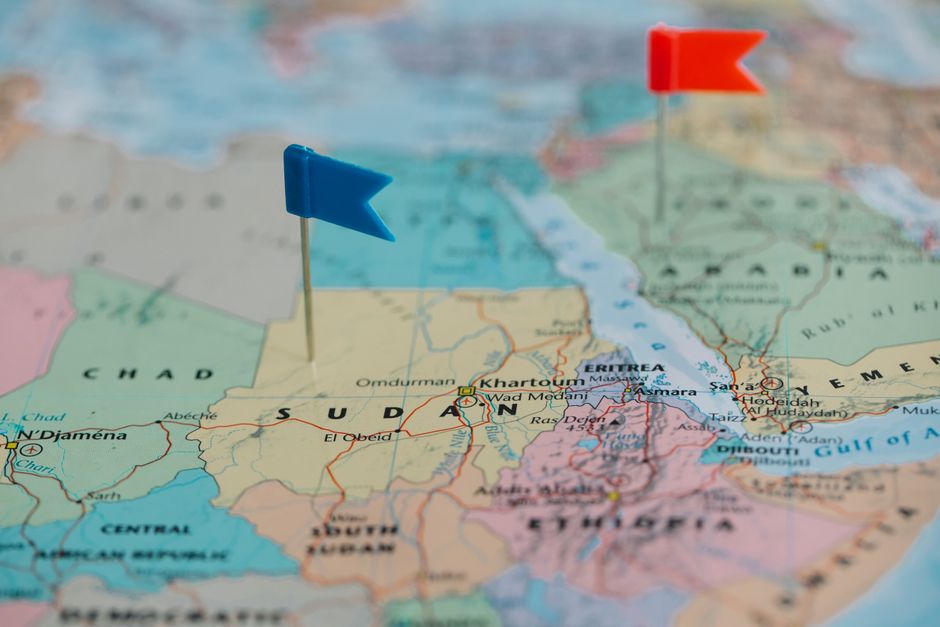
In the space of a single day, the Horn of Africa’s diplomatic landscape shifted in ways that could take years to undo. On 2 October, the African Union Commission issued a statement calling on Ethiopia, Eritrea and Egypt to exercise “maximum restraint” — language that, in AU communiqués, signals genuine alarm. The organisation said it was following events “with concern”, a phrase that understates the severity of what had just unfolded.
Three decisions, one very bad day
The speed of the deterioration is striking. Ethiopia’s Ministry of Foreign Affairs notified the Egyptian embassy in Addis Ababa that one of its officials, Ahmed Moharam Ahmed Soliman, had been declared persona non grata and given 48 hours to leave the country. Simultaneously, Addis Ababa announced the closure of its embassy in Asmara and the expulsion of ten Eritrean diplomats. Asmara’s response went further still: Eritrea announced a complete severance of diplomatic relations with Ethiopia — one of the most drastic steps a government can take short of open conflict.
None of this happened in isolation. The backdrop is a resumption of fighting in northern Ethiopia between federal forces and the Tigray People’s Liberation Front (TPLF), a civil conflict that already destabilised the entire sub-region between 2020 and 2022 and cost tens of thousands of lives.

The Afriques newsletter
- Free & no spam
- 1 email per day
- Unsubscribe in 1 click
Three overlapping fault lines
What makes this crisis particularly difficult to manage — for the AU and for outside investors and observers — is that it is not one dispute but at least three, layered on top of each other.
The first and most structurally entrenched is the Grand Ethiopian Renaissance Dam (GERD) on the Blue Nile. Cairo views the Nile as existential — Egypt depends on it for roughly 97% of its fresh water, according to widely cited Egyptian government figures — while Addis Ababa asserts its sovereign right to harness the river for hydroelectric development. No binding agreement on dam operations has been reached between the two countries to date, despite years of AU- and US-mediated talks.
The second fault line is access to the Red Sea. Ethiopia has been landlocked since Eritrea gained independence in 1993, and successive Ethiopian governments have sought a maritime outlet. That ambition puts Addis Ababa in tension with Asmara, and to varying degrees with Djibouti and Somalia — neighbours that control or border the coastline Ethiopia covets.
The third concerns shifting military alignments in the region. The AU Commission’s statement alludes to recent realignments among regional actors without specifying them. Those shifts, whatever their precise nature, appear to have accelerated the breakdown between all three capitals involved.
The AU’s response: legitimate, but toothless?
In its 2 October declaration, the AU Commission urged the three states to “refrain from any action or statement that could further escalate tensions and undermine regional peace and stability”, while stressing the importance of keeping communication channels open. It said it stood ready to “support de-escalation, dialogue and peaceful dispute resolution” in line with the principles of its own Constitutive Act.
The institutional logic is sound. The question is whether it means anything in practice. Ethiopia and Egypt are two of Africa’s most populous and militarily significant states — Ethiopia with roughly 130 million people, Egypt with around 105 million, both operating substantial armed forces. The AU has a long record of struggling to act as a credible arbiter when major regional powers are directly involved. The fact that Eritrea announced its full diplomatic break with Ethiopia on the very same day the AU called for restraint illustrates, bluntly, the limits of the organisation’s immediate leverage.
For context that anglophone investors and analysts will recognise: the AU’s Peace and Security Council exists precisely for moments like this. The AU statement does not clarify whether that body has been formally convened.
What the statement leaves unanswered
Several questions that regional observers will immediately raise are conspicuously absent from the AU Commission’s communiqué.
First, no reason is given for the expulsion of the Egyptian diplomat Ahmed Moharam Ahmed Soliman. The specific charge — or absence of one — would clarify whether Ethiopia is responding to a concrete act of interference or making a broader political statement directed at Cairo.
Second, the statement does not confirm whether any AU emergency mechanism, including the Peace and Security Council, has been formally activated.
Third, the positions of Djibouti and Somalia — both directly exposed to any further regional destabilisation, and both with a stake in Red Sea stability — are not mentioned.
What to watch
Three threads will determine how dangerous this episode becomes. The first is Cairo’s next move: whether Egypt responds with its own expulsions, a military signal, or a return to multilateral pressure at the UN or AU level. The second is the fate of the diplomatic missions and personnel caught in the middle — Ethiopian staff in Asmara, Eritrean diplomats leaving Addis Ababa, Egyptian officials under a 48-hour deadline. The third, and most consequential, is the military situation in Tigray. The renewed TPLF fighting is the most combustible element underneath all the diplomatic manoeuvring, and any significant escalation there would reshape the calculus for all parties.
For investors tracking East Africa — a region that has attracted growing interest from Gulf sovereign wealth funds, Chinese infrastructure lenders, and Western development finance institutions — this triple crisis is a reminder that the Horn’s economic potential and its political fragility remain inseparable.
Source: AMAP (Malian Press and Publicity Agency), 2 October