

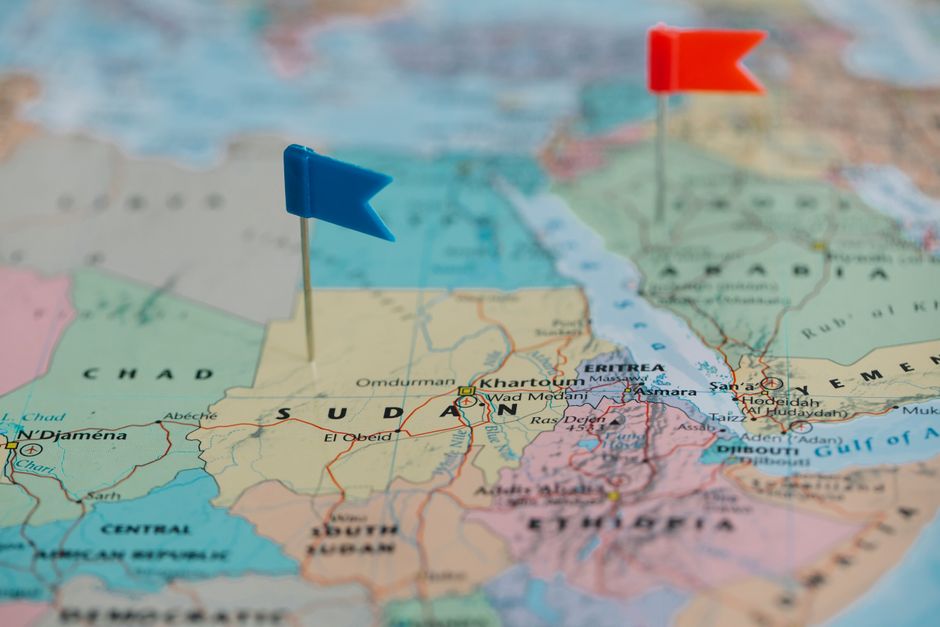
The Horn of Africa is sinking into a worrying diplomatic spiral. On October 2, the African Union Commission published a communiqué calling on Ethiopia, Eritrea, and Egypt to exercise “maximum restraint,” acknowledging that it was following “with concern” an escalation that now combines several distinct but interconnected crises.
Cascading Ruptures
The events that occurred in a single day illustrate the speed with which the situation has deteriorated. The Ethiopian Ministry of Foreign Affairs notified the Egyptian embassy in Addis-Abeba that one of its agents, Ahmed Moharam Ahmed Soliman, had been declared persona non grata and was required to leave the country within 48 hours. Simultaneously, Addis-Abeba announced the closure of its embassy in Asmara and the expulsion of ten Eritrean diplomats. In response, Asmara went a step further by deciding to completely sever its diplomatic relations with Ethiopia — one of the most serious measures in the diplomatic arsenal.

The Afriques newsletter
- Free & no spam
- 1 email per day
- Unsubscribe in 1 click
These decisions do not occur in a vacuum: they come in the context of a resumption of clashes in northern Ethiopia between federal forces and the Tigray People’s Liberation Front (TPLF), a civil war that had already destabilized the entire region between 2020 and 2022.
Three Disputes, One Powder Keg
What makes the situation particularly complex is the overlapping of several structural disputes. Between Ethiopia and Egypt, the Grand Ethiopian Renaissance Dam (GERD) remains at the heart of persistent tensions: Cairo fears for its share of the Nile waters, which it considers vital to its survival, while Addis-Abeba defends its right to hydroelectric development. No binding agreement has been signed to date between the two countries on the management of the dam.
The question of access to the Red Sea constitutes a second source of tension. Landlocked since Eritrea’s independence in 1993, Ethiopia is seeking to secure a maritime outlet — an ambition that clashes with both Asmara and, to some extent, other Red Sea neighbors such as Djibouti and Somalia.
Finally, military alliances in the region are being reconfigured. Recent rapprochements between certain regional actors, not detailed in the official communiqué, appear to have accelerated the deterioration of relations between the three capitals concerned.
The AU’s Response: A Call Without a Binding Mechanism
The AU Commission, in its October 2 statement, urged the three states to “refrain from any action or statement likely to further exacerbate tensions and undermine regional peace and stability,” while insisting on maintaining channels of communication. It stated its readiness to “support efforts towards de-escalation, dialogue, and peaceful settlement of disputes,” in accordance with the principles of the Constitutive Act of the African Union.
This stance, as institutionally legitimate as it may be, raises a central question: does the AU possess the real levers to exert influence over three member states, two of which — Ethiopia and Egypt — are among the most populous and militarily significant on the continent? The pan-African organization has regularly struggled to assert itself as an arbitrator in conflicts involving regional powers. The diplomatic rupture between Eritrea and Ethiopia, announced on the very day of the call for restraint, illustrates the immediate limits of its influence.
What the Communiqué Does Not Say
The AMAP communiqué, drawing on that of the AU Commission, remains silent on several points that regional observers will not fail to note. It does not specify exactly what offense the expelled Egyptian diplomat is accused of — information that would help clarify Addis-Abeba’s intentions. It also does not say whether emergency AU mechanisms — such as the Peace and Security Council — have been formally seized. Finally, it does not mention the positions of other Red Sea neighbors, such as Djibouti or Somalia, which are nonetheless directly exposed to any regional destabilization.
Caution is therefore warranted in the face of a crisis whose contours remain partially opaque. What to watch: Addis-Abeba’s reaction to any potential Egyptian reprisals, the fate of the nationals and diplomatic missions concerned, and above all the military developments in Tigray, which represents the most explosive underlying factor in this sequence.
Source: AMAP (Agence Malienne de Presse et de Publicité), October 2