


Money changes hands: the silent revolution of digital payment in Francophone Africa
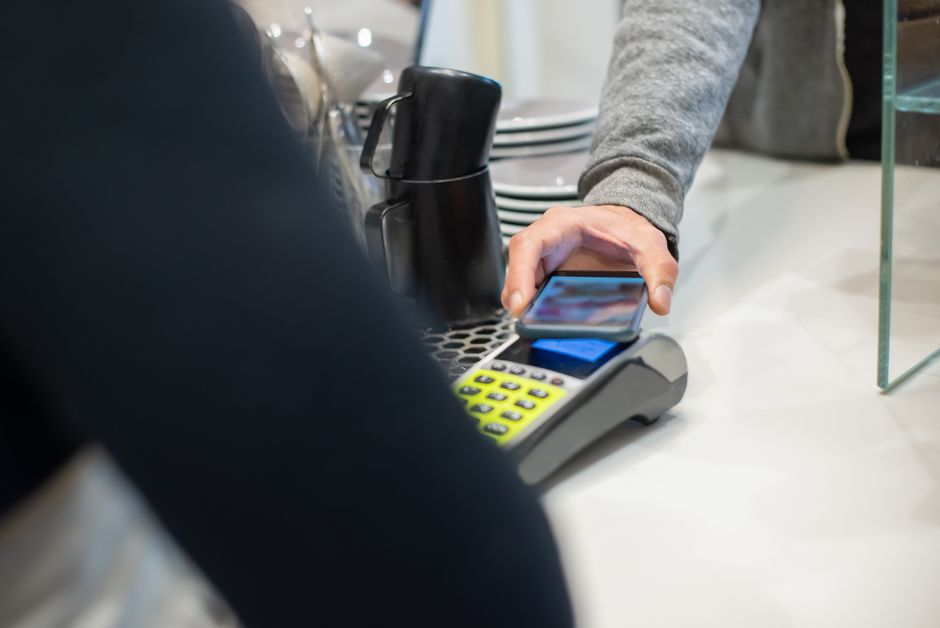
In 2026, sending money to Dakar from Abidjan takes less than thirty seconds. Not through a bank, but through an app downloaded on an 80-euro smartphone. This shift, spectacular in its speed, is at the heart of an economic battle reshaping the financial architecture of an entire region: the rivalry between African fintech startups and traditional banks for control of digital payment markets in the Francophone zone. The stakes go far beyond technology — this is about access, power and economic sovereignty.
A playing field dominated by financial exclusion
To understand why fintechs are advancing so quickly, one must measure the void they are filling. In Francophone West Africa, more than 60% of the adult population remains unbanked according to BCEAO estimates for 2026. This figure, often cited in the abstract, actually represents millions of traders, craftspeople, female farmers and informal workers who until now managed all their transactions in cash.
Traditional banks — Ecobank, Société Générale Afrique, Banque Atlantique, SGBCI and Coris Bank — have long favoured a solvent, formal clientele, reachable in major urban centres. Their fee models, documentary requirements and the scarcity of their branches have structurally excluded the majority of the population. It is precisely in this financial desert that fintechs planted their first markers.
Fintech startups on the offensive: models and dominant players
Wave, the disruption from Senegal
It is hard to talk about mobile payment in Senegal without mentioning Wave. Launched in 2018, the startup of American origin but rooted in Dakar completely reconfigured the local market by slashing prices: zero fees on transfers between individuals, ultra-low commissions for merchants. In 2026, Wave claims several tens of millions of active users in Senegal, Côte d’Ivoire, Mali and Burkina Faso. Its valuation propels it into the very exclusive club of African unicorns.
What sets Wave apart from legacy operators is its product approach: a streamlined interface, designed for users with little digital experience, and a lightweight infrastructure relying on proximity agents — often young people set up in kiosks — who serve as physical relays for deposits and withdrawals.
Orange Money, Moov Money and MTN MoMo: telecoms lying in wait
Between traditional banks and pure fintech players, there is a third actor often underestimated in analyses: mobile money services carried by telecom operators. Orange Money, present in fifteen African countries including Côte d’Ivoire, Senegal and Cameroon, processes transaction volumes that rival those of many African central banks. MTN MoMo, for its part, has established itself in Anglophone West Africa but is gradually gaining ground in the Francophone zone through its Ivorian and Guinean subsidiaries.
These hybrid players — neither truly fintechs in the strict sense, nor banks — blur the categories and force both sides to constantly reposition themselves. In Côte d’Ivoire, the competition between Orange Money and Wave on the money transfer segment triggered a price war from which consumers largely benefited, with commissions cut by three between 2022 and 2026.
Other startups to watch in 2026
- Julaya (Côte d’Ivoire): specialising in B2B payments, it automates cash flow management for SMEs.
- Bizao: pan-African payment aggregator facilitating interoperability between operators.
- Nioqo (Senegal): instant microcredit solution backed by a mobile wallet.
- CinetPay: online payment gateway widely adopted by Francophone e-commerce merchants.
- Djamo (Côte d’Ivoire): neobank targeting urban youth with a virtual Visa card and a no-hidden-fees account.
The response of traditional banks: adaptation or resistance?
Faced with this offensive, banks have not stood idle — but their responses remain uneven. Some have chosen the path of partnership, integrating fintech APIs into their own applications to offer mobile payment services to their existing customers. Others have launched their own digital products, with varying degrees of success.
Ecobank, which operates in 35 African countries, has invested heavily in its super-app Ecobank Mobile, capable of handling inter-country transfers, merchant payments and remote account openings. In the UEMOA zone, several banks have also formed partnerships with the GIM-UEMOA interoperability platform to connect their systems to mobile wallets.
But a cultural and structural gap persists. Banks are still perceived as slow, bureaucratic and expensive by a young, mobile and connected clientele. In 2026, the average age in West Africa is under 20: this generation often had its first financial account not at a bank branch, but in an app on their phone.
Who is really winning the battle? Market share analysis
In terms of transaction volume, mobile money services — fintechs and telecoms combined — now exceed traditional banks in the retail payments segment in the UEMOA zone. The BCEAO estimates that the number of active electronic money accounts surpassed 100 million in Francophone West Africa in 2026, compared with barely 25 million traditional bank accounts.
However, the battle is not entirely lost for banks on other fronts:
- Credit and savings remain largely dominated by licensed banking institutions.
- Large corporations and the State continue to operate through the traditional banking system for their complex transactions.
- Regulatory compliance (AML, enhanced KYC) still constitutes a comparative advantage for banks in institutional markets.
What we are witnessing is therefore less a clear victory of one side over the other than a fragmentation of the financial value chain: fintechs capture the bottom of the pyramid and everyday payments, while banks retain high-value-added segments. The real question for the years ahead is whether players like Wave or Djamo will manage to move upmarket into credit and investment — and whether banks will succeed in capturing the unbanked before they are permanently won over by new entrants.
Regulation: the discreet referee that can change everything
The BCEAO plays a central role in this competition. In 2026, the regulatory framework for electronic money institutions (EME) in the UEMOA zone continues to evolve, with raised equity requirements and strengthened reporting obligations. These constraints weigh more heavily on small fintechs than on banks or large telecom groups, which could accelerate consolidation in the sector.
Furthermore, the regional interoperability initiative promoted by the BCEAO aims to allow an Orange Money user to send money directly to a Wave account without going through an intermediary — a development that could ultimately homogenise the market and reduce the competitive advantages linked to network effects.
FAQ — Frequently asked questions
What is the difference between a fintech and a traditional bank in Africa?
A fintech (financial technology) is a company that uses technology to offer financial services more quickly, at lower cost and more accessibly than traditional banks. In Francophone Africa, fintechs often operate under the status of electronic money institution (EME), which allows them to offer payments and transfers without holding a full banking licence. Traditional banks, on the other hand, can offer credit, guarantee deposits and access interbank markets.
Is Wave truly an African company?
Wave was founded by American entrepreneurs, but its operational headquarters is in Dakar and the bulk of its teams, customers and product development is rooted in West Africa. It is often cited as an example of an “African” startup insofar as its model was designed specifically for local markets, unlike imported solutions that were not adapted.
Is mobile payment secure in West Africa?
The main market players (Wave, Orange Money, MTN MoMo) are subject to supervision by the BCEAO or national central banks and must comply with strict security standards, particularly regarding data protection and anti-money laundering. Fraud incidents do occur, as in any financial system, but platforms are investing heavily in biometric authentication and real-time suspicious transaction detection.
Which Francophone African countries are the most advanced in digital payment?
In 2026, Senegal and Côte d’Ivoire stand out as regional references, with mobile money penetration rates among the highest in the UEMOA zone. Cameroon, although operating in a different regulatory zone (CEMAC), also displays strong momentum. Conversely, countries such as Niger or Guinea-Bissau still exhibit lower adoption levels, held back by insufficient telecom infrastructure.
Will traditional banks disappear in the face of fintechs?
No, at least not in the short or medium term. Banks hold structural assets that fintechs struggle to replicate: the ability to grant credit, management of guaranteed deposits, institutional relationships and advanced regulatory compliance. The underlying trend is rather towards competitive coexistence and strategic partnerships, with a progressive specialisation of each type of player in its areas of strength.
Read also