



One winter morning in the Southern Hemisphere, in the streets of Stellenbosch, the air smelled of pine trees and damp earth. A few kilometers away, solar panels shimmered on rooftops, while a group of children collected plastic waste in a park, guided by an enthusiastic young teacher. This was not an isolated scene. In South Africa, the environment has become a collective concern, almost a national mission. And this dynamic raises a question: what can other African countries learn from this resolutely proactive approach?
One of the most advanced legal frameworks on the continent
Few African countries have environmental legislation as structured as that of South Africa. As early as 1996, the South African Constitution guaranteed every citizen “the right to an environment that is not harmful to their health or well-being.” This principle has since been reinforced by the National Environmental Management Act (NEMA), which requires rigorous impact assessments for any industrial or mining activity.
“Here, you cannot build a factory without proving that its environmental impact is under control. It is a requirement, not an option,” explains Lerato Mokoena, a lawyer specializing in environmental law in Pretoria. She adds: “Other countries could draw inspiration from this to avoid avoidable ecological disasters.”
Implementing these laws remains a challenge, but their existence gives citizens and NGOs a powerful tool to defend nature. In 2017, a court suspended a mining project in the Limpopo province, following a complaint from the local community supported by ecological experts. A first on the continent.
Cities betting on urban ecology
Cape Town, Johannesburg, Durban… These major South African cities have understood that a green city is a more livable city. Cape Town, for example, was one of the first African cities to integrate a strategic climate resilience plan following the water crisis of 2018, dubbed “Day Zero.”
“We came close to disaster. That year, the taps were literally going to run dry. It was a wake-up call,” recalls Thabo Ndlovu, a water management engineer. Since then, the city has invested heavily in wastewater reuse, rainwater collection, and public awareness.
Johannesburg, for its part, has launched an ambitious urban reforestation program. More than 200,000 trees have been planted over ten years. Green roofs and cycling paths are multiplying, while entire neighborhoods are experimenting with ecological, energy-positive housing models.
A mobilized and influential civil society
In South Africa, citizens are not mere spectators of environmental policies. They are often the instigators. Movements such as Earthlife Africa, GroundWork, and the South Durban Community Environmental Alliance have managed to block polluting industrial projects and put pressure on local authorities.
“We understood that if we didn’t fight for our environment, no one would do it for us,” says Nomvula Dlamini, an environmental activist in Durban. She recalls the protests against the Enref oil refinery, accused of polluting the air and water: “We organized marches, filed complaints, mobilized the media. And we eventually obtained stricter controls.”
This culture of environmental activism is rare on the continent. It is partly rooted in a relatively preserved freedom of expression, but also in a dense and well-structured network of associations. A model that could inspire other African civil societies to organize around ecological issues.
Technological innovation in service of nature
The country does not rely solely on laws and protests. It innovates. South Africa is one of Africa’s leaders in the field of renewable energy. In 2023, more than 11% of electricity produced came from solar and wind power, according to the South African Renewable Energy Council.
The REIPPPP (Renewable Energy Independent Power Producer Procurement Programme) has attracted more than 200 billion rands in private investment since 2011. “It’s simple: we showed that ecology could also be profitable,” explains Sipho Mahlangu, manager of a wind farm in the Northern Cape. “Foreign investors don’t come out of charity, but because it works.”
Beyond energy, South African start-ups are developing technologies to monitor air quality, recycle plastics, or map deforestation via drones. A green innovation ecosystem is emerging, supported by universities such as those of Stellenbosch or Pretoria.
A still contrasted management of natural resources
Not everything is perfect. South Africa remains one of the continent’s largest CO₂ emitters, largely due to its dependence on coal. The giant Eskom, the national electricity provider, still produces more than 80% of its energy from aging thermal power plants.
“As long as we don’t tackle the coal question, our efforts will remain limited,” acknowledges Zanele Khumalo, an analyst at the Institute for Environmental Studies in Johannesburg. “But at least the debate is open. And the pressure is mounting.”
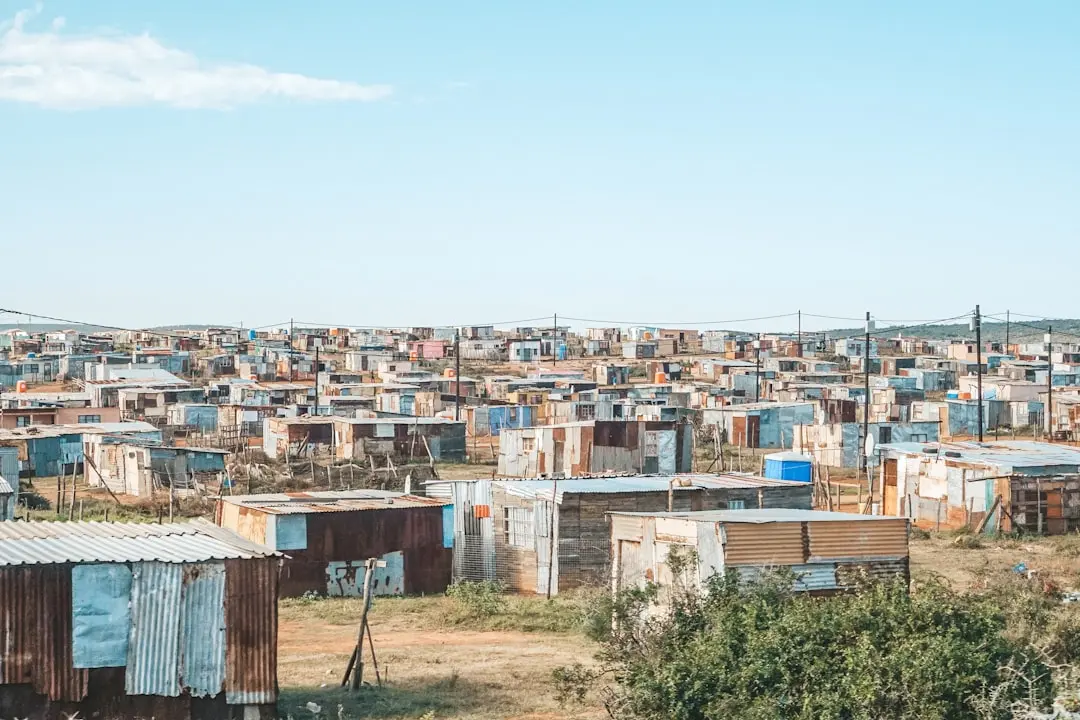
Water, waste, and biodiversity management also remains uneven depending on the region. Some rural areas lack basic infrastructure, while others suffer from corruption or the negligence of local authorities. Yet even in these areas, community initiatives are emerging, often led by women or young leaders.
A youth taking up the ecological fight
In schools, universities, and on social media, a new generation of South Africans is making the environment a central issue. Figures such as Ayakha Melithafa, a 22-year-old climate activist, participate in international summits and address leaders with disarming eloquence.
“I don’t want to inherit a world on fire. I want to be able to breathe, drink clean water, walk in a forest,” she declared at a conference in Nairobi. These words resonate far beyond South Africa’s borders.
In the townships, educational projects such as Eco-Schools or Greenpop raise children’s awareness from a very young age. They learn to grow a vegetable garden, sort waste, and understand the water cycle. A green education that could durably transform mindsets.
“You cannot change the world without changing minds,” says Musa Ntuli, a teacher in Soweto. “And it starts with children.”
So, while South Africa has not yet resolved all its ecological challenges, it is showing a possible path. A path made of solid laws, civic mobilization, bold innovations, and an engaged youth. The question remains open: are other African countries ready to follow this path?
To explore further on the environment in Africa
This subject gains in value when connected to economic indicators, capitals, professions, and business opportunities on the continent.