



In the verdant hills of the Danyi plateau, in southwestern Togo, a light mist drifts above the cassava fields and coffee trees. Here, far from major cities and media spotlights, a silent revolution is underway. A green revolution, driven by rural communities, committed scientists, and young entrepreneurs convinced that the future of Africa’s environment could well begin here, in this small West African country.
A discreet yet strategic territory
Togo does not often top global environmental rankings. Yet this country of 8.5 million inhabitants possesses a remarkable ecological diversity: savannas, tropical forests, coastal areas, mangroves… a concentration of ecosystems within just 57 000 km².
“Togo is an open-air laboratory,” says Dr. Kossi Agbényéga, ecologist at the University of Lomé. “Its small size allows environmental policies to be tested quickly and their effects observed in the field.”
Over the past decade, the Togolese government has multiplied initiatives: a ban on plastic bags in 2011, massive reforestation, the creation of protected areas, and more recently, investments in renewable energy.
As a result, Togo is today one of the rare African countries to produce more than 50 % of its electricity from renewable sources, largely thanks to the Blitta solar power plant, the largest in West Africa with its 136 000 photovoltaic panels.
A youth that refuses to remain a spectator
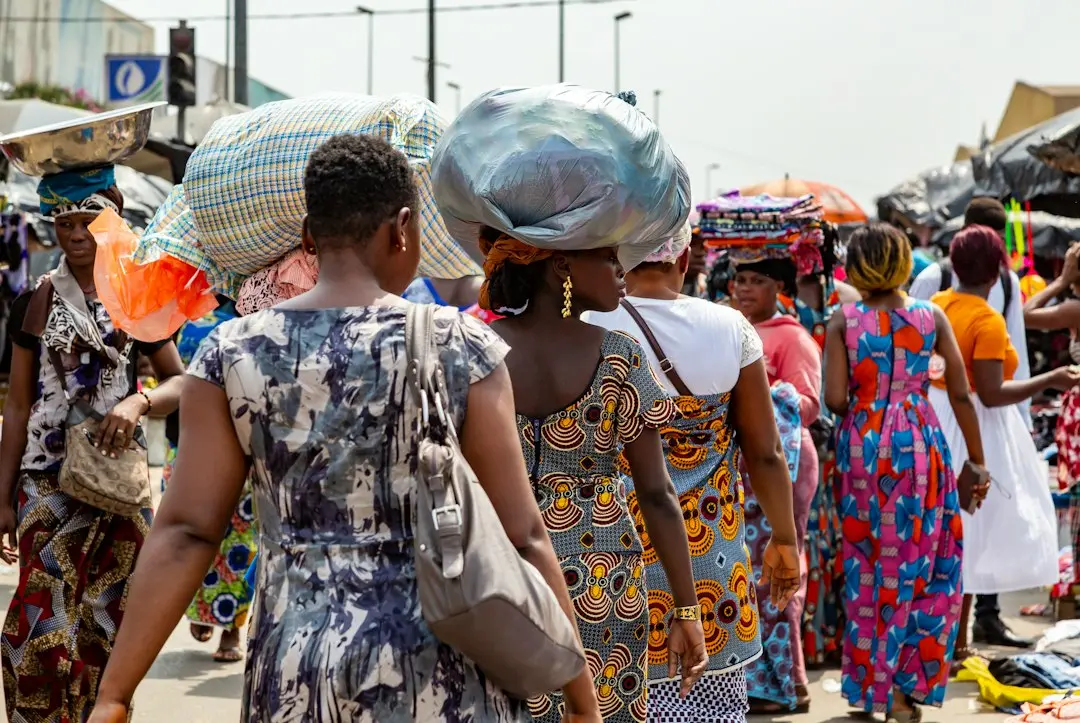
In the streets of Lomé, the capital, a new generation is making its voice heard. Students, artists, developers… all want to participate in the country’s ecological transformation.
“We can no longer wait for solutions to come from elsewhere,” says Aïcha Mensah, 27, founder of GreenTogo, a start-up that transforms organic waste into compost. “We have the ideas, the energy, and above all, the urgency.”
Every month, environmental hackathons bring together dozens of young people around concrete problems: water pollution, deforestation, waste management. In 2023, more than 300 projects were submitted as part of the national Éco-Innovation competition.
Some projects already have a tangible impact. In Kara, in the north of the country, a cooperative of young women has implemented a water filtration system based on local activated charcoal. In less than a year, 12 villages saw their rate of waterborne diseases fall by 40 %.
Forests rising from the ashes
Between 1990 and 2010, Togo lost nearly 40 % of its forest cover, according to the FAO. A hemorrhage caused by slash-and-burn agriculture, firewood collection, and illegal logging.
But since 2015, an ambitious reforestation program has emerged. Every June 1st, on the occasion of National Tree Day, millions of Togolese plant trees. In 2023, more than 10 million seedlings were put in the ground.
“It is not merely a symbolic gesture,” explains Yawo Dossou, forestry engineer in Kpalimé. “We support communities over several years, with training, adapted seeds, and technical monitoring.”
In certain areas, the forest is returning. In Agou, plots that resembled fields of ash ten years ago are today covered with young teak trees and acacias. Birds are returning, soils retain water better, and farmers are seeing their yields increase.
The challenges of rampant urbanization
But not everything is green. In Lomé, the population has doubled in twenty years. Peripheral neighborhoods are expanding without planning, waste is accumulating, and flooding is increasing.
“The urban environment is our greatest challenge,” acknowledges Françoise Améganvi, urban planner at the Lomé city hall. “We must reconcile demographic growth, economic development, and sustainability.”
Pilot projects are emerging: eco-neighborhoods, urban gardens, community recycling centers… but resources are lacking. In 2022, the budget allocated to the environment represented less than 1 % of the national budget.
NGOs are partly filling this void. The association Terre Verte, for example, has set up a waste sorting and collection system in three neighborhoods of Lomé, with the participation of residents. In one year, more than 120 tonnes of waste were recovered.
Agriculture at a crossroads
In Togo, more than 60 % of the population lives from agriculture. But soils are becoming exhausted, rainfall is growing unpredictable, and yields are stagnating.
“Climate change is already here,” says Komlan Kpodo, farmer in Sokodé. “We can no longer rely on the seasons as before.”
Faced with this, some farmers are experimenting with agroecology: crop rotation, natural compost, living hedgerows, plant associations. The results are encouraging: higher yields, reduced erosion, better resilience in the face of droughts.
Training centers, such as the one in Tchébébé, train hundreds of farmers each year in sustainable techniques. Word of mouth does the rest.
“When my neighbor doubled his corn harvest without chemical fertilizer, I wanted to understand,” smiles Aminata, a 38-year-old farmer. “Today, I in turn train other women.”
A country attracting international attention
In recent years, Togo has begun to attract attention from afar. In 2021, the country was selected to participate in the AFR100 initiative, a pan-African program aimed at restoring 100 million hectares of degraded land by 2030.
International donors, such as the World Bank or the Green Climate Fund, now support environmental projects in Togo. In 2023, a financing of 30 million dollars was granted to strengthen coastal resilience against marine erosion.
“Togo has become an experimentation ground for climate solutions in Africa,” considers Marie-Laure Delmas, sustainable development expert at the AFD. “What works here could be replicated elsewhere.”
But success will also depend on the country’s ability to maintain its commitments, engage its citizens, and resist short-term economic pressures.
So, can Togo truly become an environmental model for Africa? Or is it merely a mirage in a still fragile landscape? The answer may be playing out right now, in a cassava field, a peripheral neighborhood, or a classroom. What if the future of Africa’s environment began here, in the fertile silence of the Togolese hills?
To explore further on the environment in Africa
This subject gains in value when connected to economic indicators, capitals, professions, and business opportunities across the continent.