



The wind blows over the Kalahari Desert, raising clouds of red dust that cling to the dried-out branches. On the horizon, the silhouettes of elephants stand out in the shimmering heat. Botswana, a natural jewel of southern Africa, seems frozen in its wild beauty. But behind this postcard image, a silent urgency is rumbling. The country faces environmental challenges of unprecedented scale, which could disrupt its balance by 2030.
A Drought That Dare Not Speak Its Name
For several years, rainfall has been scarce. Botswana, already semi-arid, is seeing its precipitation dangerously decrease. In 2022, Gaborone recorded one of its lowest rainfall levels in 40 years, with barely 280 mm over the year. Dams are running dry, groundwater is being depleted, and farmers are looking to the sky with concern.
“My farm produced nothing this season. Even the goats can no longer find anything to graze on,” confides Thato Molefe, a livestock farmer in the Kweneng region. “We depend on the rain, and it no longer comes.”
Climate change is intensifying this phenomenon. According to a study by the University of Botswana, temperatures are rising twice as fast as the global average in some regions of the country. Experts estimate that by 2030, Botswana could lose up to 30% of its available water resources if no drastic measures are taken.
Wildlife in Silent Peril
Botswana is renowned for its nature reserves and exceptional wildlife. The Okavango Delta, a UNESCO World Heritage Site, is home to lions, leopards, elephants, and more than 400 bird species. But this fragile ecosystem is under threat.
“The water level in the delta drops every year. This disrupts migrations, reproductive cycles, the entire balance of wildlife,” explains Naledi Dube, biologist at the Botswana Wildlife Institute.
Conflicts between humans and animals are also intensifying. In 2023, more than 400 incidents involving elephants were reported in the north of the country. The cause: the scarcity of water sources and agricultural pressure pushing the pachyderms to approach villages.
“We don’t want to harm them, but they destroy our crops. What are we supposed to do?” asks Kagiso, a farmer from Maun.
A Risky Energy Dependency
Botswana relies on coal for more than 90% of its electricity production. The Morupule power station, the country’s main energy source, pumps tonnes of CO₂ into the atmosphere every day. A paradox for a country that considers itself a protector of nature.
“There is talk of an energy transition, but investment remains low. Solar energy is underexploited even though the country benefits from more than 320 sunny days per year,” laments Tshepo Ramokate, a renewable energy engineer.
The government launched an energy diversification plan in 2021, with the objective of reaching 15% renewable energy by 2030. But projects are progressing slowly, held back by a lack of infrastructure and financial incentives.
Yet the potential is immense. According to a study by the African Development Bank, Botswana could cover up to 60% of its energy needs with solar power by 2040.
The Pressure of Extractive Industries
Botswana’s subsoil is rich. Diamonds, copper, nickel: mineral resources have long been the backbone of the economy. But intensive exploitation comes at a high environmental cost.
“Mining areas are often abandoned once deposits are exhausted. This leaves barren, polluted land, unusable for decades,” explains Mpho Motsamai, an independent geologist.
In 2022, a survey conducted in the Selibe Phikwe region revealed lead and arsenic contamination levels exceeding the thresholds recommended by the WHO. Residents complain of respiratory illnesses, water unfit for consumption, and the disappearance of local biodiversity.
The government is attempting to impose stricter standards, but controls remain sporadic. And faced with the economic weight of multinational mining companies, authorities struggle to enforce the rules.
Rampant Urbanisation, Retreating Nature
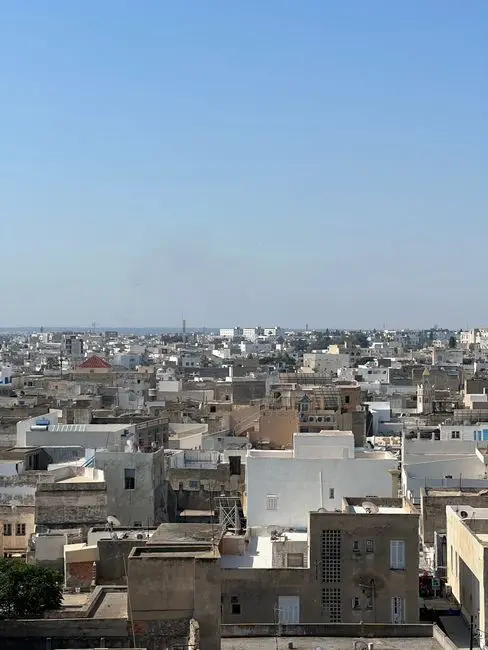
Gaborone, the capital, has seen its population double in twenty years. Secondary cities such as Francistown and Maun are experiencing rapid growth. The result: urban sprawl is eating into agricultural land, forests, and wetlands.
“Ten years ago, this was still fields. Today, it’s nothing but housing estates and roads,” says Boitumelo, a resident of Tlokweng.
The lack of urban planning is making the situation worse. Construction is multiplying with little real consideration for the environment. Waste is accumulating, sewage treatment plants are overflowing, and rivers are turning into open sewers.
A 2023 report by the Botswana Environmental Agency warns of the loss of 12% of the country’s wetlands over ten years. These are ecosystems essential for the natural regulation of water and biodiversity.
Towards an Ecological Awakening?
Faced with these challenges, a new generation of citizens is organising. Associations, young activists, scientists: they want to shift the lines.
“We cannot wait until 2030 to act. It is now that we must change our practices, our policies, our relationship with nature,” declares Keitumetse Leburu, founder of Green Botswana, an environmental collective active in schools and rural communities.
Local initiatives are emerging: reforestation in the south, awareness campaigns, pilot permaculture projects. But these efforts remain scattered, often without institutional support.
The question is now clear: will Botswana be able to reconcile development with the preservation of its environment? Or will it see its natural identity fade under the weight of climate, economic, and social emergencies?