



At the break of dawn, in the still-cool streets of Windhoek, a young woman adjusts her headscarf before opening the door of her small natural cosmetics shop. Her name is Tuli, she is 29 years old, and she is part of that generation of Namibians who dream of building a future by creating their own business. But in a world where the rules of entrepreneurship are changing at a breathtaking pace, Namibia moves forward between promises and uncertainties.
A booming ecosystem
Over the past few years, Namibia has been experiencing an unprecedented entrepreneurial buzz. According to the Global Entrepreneurship Monitor, nearly 35% of young Namibians are considering starting a business within the next three years. An impressive figure for a country of only 2.5 million inhabitants.
The most dynamic sectors? Sustainable agriculture, responsible tourism, fintech and renewable energy. Promising fields, in line with major global trends. “We have a creative, connected and change-hungry youth,” says Elias Mutjavikua, director of an incubator in Swakopmund. “But we need to give them the means to turn their ideas into viable businesses.”
Incubators, coworking spaces and mentoring programmes are multiplying, often supported by international partnerships. But behind this promising façade, the challenges remain immense.
The challenges of a limited market
Namibia, with its low population density and an economy still largely dependent on mining, struggles to provide a sufficient domestic market to sustain rapid start-up growth.
“I launched my e-commerce platform to promote local crafts,” says Ndeshi, founder of NamiCraft. “But after a few months, I realised I had to target the international market to survive. The local market is too small.”
This reality pushes many entrepreneurs to turn to exports or to adapt their models to serve a regional clientele, particularly in southern Africa. But this requires efficient logistics, solid digital infrastructure, and above all, access to financing. Yet on this point, Namibia is lagging behind in a worrying way.
Access to financing: a quest fraught with obstacles
Obtaining a bank loan to start a business in Namibia is often an uphill battle. Collateral requirements are high, and interest rates can reach 12% or more. As a result, many young people are turning to alternative solutions, such as crowdfunding or social impact investment funds.
But these options remain scarce and highly competitive. “I pitched my project to three different funds, without success,” admits Petrus, an engineer who pivoted into agritech. “They tell me my idea is good, but not ‘scalable’ enough. It’s frustrating.”
Faced with this deadlock, some are turning to cryptocurrencies or decentralised platforms to raise funds, at the risk of exposing themselves to dangerous volatility. Others simply give up, discouraged by administrative and financial obstacles.
The digital temptation
Digital technology appears as a lifeline for many Namibian entrepreneurs. Thanks to relatively good Internet coverage and a young, connected population, digital start-ups are multiplying across the country.
Delivery apps, educational platforms, mobile payment solutions: ideas are flowing. “Our application helps farmers monitor their livestock’s health in real time,” explains Kauna, co-founder of LivestockTrack. “It changes everything in rural areas.”
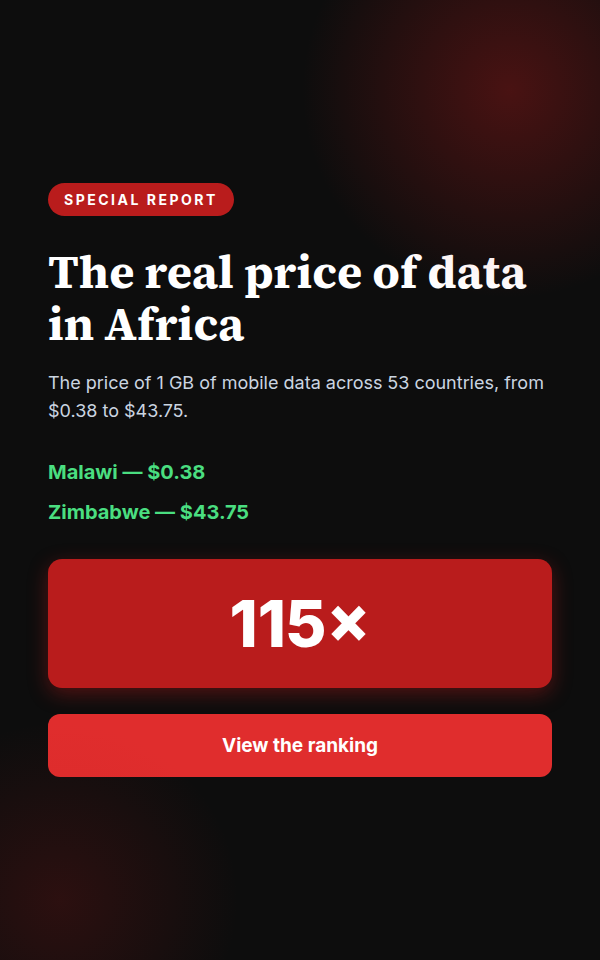
But here again, the challenges are numerous. The cost of data remains high, technical skills are still scarce, and digital giants often absorb the most promising talent. Namibia risks becoming a talent pool for other markets, without fully benefiting from this digital revolution.
Between local innovation and global pressure
In an increasingly interconnected world, Namibian entrepreneurs must contend with fierce global competition. Major international platforms, well-established brands and better-funded foreign start-ups quickly occupy the most lucrative niches.
“We launched a range of cosmetics based on desert plants,” says Tuli, the young entrepreneur from Windhoek. “But very quickly, South African brands copied our concept with far greater resources. It’s disheartening.”
To differentiate themselves, some are betting on local authenticity, social impact or frugal innovation. But this requires strategic support, intellectual property protection, and above all, a clear national vision.
What future for Namibian entrepreneurship?
At a crossroads, Namibia must make crucial choices. Encouraging entrepreneurship cannot be limited to speeches. It is necessary to rethink education, simplify administrative procedures, create bridges between academia and business, and above all, invest massively in digital and energy infrastructure.
“This is not just an economic issue,” insists Elias Mutjavikua. “It is a matter of sovereignty. If we do not create our own solutions, others will do it in our place.”
As the world evolves at great speed, Namibia is still searching for its place on this new map of global entrepreneurship. Between hopes and uncertainties, one question remains: will it be able to turn its challenges into a springboard, or will it remain on the periphery of this silent revolution?
Also worth reading on African dynamics
To place this topic within a continental perspective, also consult GDP of African countries, profitable businesses in Africa, African capitals and jobs in demand in Africa.