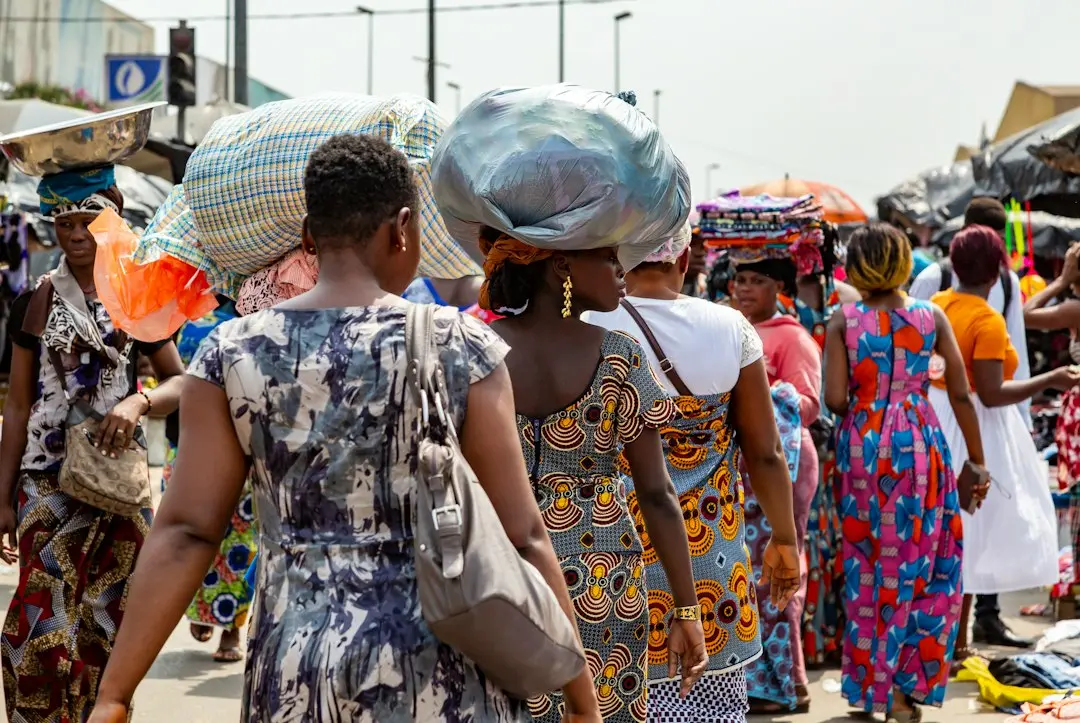




In the spotless streets of Kigali, motorcycle taxis rarely accept cash anymore. With a few taps on a smartphone, the fare is settled. This simple gesture has become one of the most visible symbols of a silent yet radical transformation: that of a country which, in less than two decades, decided to rewrite its future by betting on the digital.
A bold wager to turn the page
In the aftermath of the 1994 genocide, Rwanda was a depleted country. Infrastructure destroyed, fragile institutions, a traumatized population. Yet, as early as the 2000s, the Rwandan government made an uncommon choice for a country in reconstruction: massively investing in information technology.
“We had no natural resources, but we had the intelligence of our people,” Paul Kagame, President of Rwanda, declared at a conference in Davos in 2018. “The digital is our deposit.”
This wager materialized in 2000 with Vision 2020, a national development strategy that placed the knowledge economy at the heart of all public policies. The digital was no longer a luxury, but a lever for survival and growth.
Fiber optics as a backbone
To build a digital economy, the country first needed to be connected. In 2011, Rwanda completed the deployment of more than 2 500 kilometers of fiber optic cable across its entire territory, including in the most remote rural areas.
“It was a colossal investment for a small country, but it was a non-negotiable condition,” explains Jean-Baptiste Niyonzima, a telecommunications engineer in Kigali. “Today, even in a village on the border with Uganda, you can have access to high-speed Internet.”
As a result, more than 90% of the population now lives in an area covered by a 4G network. Rwanda is thus one of the rare African countries to offer near-national coverage in high-speed mobile broadband.
A 100% digital administration
The transformation did not stop at infrastructure. The government launched Irembo, an online platform that allows citizens to access more than 100 public services: passport application, birth certificate, vehicle registration, tax payment… everything is done online.
“Before, I had to drive two hours and wait an entire day to renew my identity card,” says Claudine Uwimana, a resident of Huye. “Now I do it from my phone, in ten minutes.”
In 2023, more than 10 million transactions were carried out on Irembo, an average of nearly 30 000 digital operations per day. Rwanda has thus risen among the most advanced countries in Africa in terms of digital governance.
A tech ecosystem in full swing
Around this digital infrastructure, a dynamic ecosystem has emerged. Incubators such as kLab and Norrsken Kigali welcome hundreds of young entrepreneurs, developers and start-up founders every year.
“There is an incredible energy here. Young people no longer just want to find a job, they want to create one,” says Fatou Diarra, a Senegalese investor based in Kigali. “They are developing solutions for health, agriculture, finance… tailored to our African reality.”
In 2022, Rwanda raised more than 150 million dollars in technology investments, a record for this country of 13 million inhabitants. Companies such as Zipline, which delivers medicine by drones, or AC Group, which digitized public transport, have become continental references.
Education reimagined for the future
But Rwanda knows that without human capital, technology remains a mirage. The country has therefore massively invested in digital education. Since 2017, every primary school student receives a laptop as part of the One Laptop per Child program.
Universities, too, are transforming. The African Institute for Mathematical Sciences (AIMS) and Carnegie Mellon University Africa are training a new generation of engineers, data scientists and artificial intelligence researchers.
“Rwanda is creating a digital middle class,” analyzes Michel Tchoumba, a Cameroonian economist. “It is a silent revolution, but a powerful one.”
Persistent challenges, but an intact vision
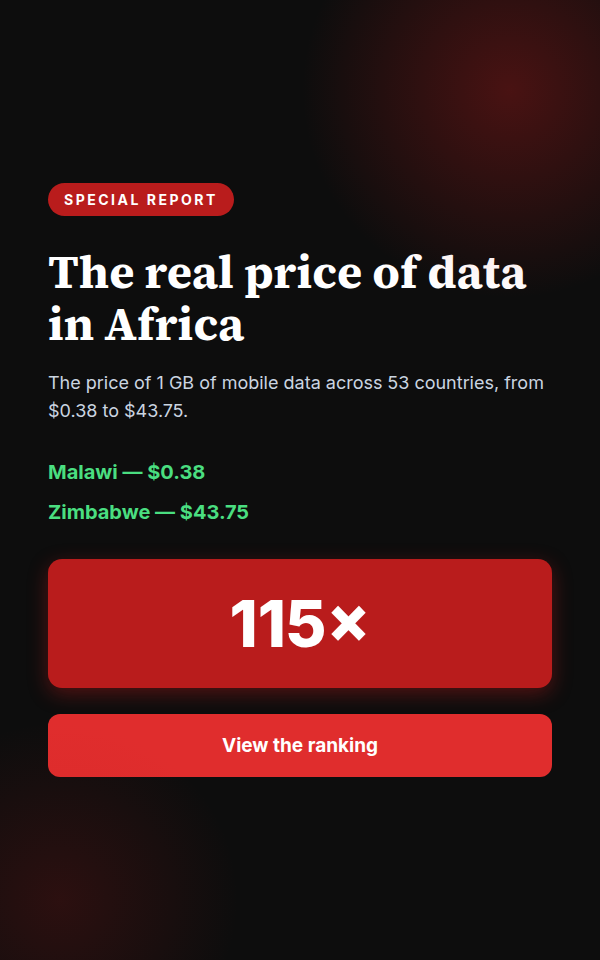
Despite these advances, challenges remain numerous. The cost of Internet access remains high for rural populations. The digital inclusion of women still lags behind. And cybersecurity is becoming a growing concern.
The government is aware of this. In 2022, it launched a new strategy: Vision 2050, which aims to make Rwanda a high-income country, with an economy based on innovation, sustainability and technology.
“We do not just want to adopt technology. We want to create it, master it, export it,” declared Paula Ingabire, Minister of Information Technology. “The digital is our language of the future.”
As the rest of the continent watches this metamorphosis with curiosity, one question remains: is Rwanda becoming the digital Singapore of Africa, or is it charting a unique model, still unclassifiable?