



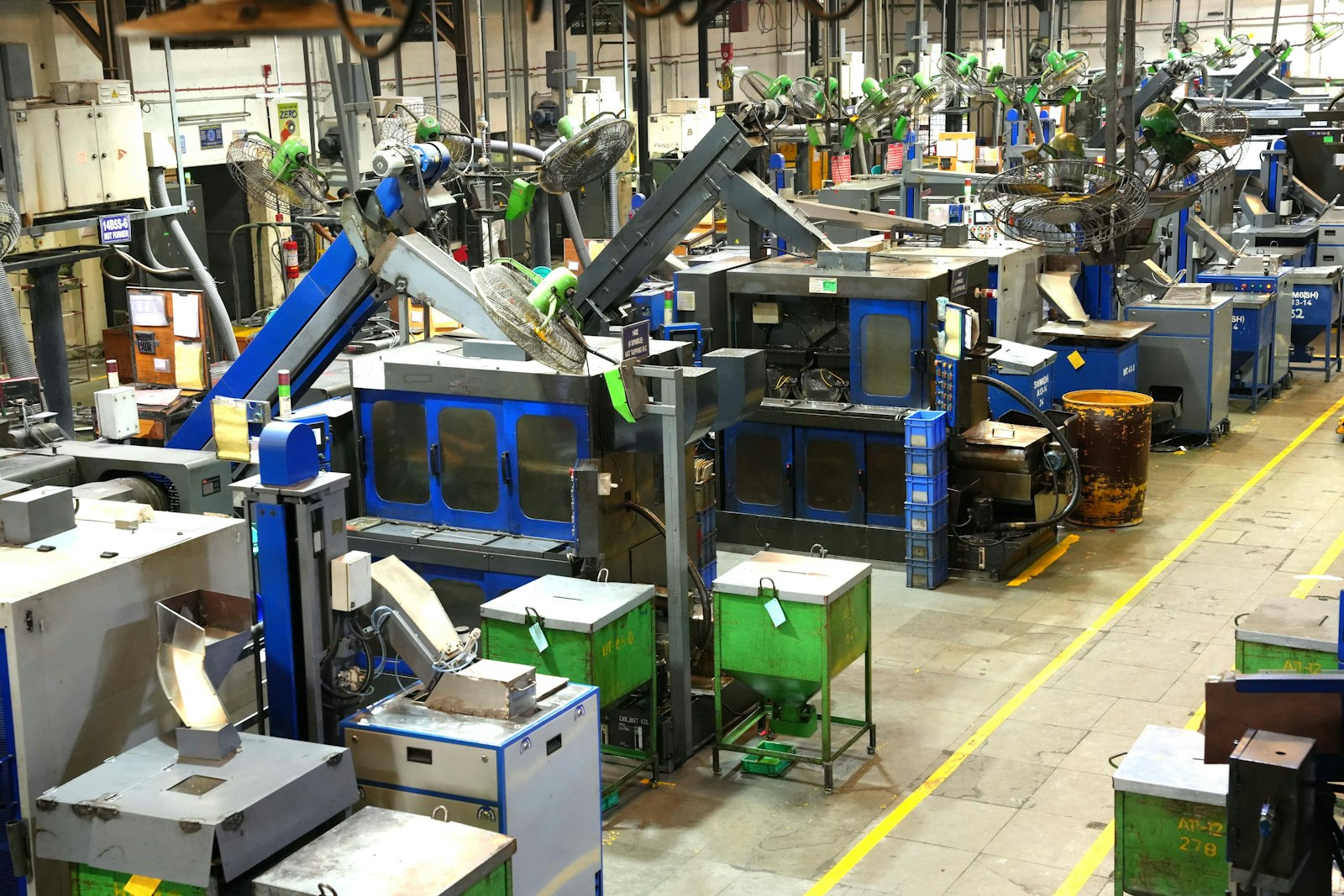
South Africa’s manufacturing sector posted a sharp year-on-year decline in September 2026, with output falling 3.5% compared to the same month in 2025, according to Statistics South Africa (Stats SA). The headline figure lands at an uncomfortable moment for an economy that has been trying to rebuild industrial momentum — and it raises pointed questions for investors watching the continent’s most industrialised economy.
Month-on-month: the bleeding has paused, for now
Seasonally adjusted production was flat in September relative to August — neither growth nor contraction. That may sound unremarkable, but it follows two volatile months: a 3% decline in August and a 2.1% gain in July. The oscillation suggests sector-wide instability rather than a clean directional trend. On a quarterly basis, however, there is a marginally brighter picture: seasonally adjusted output rose 0.9% in the third quarter of 2026 compared to the second quarter, with five of the sector’s ten divisions recording positive movement over that period.
Where the damage is concentrated
The year-on-year breakdown shows the losses are not spread evenly. Four divisions account for the bulk of the drag:

The Afriques newsletter
- Free & no spam
- 1 email per day
- Unsubscribe in 1 click
| Division | Year-on-year change | Contribution to headline |
|---|---|---|
| Motor vehicles, parts, accessories and other transport equipment | -15.0% | -1.1 percentage points |
| Wood, paper, publishing and printing | -11.2% | -1.1 percentage points |
| Furniture and other manufacturing | -19.0% | -0.8 percentage points |
| Basic iron and steel, nonferrous metals, metal products and machinery | -3.7% | -0.8 percentage points |
The motor vehicles figure is the one most likely to catch the attention of foreign investors. South Africa’s automotive assembly industry — centred on plants in Gauteng, the Eastern Cape and KwaZulu-Natal — is a critical export earner and a key link in global supply chains for manufacturers including BMW, Toyota and Ford. A 15% production drop in a single month is a significant signal, though Stats SA’s release does not explain the cause; whether it reflects weaker domestic demand, export order softness or operational disruptions is not stated in the source data.
The 19% decline in furniture and other manufacturing is equally striking in percentage terms, though the division carries less weight in the overall index — hence its 0.8 percentage point contribution despite the larger percentage swing.
One clear bright spot: food and beverages
Against the gloom, food and beverages delivered a 4.9% year-on-year increase and contributed 1.2 percentage points positively to the headline — the single largest positive offset in the data. This is consistent with a pattern seen across sub-Saharan Africa more broadly: consumer-facing food production tends to hold up better than capital-goods or export-linked industries during periods of industrial softness, driven by inelastic domestic demand. Nigeria’s food manufacturing segment showed similar relative resilience during its own industrial contraction cycles in recent years, though direct comparison requires caution given the structural differences between the two economies.
Sales tell a slightly different story
Seasonally adjusted manufacturing sales fell 2.2% month-on-month in September — a sharper drop than the flat production reading, suggesting inventory dynamics or pricing pressure may be at play. On a quarterly basis, however, sales were up 3.2% in the third quarter versus the second, outpacing the 0.9% quarterly production gain. That divergence between the sales and production trends is worth watching: it could reflect drawdown of previously built-up stock, or it could indicate that some of the production weakness is demand-driven rather than supply-driven. Stats SA’s release does not resolve this question.
What this means if you have skin in the game
For diaspora members remitting to South Africa or holding rand-denominated assets, weak manufacturing data adds to existing currency pressure narratives. For institutional investors benchmarking South Africa against other emerging-market manufacturing hubs — Kenya’s export processing zones, Ghana’s light industry base, or Nigeria’s nascent automotive assembly push — the September numbers reinforce concerns about South Africa’s ability to sustain industrial output growth in the near term. The quarterly uptick of 0.9% prevents the picture from being entirely negative, but a 3.5% annual decline in a sector that underpins formal employment and export revenue is not easily dismissed.
What Stats SA’s release does not tell us — and what investors should seek out independently — is the degree to which load-shedding, logistics constraints at Transnet, or global demand shifts explain the specific divisional collapses. Those causal questions remain open.
Source: Statistics South Africa (Stats SA), Manufacturing: Production and Sales, September 2026, published 10 November 2026.

Moussa D.
Editor-in-chief of lesafriques.com. An economic journalist trained in Tunis, he sets the editorial line and reviews every article before publication. He ensures every figure is sourced, verified and dated, in line with the site's methodology.
View all articles → · LinkedIn ↗


