
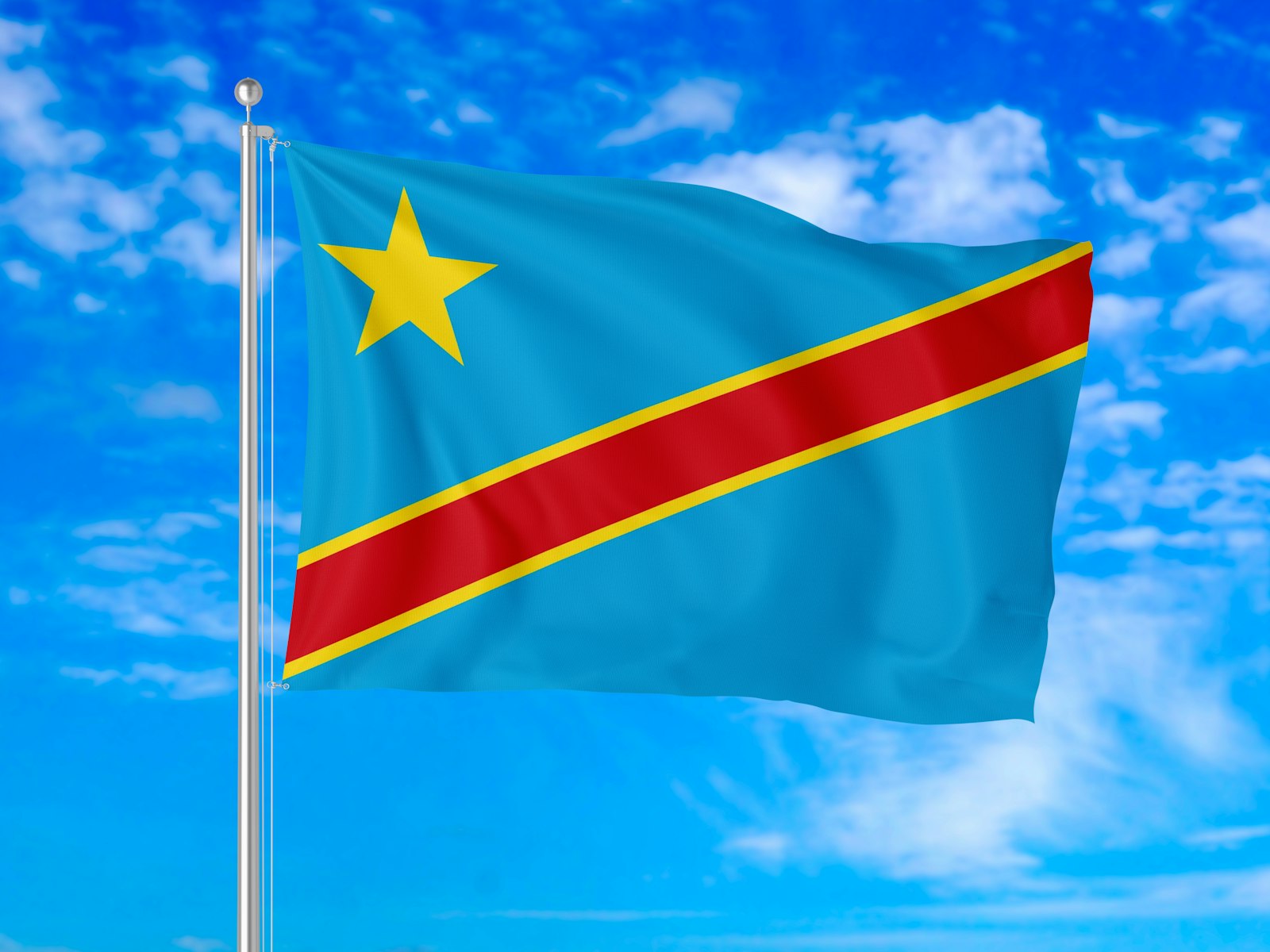
The crisis tearing eastern Democratic Republic of Congo apart for years now has a new arena: the Organisation internationale de la Francophonie (OIF). This is one of the readings proposed by Congolese political analyst Christian Moleka, for whom several apparently distinct issues are part of the same dynamic — the one opposing Kinshasa to Kigali.
The OIF, new terrain of the diplomatic battle
According to Christian Moleka, the Francophonie “once again crystallizes the Congolese crisis, but at the international level.” This formulation deserves careful consideration: it suggests that the multilateral francophone body, usually perceived as a space for cultural and linguistic cooperation, is becoming a place where regional rivalries play out. While it is not yet possible to detail the precise mechanisms of this diplomatic battle within the OIF, the analyst clearly situates the confrontation as an extension of the armed conflict opposing the DRC to M23 forces, supported according to Kinshasa by Kigali — something Rwanda contests.
The rise of the Front de résistance nationale (FRN) also figures among the elements that Moleka integrates into this overall picture. The offensive of this movement constitutes, in his reading, an additional piece of the same security and political puzzle. These internal dynamics in turn feed into the DRC’s positioning on the international stage, and therefore within institutions such as the OIF.
The Afriques newsletter
- Free & no spam
- 1 email per day
- Unsubscribe in 1 click
Three issues, one and the same fracture
The analyst structures his argument around four issues that the Actualité.cd communiqué explicitly identifies: the diplomatic battle at the OIF, the referendum law, the FRN offensive, and the erasure of Joseph Kabila’s name. Subjects which, taken individually, belong to different registers — constitutional law, security, political memory — but which Moleka links to a central crisis.
The referendum question deserves particular attention. A constitutional amendment by referendum in the DRC would inevitably spark debates on governance, term lengths, or the country’s institutional architecture. In a context of war, the adoption of such a law can be perceived as an attempt to consolidate the current power — which its supporters would present, conversely, as a necessity for stabilization. The communiqué does not take a stance on this point, nor does Moleka, judging by the available summary.
The “erasure of Joseph Kabila’s name” constitutes a strong political signal. The former president, who governed the DRC for nearly eighteen years before giving way to Félix Tshisekedi in 2019, is progressively being sidelined from the official political landscape. This process, whether it involves symbolic withdrawal or legal measures, is part of internal reconfigurations which, according to Moleka, are not unrelated to external tensions.
What the communiqué does not say
Several questions remain open. First, the precise nature of the “diplomatic battle” at the OIF: which states support which positions, and on which texts or decisions does this confrontation concretely bear? Then, Moleka’s analysis — as stimulating as it may be — rests on a unified reading of issues that other observers might treat separately. The risk, in this type of analytical framework, is projecting coherence where autonomous logics coexist.
Furthermore, the role of Western partners and African regional organizations — the African Union, SADC, which is leading a mediation process — is not mentioned in the available summary. Yet these actors weigh on the outcome of negotiations as much as, if not more than, the maneuvers within the OIF.
What is certain is that the DRC is seeking to further internationalize its cause, by bringing the conflict before every available forum. The OIF, composed of numerous French-speaking African states some of which maintain close ties with Kigali, represents in this regard a sensitive diplomatic playing field. It remains to be seen whether Kinshasa has the necessary relays to assert its position there — a question Moleka raises without necessarily providing a definitive answer.
Source: Actualité.cd (DRC), 13 November 2026.