
The African Development Bank (AfDB) has approved €20 million (≈ $21.6 million) in financing for Ciments écologiques de Côte d’Ivoire (CIMECI), a subsidiary of the YESHI Group, to construct a low-carbon cement production complex in Attingué, a town north of Abidjan. The AfDB Board of Directors signed off on the deal on 18 November 2026.
What is being built — and why it matters
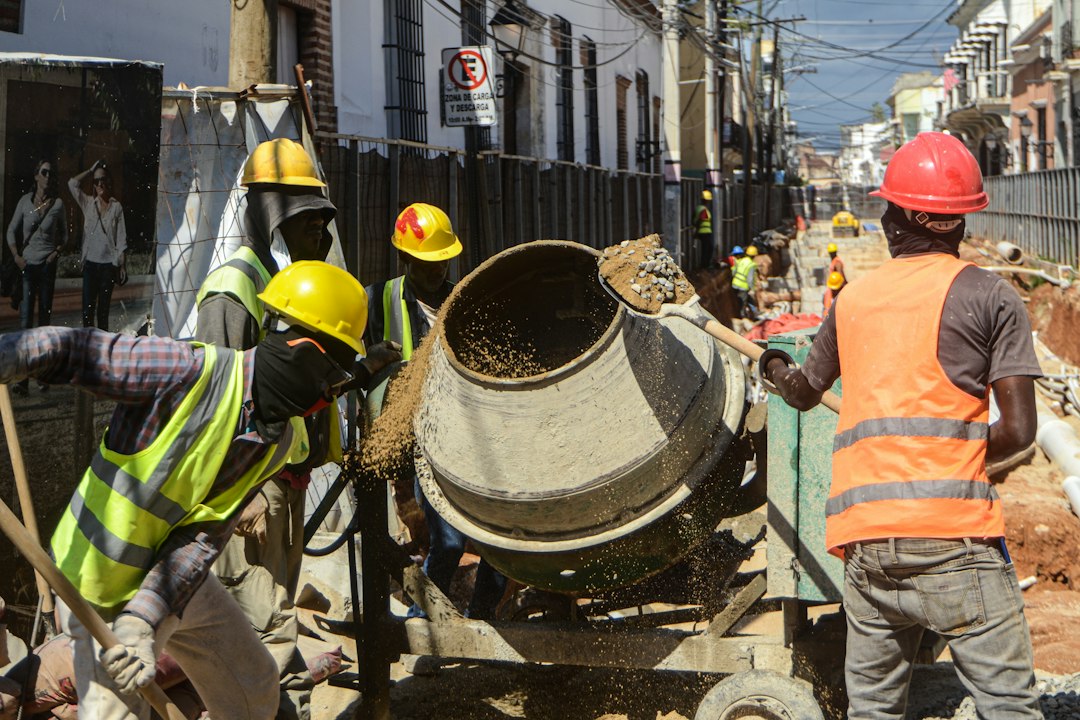
The Attingué complex will combine two facilities: a calcined clay plant with annual output capacity of roughly 350,000 tonnes, and a grinding unit capable of producing up to 500,000 tonnes of cement per year. Both will draw on locally sourced clay and limestone to manufacture limestone calcined clay cement — known in the industry as LC3 — a lower-emission alternative to conventional Portland cement.
The significance of that technology choice is hard to overstress. Conventional cement production is one of the most carbon-intensive industrial processes globally, responsible for roughly 8% of worldwide CO₂ emissions, largely because it depends on clinker — a highly energy-intensive intermediate product. LC3 replaces a substantial share of clinker with calcined clay, cutting emissions without sacrificing structural performance.
The Afriques newsletter
- Free & no spam
- 1 email per day
- Unsubscribe in 1 click
For Côte d’Ivoire specifically, the project addresses a structural vulnerability: the country currently relies heavily on imported clinker to sustain domestic cement production. By sourcing raw materials locally, CIMECI reduces both foreign-exchange exposure and supply-chain risk — a concern any infrastructure investor in West Africa will recognise.
The market CIMECI is targeting
Domestic demand is the primary target. Côte d’Ivoire’s construction pipeline — residential housing, commercial real estate and large-scale infrastructure — continues to expand, underpinned by one of West Africa’s more resilient growth trajectories. The combined 500,000-tonne annual grinding capacity positions CIMECI to capture a meaningful slice of that demand without immediately competing at the scale of regional heavyweights.
To put the numbers in context: Nigeria, Africa’s largest cement market, consumed well over 20 million tonnes in 2023, with Dangote Cement alone operating multi-million-tonne integrated plants. Ghana and Senegal operate in the low-single-digit million-tonne range. Côte d’Ivoire sits in a comparable bracket to Senegal, meaning a 500,000-tonne facility is a credible market entrant rather than a niche player.
YESHI Group — the industrial sponsor
CIMECI’s parent, YESHI Group, was founded in Côte d’Ivoire in 1979 and has grown into a diversified industrial conglomerate with operations across Côte d’Ivoire, Cameroon, Senegal, Gabon, Morocco, the Central African Republic and the Republic of Congo. That multi-country footprint gives it procurement, logistics and regulatory experience across francophone Africa — relevant collateral for any investor assessing execution risk on a greenfield industrial project.
AfDB’s strategic rationale
The AfDB frames this investment under its Ten-Year Strategy 2024–2033, which prioritises green industrialisation and private-sector development. For the bank, the CIMECI deal ticks both boxes: it backs a privately owned industrial company deploying cleaner production technology, using local inputs, in a sector — construction materials — that is fundamental to the infrastructure ambitions of nearly every African government.
The €20 million (≈ $21.6 million) ticket is a senior or quasi-equity instrument — the press release does not specify the exact instrument type — aimed at de-risking a project that might struggle to attract commercial bank financing at comparable terms, given the greenfield nature of the complex and the still-nascent LC3 market in West Africa.
What to watch
Several questions the AfDB press release leaves open are worth tracking for investors and industry observers. First, the timeline: no commissioning date is disclosed, so construction risk remains unquantified. Second, pricing competitiveness: LC3 cement carries a green credential, but whether Ivorian buyers — particularly public procurement bodies — will pay a premium or demand price parity with conventional cement is unconfirmed. Third, the clinker-import displacement effect: the press release states the project will reduce dependence on imported clinker, but does not quantify by how much, leaving the trade-balance benefit unclear. Finally, YESHI Group’s expansion track record across seven countries is a positive signal, but its specific experience in greenfield cement manufacturing has not been detailed publicly. Each of these points will bear watching as the project moves from approval to ground-breaking.
Source: African Development Bank Group, press release, 18 November 2026.
Source: African Development Bank Group, press release, 18 November 2026.