


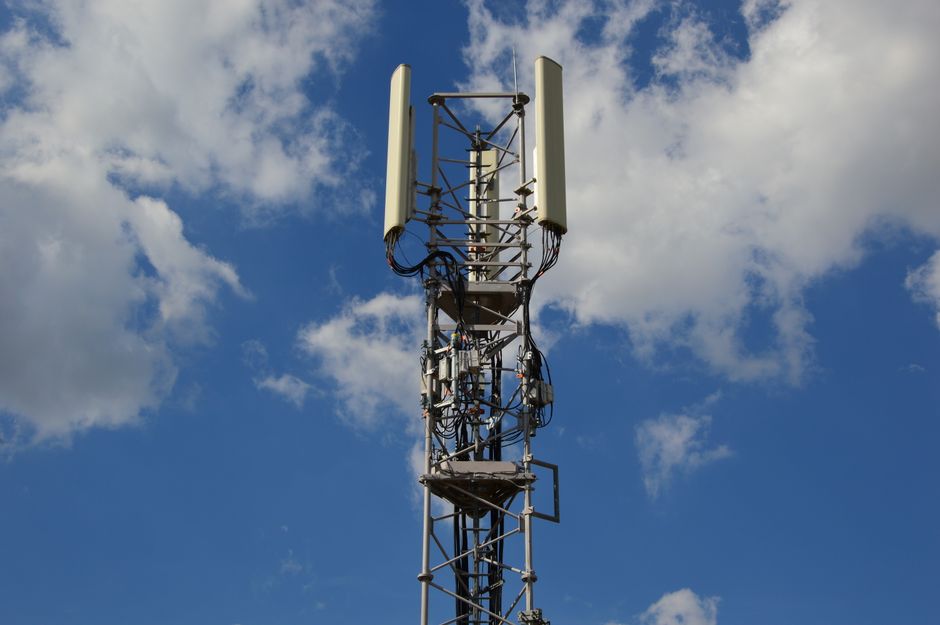
In Dakar, Abidjan, Kinshasa or Nairobi, Huawei’s 5G antennas now criss-cross urban skylines. Behind this connectivity revolution lies a challenge that few African governments dare name openly: who actually controls the data flowing across these networks? In 2026, the battle for African digital sovereignty is no longer a theoretical question reserved for lawyers or engineers — it is a fully-fledged geopolitical front, where artificial intelligence, undersea cables and data centers have become strategic weapons as critical as oil or uranium.
Chinese 5G in Francophone Africa: partnership or dependency?
Since the launch of the first commercial 5G corridors in sub-Saharan Africa, Huawei remains the dominant operator in at least 70% of the continent’s francophone countries. In Senegal, Côte d’Ivoire, Cameroon and the Democratic Republic of Congo, contracts signed with the Shenzhen giant have enabled an unprecedented acceleration in network coverage — often at costs 30 to 40% lower than competing Western offers.
But this pricing windfall has a structural downside. Huawei equipment incorporates, by design, proprietary architectures that drastically limit the ability of African states to independently audit data flows. In 2026, several reports from the African Union and Kenyan cybersecurity firm Serianu have highlighted systemic vulnerabilities in core networks deployed in West Africa, linked to software updates carried out remotely from servers based in China.
The question of huawei 5g afrique francophone souveraineté numérique 2026 is therefore no longer trivial. It directly concerns the capacity of states to protect their governmental communications, financial transactions and the personal data of their citizens.
The opaque clauses in infrastructure contracts
A confidential report by the United Nations Economic Commission for Africa (ECA), partially disclosed in early 2026, reveals that several contracts binding African states to Chinese digital infrastructure providers contain so-called “priority maintenance” clauses. In diplomatic language, this means that technicians based in China have permanent remote access to core network equipment — with no obligation to notify local authorities in real time.
- Côte d’Ivoire: a $780 million contract signed in 2023 with Huawei Marine for the deployment of a national backbone, with an uncapped remote maintenance clause.
- Senegal: 5G deployment entrusted 80% to Huawei equipment in the urban areas of Dakar and Thiès.
- DRC: three data centers built by China Telecom in Kinshasa, hosting part of the state’s tax data.
Chinese AI vs. African AI: the invisible data war
Artificial intelligence is the arena where the most silent — and most formidable — dimension of this competition plays out. In 2026, the major AI platforms deployed across the African continent are overwhelmingly of Sino-American origin: Alibaba Cloud, Baidu AI, AWS and Google Vertex AI share the bulk of the enterprise solutions market. African players, despite dynamic startup ecosystems in Lagos, Nairobi and Cape Town, struggle to compete in computing power and training data volumes.
Yet AI feeds on local data. Every voice recognition model trained on conversations in Wolof, Lingala or Dioula produces economic and cultural value — value that is today captured outside the continent. The geopolitics of data, often referred to under the acronym ia chinoise vs africaine géopolitique données, reveals a fundamental asymmetry: Chinese and American companies process African data for purposes that entirely escape the control of local regulators.
African initiatives emerging nonetheless
Faced with this reality, some African states and private actors are attempting to regain control. Morocco, Rwanda and Ghana stand out in 2026 for proactive policies of data localization and support for local technology champions:
- Rwanda: the government launched the “AI Kigali” programme in 2025, aiming to train 10,000 AI engineers by 2028 and to build a sovereign data center powered by solar energy.
- Morocco: Rabat adopted a legal framework in January 2026 requiring foreign cloud providers to host public administration data locally.
- Ghana: the Accra Digital Centre aims to become the regional data processing hub for English-speaking West Africa.
These initiatives are promising, but insufficient given the pace of expansion of Chinese players and their near-unlimited financing capacity through the mechanisms of the digital Belt and Road Initiative (BRI).
Cybersecurity and technological dependency: the Francophone Achilles’ heel
Cybersecurity in Francophone Africa remains the weakest link in this entire chain. According to INTERPOL’s 2026 report on cybercrime in Africa, financial losses linked to cyberattacks on the continent reached $4.1 billion in 2025, up 65% over two years. Even more concerning: the majority of documented intrusions into sub-Saharan African government systems exploit vulnerabilities in equipment or software whose security updates are controlled by foreign third parties.
Cybersecurity in Francophone Africa and dependency on China is thus a double-edged equation. On one hand, Chinese equipment enables fast and affordable network coverage. On the other, it creates a structural dependency that exposes states to risks of industrial espionage, sabotage of critical infrastructure or service disruption in the event of deteriorating diplomatic relations.
Towards an African cybersecurity regulatory framework
The African Union took a first step by adopting, in March 2026, a Continental Cybersecurity and Personal Data Protection Policy (PCPD-2026). This text, inspired by both the European GDPR and ITU recommendations, lays the groundwork for mandatory certification of network equipment deployed in African critical infrastructure. It nonetheless remains non-binding on member states, which considerably limits its practical reach in the short term.
Voices such as that of Senegalese economist Ndongo Samba Sylla or Ivorian technologist Thierry Zézé are calling for further action: creating a African Sovereign Digital Agency, endowed with real sanctioning power, capable of auditing infrastructure contracts and imposing minimum standards of technological independence.
African digital infrastructure: towards genuine independence?
The question of African digital infrastructure and technological independence cannot be separated from financing. Undersea cables, data centers and fiber optic networks cost billions of dollars — money that the majority of African states do not have, hence the massive recourse to Chinese financing via Exim Bank of China or public-private partnerships with giants like Alibaba or Huawei.
Two alternative paths are nonetheless emerging in 2026:
- The European co-financing model: through the EU’s Global Gateway programme, several alternative undersea cable projects are being deployed between Europe and West Africa, with explicit clauses for independent auditing and shared ownership.
- African green bonds: Rwanda and Kenya have raised funds on international markets through green bonds directed toward energy-efficient, locally-owned digital infrastructure.
These alternatives remain marginal. In 2026, Francophone Africa remains structurally dependent on external providers for at least 85% of its critical digital infrastructure. Reversing this trend will require courageous political decisions, strengthened regional cooperation — particularly within ECOWAS and ECCAS — and a generation of African engineers and lawyers trained in the issues of sovereign digital technology.
FAQ — Your questions about African digital sovereignty
Why is Huawei 5G problematic for African sovereignty?
Huawei equipment incorporates proprietary architectures that limit the ability of African states to independently audit their networks. Permanent remote access granted to technicians based in China raises real risks of espionage and operational dependency.
Are there credible African alternatives to Chinese AI?
Startups such as Lelapa AI (South Africa), Ubenwa (Nigeria) and Instadeep (Tunisia/UK) are developing AI solutions tailored to African contexts. But they still lack the computing power and massive training datasets needed to compete with Baidu or Alibaba Cloud.
What is the “digital Belt and Road Initiative” and how does it concern Africa?
The digital BRI is the technological extension of China’s New Silk Roads. It finances digital infrastructure (cables, data centers, 4G/5G networks) in Africa in exchange for preferential contracts for Chinese companies, creating long-term structural dependency.
Which African countries are the most advanced in terms of digital sovereignty?
In 2026, Rwanda, Morocco and Ghana stand out for their data localization policies, support for local technology champions and large-scale digital skills training. South Africa also has a mature tech ecosystem, but remains exposed to the same infrastructural dependencies.
Is the African Union’s continental cybersecurity policy sufficient?
The PCPD-2026 adopted by the AU represents an important symbolic step forward, but it remains non-binding on member states. Without a real sanctioning mechanism and dedicated funding, it risks remaining a statement of principle with no significant practical effect in the short term.
Read also