


In 2026, while the debate on the employability of African youth intensifies in chancelleries and economic forums, a quiet reality is asserting itself on the ground: thousands of French-speaking young people from the continent are gaining concrete digital skills through programs carried by the Organisation Internationale de la Francophonie. This is no longer a bet on the future — it is an ongoing transformation, measurable, documented, and still far too little covered by the media.
Why digital training has become a strategic emergency in francophone Africa
Francophone sub-Saharan Africa is home to some of the youngest populations in the world. In Burkina Faso, Mali, the Democratic Republic of Congo, Senegal and Côte d’Ivoire, more than 60% of the population is under 25. This demographic reality is both an extraordinary opportunity and a colossal challenge for governments and international institutions.
Yet the job market is digitalizing at a speed that far outpaces the capacity of traditional educational systems. Local companies, startups, NGOs and even public administrations are looking for profiles with expertise in web development, cybersecurity, data management, digital marketing and applied artificial intelligence. Faced with this growing demand, the supply of digital training in francophone Africa remains insufficient and unevenly distributed.
It is precisely in this context that the role of the OIF takes on its full meaning. By positioning itself as a facilitator of technological skills transfer within the francophone space, the organization provides a structured response to a real social emergency.
The OIF and its digital strategy: far more than symbolic support
A roadmap focused on digital inclusion
For several years, the OIF has placed digital transformation at the heart of its institutional priorities. The OIF digital transformation Africa program is not limited to conferences or statements of intent. It translates into concrete actions: funding training centers, deploying educational resources in the French language, partnerships with universities, digital schools and private players in the technology sector.
In 2026, the organization has strengthened its commitments in several member countries of sub-Saharan Africa, with a particular focus on peri-urban and rural areas, which are often overlooked by major digital development plans. The stated objective: not to reproduce the geographical inequalities of the physical world in the digital space.
Flagship initiatives that change lives
Among the most impactful mechanisms deployed by the OIF, the following can be cited:
- The Instituts Francophones du Numérique (IFN): established in several African capitals, these institutes offer certified training in software development, cybersecurity and digital entrepreneurship, accessible to young people without prior university qualifications.
- The Campus Numérique Francophone platform: an online learning environment that allows learners located in areas with low connectivity to access quality courses, sometimes in offline mode thanks to downloadable content.
- Franco-African mentorship programs: which connect tech professionals established in France, Belgium or Canada with young African talents eager to develop their skills or launch their startups.
- OIF scholarships for tech training: awarded each year to hundreds of young women and men from the continent to pursue specialized training at partner institutions.
Francophone African youth: at the heart of the initiative
Varied profiles, a common ambition
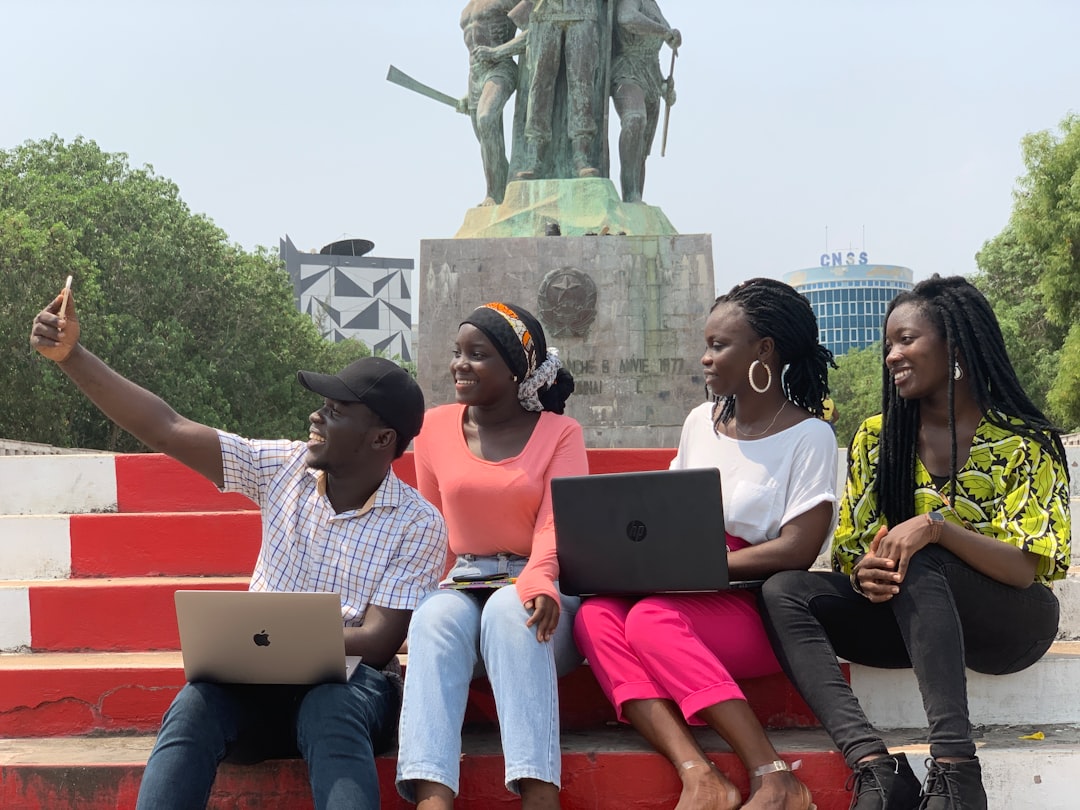
The francophone African youth tech training is not a monolithic bloc. It is made up of high school students in career transitions, unemployed graduates, passionate self-taught individuals, budding entrepreneurs and women seeking to make their mark in sectors that are still very male-dominated. The OIF’s programs have the distinctive feature of addressing this diversity by offering modular pathways adapted to different levels and objectives.
In Dakar, a 24-year-old woman who previously sold clothing can today design e-commerce websites after six months of intensive training. In Kinshasa, a former literature student can retrain as a data analyst and work for a local fintech. These trajectories, still marginal ten years ago, are gradually becoming the norm in the major francophone African metropolises.
The French language as an asset, not an obstacle
One of the angles often overlooked in the debate on digital training in Africa is that of language. A large proportion of the educational resources available online is in English, which constitutes a real barrier for millions of French-speaking young people for whom English is not their natural working language.
By producing and distributing tech training content in French, the OIF transforms language into a lever for inclusion rather than an obstacle. This is an intelligent strategic positioning that anchors francophonie within the contemporary challenges of global economic development.
Remaining challenges and ways to address them
Connectivity: the lifeblood of the digital battle
Despite the progress made, access to the Internet remains unequal in francophone Africa. The cost of mobile data, the inadequacy of infrastructure in rural areas and frequent power outages constitute structural obstacles that training programs alone cannot resolve. In 2026, the OIF is working in coordination with partners such as the African Union, the World Bank and private telecom operators to co-finance low-bandwidth access solutions adapted to local realities.
Recognition of digital certifications
Another crucial issue concerns the value of diplomas and certifications obtained through these programs on the local job market. While large multinational companies readily recognize Google, Microsoft or AWS certifications, local SMEs and African public administrations sometimes remain cautious about non-conventional learning pathways. The OIF actively advocates for the establishment of national frameworks for recognizing digital qualifications in its member states.
The gender challenge in African tech
Women still represent less than 30% of learners in tech fields in francophone Africa. The OIF’s programs now incorporate quotas and scholarships specifically aimed at women, with support mechanisms designed to remove the cultural and family obstacles that hinder their access to these training programs. This is a long-term undertaking, but results are beginning to show.
Towards a sovereign francophone digital ecosystem
Beyond individual training, what the OIF is building in 2026 are the foundations of a francophone digital ecosystem that is not simply a consumer of technologies produced elsewhere, but capable of creating, adapting and exporting them. Startups emerging from these programs are beginning to establish themselves in regional markets. Developers trained at the IFN are working for European clients remotely. Francophone African data scientists are participating in international research projects.
This dynamic is still fragile, but it is real. And it rests on a simple conviction: investing in human competence is the best investment an institution can make for a continent whose future is being built right now.
FAQ — Digital training in francophone Africa and OIF programs
Which African countries mainly benefit from the OIF’s digital programs?
The OIF’s programs cover all francophone member states in Africa, with a particular concentration on sub-Saharan African countries such as Senegal, Côte d’Ivoire, Cameroon, the DRC, Rwanda, Benin and Morocco. Countries in situations of institutional fragility often benefit from enhanced mechanisms.
How can a young person access the OIF’s digital training programs?
Candidates can find information directly on the OIF’s official website (francophonie.org) or through the Instituts Francophones du Numérique present in their countries. Some training programs are accessible online via the Campus Numérique Francophone platform, with no prior diploma requirement for introductory courses.
Is OIF training free of charge?
Some of the training is fully covered thanks to institutional funding from the OIF and its partners. Others are accessible through competitive scholarships. Some programs offer a deferred payment model, where training fees are only reimbursed once the learner is employed.
What level is required to enroll in a tech training program through the OIF?
Prerequisites vary depending on the program. Introductory courses (digital basics, use of office tools, introduction to coding) are accessible from high school level. Advanced training in software development, cybersecurity or data science generally requires a Bac+2 level or demonstrable self-taught experience.
Does the OIF collaborate with private companies for the professional integration of learners?
Yes. In 2026, the OIF has developed partnerships with several African and international technology companies — including players such as Orange Digital Centers, MTN, Ecobank Tech and various fintech startups — to facilitate the integration of graduates into real professional environments, through internships, work-study contracts or direct recruitment.
Also read
Also read