



African Diaspora in France: Employment and Professional Mobility
From factory to startup: how the African diaspora in France is reinventing its professional journey
In 2026, more than 1.5 million African nationals reside in France, carrying migration stories, degrees sometimes unrecognized, skills often undervalued — and yet a remarkable professional resilience. The African diaspora in France does not form a homogeneous bloc: it brings together Malian engineers hired by Parisian firms, Senegalese nurses who are pillars of the public hospital system, Ivorian entrepreneurs leading fast-growing SMEs, and Cameroonian delivery workers caught in the nets of the platform economy. Drawing an honest map of these professions and employment sectors requires combining statistical data with lived realities.
A structural presence in the French economy
Contrary to a persistent misconception, the African diaspora in France does not exclusively hold low-skilled jobs. Data from INSEE and the OECD, updated for 2026, reveal a much more nuanced sectoral distribution. Admittedly, overrepresentation in certain so-called “essential” occupations remains a statistical reality. But it coexists with a visible rise in the health, education, technology and entrepreneurship sectors.
The major trends reveal five dominant sectors for the African diaspora France professions employment:
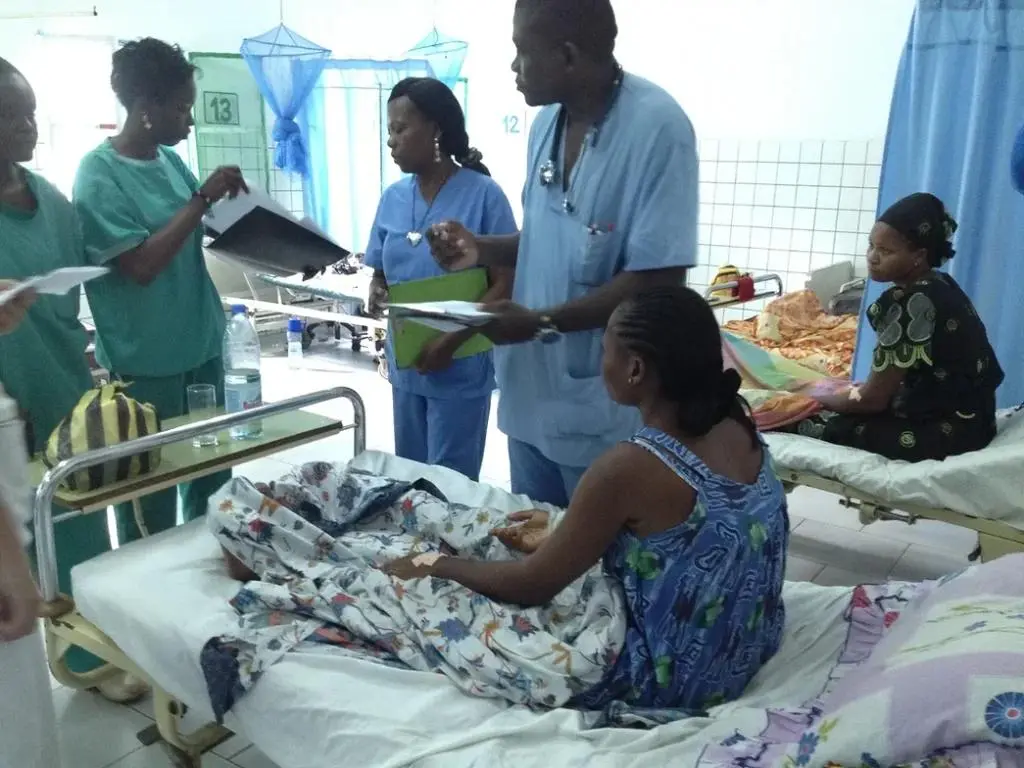
- Health and social work: nurses, care assistants, doctors, social workers — this sector alone accounts for nearly 18% of workers of sub-Saharan origin in France.
- Construction and manufacturing: historically the primary employer of the first generation of African immigrants, this sector remains significant, particularly for the Malian, Senegalese and Moroccan communities.
- Trade, transport and logistics: the proliferation of digital platforms (Uber Eats, Deliveroo, Amazon Flex) has massively integrated African workers into precarious but visible jobs.
- Business services and finance: with the arrival of new educated generations, a breakthrough is being observed in consulting firms, banks and insurance companies.
- Education and research: African or African-origin teachers, researchers and trainers actively contribute to French universities, particularly in scientific fields and African studies.
Focus on the Senegalese diaspora: a textbook case of diversification
Among the most studied communities, the work sectors of the Senegalese diaspora in France perfectly illustrate this dual dynamic of persistence and transformation. Estimated at more than 120,000 people in 2026 (including dual nationals), the Senegalese community in France has long been associated with street trading, textiles and construction.
Today, the profile has evolved profoundly. There is a high proportion of higher education graduates among recent arrivals: master’s and doctoral students who stay after their studies, engineers recruited by CAC 40 companies, and lawyers specialising in international business law. At the same time, a dense entrepreneurial fabric has taken shape, particularly in African restaurants, money transfers, travel agencies and more recently in Africa-focused fintechs.
This dualism — between persistent precarity for part of the community and real social advancement for another — is precisely at the heart of the issues surrounding professional mobility of African migrants in France.
Socioprofessional mobility: what obstacles, what trajectories?
Structural barriers to mobility
The professional mobility of migrants from Africa in France runs up against several well-documented obstacles. The first is the non-recognition of foreign qualifications, which forces many African doctors, architects or engineers to accept positions below their skill level. In 2026, despite successive reforms to the ENIC-NARIC system, processing delays and partial equivalences continue to penalise career paths.
The second barrier is hiring discrimination. Testing studies conducted by the Défenseur des droits confirm that, with an equivalent CV, a candidate with an African-sounding name receives significantly fewer positive responses than their counterpart with a European-origin name. This invisible glass ceiling weighs on career trajectories, even for graduates of leading institutions.
Finally, the professional network — crucial social capital in the French working world — remains unequally accessible. The closed circles of elite schools, alumni clubs and informal co-optation networks reproduce dynamics of exclusion that diaspora candidates must learn to navigate around.
Levers for advancement: training, entrepreneurship, diaspora networks
Faced with these obstacles, adaptation and workaround strategies have emerged. Continuing education is one of the first levers: associations such as AFRIC’IMPACT, incubators like Africa4Tech or dedicated university programmes allow professionals in career transition to upskill and validate new recognised qualifications.
Entrepreneurship represents another major path to emancipation for the African diaspora business creators in France. In 2026, more than 80,000 companies are estimated to have been created or co-led by entrepreneurs of African origin on French territory. These structures cover a very broad spectrum: from local micro-enterprises to scale-ups with pan-African ambitions. Names such as Djamo, Yoco and Franco-African fintechs based in Paris bear witness to a new generation of entrepreneurs looking simultaneously toward France and toward the continent.
Diaspora networks also play a growing role. Organisations such as Club Efficience, Africa CEO Forum Paris, or platforms like AfricaLink facilitate networking, mentoring and access to investors receptive to Africa-related projects. These ecosystems serve as genuine career accelerators for African professionals in France.
Towards recognition of the economic role of the African diaspora in France
In 2026, remittances from the African diaspora in France to the continent exceed 10 billion euros annually — a figure that far surpasses French official development aid to Africa. This financial flow is directly conditioned by the ability of diaspora members in France to integrate and advance professionally.
Recognising the economic contribution of the African diaspora therefore also means investing in its upward mobility: accelerated degree recognition, institutionalised mentoring, effective action against hiring discrimination, and easier access to credit for entrepreneurs. These are public policies at the intersection of integration, development and French economic competitiveness.
Mapping the professions and jobs of the African diaspora in France is not merely an academic exercise. It is the mirror of a society in motion, which must still learn to fully value the talents it welcomes.
FAQ — Frequently asked questions about the African diaspora and employment in France
Which sectors employ the most people from the African diaspora in France in 2026?
The main sectors are health and social work, construction and public works, trade and logistics, business services and education. The distribution varies according to national origins and migration generations.
In which fields does the Senegalese diaspora in France primarily work?
Historically present in trade and construction, the Senegalese diaspora in France has diversified significantly. A growing proportion of graduates can now be found in the finance, law, technology and entrepreneurship sectors, particularly in fintechs focused on West Africa.
What are the main barriers to professional mobility for African migrants in France?
The three main barriers identified are the non-recognition of foreign qualifications, hiring discrimination documented by testing studies, and unequal access to informal professional networks that structure a large part of the French labour market.
How many companies are created by African entrepreneurs in France?
In 2026, more than 80,000 companies are estimated to have been created or co-led by entrepreneurs of African origin in France. These structures range from very small local businesses to startups with pan-African ambitions, particularly in the fintech, restaurant and international trade sectors.
What is the link between the professional integration of the diaspora and Africa’s development?
The link is direct and massive. Remittances sent by the African diaspora from France to the continent exceed 10 billion euros per year in 2026. These transfers, conditioned by the stability and quality of employment in France, finance education, health and entrepreneurship in countries of origin, making the diaspora a key player in African development.
Read also