



At dawn, when the sun rises over the red dunes of the Namib desert, another kind of energy awakens in the streets of Windhoek. It is not that of wind or sand, but that of young entrepreneurs, solidarity communities, bold start-ups, and traditions reinventing themselves. In Namibia, a new social ecosystem is taking shape — discreet yet powerful, woven between modernity and ancestral memory.
A youth inventing its own rules
They are under 35, often university-educated, sometimes self-taught, and they refuse to leave their country to seek their fortunes elsewhere. In Windhoek, Swakopmund, or Katima Mulilo, a generation of young Namibians is mobilizing to build a different society — more equitable and more rooted in local realities.
“We no longer want to depend on international aid or copy models imported from Europe,” says Tuli Ndapewa, 29, founder of GreenRoots, an urban farming start-up. “We have our own solutions, our own dreams.”
Youth unemployment exceeds 40% in some regions of the country, but that does not curb their creativity. Incubators such as Dololo and StartUp Namibia support these initiatives, with growing backing from the private sector and the diaspora.
In 2023, more than 500 entrepreneurial projects were registered in the country, 60% of which were led by women. Figures that reveal a silent yet determined momentum.
New community solidarities
In the remote villages of the north, ancient community structures are transforming. The “mahangu clubs” — mutual aid groups centred around millet cultivation — are also becoming spaces for micro-finance and digital training.
“We have always shared our harvests; now we also share our knowledge,” explains Paulus Haikali, a traditional chief in the Omusati region. “Young people show us how to use WhatsApp to sell our crafts.”
These informal networks are becoming true economic pillars. According to a study by the University of Namibia, nearly 70% of rural households participate in some form of solidarity economy, whether through tontines, agricultural cooperatives, or community care networks.
This collective resilience, inherited from ancestral practices, is adapting to contemporary challenges: climate change, rural exodus, and access to healthcare. It is redefining the contours of a more horizontal society, where everyone has a place.
When technology takes root in the land
Unlike in some other African countries where tech can sometimes seem disconnected from local realities, in Namibia it is embedded in everyday life. The most striking example: the Oshili app, developed by three students from the University of Windhoek, which directly connects goat farmers to urban markets.
“Before, we used to sell our animals at a loss to middlemen,” recounts Johannes Katjiteo, a livestock farmer in the Otjozondjupa region. “Now, with Oshili, I set my own price and speak directly to the customer.”
The mobile penetration rate exceeds 110% in the country. Even in rural areas, smartphones are ubiquitous. Projects such as iNamibia and TechHub Swakopmund are training hundreds of young people in coding, cybersecurity, and digital entrepreneurship.
But technology does not replace tradition — it complements it. Digital databases catalogue local medicinal plants, podcasts in indigenous languages are emerging, and video games retell San and Herero legends. A bridge between past and future.
Women at the heart of change
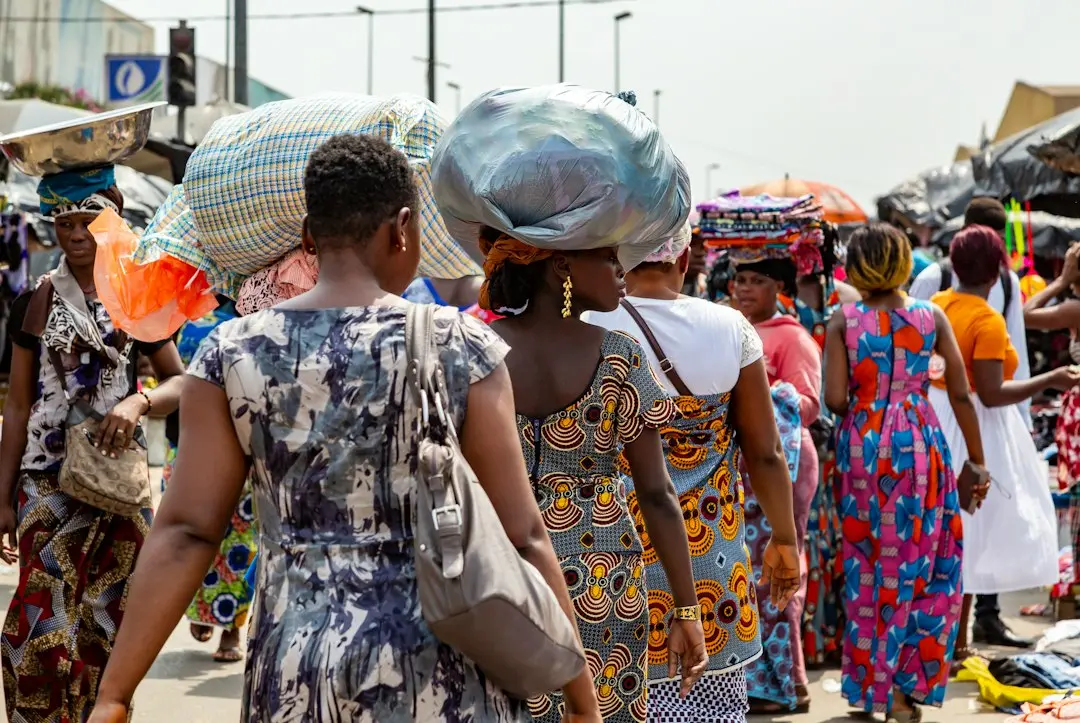
In the streets of Katutura, a working-class neighbourhood of Windhoek, the vivid colours of wax fabrics sit alongside the logos of local businesses. Here, women are not merely traders: they are business owners, trainers, and activists.
“We have long been invisible in economic decision-making. That time is over,” declares Martha Kambonde proudly, founder of SheBuilds, a women’s construction cooperative. “We build houses, but also a new society.”
The Namibian government has put in place several support programmes for women entrepreneurs. In 2022, more than 3,000 women received micro-credit to launch their businesses.
But beyond the figures, a cultural shift is taking place. Patriarchal norms are slowly retreating, driven by a more aware younger generation and increasingly visible female role models of success.
Art as a mirror of an emerging society
The galleries of Windhoek are vibrating with a new energy. Paintings, installations, videos: Namibian artists are exploring the tensions between modernity and memory, between national identity and cultural diversity.
“Art is our way of telling what the numbers don’t,” confides Elago Shilongo, a young visual artist whose works question the scars of colonialism. “We speak of land, languages, broken dreams — but also of rebirth.”
The National Culture Festival, relaunched in 2021, attracts thousands of visitors each year. San, Himba, Damara, and Kavango artists meet there, exchange ideas, and create together. A mosaic of identities that refuses homogenisation.
In schools, pilot programmes now integrate visual arts and traditional music into curricula. A way of reconnecting young people to their roots while opening them up to the world.
A future built one step at a time
Namibia has not yet found all the answers. Inequalities persist, the climate is destabilising, and land tensions are simmering. But something unique is being born: a society searching for itself differently, off the beaten track.
“We don’t just want to catch up on ‘lost time’. We want to invent our own way of moving forward,” summarises Ndinelao Amukoto, an urban planner in Windhoek. “And no one else can do that for us.”
While the spotlight often remains fixed on the continent’s giants, Namibia is forging its own path — discreet but singular. A society in motion, one that does not claim to be a model, but that raises essential questions.
What if true progress lay not in speed, but in the direction one chooses?