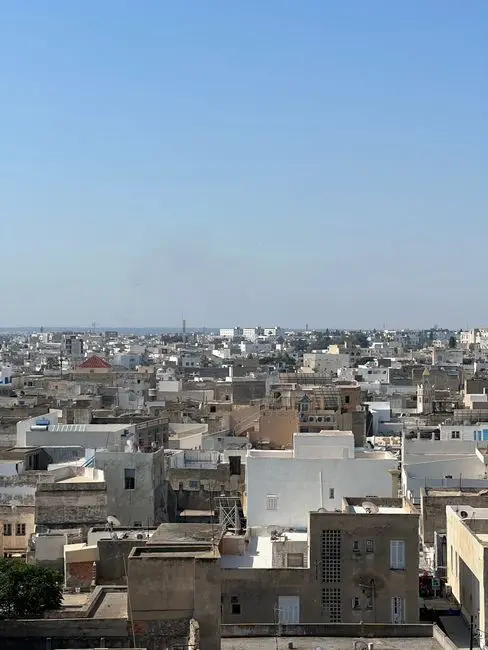




In the lively alleyways of the Medina of Tunis, between the sweet scents of jasmine and the buzz of scooters, a silent revolution is taking shape. Far from the usual spotlight, Tunisia is gradually weaving its web in the world of African innovation. An unexpected dynamic, driven by a connected youth, bold incubators and a clear political will. But how is this small Maghreb country becoming a technological engine for an entire continent?
A digital ecosystem in full swing
For several years now, Tunisia has been undergoing a true digital transformation. The country is home to more than 700 active startups, according to the Tunisian Ministry of Communication Technologies. An impressive figure for a population of 12 million inhabitants.
At the heart of this dynamic: the Startup Act, a pioneering law adopted in 2018. It offers a unique legal framework in Africa, with tax benefits, special leave for employee entrepreneurs and a state-backed seed fund.
« The Startup Act changed the game. Before, starting a tech company here was an uphill battle. Today, we finally have the tools to dream big », says Leïla Ben Amor, founder of the educational platform EdVenture, incubated in Tunis.
This law has inspired other African countries such as Senegal and Côte d’Ivoire, which are looking to adapt the Tunisian model to their own realities.
An educated and connected youth
Tunisia benefits from a major asset: a pool of highly qualified young talent. Every year, more than 10 000 engineers graduate from the country’s universities and schools, notably from the École nationale d’ingénieurs de Tunis (ENIT) and the Institut supérieur d’informatique.
« What struck me when I arrived here was the quality of the developers. Many speak three languages, master the latest technologies and have a true culture of innovation », says Mark Jensen, an American investor based in Berlin, who recently opened an office in Tunisia for his venture capital firm.
With an Internet penetration rate of over 70 %, Tunisian youth are also very active on social networks, tech forums and online learning platforms. A curious, inventive generation eager for change.
Booming technology hubs
From Tunis to Sfax, through Sousse and Bizerte, incubators and technopoles are flourishing throughout the country. The most emblematic remains the El Ghazala hub, which hosts more than 90 companies and startups in the fields of digital technology, artificial intelligence and cybersecurity.
But other structures are emerging, such as Flat6Labs Tunis, a regional accelerator that supports dozens of young companies each year, or the Startup Village in Djerba, which focuses on innovation in rural areas.
« The centralised model is no longer enough. We want to create mini-Silicon Valleys throughout the country, so that every region can innovate in its own way », explains Yassine Ferchichi, director of the Smart Tunisia programme.
This decentralisation of innovation is attracting an increasing number of international partners, particularly European and African institutions eager to support a sustainable model.
A bridge between Africa and Europe
Tunisia’s geographical position is a strategic asset that is rarely highlighted. Just two hours’ flight from Paris, Rome or Barcelona, the country sits at the crossroads between Europe, the Maghreb and sub-Saharan Africa.
This proximity allows Tunisian startups to quickly project themselves internationally. Several of them, such as Expensya (expense management) or InstaDeep (artificial intelligence), have raised funds abroad and opened subsidiaries in Europe and West Africa.
« Tunisia is a bridge. We understand African realities, we speak French, Arabic and sometimes English, and we are a few hours away from the major European markets », summarises Amine Karray, co-founder of the logistics startup Kargo.
This dual cultural and geographical belonging makes Tunisia a natural player in connecting the innovation ecosystems of the North and the South.
Persistent but surmountable challenges
Despite its progress, Tunisia still faces several challenges in consolidating its place in African innovation. Administrative red tape, difficulties in accessing financing and brain drain remain major obstacles.
« Many young people dream of leaving. We need to give them reasons to stay, to create here, to believe in their country », warns Rim Mahjoub, entrepreneurship lecturer at the University of Carthage.
Startup funding also remains limited. Fewer than 5 % of Tunisian startups access funding rounds exceeding 500 000 dollars. Local investors are still cautious, and banks are reluctant to support high-risk projects.
But initiatives such as the Anava Fund of Funds, endowed with 200 millions de dinars (approximately 60 millions d’euros), aim to structure investment in Tunisian innovation.
A model for the continent?
Tunisia inspires. Several African countries are sending delegations to study its innovation model. Partnerships are being formed with Kigali, Dakar, Abidjan and Cairo. The African Union has even cited Tunisia as an example in its report on the continent’s digital transformation.
« What Tunisia shows is that with limited means but a great deal of will, it is possible to create a dynamic, inclusive ecosystem geared towards the future », analyses Fatou Diop, an innovation expert based in Nairobi.
The country does not claim to be an African Silicon Valley. But it is forging an original path, adapted to its own realities, which could well inspire a new generation of African innovators.
As the continent searches for its technological champions, Tunisia moves forward, quietly but surely. What if the digital future of Africa were also being shaped on the shores of the Mediterranean?