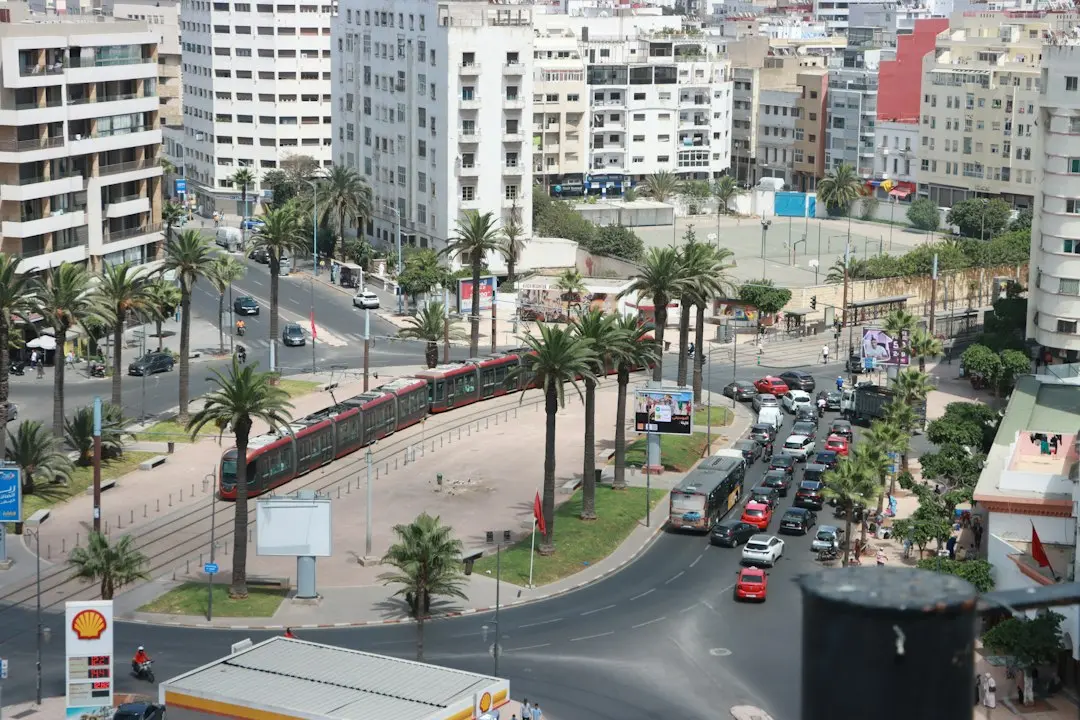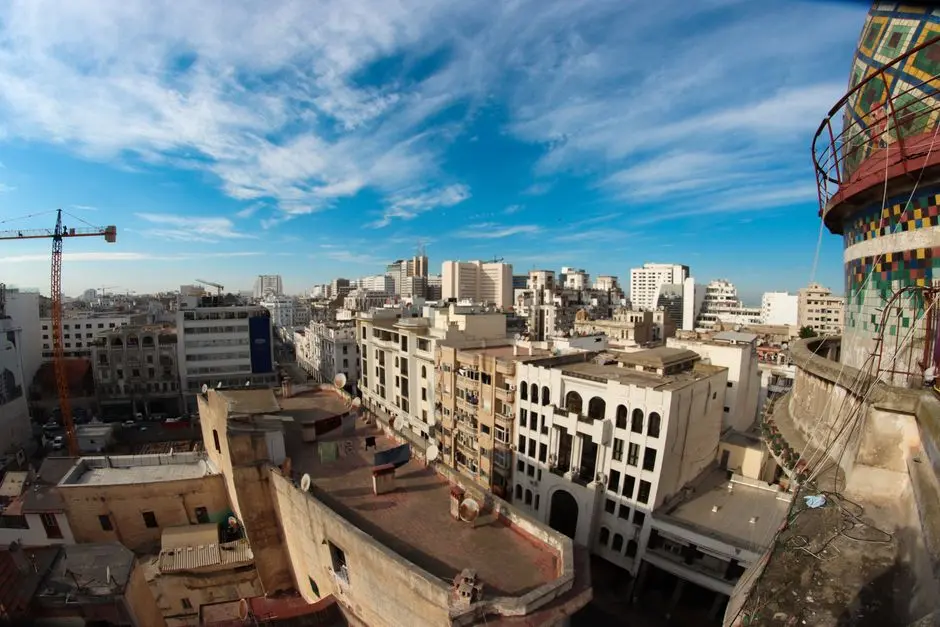



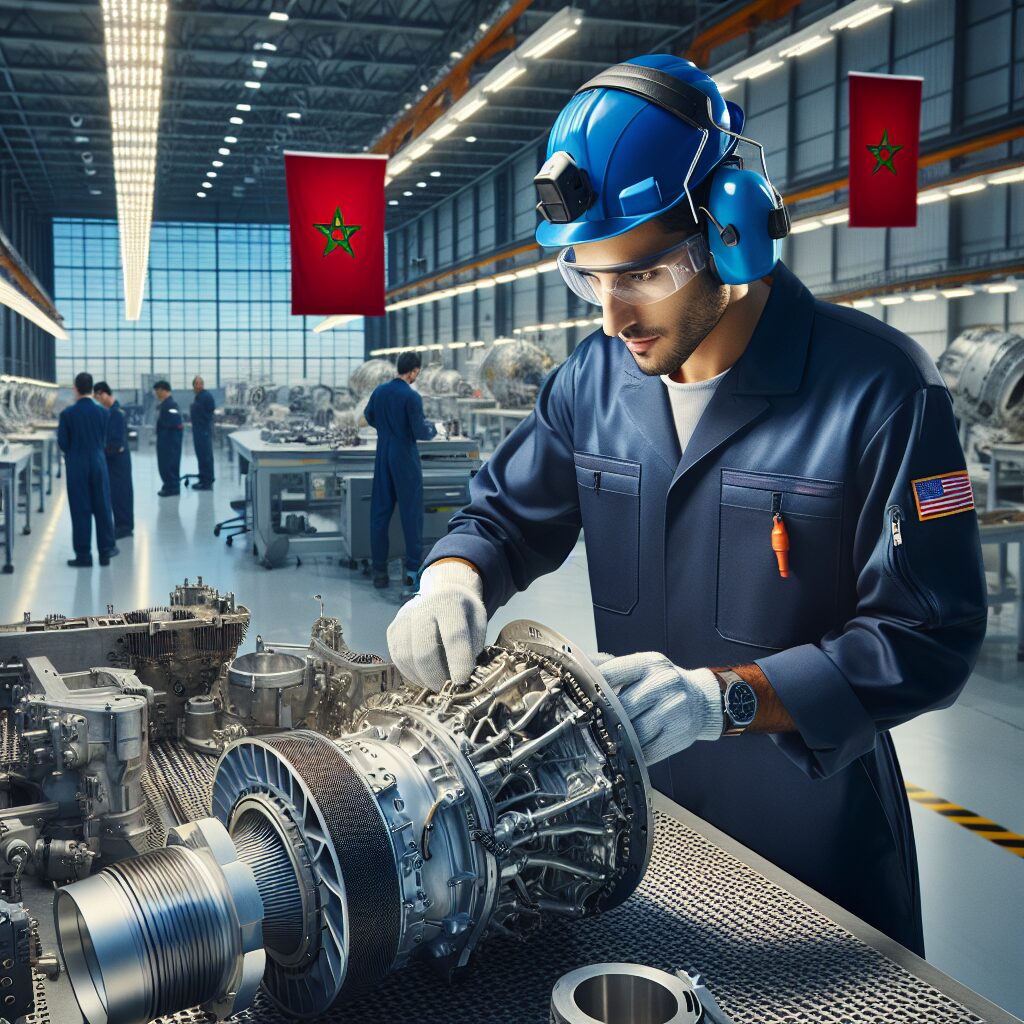
In an industrial zone in Casablanca, the quiet hum of machines competes with the meticulous silence of technicians. Here, thousands of kilometers from the world’s major aeronautical capitals, aircraft parts take shape with surgical precision. Morocco, long discreet on the technological scene, is establishing itself as one of the most dynamic players in global aviation.
A takeoff that began in the 2000s
Twenty years ago, few would have bet on Morocco as a future aeronautical hub. Yet it was during this period that the country began laying the foundations of what would become a strategic industry. The arrival of major names such as Safran, Boeing, and Bombardier marked a decisive turning point.
“When we opened our first factory here in 2001, it was a gamble,” recalls Jean-Luc Moreau, former site director at Safran. “Today, I am blown away by the quality of the Moroccan workforce and the speed with which the ecosystem has taken shape.”
The Moroccan government, anticipating the sector’s potential, launched a series of reforms and tax incentives. Dedicated industrial zones were created, such as Midparc in Nouaceur, right next to Mohammed V airport. At the same time, partnerships were forged with engineering schools to train a new generation of specialized technicians.
A rapidly expanding ecosystem
In 2024, the Moroccan aeronautical sector comprises more than 140 companies, employing nearly 20,000 people. This is remarkable growth for a country where the industry represented barely 1% of GDP in the early 2000s.
Morocco is no longer limited to assembling simple parts. It now produces highly technical components: wiring, engine parts, and fuselage elements. The local integration rate now exceeds 40%, a figure that impresses even industry experts.
“We have gone from being an executor to a technological partner,” explains Salma El Amrani, chief engineer at Hexcel Maroc. “Today, our teams participate in the design of parts used on Airbus A320s and Boeing 737s.”
The country also benefits from its strategic geographical position: at the crossroads of Europe, Africa, and the Middle East. A logistical advantage that attracts aeronautical giants seeking to reduce costs without sacrificing quality.
Tailor-made training programs
The heart of this success lies in human capital. Aware that aeronautics demands highly specialized technical skills, Morocco has invested heavily in training. The Institut des Métiers de l’Aéronautique (IMA), inaugurated in 2011, trains more than 1,200 specialized technicians every year.
“We work hand in hand with industry players to adapt our programs in real time,” explains Rachid Benslimane, director of the IMA. “What comes out of our workshops is operational from day one.”
Moroccan universities have also established partnerships with French and Canadian schools to train aeronautical engineers. This skills development is one of the pillars of Morocco’s competitiveness in a sector where there is no room for error.
“The slightest defect can cost millions, or even lives. Rigor is part of our daily routine,” emphasizes Youssef, a 26-year-old technician trained at the IMA, now employed at Stelia Aerospace.
An ambition driven by innovation
Morocco does not want to settle for being the world’s workshop. The country now has clear ambitions in terms of innovation. Several local companies are investing in research and development, particularly in composite materials and additive manufacturing.
In 2023, a Moroccan start-up, AeroTech Maghreb, even unveiled a prototype surveillance drone 100% designed and assembled in Morocco. A first in the region.
“The future of aeronautics hinges on innovation. If we want to remain competitive, we must invent, not just produce,” says Leïla Karroumi, founder of the start-up.
Specialized incubators are beginning to emerge in Casablanca and Rabat, with the support of foreign investors and public institutions. The goal: to make Morocco an innovation hub in aeronautics, capable of competing with the major European and Asian centers.
Challenges at high altitude
Despite its successes, the sector is not immune to turbulence. The COVID-19 crisis hit the global aeronautical industry hard, causing a sharp drop in orders. Morocco was no exception: in 2020, the sector’s activity fell by 40%.
But the recovery is already underway. In 2022, Morocco’s aeronautical exports reached 21 billion dirhams, up 24% compared to the previous year. Order books are filling up again, driven by the recovery of global air traffic.
Another challenge: moving up the value chain. If Morocco wants to maintain its position, it will need to continue investing in training, automation, and innovation. Competition is fierce, particularly from Turkey, Mexico, and Southeast Asia.
“Morocco has earned its place in the cockpit, but it must now prove that it can also fly the plane,” summarizes a consultant at Deloitte, specializing in the aeronautical industry.
A future to be written in the skies
Morocco’s sky has perhaps never looked so promising. The country, which has managed to turn an industrial ambition into an economic reality, now looks toward the future with confidence. Aeronautics, beyond the numbers, has become a symbol of modernity and expertise.
But how far can Morocco go? Will it one day design its own aircraft, or will it remain a strategic link in the global chain? One thing is certain: the engines are running, and the journey is only just beginning.