



When discussing geopolitical powers in Africa, few people think of Benin. Yet, out of the spotlight, this small West African country is patiently weaving a web of influence, stability, and diplomatic innovation that commands admiration. A discreet but remarkably effective strategy that increasingly intrigues international observers.
A discreet country at the heart of regional issues
Benin possesses neither abundant oil nor an oversized army. Yet today it plays a central role in the balance of West Africa. Located between Nigeria, the regional giant, and Togo, the country has established itself as a strategic link between Francophone and Anglophone blocs.
“Benin has become a natural mediator in regional conflicts. Its neutrality and political stability make it a credible interlocutor,” explains Florence Koudjo, analyst at the African Centre for Geopolitics. Indeed, since the 2010s, the country has multiplied its diplomatic initiatives, often in complete discretion.
In 2022, for example, as tensions were rising between Burkina Faso and Niger over the cross-border management of water resources, it was in Cotonou that the first discussions took place. Without fanfare, but with concrete results.
An influence-based diplomacy built on trust
The secret to this success? Patient diplomacy, built on trust and respect for sovereignty. Unlike other states that rely on power or pressure, Benin favors dialogue and partnership.
“We never come with ready-made solutions. We listen first, then we build together,” confides a senior official from the Beninese Ministry of Foreign Affairs, speaking anonymously. This approach has won over several countries in the region, which see Cotonou as a reliable partner, far from the logic of domination.
The country has also multiplied bilateral agreements in key areas: security, education, and the environment. In 2021, Benin signed a security cooperation pact with Ghana and Togo, aimed at combating the rise of armed groups in the border region. An agreement praised by the African Union for its “innovative and pragmatic” nature.
Rare political stability in the region
In a West Africa shaken by coups and chaotic transitions, Benin stands as an exception. Since the return to multiparty politics in 1990, the country has experienced regular democratic alternations, without bloodshed.
This stability, although sometimes criticized for its growing authoritarianism, remains a major geopolitical asset. “Benin inspires confidence because it is predictable,” analyzes Thomas N’Diaye, a Senegalese political scientist. “Investors, diplomats, and NGOs know what to expect.”
In 2023, the country was ranked 6th in Africa for governance according to the Mo Ibrahim index, ahead of heavyweights such as Kenya and Morocco. A performance that strengthens its position on the regional stage.
The port of Cotonou, a strategic tool of influence
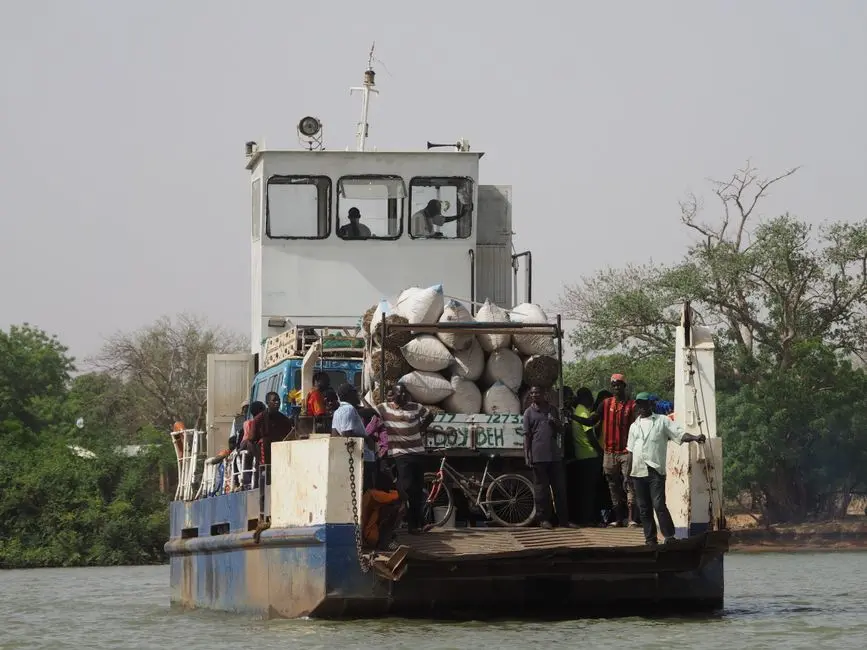
But it is also on the economic front that Benin is playing a refined geopolitical card. The port of Cotonou, deeply modernized since 2018, has become an essential logistics hub for several landlocked countries such as Niger, Burkina Faso, and even Mali.
With more than 12 million tonnes of goods handled in 2022, the port now surpasses that of Lomé in terms of flows into the interior of the continent. This role as a regional platform gives Benin a powerful diplomatic lever: that of transit and interconnection.
“We know our port is strategic. But we use it as a tool for cooperation, not blackmail,” specifies Hervé Dossou, director of the Société béninoise des ports. A distinction that makes all the difference in a region where commercial tensions can quickly escalate.
A growing presence in international organizations
Benin is no longer content to be a regional actor. It now aspires to a stronger voice on the international stage. Witness its recent positions at the UN, particularly on issues of migration and climate change.
In 2021, the country was elected to the United Nations Human Rights Council. A first that surprised more than one observer. “Benin has managed to build an image of a moderate, constructive, and forward-looking country. This appeals to the great powers,” notes the German ambassador to Cotonou, Klaus Meier.
The country has also strengthened its ties with emerging powers such as Turkey, Brazil, and India, thereby diversifying its partners and avoiding unilateral dependencies. A long-term strategy, designed to last.
A youth trained for the diplomacy of tomorrow
Finally, Benin is counting on its youth to consolidate its place on the African chessboard. Since 2019, the National Institute for Diplomatic Training in Cotonou has welcomed around a hundred students from across West Africa every year.
“We want to train a new generation of African diplomats, rooted in their culture but open to the world,” explains the institute’s director, Aïssatou Bello. The courses combine geopolitics, negotiation, foreign languages, and crisis management.
This initiative, supported by the European Union and UNESCO, makes Benin a regional training hub for international relations. A subtle but effective way of extending its intellectual and cultural influence.
“Benin doesn’t make noise, but it moves forward. And soon, it will have to be reckoned with,” warns Ivorian researcher Pascal Kouamé.
As Africa redefines its balances, Benin charts its course, far from the spotlight, but with a determination that commands respect. The question is no longer whether it plays a geopolitical role, but how far it intends to go.
To learn more about culture in Africa
This topic gains in value when linked to economic indicators, capitals, professions, and business opportunities across the continent.