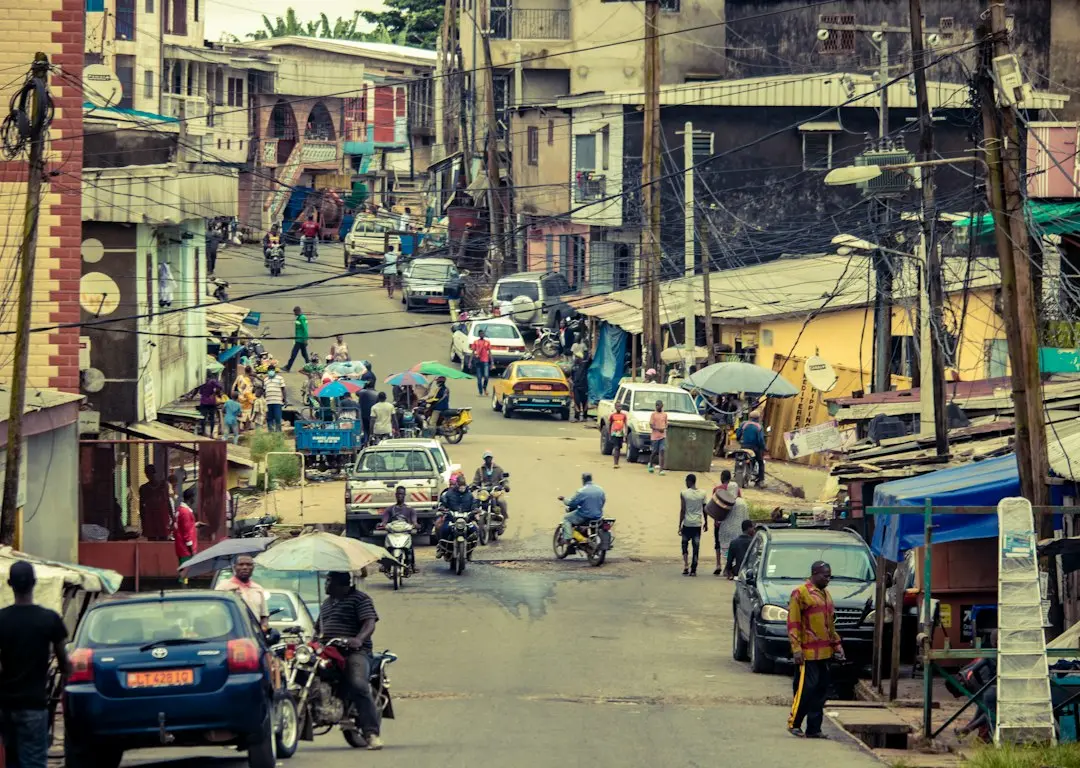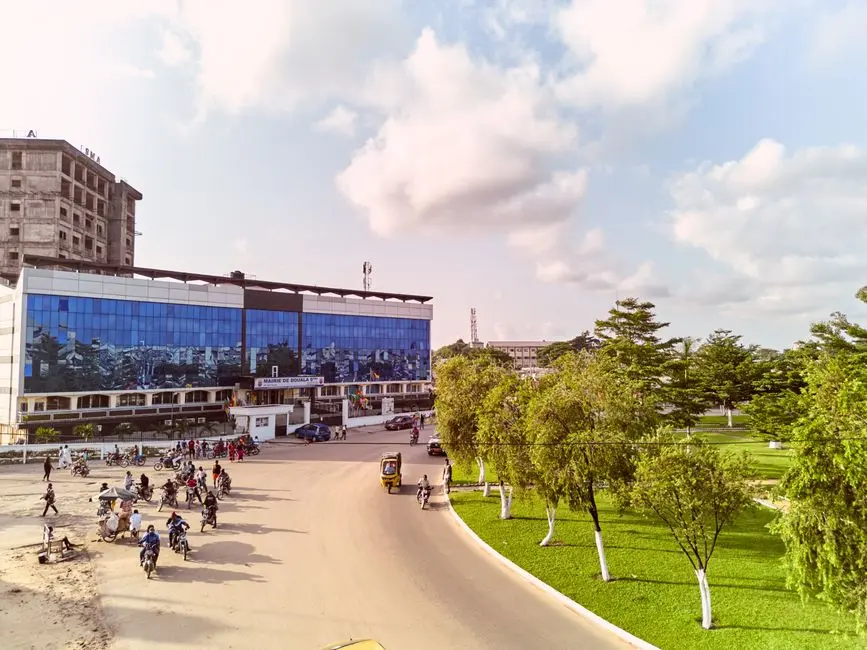


In the red hills of western Cameroon, a bittersweet smell floats in the air. It is not only the aroma of freshly fermented cocoa. It is also that of a silent struggle, waged far from the spotlight, in plantations, cooperatives, and ports. A struggle so that Cameroonian cocoa is no longer merely sold, but recognized. Because behind every bean, there is a story of quality, pride, and future.
A discreet giant of cocoa
Cameroon is the fifth largest cocoa producer in Africa, behind Côte d’Ivoire, Ghana, Nigeria and Cameroon. In 2023, the country produced nearly 300 000 tonnes of cocoa, according to figures from the Conseil Interprofessionnel du Cacao et du Café (CICC). An honourable performance, but one that hides a more complex reality.
The Afriques newsletter
- Free & no spam
- 1 email per day
- Unsubscribe in 1 click
“We have the potential to become a global benchmark,” says Jean-Baptiste Mbarga, an agro-economics expert based in Yaoundé. “But too often, our cocoa is sold as a mass-market product, without showcasing its intrinsic quality.”
Cameroonian cocoa, largely grown in the Centre, South-West and East regions, suffers from a lack of standardization. The beans are often mixed without distinction of variety or fermentation method. As a result, the country struggles to position itself in high-end markets, where quality makes all the difference.
Fermentation, a neglected art
At the heart of the problem, one word keeps coming back: fermentation. It is this crucial stage that reveals cocoa’s aromas, transforming a simple seed into a bean with floral, fruity or woody notes. But in Cameroon, this stage is often botched.
“We want to go fast, we lack training, and sometimes we sell the beans without even having properly dried them,” explains Rosine Nguimatsa, a producer in the Bafia region. “Yet when we do things right, the results are incredible.”
Local initiatives are trying to change the situation. Cooperatives like ChocoCAM or the Société Coopérative Agricole du Centre (SCAC) train producers in good fermentation and drying practices. They also introduce simple equipment, such as wooden boxes for homogeneous fermentation, or solar dryers to preserve aromas.
These efforts are beginning to bear fruit. In 2022, a batch of Cameroonian cocoa was ranked among the world’s 50 best at the international Cocoa of Excellence competition in Paris. A first that raised a lot of hope.
The challenge of traceability
But quality is not enough. On international markets, especially in Europe, buyers now demand traceability. They want to know where cocoa comes from, how it was grown, by whom, and under what conditions.
“Without traceability, we’re offside,” says Paulin Ndongo, quality manager at an exporter based in Douala. “The big chocolate brands no longer want anonymous cocoa. They want stories, faces, commitments.”
To meet this demand, Cameroun launched an electronic certification system for cocoa batches in 2021. Each bag is now labelled with a unique code, making it possible to trace back to the producer. This system, still in the deployment phase, is generating both hope and scepticism.
“It’s a good idea, but it has to work on the ground,” tempers Rosine Nguimatsa. “Many producers don’t have access to the Internet or digital tools.”
Between bulk cocoa and specialty cocoa
The global cocoa market is divided into two segments: bulk cocoa, used for mass retail, and specialty cocoa, intended for artisanal chocolatiers or premium brands. The former represents more than 90 % of volumes, but with volatile prices and low margins. The latter, far more lucrative, remains difficult to access.
“A specialty cocoa can sell for up to three times more than standard cocoa,” says Jean-Baptiste Mbarga. “But it requires impeccable quality, a strong story, and consistency in deliveries.”
A few Cameroonian pioneers have managed to cross this barrier. This is the case of the “Le Bon Cacao” brand, founded by a young entrepreneur from Douala, which exports 72-hour fermented beans to Belgian and Japanese chocolatiers. Or the Nkolbisson cooperative, which has signed a partnership with a Swiss company for certified organic and fair-trade cocoa.
But these successes remain marginal. The majority of producers still sell their cocoa to intermediaries, at prices set by the international market, without being able to promote their know-how.
The effects of climate change
Added to this is a more insidious threat: climate change. Temperatures are rising, seasons are becoming unpredictable, and fungal diseases are multiplying. Cocoa, a fragile plant, is suffering from it.
“We lost 30 % of our production last year because of excessively heavy rains,” says Bernard Tchouambou, a farmer in the Mbalmayo region. “The pods rot on the tree, the beans get moldy.”
To cope, researchers from the Institut de Recherche Agricole pour le Développement (IRAD) are working on more resistant varieties and on agroforestry techniques, which allow cocoa to be grown in the shade of larger trees, to preserve moisture and biodiversity.
But here again, the spread of these innovations remains slow, hampered by the lack of resources, training, and sometimes political will.
A future to reinvent
Cameroonian cocoa is at a crossroads. It can remain a mass product, sold to the highest bidder, without recognition or added value. Or it can become a symbol of quality, sustainability, and national identity.
“What we want is not just to sell cocoa,” summarizes Rosine Nguimatsa. “It’s that the world knows that our cocoa has a soul.”
The tools exist, and so do the talents. It remains to be seen whether the country will be able to bring them together, coordinate them, and give them the means to turn a brown bean into brown gold. And whether, tomorrow, Cameroun will finally be able to write its own story in the great book of world chocolate.
But deep down, the real question may be this: is the world ready to listen to what Cameroonian cocoa has to say?
Our detailed review of Wise
Wise is a neobank that caught our attention for its ability to simplify international money transfers.
The platform mainly appeals to freelancers and small businesses that invoice abroad or buy services from international partners.
But be careful: its business model does not necessarily meet the needs of an SME in Senegal that wants to pay suppliers in CFA francs or manage employee payroll.
In this review, I explain precisely what Wise can offer you – and what it cannot do for your business.
What should you remember about Wise?
| Criteria | Our rating |
|---|---|
| Strengths | Real exchange rate, transparent fees, multi-currency account, efficient mobile app |
| Weaknesses | No FCFA deposit, no local card, slow customer support, limited features for a Senegalese SME |
| Fees | Conversion fees from 0.33%, free withdrawals up to 200 EUR per month, then 1.75% |
| Minimum deposit | None |
| Transfer time | Generally 0 to 2 business days |
| Final rating | 3,5/5 |
What is Wise used for?
Wise is a payment platform that lets you send money abroad, receive funds from more than 30 countries and convert currencies at a rate close to the interbank market rate.
It also offers a multi-currency account that lets you hold more than 40 currencies, get local bank details in 10 countries and spend internationally with a debit card (depending on your country of residence).
Wise primarily targets expatriates, freelancers and e-commerce merchants working with Europe or North America.
However, if your business is based in Senegal and you invoice in FCFA, Wise cannot receive or hold CFA francs.
For that, you need a local solution such as PaySika, CinetPay or PayDunya.
The strengths of Wise
What sets Wise apart from traditional banks is its use of the interbank exchange rate (the real rate) without any hidden margin.
You pay conversion fees displayed in advance, generally between 0,33 % and 1,5 % depending on the currency.
Another advantage: fees displayed upfront. Before confirming a transfer, Wise shows you exactly how much the recipient will receive, without hidden fees or exchange rate margin.
Opening a Wise account is free and can be done entirely online in a few minutes.
The mobile app is considered smooth, fast and well designed, which makes it easier to track transactions and manage currencies.
For a Senegalese freelancer issuing invoices in euros or dollars, Wise can therefore be an excellent secondary business account, provided you have a local bank account to repatriate the funds.
Wise’s limitations in Senegal
The first limitation is simple: Wise does not support FCFA.
You cannot open an account in CFA francs, receive a payment in FCFA, or send funds from Senegal to the UEMOA zone in FCFA.
Transfers sent to Senegal are converted into euros or dollars, then repatriated via the local banking system – which generates intermediary fees and additional delay.
Another blocking point: the Wise card is not available in Senegal. You can therefore not withdraw cash from an ATM or pay in stores with a Wise card.
Add to that a customer support team that is hard to reach in the event of a dispute, with sometimes late email responses and limited telephone support.
Finally, Wise is not a licensed bank in Senegal and does not offer business loans, overdrafts or cheque deposits.
Wise for a freelancer or an SME?
If you are a Senegalese freelancer and your clients are based in Europe, the United Kingdom or the United States, Wise allows you to receive euros, pounds sterling or dollars with reduced fees.
You can then convert these currencies and withdraw them to a local account (via a standard bank transfer).
On the other hand, for an SME that manages employees in Senegal, pays local suppliers in FCFA or collects from Senegalese clients, Wise is not suitable.
You will need to combine Wise with a local solution for mobile money collection (Wave, Orange Money, Free Money) and standard payments.
Wise fees in 2026
Wise applies transparent, variable fees depending on the currency, amount and payment method.
For major currencies, conversion fees are around 0,33 % to 1,5 %.
Fixed transfer fees generally vary between 0,50 EUR and 1,50 EUR depending on the destination currency.
The exchange rate applied is the real interbank rate, visible at the time of simulation.
Deposits by bank transfer are often free, but using a bank card incurs additional fees.
If you withdraw funds with the Wise card, withdrawals are free up to 200 EUR per month, then charged 1,75 % beyond that.
For a transfer of 1 000 EUR to a CFA franc account, the total cost will depend on the EUR/FCFA conversion rate and the receiving bank’s fees.
How to open a Wise account from Senegal?
Opening is simple and 100% online:
- Create an account on wise.com with your email address.
- Verify your identity with an ID document (passport or national identity card).
- Add your bank details in euros, dollars or pounds sterling.
- Order a Wise card (if you live in an eligible country).
For Senegalese residents, identity verification may require an additional proof of address due to local regulations.
Once the account is verified, you can receive international payments, but you will not be able to hold CFA francs.
Wise vs local banks
Compared with Senegalese banks, Wise offers lower exchange fees and a more modern interface.
Traditional banks often apply exchange margins of 2 % to 5 % on international transfers, whereas Wise limits itself to reduced conversion fees.
However, local banks offer services that Wise does not: cash deposits, chequebook, business credit, payment of VAT or local taxes.
For daily use in Senegal, a local bank account remains essential.
Alternatives to Wise for Senegal
If you are looking for a solution capable of handling FCFA, your local payments and mobile money, several platforms are more suitable than Wise:
- PaySika: multi-currency account, prepaid cards and transfers sent from Africa.
- CinetPay: online payment collection in FCFA and mobile money.
- PayDunya: online payments for SMEs in Senegal and the sub-region.
- Wave: leading mobile money app in Senegal for daily payments.
International alternatives to Wise
Internationally, three players stand out:
- Taptap Send: money transfers to Africa with competitive fees.
- LemFi: sending money to Senegal, Nigeria, Ghana, Kenya, etc.
- Paysend: international transfers by bank card with fixed fees.
These solutions do not always handle FCFA as a holding currency, but they make it easier to send funds to Senegal.
Wise compared to Taptap Send, LemFi and Paysend
For standard transfers to Senegal, Taptap Send, LemFi and Paysend are often faster and cheaper than Wise.
Wise remains more attractive for freelancers who want to hold funds in euros or dollars and convert them at the right time.
In the table below, we compare the services relevant to Senegal.
| Criteria | Wise | Taptap Send | LemFi | Paysend |
|---|---|---|---|---|
| Transfer fees | 0,33 % to 1,5 % | Variable fees depending on amount | Competitive fees | Fixed fees from 1 EUR |
| Transfer time | 0 to 2 business days | Instant or a few minutes | Instant or a few hours | 0 to 1 business day |
| FCFA deposit | No | No | Yes | No |
| Receiving in FCFA | No | Yes | Yes | Yes |
| Debit card | Yes (outside Senegal) | No | No | No |
| Rating | 3,5/5 | 4,0/5 | 4,2/5 | 3,8/5 |
Is Wise reliable for an SME?
Yes, Wise is a reliable and regulated platform in several jurisdictions (FCA, FinCEN, etc.).
Client funds are held in segregated accounts and the company regularly publishes its financial statements.
However, reliability is not enough: for a Senegalese SME, the question is first whether Wise covers your FCFA needs and your local payments.
If it does not, it would be a mistake to force the use of Wise for operations it does not handle properly.
Why Wise 2026 revenue?
Several Senegalese businesses are looking to find out whether Wise can help them collect international payments in 2026.
The short answer is yes, if your clients pay in euros or dollars, and if you use Wise as a secondary receiving account.
The answer is no if you want a primary account in Senegal, FCFA payments or traditional banking features.
Concrete use cases for Wise
1. Freelancer in digital communication
A Senegalese freelancer in digital communication invoices a French client 3 000 EUR. He receives the funds into his Wise account, converts them into FCFA at a favourable time, then withdraws them to his local bank account.
2. Import-export SME
A Senegalese SME imports equipment from China and must pay a supplier in dollars. It uses Wise to convert euros into dollars at lower cost, then makes the transfer.
3. Online store
An online store based in Dakar sells products in Europe. It receives payments in euros on Wise, then pays its local suppliers in FCFA via a mobile money account.
Wise and regulation in Senegal
Wise is not licensed as an electronic money institution in Senegal.
It operates from abroad and complies with European and British regulations, but this means you do not benefit from BCEAO protection or the local deposit guarantee.
For a Senegalese company, it is therefore recommended to keep the majority of its cash in a licensed local bank.
Wise or Paysend for Senegal?
If you are sending money to Senegal from Europe, Paysend can be simpler: fees are fixed and the transfer is fast.
Wise is more suitable if you want to hold currencies, convert at the right time and reduce exchange fees.
The two services often complement each other: Wise for the multi-currency account, Paysend for occasional card transfers.
Wise or LemFi for Senegal?
LemFi is clearly positioned on transfers to Africa and offers competitive rates for Senegal.
If your main need is to send money to a relative or partner in Senegal, LemFi is often faster and simpler.
If you are a freelancer receiving euros, Wise remains more versatile.
User reviews of Wise
Online reviews of Wise are generally positive, with an average rating of 4,3/5 on Trustpilot.
Users appreciate the transparency of fees, the speed of transfers and the ease of use of the app.
Criticism mainly concerns account closures, slow customer support and the geographical limitations of the card.
Wise: scores and ratings
We evaluated Wise for professional use in Senegal based on five criteria.
| Criteria | Rating (out of 5) |
|---|---|
| Transfer fees | 4,0 |
| Execution times | 4,5 |
| Accessibility in Senegal | 2,0 |
| FCFA features | 1,0 |
| Customer support | 3,0 |
| Service for SMEs | 3,0 |
| Final rating | 3,5/5 |
Frequently asked questions about Wise
Can you open a Wise account in Senegal?
Yes, you can open a Wise account from Senegal and receive payments in euros, dollars or pounds sterling. But you cannot get bank details in FCFA or order the Wise card.
Does Wise support FCFA?
No, Wise does not support the West African CFA franc (XOF). Funds must be sent in another currency and then converted locally.
What is the cost of a Wise transfer to Senegal?
The cost depends on the amount, the sending currency and the payment method. Conversion fees start at 0,33 % and there are no hidden fees.
Is Wise available in Senegal?
Yes, Wise is accessible from Senegal, but with limited features: no FCFA deposit, no Wise card, no bank details in FCFA.
What is the best alternative to Wise in Senegal?
For local payments and mobile money, PaySika, CinetPay and Wave are more suitable. For international transfers, Taptap Send, LemFi and Paysend are good options.
Verdict: our final review of Wise
Wise is an excellent tool for Senegalese freelancers and businesses that invoice in euros or dollars.
Its fee transparency, real exchange rate and efficient mobile app make it a benchmark.
But for an SME based in Senegal that needs to manage FCFA, pay local suppliers and manage payroll, Wise alone is not enough.
You need to combine it with a local solution (bank or fintech) to cover all your needs.
We recommend Wise only as a complement to a local business account, never as your main account.