


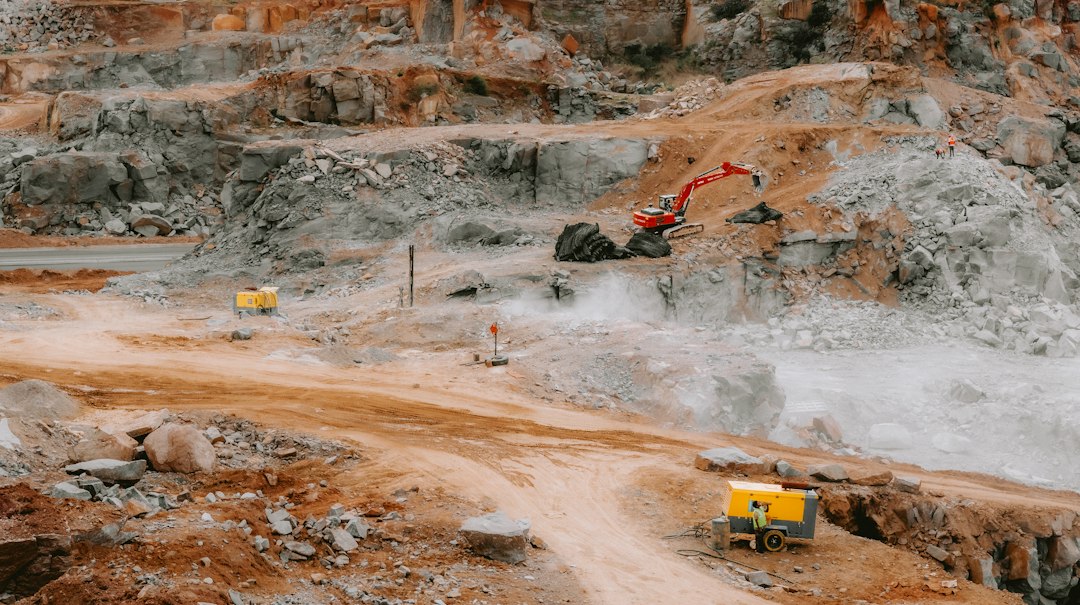
Côte d’Ivoire closed its second International Extractive and Energy Resources Exhibition — known by its French acronym SIREXE — on 22 November 2026 with a headline figure that the country’s extractive sector had not previously put on the table in a single setting: 4,913 billion FCFA (≈ $8.2 billion) in investment prospects tied to 19 discrete mining, oil and energy projects.
Prime Minister Robert Beugré Mambé made the announcement at the Abidjan Port-Bouët Exhibition Park on the closing day of the event, framing the pipeline as evidence of growing international confidence in the country’s resource sector. For diaspora investors, regional funds and energy developers tracking West Africa’s extractive corridor, the scale of the declared pipeline — and the diplomatic momentum behind it — deserves careful unpacking.
From 50,000 to 107,164: The Attendance Leap
Foot traffic more than doubled compared to the inaugural edition. SIREXE 2026 recorded 107,164 visitors in total, including 8,000 industry professionals, up from 50,000 visitors in 2024. The number of ministerial delegations rose from 26 to 41, and the exhibitor count reached 400. Those are meaningful signals: ministerial-level attendance at resource showcases typically precedes bilateral deal-making, and the jump in professional visitors suggests the event is graduating from domestic showcase to genuine regional deal forum.

The Afriques newsletter
- Free & no spam
- 1 email per day
- Unsubscribe in 1 click
For context, comparable extractive investment summits in sub-Saharan Africa — such as the Mining Indaba in Cape Town or the Ghana Mining and Energy Summit — have taken several editions to attract comparable diplomatic footprints. SIREXE appears to be compressing that timeline.
A Bilateral Anchor: The Côte d’Ivoire–Botswana MOU
Among the tangible outputs of the exhibition was a bilateral memorandum of understanding signed between Côte d’Ivoire and Botswana covering the mining and energy sectors. The substance of the agreement — specific commitments, financial terms, or joint-venture structures — was not disclosed in the government’s official communication, and investors should treat it as a framework instrument rather than a binding commercial contract at this stage.
The pairing is nonetheless strategically interesting. Botswana is one of Africa’s most established diamond and mineral economies, with a regulatory track record that consistently ranks among the continent’s most transparent. A formal knowledge-transfer or investment-facilitation agreement with Abidjan could help Côte d’Ivoire signal governance ambitions to the same class of institutional investors that back Southern African resource plays.
The .2 Billion Question: Prospects, Not Commitments
The 4,913 billion FCFA (≈ $8.2 billion) figure deserves scrutiny. The government’s language — investment prospects — is deliberately non-binding. These are project-level opportunities identified across 19 mining, oil and energy projects, not signed contracts or confirmed capital allocations. The pipeline could include early-stage exploration, development-ready assets and infrastructure requirements bundled together.
West African resource announcements of this kind have a mixed track record of conversion. Ghana’s offshore oil expansion and Senegal’s BP-backed gas development both moved from prospect to production, but required years of regulatory negotiation and financing rounds after the initial fanfare. Côte d’Ivoire’s own offshore blocks have attracted interest from major operators in recent years, and the country has made progress expanding its gold-mining output — but translating a showcase pipeline into drilled wells and operating mines requires sustained policy consistency, transparent licensing and competitive fiscal terms.
None of that is guaranteed by an exhibition closing ceremony.
Recognition and Sector-Building
On the softer side of institution-building, 29 individuals were decorated in the Order of Mining Merit — 9 at Commander level, 11 as Officers and 9 as Knights. Awards of this nature, common in Francophone African resource sectors, serve a dual purpose: recognising technical and entrepreneurial contributions while signalling to foreign partners that the state takes professional standards seriously.
What to Watch
Three things will determine whether SIREXE 2026 produces lasting economic impact rather than a well-attended trade fair. First, licensing timelines: how quickly do any of the 19 identified projects move to formal permitting? Second, the Botswana MOU’s operational content: if the two governments publish an implementation roadmap, it will reveal whether the agreement has real commercial architecture. Third, fiscal terms: Côte d’Ivoire’s attractiveness to the institutional capital needed for projects of this scale will ultimately hinge on the mining and petroleum codes — their stability, their competitiveness against peers like Ghana, Burkina Faso and Guinea, and the clarity of dispute-resolution mechanisms.
The 2026 exhibition has undeniably raised Côte d’Ivoire’s profile as an extractive investment destination. Whether the $8.2 billion prospect figure becomes a commitment figure is the story the next 24 months will tell.
Source: Government of Côte d’Ivoire, official portal (gouv.ci), 23 November 2026.
Source: Government of Côte d’Ivoire (gouv.ci), “Clôture du SIREXE 2026”, 23 November 2026.

Moussa D.
Editor-in-chief of lesafriques.com. An economic journalist trained in Tunis, he sets the editorial line and reviews every article before publication. He ensures every figure is sourced, verified and dated, in line with the site's methodology.
View all articles → · LinkedIn ↗


