

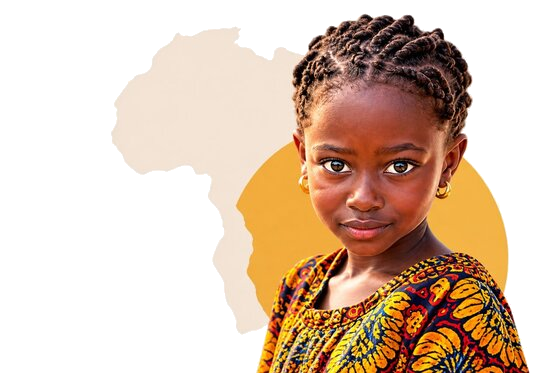
In the lush depths of the equatorial forest, silence is deceptive. It conceals a new effervescence, a discreet but determined struggle to breathe new life into a land long forgotten. In the Central African Republic, an environmental ecosystem is emerging, driven by unexpected actors, unlikely alliances and a palpable urgency.
A wounded, but undefeated nature
The Central African Republic, often reduced to its political crises, nonetheless harbors one of the richest biotopes on the African continent. Dense forests, open savannahs, powerful rivers: its biodiversity is exceptional. Yet in recent decades, this natural wealth has been severely tested.
The Afriques newsletter
- Free & no spam
- 1 email per day
- Unsubscribe in 1 click
“When I was a child, you could hear the elephants from the village. Today, they are rare,” confides Joseph Gonda, a former tracker turned naturalist guide in the Dzanga-Sangha region. Illegal deforestation, poaching and artisanal mining have left deep scars.
According to a report by the Observatory of Central African Forests, the Central African Republic lost nearly 1.2 million hectares of forest cover between 2001 and 2021. Yet despite this alarming finding, a new dynamic appears to be taking shape.
Communities on the front line
This change does not come from above. It is born first in villages, where the environment is both a source of life and survival. In Bayanga, on the far southwest of the country, local communities are organizing around community conservation initiatives.
“We understood that if the forest disappears, our future disappears too,” explains Marie-Claire Bétou, president of a women’s cooperative specializing in the processing of non-timber forest products. Wild honey, shea nuts, mushrooms: these resources are becoming sustainable alternatives to logging or hunting.
With the support of international NGOs, several villages have set up community patrols to monitor nature reserves. These sentinels of the forest, often armed with simple binoculars and notebooks, now play a crucial role in preserving biodiversity.
The awakening of a green youth
In the dusty streets of Bangui, a new wind is also blowing. Groups of students, artists and environmental activists regularly gather to organize awareness campaigns. The collective “Terre Verte RCA”, born in 2020, now counts more than 500 active members across the country.
“We want to show that ecology and development are not incompatible,” says Nadège Mokassa, 27, co-founder of the collective. She organizes recycling workshops in schools and reforestation operations in the outlying neighborhoods of the capital.
In 2023, these young people planted more than 15,000 trees in urban and peri-urban areas. A modest figure on a national scale, but symbolic of a change in mindset. For many, the environment is no longer a luxury, but a vital necessity.
Pilot projects at the crossroads of worlds
In the Dzanga-Sangha special reserve, a pilot project is attracting the attention of international experts. It is an unprecedented partnership between the Central African government, the WWF and the indigenous BaAka peoples to sustainably manage the area’s natural resources.
“This is the first time the BaAka have genuinely participated in decisions concerning their ancestral territory,” emphasizes Emmanuel Kossi, program coordinator. The hunter-gatherers, long marginalized, are now being trained as eco-guards, tourist guides or awareness facilitators.
The project has helped stabilize the lowland gorilla population, a critically endangered species. It has also generated alternative income for local residents, through ecotourism and the promotion of traditional knowledge.
This model, still fragile, could inspire other regions of the country. But it requires constant funding and lasting political will.
Environmental diplomacy in the making
On the international stage, the Central African Republic is beginning to make its voice heard. In 2022, it joined the Great Green Wall Initiative, a pan-African project aimed at restoring 100 million hectares of degraded land by 2030.
The country also benefits from the support of the Global Environment Facility (GEF) and the United Nations Environment Programme (UNEP). This support helps fund reforestation projects, integrated watershed management and soil erosion control.
But the challenges remain immense. Chronic political instability, lack of infrastructure and weak institutions hamper large-scale implementation. “A solid environmental governance framework must be built, otherwise all these efforts will remain isolated,” warns an expert from the African Development Bank.
A future hanging by a thread
The Central African Republic is at a crossroads. Its exceptional natural heritage can become a lever for sustainable development, but it can also erode forever if nothing is done. In the hands of its inhabitants, its youth and its elders, a silent but decisive game is being played.
“We do not have the luxury of waiting,” murmurs Marie-Claire Bétou, her eyes turned toward the canopy. “The forest speaks to us. We just need to learn to listen to it again.”
And what if, in this country so often relegated to the margins, an African model of ecological resilience were taking shape?
To learn more about the environment in Africa
This topic gains in value when connected to economic indicators, capitals, professions and business opportunities across the continent.